Shift complaints on a 2003-2007 Ram 2500 Cummins come in a handful of flavors: it starts in 3rd and will not shift, it hangs 2nd at wide-open throttle and only grabs 3rd when you lift, it shifts early and lazy when it is loaded, or it bangs into gear. Every one of those has a different root cause, and on a 48RE most of them live in the valve body and the electronics that steer it, not in the clutch packs. That is good news, because it means a lot of these trucks get fixed with a solenoid, a sensor, a wiring repair or a valve body, not a full overhaul.
The truck in question is Chrysler's "Auto 4-Speed HD 48RE" behind the 5.9L Cummins HO, per the 2006 Ram Body Builder technical specifications.[1] This guide is about getting the shift points and shift timing right. If your complaint is a flare or rpm climb inside a gear, that is a slip, and our 48RE Ram 2500 slipping guide is the better starting point.
How a 48RE decides when to shift
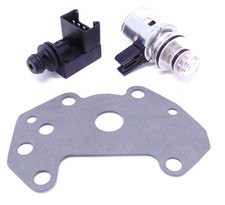
You cannot diagnose a shift complaint on this unit until you know who is in charge of each shift, because it is split between hydraulics and electronics. Per ATSG, the 46RE, 47RE and 48RE are four-speed units with an electronic governor. The 1-2 and 2-3 shifts are controlled by an electronic governor pressure solenoid mounted on the valve body; the shift into 4th and the converter clutch are controlled by their own separate solenoids.[2]
That means the first three gears still shift the old TorqueFlite way: two hydraulic pressures fight over each shift valve. Throttle (TV) pressure rises with throttle opening and pushes the valve toward the downshift position. Governor pressure pushes the other way. Jesse Zacarias lays it out for the 2-3 shift valve in Gears Magazine: TV pressure acts between lands F and G and on land H, governor pressure acts on land A, and governor has to overcome TV plus spring force before the valve strokes and the 2-3 shift happens.[3] Too little governor pressure or too much TV pressure, and the shift comes late or not at all. The reverse gives you early, soft shifts.
The PCM makes governor pressure by pulse-width modulating the governor solenoid, which is fed by line pressure. Transmission Digest describes the logic on the RE trucks: with the solenoid off, nearly full feed pressure enters the governor circuit; fully energized, it holds governor near 0 psi at a stop; and on gas trucks the PCM backs the solenoid off in proportion to road speed until 4th gear and converter lockup, when it turns it fully off.[4] The same article notes that road-speed relationship applies "except in diesel applications," which is worth remembering on a Cummins: the PCM's governor strategy on a diesel 48RE is not a straight speed-to-pressure ramp, so judge it by desired-versus-actual, not by a rule of thumb from a gas truck.
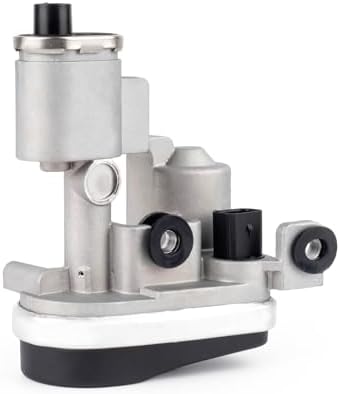
TV pressure on a 2003-2004 Cummins truck comes from a cable. From 2005, Dodge replaced the cable on the diesel 2500 and 3500 with an ECM-driven transmission throttle valve actuator (TTVA).[5] Either way, a bad TV signal moves every 1-2 and 2-3 shift point.
Symptom 1: Starts in 3rd, will not shift, MIL on
This is limp-in (failsafe). When the PCM loses confidence in the governor circuit, it shuts the solenoids off and the transmission defaults to 3rd hydraulically, so the truck pulls away like a dog and never upshifts. Pull codes before anything else. The governor-related ones you will see are:
- P1763 — governor pressure sensor volts too high
- P1762 — governor sensor offset volts or drift too low or too high
- P1757 — governor pressure above 3 psi at 0 mph
Transmission Digest's TECH/TALK on P1763 is worth reading in full. It sets when the PCM sees 4.89 volts or higher on the governor pressure sensor circuit for eight seconds or more, and if high pressure caused it, that reading means governor pressure was 90-96 psi or higher in Drive.[4] The article gives three causes, in the order I would check them:
- A compromised sensor ground. The governor pressure sensor shares a ground with the battery temperature sensor and the heated oxygen sensors, so P1763 can arrive with a P1492 (battery temperature sensor volts too high). TD calls a bad heated O2 sensor the most common cause of a corrupted shared ground. The quick test: clear codes, unplug the upstream and downstream O2 sensors, and road test. If the code stays away, plug them back in one at a time to find the bad one.[4]
- Line pressure above spec. Because the governor solenoid is fed by line pressure, a valve body modified to firm up shifts can drive governor pressure past the sensor's range. TD's test: clear codes and drive while holding enough brake to activate the brake switch, which blocks converter clutch apply. If P1763 only returns after the converter applies, high line pressure is the cause.[4]
- Charging system spikes. A failing alternator producing voltage spikes or high charging voltage can set it. Clear codes and road test with the alternator disconnected; if the code stays away, replace the alternator.[4]
That TD article was written around gas-engine trucks, but the shared-ground and line-pressure logic is the same hardware on a Cummins truck. Only after the ground path, line pressure and charging voltage check out should the governor pressure sensor itself get the blame.
Symptom 2: Hangs 2nd at wide-open throttle, shifts when you lift
This one is so common on diesel 48REs that the Valve Body Pro hotline wrote about it. Zacarias describes repeated calls about 48REs behind diesel engines that would not upshift at WOT. The 1-2 shift happened, but the 2-3 did not occur until the driver backed off the throttle. The shops had overhauled the valve body and replaced both the governor solenoid and transducer, and the truck still did it.[3]
The cause was a brand-new aftermarket governor solenoid. On a 2003 Dodge 5.9L diesel with a cable TV, they put pressure transducers on the line and governor taps and scoped them at WOT. When the PCM dropped the governor solenoid command to 1% duty cycle (maximum pressure), governor pressure with the aftermarket solenoid was unstable and never equalled line pressure. With an OE solenoid on the same command, governor rose to line pressure and the truck shifted.[3] Mechanically, governor pressure has to reach about 36 psi for the TV limit valve to cut TV pressure to land H of the 2-3 shift valve; until it can overpower full-throttle TV, the valve will not stroke and the direct clutch circuit never gets oil. Lifting lowers TV pressure, and the shift happens.[3]
How to confirm it on your truck:
- On a scan tool, log governor pressure desired and governor pressure actual along with throttle position and output speed during a WOT 2-3 attempt. Actual should track desired. If actual falls short and wanders while desired is at its maximum, the solenoid (or its feed) is not delivering.
- If you have gauges or transducers, tee into the line and governor taps. At maximum command, governor should match line.[3]
- Note what is in the truck. If a governor solenoid was replaced recently with a cheap unit and the problem started then, that is your lead.
The fix in the article was simply an OE governor solenoid. Zacarias also notes that on a 48RE, line and governor pressure rise when the PCM commands 4th or converter apply because the boost valve strokes, so take your readings in the gear you are diagnosing.[3]
Symptom 3: Late, harsh or inconsistent 2-3, poor kickdown
If governor pressure tracks fine but the shift timing still wanders, look at the TV side. Sonnax says the throttle valve bore wears easily on these Chrysler units, and on the 48RE they see more frequent poor line pressure rise and inconsistent shift timing as a result. The complaints they list for TV valve and sleeve wear are shift timing concerns, throttle buzz, poor kickdown, late 2-3 and an oversensitive 3-2.[6] Their drop-in throttle valve kit (22771-03K) fits all Chrysler RWD units including the 2005-later motorized-linkage trucks, with a hardened plunger and valve aimed at 48RE durability. Heavier bore wear needs the oversized 22771-04K, which requires reaming.[6]
On a 2003-2004 cable truck, also check the obvious: TV cable adjustment and a sticky or kinked cable will move every shift point. A cable set too long gives you early, soft shifts and no kickdown; too short gives you late, harsh shifts.
Symptom 4 (2005-2007): Shift points jump around, TTVA codes
On the 2005-2007 Cummins trucks the TTVA is the TV cable, so a sick actuator produces the same shift timing complaints. Per Jeff Parlee of the Sonnax TASC Force in Transmission Digest, the actuator is an ECM-driven DC motor with two position potentiometers that strokes the TV shaft through a D-shaped socket. It has no adjustment, it must be initialized after replacement (key on, engine off, at least 30 seconds), and the ECM recalibrates it every key cycle.[5]
The ECM wants at least 48 degrees of travel during calibration. The distance between the pressure regulator spring bracket and the inside of the throttle shaft adjustment bolt head should be 0.905 in.; some cable-era brackets are set as tight as 0.820 in., which limits travel and sets P1751 and/or P1752.[5] The full TTVA code family is P1749 through P1755. Any of them on a truck with shift complaints gets fixed first, and if the truck had a rebuilt or swapped valve body before the codes started, measure that bolt dimension before you buy an actuator.
Symptom 5: No 3-4 upshift or no lockup
Because 4th and converter clutch are on their own solenoids,[2] a truck that shifts 1-2-3 normally but never goes into overdrive is a separate problem from everything above. Check that the overdrive is not cancelled at the switch, then look at the overdrive solenoid circuit, its codes, and the transmission temperature input. That diagnosis is covered in detail in our 48RE won't shift into overdrive guide.
Do not skip the fluid
Governor and TV circuits are small, close-tolerance valves, and the governor solenoid is fed through a screen. Dirty fluid hangs valves and plugs solenoids, which shows up as erratic shift timing long before it shows up as slipping. The 48RE takes Mopar ATF+4. Chrysler lists a 3.8 L (8 pint) service fill and 14-16 L (29-33 pints) after overhaul, noting that dry fill varies with the cooler and line length.[1] Set the level hot on the dipstick, and if you are replacing a governor solenoid because of contamination, service the filter and pan at the same time so the new part does not get the same debris.
The fix, in order
- Codes and fluid. Read every module, not just the transmission. Fluid level and condition hot.
- Wiring and grounds. For P1762/P1763/P1757, run TD's O2 sensor unplug test, check charging voltage, and inspect the shared ground before buying parts.[4]
- TTVA (2005-2007). Clear P1749-P1755, initialize, and check the 0.905 in. bolt dimension.[5]
- Governor solenoid and sensor. Compare desired versus actual governor. If actual cannot reach line pressure at maximum command, install an OE-quality governor solenoid, not a bargain unit.[3]
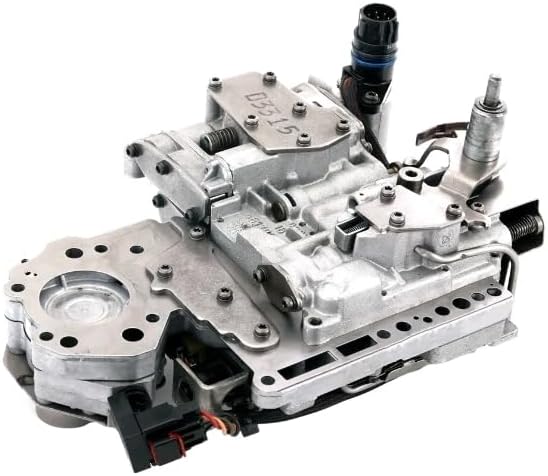
- Valve body. If governor tracks and TV is right but shift timing is still late or inconsistent, the TV bore or other valve wear is next: a TV valve kit or a complete remanufactured 48RE valve body.[6]
For the fluid side of the job, see our 48RE fluid type and capacity guide and the transmission fluid spec chart.
48RE governor pressure solenoids, TTVA actuators, solenoid kits and remanufactured valve bodies for the 2003-2007 Ram 2500 Cummins — shipped fast from the USA.
Shop 48RE parts →Shop the 48RE governor kit → All 48RE parts
FAQ
Why does my 48RE start in 3rd gear and not shift?
That is failsafe. When the PCM sees a governor pressure fault such as P1763, P1762 or P1757 it shuts the solenoids off and the transmission defaults to 3rd. Before replacing the sensor, check the shared ground with the oxygen and battery temperature sensors, line pressure and charging voltage, which Transmission Digest lists as the common causes.
Why won't my Cummins 48RE shift into 3rd at full throttle?
Governor pressure is not high enough to overcome full-throttle TV pressure on the 2-3 shift valve, so the shift only happens when you lift. Gears Magazine traced repeated cases to aftermarket governor solenoids that could not bring governor pressure up to line pressure at 1% duty cycle; an OE solenoid fixed them.
What does P1763 mean on a Dodge 48RE?
P1763 is governor pressure sensor volts too high. It sets when the PCM sees 4.89 volts or more on the sensor circuit for eight seconds, which corresponds to roughly 90-96 psi governor pressure if pressure is the cause. A bad heated oxygen sensor corrupting the shared ground is the most common trigger.
What are the 48RE TTVA codes on 2005-2007 Cummins trucks?
The throttle valve actuator codes run P1749 through P1755. The actuator has no adjustment and must be initialized with the key on and engine off for at least 30 seconds, and the throttle shaft adjustment bolt dimension should be 0.905 inch so the actuator gets its full 48 degrees of travel.
Can a bad governor solenoid cause late shifts on a 48RE?
Yes. The governor solenoid controls the 1-2 and 2-3 shifts, so a solenoid that cannot build pressure delays those shifts, especially under heavy throttle. Compare governor pressure desired and actual on a scan tool; if actual falls short at maximum command, the solenoid or its feed is the problem.
Related 48RE guides
Sources
- Chrysler / Ram Body Builder Guide 2006 — Technical Specifications and Fluid Capacities. Backs the "Auto 4-Speed HD 48RE" behind the 5.9L Cummins HO in the Ram 2500, ATF+4, the 3.8 L (8 pint) service fill and 14-16 L (29-33 pint) overhaul fill with its cooler footnote. Technical specifications (PDF) · Fluid capacities (PDF)
- ATSG — 46RE/47RE/48RE Technical Service Information (manual excerpt). Backs the electronic governor design, the governor solenoid controlling the 1-2 and 2-3 shifts, separate solenoids for 4th and converter clutch, and the TTVA replacing the TV cable. atsg.biz (PDF)
- Gears Magazine (ATRA) — "It Can't Be the Solenoid...I Replaced It!", Jesse Zacarias, March 2016. Backs the diesel 48RE no-2-3-at-WOT complaint, the aftermarket governor solenoid failing to reach line pressure at 1% duty cycle, the OE solenoid fix, the 36 psi TV limit valve point, the 2-3 shift valve land forces, and the 4th/TCC boost valve pressure rise. gearsmagazine.com
- Transmission Digest — TECH/TALK, March 2006 issue: RE-series P1763 "governor pressure sensor volts too high." Backs the third-gear failsafe, the 4.89 V / eight-second set condition and 90-96 psi equivalent, the shared ground with battery temperature and O2 sensors, P1762/P1757/P1492, the O2 unplug, brake-switch and alternator tests, and the governor solenoid on/off logic. transmissiondigest.com
- Transmission Digest — "Preventing 48RE Transmission Throttle-Valve-Actuator Codes," Jeff Parlee (Sonnax TASC Force), June 2010. Backs the 2005 TTVA on diesel 2500/3500 Rams, the 30-second initialization, 48-degree span, the 0.905 in. versus 0.820 in. bolt dimension, and the P1749-P1755 codes. transmissiondigest.com
- Sonnax — Throttle Valve Kit 22771-03K product page. Backs TV bore wear on Chrysler RWD units, the 48RE's inconsistent shift timing and poor line rise, the complaint list (shift timing, throttle buzz, poor kickdown, 2-3 late, 3-2 oversensitive), and the 22771-04K oversized option. sonnax.com