A 46RE in limp mode pulls away in third, stays in third, has no overdrive and no converter lockup, and still backs up. Behind a 5.2L or 5.9L gas V8 in a Ram 1500 or another gas Dodge truck, the truck feels like it has lost its low gears, and the customer usually says it "has no power." It has plenty of power. The computer has stopped controlling governor pressure and gone to its failsafe.
This guide covers how the 46RE's electronic governor fails safe, how the PCM calibrates the governor sensor at every stop, the gas-truck traps (O2 sensor grounds and the engine-running relay feed), the factory pressure numbers, and how to replace the governor parts correctly. Specs come from Chrysler's 2001 Dodge Ram Truck service manual, ATRA's GEARS magazine, Transmission Digest and Sonnax. Sources are listed at the end.
How the 46RE Fails Safe
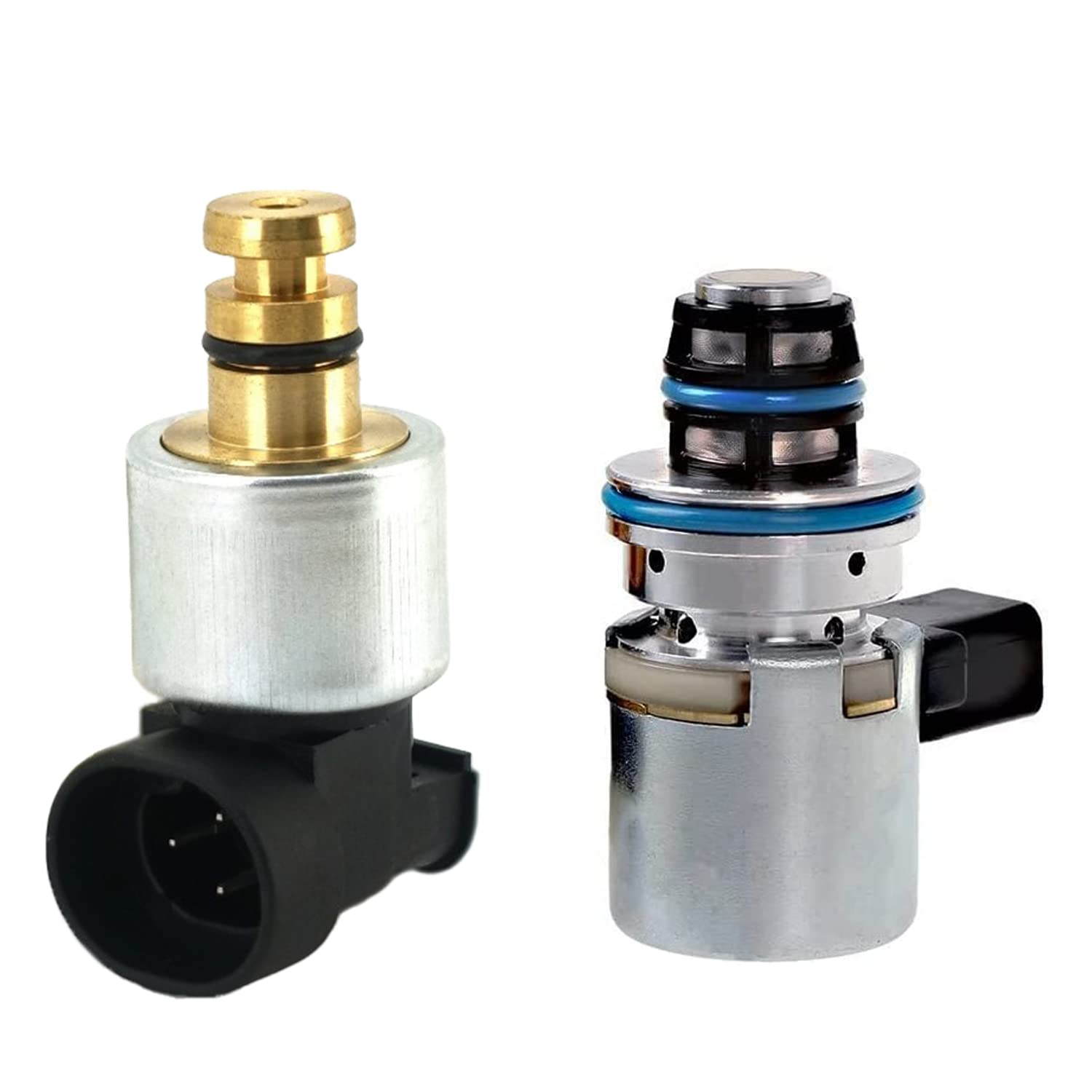
The 46RE shifts first through third hydraulically. GEARS puts it plainly: governor pressure strokes the shift valves, just like a TH350 or a C-4. What changed in 1996 is where governor pressure comes from. ATSG's 46RE/47RE/48RE technical booklet describes it the same way: first, second and third gear shifts are controlled by an electronic governor solenoid mounted on the valve body, while the shift into fourth and the converter clutch each have their own separate solenoid. There is no spinning governor weight on the output shaft. Chrysler's 46RE section (page 21-540) lists the parts that make governor pressure now: the governor body, the valve body transfer plate, the governor pressure solenoid, the governor pressure sensor, the fluid temperature thermistor, the throttle position sensor, the transmission speed sensor and the PCM.
The solenoid sits in the governor body with line pressure on its inlet side. Per the factory manual (2001 edition, page 21-541; the 1998 Ram manual says the same), the average current through the solenoid sets governor pressure: one amp produces zero psi, and zero amps produces maximum governor pressure. The PCM turns on the transmission control relay, which supplies 12 volts to the solenoid, and the PCM controls the ground side.
That is the whole failsafe. When the PCM sets a governor or relay fault, it drops the solenoid. No current means the solenoid opens all the way, full mainline pressure fills the governor circuit, and the 1-2 and 2-3 shift valves stroke to third. GEARS notes that the overdrive and converter clutch control circuits go dead in limp mode too, so there is no fourth and no lockup.
GEARS also gives the rule that should guide every diagnosis: the computer only goes into limp mode if it sets a code or loses power. A 46RE that starts in third with no code stored is not in limp mode. That is a crossleak in the governor circuit or a sticking shift valve, and the fix is hydraulic.
The Calibration Your Scan Tool Never Shows You
One detail in the 46RE manual explains a lot of "random" sensor codes. The governor pressure sensor drifts with barometric pressure and temperature, so the PCM re-zeroes it constantly. Per page 21-541, calibration runs every time output shaft speed falls below 200 rpm, and it repeats every 3 seconds while the truck stays below that speed. The PCM fires a 0.5 second pulse at 95% duty cycle to the governor solenoid, which should close it off, and reads the sensor during that pulse. It averages the signal to reject electrical noise.
Normal calibration only happens once the sump is above 50F, or after the first 10 minutes of running if the temperature signal is missing. Below 50F the solenoid can be too slow to guarantee 0 psi, so the PCM keeps pulsing but throws the readings away and uses the offset it captured at key-on.
What that means on the bench:
- Every stop is a sensor test. If the solenoid leaks, the governor body is warped or a crossleak feeds the circuit, the PCM sees pressure during a pulse that should read zero. That is how an offset code (P1762) sets at a light with nothing wrong with the wiring.
- Output speed has to read zero at a stop. The calibration keys off output shaft speed. GEARS warns that AC noise on the speed sensor circuit looks like road speed to the PCM, and it will build governor pressure for a truck that is standing still.
- The key-on value matters in cold weather. A cold-morning code that never repeats once the truck warms up points at the offset the PCM captured at key-on.
The Codes That Put a 46RE in Limp Mode
The 2001 Ram manual's DTC table defines the ones you will see, and the archived 1998 Ram service manual's DTC chart lists the same codes with the set conditions, for example P1756 setting when governor pressure is not between 10 and 25 psi while the PCM is asking for 15-20 psi, and P1764 setting below 0.10 volts:
- P1756 — Governor pressure not equal to target at 15-20 psi.
- P1757 — Governor pressure above 3 psi in gear at 0 mph.
- P1762 — Governor pressure sensor offset volts too low or high.
- P1763 — Governor pressure sensor volts too high.
- P1764 — Governor pressure sensor volts too low.
- P1765 — Trans 12 volt supply relay control circuit.
GEARS makes a practical point about these: working the DTC trees usually takes longer than diagnosing from the symptom. Use the code to tell you which circuit the PCM gave up on, then test the circuit.
Gas-Truck Trap 1: The Relay Only Has Power With the Engine Running
Here is the one that burns techs who are used to key-on testing. Transmission Digest traced the 46RE/47RE transmission control relay coil feed on these trucks. The coil does not get ignition power. It is fed from the PCM's "Generator Source" circuit, an engine-running bus the PCM powers from connector 3, pin 25 only when the engine is running. That feed goes to relay pin 86, and the PCM grounds the coil through connector 2, pin 30 (the same pin GEARS lists as B30, transmission relay control, 0.0 V with the engine running and no codes). TD notes the same circuit also feeds the EVAP leak detection pump.
So if you probe for relay or solenoid power with the key on and engine off and see nothing, that can be normal. Start the engine before you condemn anything. If the leak detection pump is also dead with the engine running, look upstream at the shared splice and the PCM feed rather than at the transmission.
Downstream of the relay, GEARS says pin 1 at the transmission case connector supplies power to the transmission solenoids. If pin 1 loses power, the system goes to limp mode. That is also why unplugging the case connector is a fair test on this family. GEARS Magazine points out that the RE uses a governor pressure solenoid instead of a line pressure control solenoid, so killing power to the unit does not drive line pressure to maximum the way it does on an EPC-controlled transmission. Unplugged, a healthy 46RE should behave exactly like the limp mode described above, with line pressure still set by the TV cable and pressure regulator. If it shifts the same plugged in as unplugged, the electrical side was never in control. A relay control circuit fault logs P1765. A fluid-soaked or corroded case connector, a pushed-back pin, or a chafed harness that opens over bumps will do the same thing intermittently, and the truck stays in third until the key is cycled.
Gas-Truck Trap 2: P1763 and the Oxygen Sensors
Every 46RE is behind a gas engine, so this one applies to all of them. Transmission Digest documented P1763 on 1996-and-later Dodge and Jeep trucks with RE transmissions behind gasoline engines. The code sets when the PCM sees 4.89 volts or more on the governor pressure sensor circuit for eight seconds or longer, which is about 90-96 psi of governor pressure, and the transmission goes to third-gear failsafe.
TD lists three causes, and the sensor is usually not the first:
- A bad shared ground. The governor sensor shares its ground path with other sensors, and a failing heated oxygen sensor is the most common cause. TD's test: unplug the upstream and downstream O2 sensors and road test. If P1763 does not return, test the O2 sensors one at a time and replace the bad one.
- Line pressure above factory spec. Valve body modifications meant to firm up shifts can push line pressure high enough to set the code when the converter clutch applies. Remember GEARS' note that above about 40 mph the governor sensor is really reading line pressure. TD describes a 150-ohm, 1/4-watt resistor installed near PCM terminal 29 as a voltage divider for this case. Treat that as a workaround for a modified valve body, not a fix for a stock truck.
- Charging system spikes. An alternator putting out excessive or spiking voltage can produce false readings. TD's check is to disconnect it and road test.
Know the Numbers
GEARS' PCM chart for 1996-2003 Dodge RWD trucks with gas engines gives you targets:
- Governor sensor signal (B29): about 0.60-0.66 V at zero psi, 3.0 V at 60 psi, 4.5 V at 110 psi.
- 5 volt reference (B31): 5 V with the ignition on.
- Governor solenoid control (B8): about 1 amp for zero psi.
- Output speed sensor (B28): about 3.0 V AC at 30 mph.
- Overdrive (B21) and TCC (B11) controls: 0.0 V when on, about 12 V ignition on and off, and no voltage at all in limp mode.
For the hydraulic side, Chrysler's 46RE Test Five (page 21-489 in the 2001 manual, identical in the 1998 Ram manual) puts the 100 psi gauge on the governor port at the right rear of the case. In D at curb idle with the brakes held, governor pressure should be no more than 3 psi; more than that means a fault in the governor pressure control system. Roll it gently, no faster than 30 mph, and pressure should climb about 1 psi per mph, then drop back to 3 psi or less at a stop. The 46RE spec table (page 21-533) is tighter for a warm, running truck: governor should return to 0-1.5 psi when stopped in D, 1 or 2, and anything above 1.5 psi at a standstill will keep the transmission from downshifting.
In Park, Reverse and Neutral there should be no governor pressure at all, because the manual valve closes the passage that feeds the governor circuit. GEARS says pressure in those ranges means a crossleak in the case, valve body or governor body.
Separate the Sensor From the Solenoid
With the scan tool and the gauge both connected, drive it and watch three values: governor desired, governor actual (the sensor) and the gauge. GEARS' rule:
- Gauge follows desired until the code sets: the sensor is lying. Replace the sensor.
- Gauge follows actual: the pressure really is wrong. Suspect the governor solenoid, a warped valve body adapter (transfer plate) or an internal leak.
- No desired signal at all: the PCM does not think the truck is moving. Check the output speed sensor and its wiring.
- Code sets in third or fourth at wide open throttle with governor actual above 105 psi: excessive line pressure or a bad sensor.
If the code never sets but the truck still starts in third, stop looking at electronics. Sonnax's 46RE/47RE vacuum test guide includes the 1-2 and 2-3 governor plug bores, and a worn bore there changes shift timing no matter what the governor does. Our 46RE valve body testing guide covers the procedure.
Replacing the 46RE Governor Solenoid and Sensor
The governor body bolts to the bottom of the valve body transfer plate, so this is a pan-off job. Chrysler's procedure (pages 21-542 and 21-543):
- Drain and remove the pan and filter, then unplug the pressure sensor and solenoid.
- Remove the solenoid retainer screws, pull the solenoid and the sensor, then unbolt the governor body and remove the gasket.
- Clean the gasket surfaces. Check the governor body for flatness and every bolt for tightness; GEARS calls a loose or warped governor body a common cause of pressure in Drive at a stop.
- Fit a new gasket and new O-rings. Lube the O-rings with transmission fluid, push the sensor and solenoid into their bores and install the retainer.
- Torque the solenoid-to-transfer-plate screws and the solenoid wiring connector screw to 4 N·m (35 in-lb) per the 46RE torque table. The pan bolts go to 17 N·m (13 ft-lb).
- Install a new filter, refill with Mopar ATF+4, and road test.
Buy the sensor for the right model year. The fluid temperature thermistor is built into the governor pressure sensor, and GEARS notes that starting in 1999 some vehicles switched from a negative to a positive temperature coefficient thermistor. The wrong one reads backwards: hot at a cold start, cooling off as you drive. That will not put the truck in limp mode, but it scrambles the cold-fluid governor curve and the overdrive and lockup strategy.
A Test Order That Works
- Confirm true limp mode: third-gear start, no upshift, no fourth, no lockup, and a stored code. No code means hydraulics.
- Read every module. O2 sensor, charging and EVAP leak detection pump codes all matter on a 46RE truck.
- Check fluid level and condition hot. Burnt fluid plus limp mode can mean clutch damage on top of the electrical fault.
- Engine running: solenoid supply at case connector pin 1, B30 at 0.0 V, 5 V reference, and sensor signal about 0.60-0.66 V at zero pressure.
- At a stop in Drive on the scan tool: gear range Drive, output speed 0 mph, governor actual near zero.
- Gauge on the governor port: 0 in P/R/N, 3 psi max at idle in D, about 1 psi per mph rolling.
- If P1763 is the code, unplug the O2 sensors and road test before buying transmission parts.
- Road test comparing desired, actual and gauge to pick between the sensor, the solenoid and a leak.
RE-Family Governor Pressure Solenoid Kit 4617210 with Sensor
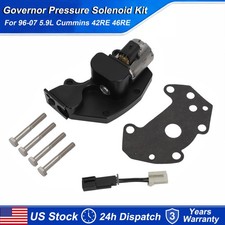
The 4617210 governor pressure solenoid and sensor kit covers the A518 RE family, including the 46RE. Replace both parts together when the gauge test points at the governor. Confirm your model year before ordering, since sensor style changed over the years.
View the governor solenoid kit →Or browse all RE-family transmission parts.
Shop the RE governor solenoid kit →
Frequently Asked Questions
What gear is a 46RE in when it goes into limp mode?
Third gear and reverse. The PCM stops driving the governor pressure solenoid, and with zero current the solenoid opens fully and sends mainline pressure into the governor circuit, which strokes the shift valves to third. The overdrive and converter clutch circuits go dead too, so there is no fourth and no lockup.
Why is there no power to the 46RE solenoids with the key on?
On these gas trucks the transmission control relay coil is fed from the PCM's engine-running Generator Source circuit, not ignition power. Transmission Digest notes the feed is only live with the engine running, so start the engine before you condemn the relay, harness or PCM. The same circuit also feeds the EVAP leak detection pump.
Can bad O2 sensors cause 46RE limp mode?
Yes. Transmission Digest found that the governor pressure sensor shares a ground path with other sensors on gas-engine RE trucks, and failing heated oxygen sensors are the most common cause of a bad ground. The result is P1763 and third-gear failsafe. Unplug the O2 sensors and road test; if the code does not return, find and replace the bad O2 sensor.
How much governor pressure should a 46RE have at a stop?
Chrysler's Test Five allows no more than 3 psi in D at curb idle with the brakes applied, and the 46RE spec table says it should return to 0-1.5 psi at rest. Above 1.5 psi at a standstill the transmission will not downshift. In Park, Reverse and Neutral there should be no governor pressure at all.
Sources
- Chrysler — 2001 Dodge Ram Truck (BR/BE) Service Manual, 46RE Electronic Governor (pages 21-540 to 21-543). Backs the governor control component list, the duty-cycle solenoid on the transfer plate, one amp for zero psi and zero amps for maximum pressure, the transmission control relay feed with PCM ground-side control, the zero-offset calibration (below 200 rpm output speed, every 3 seconds, 0.5 second 95% duty pulse, 50F threshold, key-on offset), and the governor body, solenoid and sensor removal and installation steps. The ManualsLib scan previously cited for these pages no longer resolves; cited here as the factory manual by page number pending a working public mirror.
- Chrysler — 2001 Dodge Ram Truck Service Manual, 46RE Hydraulic Pressure Test Five (page 21-489) and Pressure Test and Torque Specifications (page 21-533). Backs the governor port location, 3 psi maximum at curb idle in D, the 30 mph test limit and about 1 psi per mph rise, the 0-1.5 psi at-rest spec and no downshift above 1.5 psi, and the 35 in-lb solenoid and connector screw and 13 ft-lb pan bolt torques. The ManualsLib scan previously cited for these pages no longer resolves; cited here as the factory manual by page number pending a working public mirror.
- Chrysler — 1998 Dodge Ram Truck Service Manual (archived full scan). Backs the DTC chart definitions of P1756 (governor sensor input not between 10 and 25 psi when 15-20 psi is requested), P1757 (above 3 psi when 0 psi is requested in gear at 0 mph), P1762 (offset out of calibration for 3 consecutive Park/Neutral occurrences), P1763 (above 4.89 volts), P1764 (below 0.10 volts) and P1765 (trans 12 volt supply relay control circuit); the duty-cycle governor solenoid where one amp gives zero psi and zero amps gives maximum pressure, fed 12 volts by the trans control relay with PCM ground-side control; Test Five (3 psi maximum at curb idle in D, about 1 psi per mph, 30 mph limit); and the 0-1.5 psi at-rest spec with no downshift above 1.5 psi (page 21-202). archive.org
- ATRA GEARS Magazine — Dave Skora, "Troubleshooting the 42-47RE Transmissions" (October 2006). Backs governor pressure stroking the shift valves, limp mode de-energizing the governor solenoid for third-gear starts, limp mode requiring a code or loss of power, crossleaks and sticking valves as no-code causes, zero governor pressure in P/R/N, the desired/actual/gauge comparison, the 105 psi WOT check, the gas-engine PCM voltage chart, case connector pin 1 solenoid power, and the 1999 NTC to PTC thermistor change. atracom (PDF)
- Transmission Digest — March 2006 issue, RE governor pressure sensor volts too high (P1763). Backs the 4.89 volt for eight seconds set condition (about 90-96 psi), the shared ground with heated O2 sensors as the most common cause, the unplug-and-road-test check, high line pressure from modified valve bodies and the 150-ohm resistor workaround, and alternator spikes. transmissiondigest.com
- Transmission Digest — "46RE/47RE Power Circuit for Transmission-Control-Relay Coil." Backs the relay coil fed from the PCM Generator Source engine-running bus (connector 3, pin 25), PCM ground control through connector 2, pin 30, the shared EVAP leak detection pump feed, and starting the engine before condemning a no-power reading. transmissiondigest.com
- Sonnax — Chrysler 46RE, 46RH, 47RE, 47RH Vacuum Test Guide. Backs testing the 1-2 and 2-3 governor plug bores along with the other valve body bores. sonnax.com
- ATSG — 46RE/47RE/48RE Technical Service Information (manual excerpt, 2011). Backs first through third gear shifts controlled by an electronic governor solenoid mounted on the valve body, separate solenoids for the fourth-gear shift and converter clutch, and the 46RE application chart. atsg.biz (PDF)
- GEARS Magazine (ATRA) — "A Dead Stop! A Typical Dodge 47RE Problem With an Unexpected Solution." Backs the RE using a governor pressure solenoid rather than a line pressure control solenoid, so unplugging the transmission connector removes electrical control without spiking line pressure. gearsmagazine.com
Shop 46RE governor solenoids and sensors, internal harnesses, valve bodies and rebuild kits — shipped fast from the USA.
Shop 46RE parts →