The 46RE is the electronically governed four-speed overdrive that Chrysler put behind a huge run of trucks and SUVs — Dodge Ram 1500 and 2500, Dakota, Durango, and the full-size Ram Van — and it is essentially an A518 with a computer-controlled governor. When one of these units starts shifting badly, the valve body is where most of the trouble lives. It is the hydraulic brain of the transmission: it routes line pressure, times every shift, applies the clutches and bands, and feeds the torque converter. When its bores wear or its valves stick, the transmission does not fail all at once. It gets weird — and the weirdness is very diagnosable if you know what the valve body is actually doing.
This is how the 46RE valve body fails, what those symptoms are really telling you, a step-by-step way to test it on the bench, and how to decide between a targeted repair and a remanufactured unit before you spend money.
The short version: Most 46RE valve body complaints — delayed engagement, a soft or late 2-3, reverse slip, converter overheating — trace back to loss of oil pressure through worn bores and leaking circuits, per Sonnax, not to a single broken part. Layered on top of that is the 46RE's electronic governor (a governor pressure solenoid and pressure sensor bolted to the valve body), which drives its own set of erratic-shift and shift-schedule complaints. Diagnose the hydraulics and the governor circuit separately before you condemn the whole valve body.
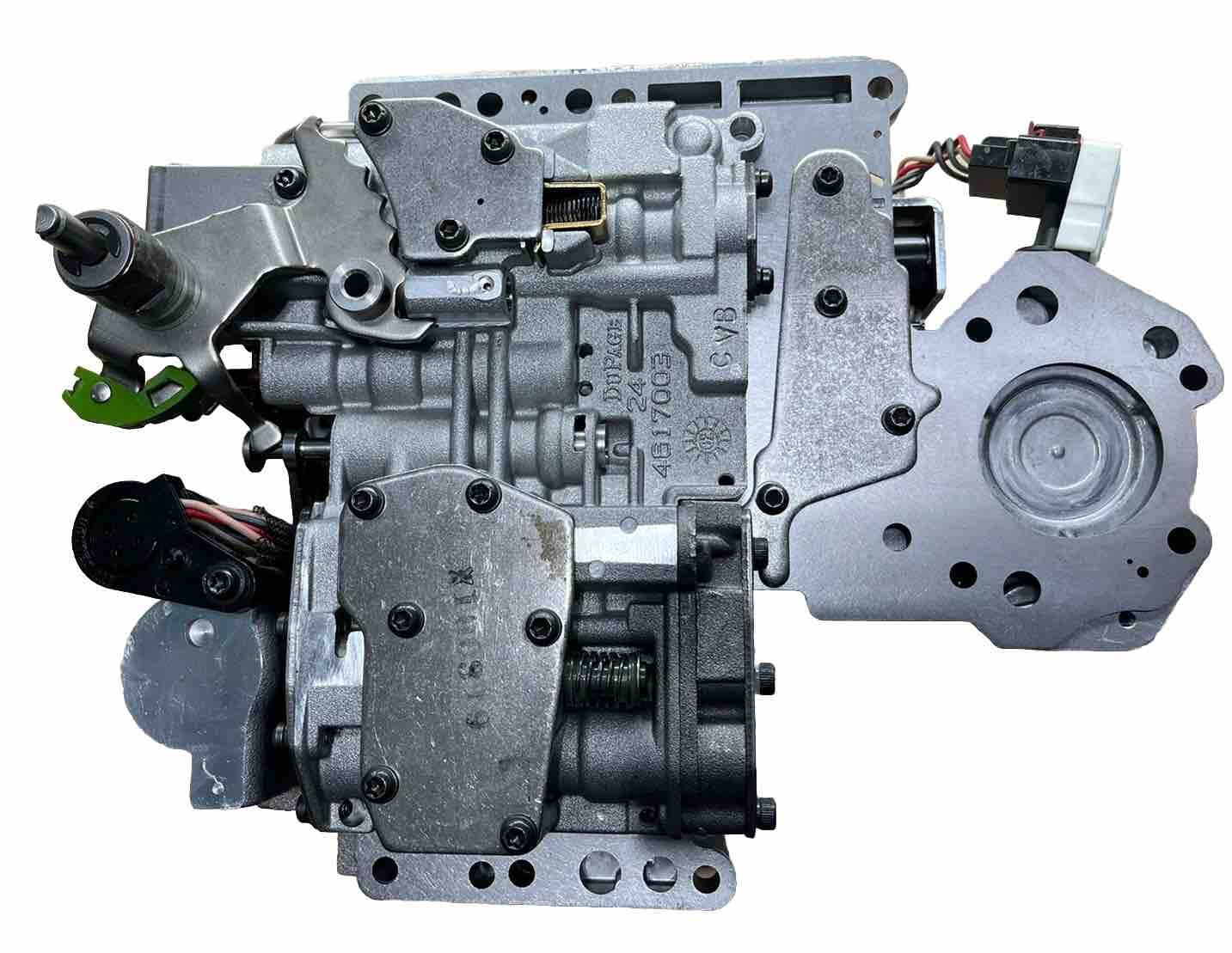
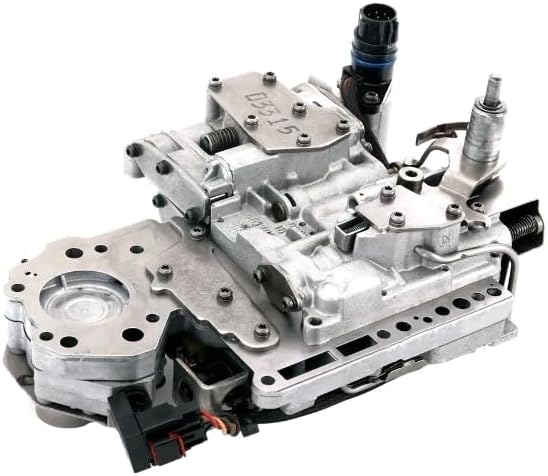
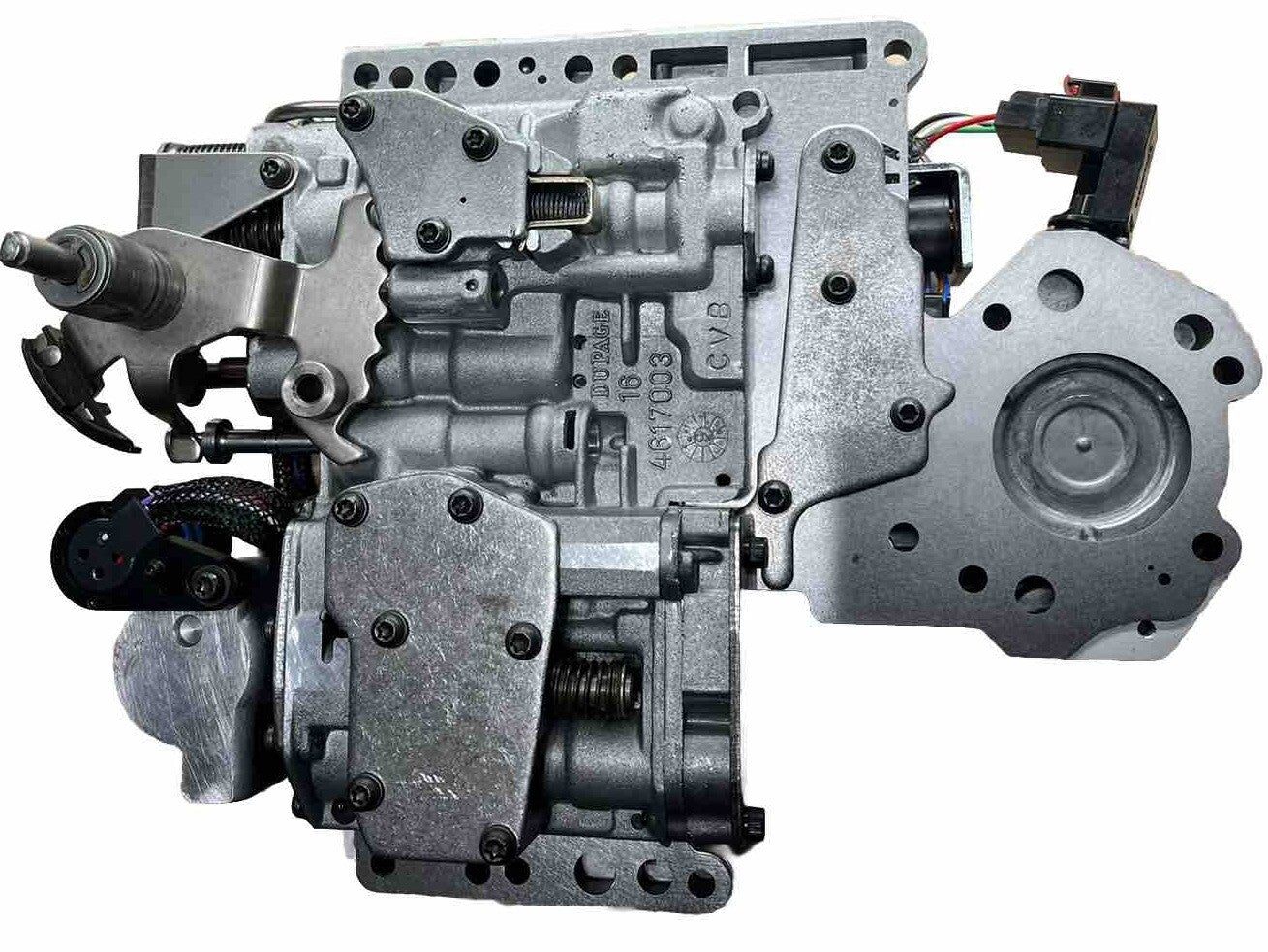
What the 46RE Valve Body Actually Controls
Unlike the older, fully hydraulic 46RH, the 46RE uses an electronic governor. In place of the old flyweight governor, a governor pressure solenoid and a governor pressure sensor (transducer) mount to the valve body, and the powertrain control module uses them to decide shift points. Everything else about the valve body is classic Chrysler RE: a manual valve, the throttle (kickdown) valve, the 1-2 and 2-3 shift valves, the pressure regulator valve, the switch/lockup valves, and a stack of checkballs sitting on a separator plate between the transfer plates.
Two things matter for diagnosis. First, the whole unit depends on clean, sealed oil circuits — Sonnax attributes the common family of 46RE complaints to loss of oil pressure due to worn components in critical oil circuits, in the mainline, converter, and throttle circuits. Second, the 46RE splits its symptoms into hydraulic problems (worn bores, stuck valves, leaking plates) and electronic governor problems (solenoid, sensor, wiring, codes). They can feel identical from the driver's seat, so you test them apart.
Symptoms of a Failing 46RE Valve Body
When the valve body or its governor circuit is the problem, the 46RE tends to show a recognizable set of complaints. Rarely do you get just one:
- Delayed engagement into Drive or Reverse after selecting a gear — often the first sign, and frequently paired with a burnt Forward clutch.
- A soft, late, oversensitive, or long-slide 2-3 shift, one of the signature Sonnax-documented 46RE valve body complaints.
- Reverse slip, or reverse that engages late or bangs in.
- Erratic, harsh, or wrong shift points — the classic electronic-governor complaint when the solenoid or pressure sensor is out of spec.
- Poor line pressure control, pressure-regulator valve buzz, and soft torque-converter-clutch apply with converter overheating from build-up of release pressure during lockup.
- A stored governor pressure code (P1757, P1762, P1763, P1764) or a torque-converter/solenoid code, sometimes with the transmission dropping into limp.
Delayed engagement, a burnt Forward clutch, and a soft 2-3 point straight at hydraulic wear. Erratic shift timing with a governor code points at the electronic side. When you see both at once, the valve body needs work and the governor circuit needs testing.
The Real Causes Behind Those Symptoms
Four causes account for the large majority of 46RE valve body complaints. They overlap, which is why guessing is expensive.
1. Worn valve bores and lost circuit pressure (hydraulic)
This is the root cause Sonnax names most often: loss of oil pressure due to worn components in critical oil circuits. High miles wear the bores that the pressure regulator, switch, and shift valves ride in, so the valves no longer seal. Pressure bleeds off through the mainline, converter, and throttle circuits, and the result is delayed engagement, a soft 2-3, reverse slip, PR valve buzz, and soft TCC apply. This is what Sonnax Zip Kit and Sure Cure hardware is built to correct — resealing and re-sizing those circuits rather than replacing the casting.
2. A stuck throttle (kickdown) valve or shift valve
The throttle/kickdown valve and the 1-2 and 2-3 shift valves can stick in their bores from varnish, debris, or wear. A stuck throttle valve throws off shift timing and line pressure; a stuck shift valve produces harsh, missed, or hunting shifts. Sonnax also documents kickdown band strut breakage among the chronic issues these units develop.
3. Separator plate and checkball problems
The separator plate and its checkballs meter and seal the circuits between the transfer plates. A worn, wrong, or damaged plate — or a missing, misplaced, or worn checkball — changes shift feel and can leak apply pressure. Matching the correct plate and valve body ID to the unit matters here, which is why Sonnax publishes a dedicated 42RE/46RE/47RE valve body identification reference. If the old plate is cupped, eroded at a port, or simply the wrong casting, new plates with OE port sizes and configurations are available — Transmission Digest lists separator plate #22747-6B as covering the 42RE/RH, 44RE/RH, 46RE/RH and 47RE/RH family, with #22747-27 for the 48RE.
4. The electronic governor circuit (solenoid and sensor)
The governor pressure solenoid and governor pressure sensor bolt to the valve body and are among the most common 46RE failures. A failed solenoid or a drifting sensor gives you erratic shift points, no upshift, harsh shifts, or governor pressure codes — and it will not be fixed by any amount of valve-body machining. Because these parts live on the valve body, they are easy to confuse with a hydraulic fault until you read the data.
Before you condemn either part, prove the solenoid is actually getting power. Jon Glatstein laid out the 46RE/47RE relay circuit in Transmission Digest: the transmission-control relay is what feeds battery power to the solenoids, the PCM switches the relay coil's ground, and the coil's power side comes off an undocumented “engine running” bus that the PCM energizes at pin 25 of connector 3, the same generator source wire that feeds the generator field and the evap leak-detection pump. A fault on that circuit takes the solenoids offline with a valve body that is mechanically perfect, and it will lead you straight into an unnecessary teardown.
How to Test Your 46RE Valve Body
Test in this order. It moves from the cheapest, non-invasive checks to a full bench inspection, and it separates the hydraulic causes from the electronic governor causes so you do not replace the wrong thing.
- Scan for codes and read live data first. Pull any stored codes and note governor-specific ones (P1757 governor pressure above request, P1762–P1764 governor sensor voltage). With a scan tool, watch commanded vs. actual governor pressure while driving. If actual pressure will not track the command, suspect the governor solenoid, sensor, or its wiring — not the hydraulic valves.
- Check the fluid and level. Confirm the correct ATF and a correct hot level. Dark, burnt fluid with debris points to burnt frictions (Forward clutch, kickdown band) and mechanical wear; clean fluid with a shift complaint leans toward a hydraulic or governor-electronic cause.
- Test line and governor pressure at the taps. Install gauges at the line-pressure port and the governor-pressure port. Compare readings against the service spec across the throttle and speed range. Low or unstable line pressure indicts a worn PR valve bore or leaking mainline circuit. Zero or erratic governor pressure at the port with a good electrical signal points to a stuck governor plug or valve in the valve body; a bad electrical signal points back to the solenoid/sensor.
- Drop the pan and inspect. Look for clutch material and metal in the pan and on the magnet, and confirm the solenoid and sensor connectors are clean and tight. Contaminated fluid changes the plan for everything downstream.
- Remove the valve body and check every valve for free movement. With the valve body off, work each valve — pressure regulator, switch, throttle/kickdown, 1-2 and 2-3 shift, and lockup valves — in its bore by hand. Every one should slide and return freely under light spring force. Any valve that hangs, drags, or has to be forced is a stuck valve and a confirmed cause. While the valve body is on the bench, check it for warpage too — ATRA's GEARS documents an aged RE-series valve body warped enough to cross-leak, and the fix is flat sanding on a sheet of glass with 220 wet/dry paper and soapy water to restore the hydraulic integrity of the casting.
- Check the bores for wear. Feel for side-to-side slop where the valves ride. A vacuum test on the critical bores (the Sonnax vacuum-test method for these units) will quantify a leaking bore that a hand check misses. Excessive leakdown confirms the worn-circuit cause and tells you a Zip Kit / Sure Cure repair or a reman valve body is warranted.
- Inspect the separator plate and checkballs. Verify the plate is the correct one for the unit, is not worn through at the orifices, and that every checkball is present, correct, and seating. Cross-check the casting against the Sonnax valve body identification chart so you know you are working on the right layout.
- Bench-test the governor solenoid and sensor. Check the solenoid's resistance and the sensor's output against spec. Out-of-range values here confirm an electronic-governor fault independent of anything hydraulic, and it is a fraction of the cost of a full valve body.
Work that sequence and the 46RE stops being a guessing game. Most units reveal either a clear hydraulic pattern (worn bores, low pressure, delayed engagement) or a clear electronic-governor pattern (bad commanded-vs-actual pressure, a governor code) — and a fair number show both, which is fine as long as you have tested them apart.
Doing the job? Our line pressure testing walkthrough and governor pressure solenoid guide cover two of the tests above in detail, and the 46RE/47RE/48RE service guide and 46RE rebuild wear points cover the rest of the unit.
Repair or Replace: The 46RE Valve Body Decision
Once you know the cause, the fix follows the test:
- A single stuck valve or a leaking checkball circuit can often be corrected with a targeted repair — free up the valve, correct the checkball, and reseal the circuit.
- Broad bore wear across several circuits (low line pressure, multiple soft shifts, PR buzz) is the case for a remanufactured valve body with corrected, re-sized bores. Trying to salvage a heavily worn casting one valve at a time rarely pays.
- An electronic-governor fault is a solenoid and/or sensor replacement, not a valve body job at all — which is exactly why testing them apart saves money.
Remanufactured 46RE Valve Bodies
When the bores are worn across the board, a reman valve body with corrected circuits is the reliable fix. We stock remanufactured 46RE valve bodies with the correct casting/sensor generation, plus governor pressure solenoids and sensors, separator plates, shift kits, and the ATF and tools to do the job — shipped fast from the USA.
Shop 46RE valve bodies & parts →Sources
- Sonnax — Chrysler 42-44-46-47RH/RE, 48RE Valve Body Layout: the reference diagram identifying the 46RE valve body's valves, plugs, and separator-plate circuits and the wear points that affect apply pressure. sonnax.com/tech_resources/586
- Sonnax — Chrysler 46RE Transmission (unit overview), on delayed engagement, burnt Forward clutch, converter overheating, low cooler flow, and the valve body identification generations. sonnax.com/units/400-46re
- Sonnax — Chrysler 42RE, 46RE, 47RE Valve Body Identification, for matching the correct casting and separator plate to the unit. sonnax.com/tech_resources/253
- Sonnax — Zip Kit 46-47RHE-ZIP, on 2-3 late/oversensitive shifts and loss of oil pressure through worn components in the mainline, converter, and throttle circuits. sonnax.com/parts/4439-zip-kit
- Sonnax — The Sure Cure Kit SC-46-47RHE-OS, on poor line pressure control, PR valve buzz, reverse slip, soft TCC apply, kickdown band strut breakage, and the oversized valves used to address worn bores. sonnax.com/parts/4466-the-sure-cure-kit
- ATRA / GEARS Magazine — “A Dead Stop! A Typical Dodge 47RE Problem With an Unexpected Solution”: the diagnostic elimination sequence across cooler flow, electrical circuits, valve body, pump and converter; the note that the 46RE/47RE family uses a governor pressure solenoid rather than a line pressure control solenoid, so unplugging the transmission does not drive line pressure to maximum the way it does on an EPC system; the valve body warpage found from age; and the flat-sanding repair on glass with 220 wet/dry paper and soapy water to restore hydraulic integrity. gearsmagazine.com
- Transmission Digest — Jon Glatstein, “46RE/47RE: Power Circuit for Transmission-Control-Relay Coil” (November 1, 2004): the transmission-control relay supplies battery power to the solenoids when its coil is energized; the PCM controls the relay by switching the coil ground; and the coil’s power side is fed from an undocumented “engine running” bus energized by the PCM at pin 25 of connector 3, the generator source wire shared with the generator field winding and the evap leak-detection pump. transmissiondigest.com
- Transmission Digest — “Sonnax introduces separator plates for Chrysler transmissions” (August 1, 2022): new separator plates with OE port sizes and configurations for the Chrysler RE and RH series, part #22747-6B covering 42RE/RH, 44RE/RH, 46RE/RH and 47RE/RH and #22747-27 covering the 48RE. transmissiondigest.com