A 46RE with no fourth gear, no lockup, or a shift schedule that has gone stupid gets written up as "bad solenoid." Sometimes it is. But the 46RE has no solenoid pack in the ordinary sense, and lumping all three of its solenoids together as "shift solenoids" hides what you need to know: they sit in two different places, they are controlled two different ways, and each fails with its own signature. Sort out which one you are chasing and the diagnosis takes twenty minutes. Skip that and you buy parts.
Everything below applies to the 46RE and its close relatives, the 47RE and 42/44RE, from the 1995 electronic-governor units through the end of the run. Where a spec is year-sensitive, it is called out.
The short version: The governor pressure solenoid controls the 1-2 and 2-3 shift points and lives in the governor body under the transfer plate. The overdrive solenoid does one job — the 3-4 shift — and is part of the internal harness and case connector assembly, along with the TCC solenoid. Per ATSG the OD and TCC solenoids should read 25 to 40 ohms. Before you condemn any of them, confirm the transmission control relay is actually powered, and confirm the cooler circuit is not restricted.
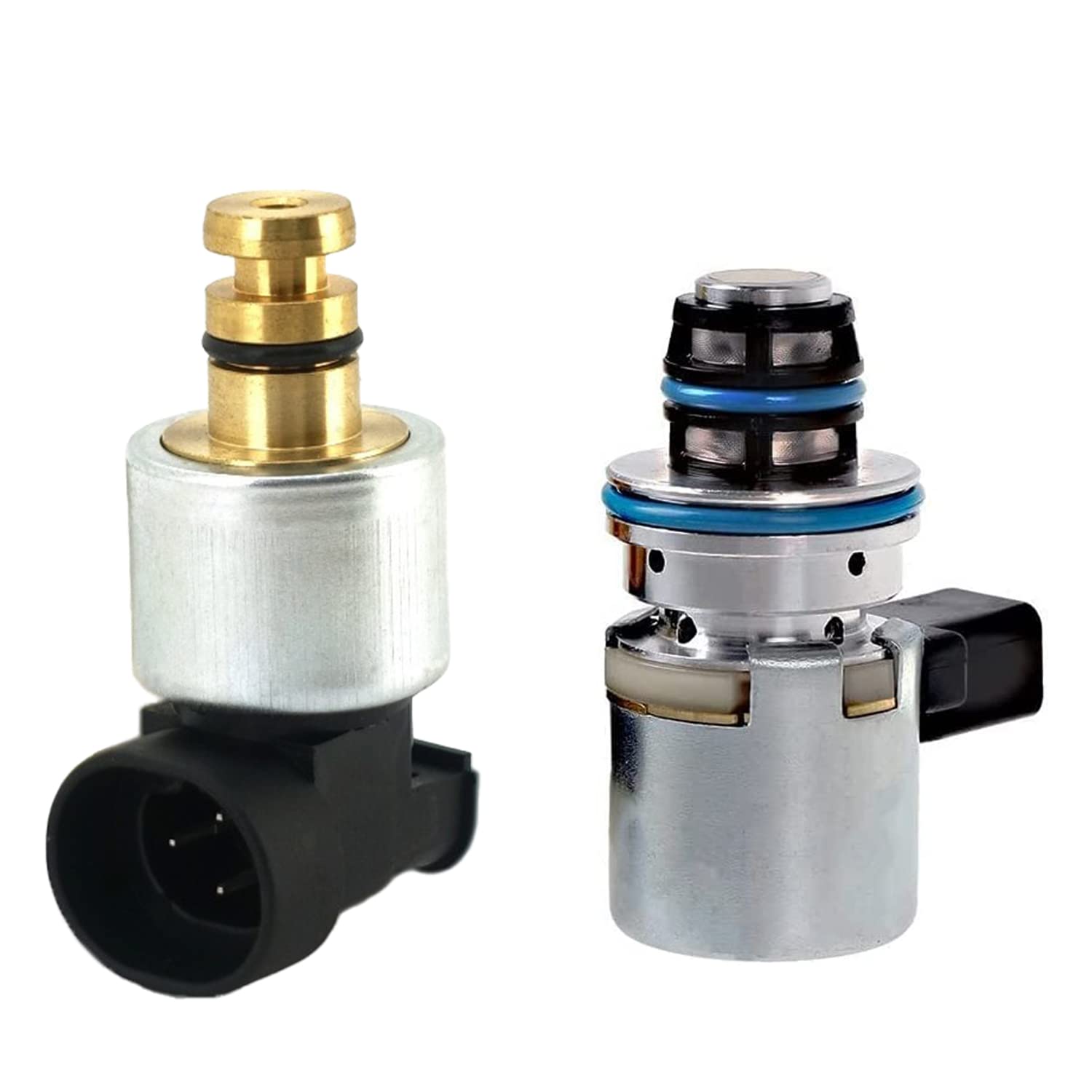
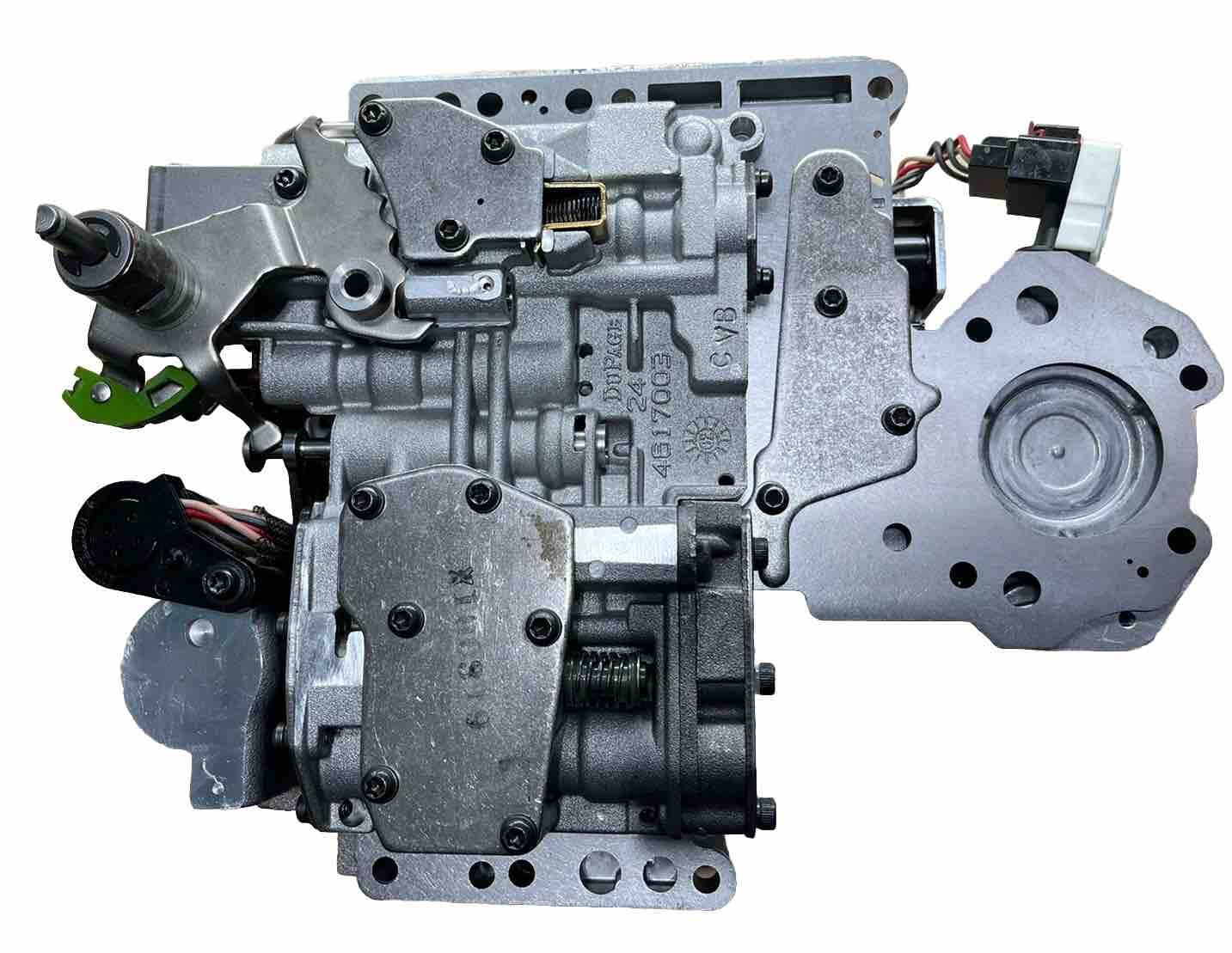
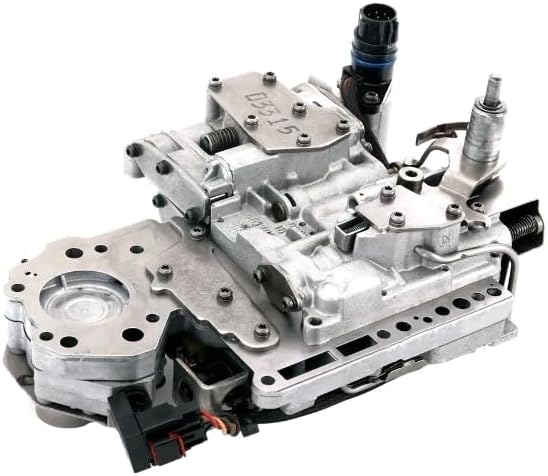
Three Solenoids, Two Locations, Three Jobs
The 46RE is an A518 with the mechanical governor deleted and an electronic one grafted in. That is the whole reason its solenoid layout looks odd next to a 4L60E.
The governor pressure solenoid is mounted in the governor pressure body, which bolts to the underside of the transfer plate. It is a duty-cycle solenoid controlling upshifts and downshifts for first, second and third gear only. Its inlet sees normal line pressure in any forward range; its outlet feeds the governor circuit in the valve body. Average current sets the pressure, and the relationship is inverted: roughly one amp produces 0 psi, zero amps produces maximum governor pressure. Transmission Digest describes the same thing from the control side — to hold 0 psi at 0 mph the PCM keeps the solenoid fully energized, then progressively turns it off as road speed rises. By fourth gear with the converter clutch commanded on, it is off entirely.
The overdrive solenoid does exactly one thing: engage the 3-4 shift. It is not a duty-cycle device and it has nothing to do with the 1-2 or 2-3 shift.
The TCC solenoid applies the converter clutch. It and the overdrive solenoid are an integral part of the internal wiring harness and case connector assembly — you do not replace one solenoid, you replace that assembly.
The case connector terminals are worth memorizing because every electrical test below runs through them. The transmission control relay supplies 12V to terminal 1, which powers the governor pressure solenoid; the control module switches the ground for that solenoid on terminal 5. The module puts out 5V reference on terminal 2 for the governor pressure sensor and reads the sensor signal back on terminal 4.
Check the Relay Before Anything Else
This is the single most common false start on a 46RE, and it costs shops real money. On 46RE and 47RE units — and some 42/44RE units after 1996 — the coil of the transmission control relay is not fed from the accessory bus or the ignition bus. Jon Glatstein documented the circuit in Transmission Digest: relay coil power comes off the PCM's generator source output at pin 25 of connector 3, which the PCM only energizes when the engine is running. It reaches the relay's pin 86 through splice 116, and the PCM controls the coil's ground at pin 30 of connector 2.
The practical consequence: key on, engine off, there is no power at the relay and none at the solenoids. That is normal. Start the engine before you write up an open-solenoid diagnosis. The same bus feeds the EVAP leak detection pump, so if the charging system, the EVAP system and the transmission all act up at once, that shared "engine running" bus is your common element, not three separate failures.
Symptoms, Decoded
| What the truck does | What it points at |
|---|---|
| Shifts 1-2 and 2-3 far too early or far too late; wrong-gear starts | Governor pressure solenoid or sensor, or worn 1-2 / 2-3 governor plugs in the valve body |
| Stuck in third gear, no upshift, possible loss of engine power | Third-gear failsafe from a governor pressure sensor code |
| 1-2 and 2-3 are normal, but there is no 4th gear at all | Overdrive solenoid, its circuit, or the OD cancel switch input |
| All gears normal, converter never locks or unlocks erratically | TCC solenoid, switch valve, or cooler / converter restriction |
| Lockup shudder or surge under load after a rebuild | Wrong lockup solenoid installed for the application, or wrong converter |
| Flashing check engine light, 2000-01 Ram, Dakota, Durango or Ram Van | P1740, and there is a known hydraulic cause — see below |
P1740 Is Often a Drilled Orifice, Not a Solenoid
P1740 is the TCC-or-overdrive-solenoid performance code, and it is the one that most often gets a good solenoid thrown at it. Transmission Digest published the real cause for a specific population: some 2000-2001 Dodge Ram Vans, Dakotas, Ram pickups and Durangos with 46RE and 47RE transmissions set P1740 with a flashing check engine light because the reducing-pressure exhaust orifice in the boost valve cover plate is too small, delaying the pressure rise the converter clutch needs on apply. The fix is mechanical: pull the boost valve cover plate and enlarge that orifice to 0.069 inch. Chrysler also released a plate with the orifice already enlarged, part number 04617012. If you have that year range and that code, check the plate before you order a harness assembly.
The White-Versus-Blue Lockup Solenoid Trap
This one produces comebacks that look like converter problems. Two different lockup solenoids are used across these applications, distinguished by connector color:
| Connector | Resistance | PCM control strategy |
|---|---|---|
| White | 0.98 – 1.6 ohms | Two-stage PWM, first stage starting at 66 Hz, second stage increasing to drive converter slip to zero |
| Blue | 13 – 24 ohms | Fixed 50 Hz standard PWM, widening pulse width to drive slip to zero; designed to run cooler and last longer |
They are not interchangeable. Per Transmission Digest, installing the blue-connector (high resistance) solenoid where the white-connector solenoid belongs produces surge, engine speed fluctuation during apply, a bump at the end of engagement, and lockup shudder under load — with codes P0741 (TCC stuck off), P1728 (converter slip) and P1744 (TCC performance) stored. Go the other way, and putting the white-connector low-resistance solenoid into a blue-connector application sets P0743, because the circuit passes more current than the driver expects.
ATSG's general spec for the OD and TCC solenoids in this family is 25 to 40 ohms. That range overlaps neither figure above, which tells you something useful: no single number covers every 46RE. Read both windings at the case connector, compare them against each other, and match the replacement to the part number and connector color that came out. A dead open or dead short is unambiguous; a borderline reading needs the book for that exact year and application, not a number off a forum.
A518 / 46RE / 47RE governor pressure solenoid and sensor kit, 4617210
The solenoid and the sensor work as a pair — the sensor is the feedback the module needs to control the solenoid at all. When one has failed on a high-mileage unit, replacing both together is the normal call, along with the governor body gasket.
View the solenoid and sensor kit →The Governor Pressure Codes and What Sets Them
Any 1996-or-later Dodge or Jeep truck using an RE-series rear-wheel-drive transmission behind a gas engine can set a chronic P1763, "governor pressure sensor volts too high," which drops the transmission into third-gear failsafe and often brings a complaint of lost engine power with it. The threshold is specific: P1763 sets when the PCM sees 4.89 volts or higher on the governor pressure sensor circuit for eight seconds or more. If high line pressure is what drove it there, that voltage corresponds to governor pressure of roughly 90 to 96 psi or higher with the transmission in drive.
Companion codes to watch for: P1762 (governor sensor offset volts or drift too low or too high) and P1757 (governor pressure above 3 psi at 0 mph). And here is the part that saves you: the governor pressure sensor shares a ground circuit with several other sensors, including the battery temperature sensor and the heated oxygen sensors. So a P1492 (battery temperature sensor volts too high) sitting alongside P1763 is a strong hint the problem is the shared ground path, not the transmission.
Transmission Digest is blunt about which shared-ground component is usually at fault: malfunctioning heated oxygen sensors are the most common cause of a compromised ground path for the governor pressure sensor. The test is cheap. Clear the code, unplug both the upstream and downstream O2 sensors, and road test. If the code stays away, plug them back one at a time until it returns, and replace that one. Ten minutes, and it has saved a lot of unnecessary harness assemblies.
To separate a high-line-pressure cause from a wiring cause, use the brake trick. Clear the codes and drive with enough brake applied to keep the brake switch signal active, which blocks converter clutch apply. If P1763 stays away, release the brake and let the TCC engage. If the code sets immediately on apply, line pressure above factory spec is your cause — usually a valve body modification aimed at firming shifts, sometimes a valve body malfunction.
Before You Condemn It: The Cooler Circuit
Sonnax's Bob Warnke puts cooler restriction at the center of the target for 740 and 1740 codes, TCC slip at high torque, delayed engagements, slow converter fill, excessive stall speed and hydraulic noise — by far the most common issue in that group. Restrictions in the drainback fitting, the radiator-mounted or auxiliary cooler, or the lines do not just starve lube. That back pressure acts on the largest diameter of the switch valve, pushing it toward the spring and staging the spools mid-circuit, restricting converter and cooler flow further. It becomes a real problem as head pressure approaches 80 psi or more. Verification is simple: temporarily bypass the cooler circuit and re-test. If the complaint disappears, go find the restriction instead of buying an internal harness.
The switch valve is the other usual suspect on lockup complaints. ATRA's position is that past about 100,000 miles all bets are off on that valve — bore wear is common and the spring end can be worn or mushroomed. Symptoms: overheated converter, TCC applying at idle, lugging or stalling the engine, TCC slip or no apply. None of it is fixed by a solenoid.
1995 Trucks: Flash the Codes Without a Scan Tool
1995 models used a dedicated Transmission Control Module rather than the later PCM-integrated setup, and you can pull codes out of it with nothing but the overdrive-off lamp. Cycle the ignition on and off three times, leave the overdrive OFF switch in the ON position, then count the flashes on the overdrive-off indicator. Code 55 marks the end of the sequence. The ones relevant here are 14 (governor pressure sensor input), 21 (governor pressure solenoid output), 22 (overdrive solenoid output), 23 (converter clutch solenoid output) and 26 (governor pressure sensor offset drift).
Replacement: What Interchanges and What Does Not
The internal harness is model sensitive, and the reason is the governor pressure sensor. ATSG documents four design levels: 1st (1995 only, sensor with no fluid temperature sensor), 2nd (early 1996 only), 3rd (late 1996 to early 2000) and 4th (late 2000 and later). Third-design parts retro-fit back onto earlier models but require the upgraded internal harness and solenoid assembly, part number 52118500. The 4th design does not retro-fit — third-design parts go in third-design vehicles and fourth in fourth, and they will not interchange. Some 2000 models were built with third-design parts, so verify by connector, not model year.
If you are also replacing the valve body, Sonnax splits its remanufactured units on two variables: pressure sensor generation and pump inlet size. The early sensor has an oval electrical connector; the late sensor is plastic and rectangular. That gives four 46/47RE numbers — CHR129 ('99-earlier, early sensor, small inlet), CHR130 ('99-earlier, early sensor, large inlet), CHR131 ('00-later, late sensor, small inlet) and CHR132 ('00-later, late sensor, large inlet). Check the connector shape and the inlet before ordering.
One more thing on reassembly. The transfer plate channels line pressure to the governor solenoid through the governor body, and channels governor pressure back to the shift valves. Any warp in the governor body creates a cross leak in exactly the circuit you were trying to fix. Check it on a flat surface before you bolt it back down.
The Order of Operations
Run it in this order and you will not waste a harness assembly.
- Start the engine, then check for solenoid supply voltage. No power with key-on-engine-off is normal on this unit.
- Pull codes and read them as a set. A P1492 next to a P1763 changes the whole diagnosis.
- Measure both solenoid windings at the case connector and compare them against each other and against the correct spec for that connector type.
- Watch governor pressure sensor voltage on the scan tool at 0 mph. It should sit near the bottom of its range, not near 4.89V.
- Test the shared ground path with the O2-sensor unplug road test before condemning the sensor.
- Bypass the cooler if you have any TCC or 740/1740 complaint.
- Only then pull the pan and go inside.
The 46RE takes ATF+4, Chrysler material standard MS-9602. Pull the refill quantity from the factory service manual for that specific truck — it changes with whether the converter and cooler were drained — and set the level hot, engine idling, in Park, on level ground.
Need parts for this job? Governor pressure solenoid and sensor kits, internal harness and solenoid assemblies, valve body repair parts, pans, filters and master rebuild kits for the 46RE are all in one place. Shop 46RE parts →
Related reading: 46RE known wear points and upgrades covers what to inspect once the unit is apart, 48RE governor pressure solenoid symptoms walks the same circuit on the later heavy-duty unit, and the 46RE / 47RE / 48RE family guide sorts out applications and differences across the family.
Sources
- Transmission Digest — "46RE/47RE: Power Circuit for Transmission-Control-Relay Coil," Jon Glatstein, November 2004. Backs the transmission control relay coil being fed from the PCM generator source at connector 3 pin 25 only when the engine is running, the routing through splice 116 to relay pin 86, the coil ground control at connector 2 pin 30, the shared EVAP leak detection pump on the same bus, and the resulting key-on-engine-off no-power condition being normal. transmissiondigest.com/46re-47re-power-circuit-for-transmission-control-relay-coil
- Transmission Digest — Transmission Tech/Talk, January 2005 issue. Backs the P1740 population (2000-01 Dodge Ram Vans, Dakotas, Ram pickups and Durangos with 46RE/47RE), the reducing-pressure exhaust orifice cause, the 0.069 inch orifice size, Chrysler boost valve cover plate part number 04617012, the white-connector lockup solenoid at 0.98–1.6 ohms versus the blue-connector solenoid at 13–24 ohms, the two-stage 66 Hz versus fixed 50 Hz PWM strategies, the non-interchangeability of the two, and the P0741 / P1728 / P1744 / P0743 code sets each mismatch produces. transmissiondigest.com/january-2005-issue
- Transmission Digest — Transmission Tech/Talk, March 2006 issue. Backs the chronic P1763 condition on 1996-and-later RE-series units behind gas engines, third-gear failsafe and loss-of-power complaint, the 4.89 volts for eight seconds threshold, the 90–96 psi governor pressure correlation, the shared ground path with the battery temperature sensor and heated oxygen sensors, P1492 / P1762 / P1757 as companion codes, heated oxygen sensors being the most common cause, the O2-unplug road test, the brake-applied test to isolate high line pressure, and the inverse operation of the governor pressure solenoid. transmissiondigest.com/march-2006-issue
- Sonnax — "46-47RH/RE Cooler and Converter Flow," Bob Warnke. Backs cooler restriction being by far the most common cause of 740/1740 codes, TCC slip at high torque, delayed engagements, slow converter fill, excessive stall speed and hydraulic noise; the drainback fitting, radiator and auxiliary coolers and lines as restriction points; the effect on the largest switch valve diameter and mid-circuit spool staging; the 80 psi head pressure threshold; and the cooler-bypass verification test. sonnax.com/tech_resources/199-46-47rh-re-cooler-and-converter-flow
- Sonnax — "Chrysler 42RE, 46RE, 47RE Valve Body Identification." Backs the requirement to identify pressure sensor type and pump inlet size before ordering, the early sensor's oval electrical connector versus the late sensor's rectangular plastic connector, and the CHR129 / CHR130 / CHR131 / CHR132 46-47RE part number split by year, sensor generation and inlet size. sonnax.com/tech_resources/253-chrysler-42re-46re-47re-valve-body-identification
- ATRA / GEARS Magazine — "Bringing it Back to Life: A Logical Approach to the RE Valve Body," Keith Clark. Backs the switch valve as the valve directly connected to lockup apply and release complaints, the past-100,000-miles position on that valve, bore wear and the worn or mushroomed spring end, and the symptom set of overheated converter, TCC applying at idle, lugging or stalling the engine, and TCC slip or no apply. gearsmagazine.com/magazine/bringing-it-back-to-life-a-logical-approach-to-the-re-valve-body
- ATSG — 46RE, 47RE, 48RE Technical Service Information, Automatic Transmission Service Group, 2011 (print manual; no public URL). Backs the 25 to 40 ohm resistance spec for the TCC and OD solenoids, the OD solenoid being used only for the 3-4 shift, the governor pressure solenoid as a duty-cycle device for 1st through 3rd gear mounted in the governor body under the transfer plate, the one-amp-equals-0-psi and zero-amps-equals-maximum current relationship, case connector terminals 1, 2, 4 and 5, the four governor pressure curves, the four governor pressure sensor design levels with their year ranges, harness assembly part number 52118500, the non-interchangeability of 3rd and 4th design parts, and the 1995 TCM flash-code procedure with codes 14, 21, 22, 23, 26 and 55.