A 47RE that will not go into overdrive runs 1-2-3 and then holds third all the way down the highway. This is the heavy-duty four-speed Chrysler put behind the 5.9L Cummins and 8.0L V10 in 1996-2002 Ram 2500 and 3500 trucks, and "no overdrive" is one of the most common complaints on it.
The good news is that most of them are not broken inside. On this transmission the first three gears are shifted hydraulically by governor pressure, but the 3-4 shift is purely electrical: the computer has to energize one solenoid, and it has a list of reasons to refuse. Work that list before you pull the pan. The procedures and specs below come from Chrysler's 1998 and 2001 Dodge Ram Truck service manuals, ATRA's GEARS magazine, ATSG and Sonnax. Sources are listed at the end.
How the 47RE Gets Into Fourth
ATSG's RE-family manual lays out the split. First through third come from the clutches, bands and planetary sets in the main case, and the shifts between them are controlled by the electronic governor solenoid. Fourth gear comes from a separate overdrive unit bolted to the back of the case, with its own overdrive clutch, overdrive/direct clutch, overrunning roller clutch and planetary gearset. The shift into fourth and the converter clutch each have their own solenoid on the valve body.
Chrysler's clutch and band chart shows how that overdrive unit works. The overdrive clutch is applied in fourth gear only. The direct clutch and the overdrive overrunning clutch are applied in every other range. So the overdrive unit carries torque in every gear, and in fourth it has to swap from the direct clutch to the overdrive clutch.
Sonnax adds one hydraulic detail worth knowing. On the 46/47RE, when the overdrive apply circuit (or converter clutch apply in third) is charged, oil moves a boost valve beside the pressure regulator and raises line pressure roughly 10-15 psi, to give the overdrive clutch and converter clutch more clamping force. If that boost does not happen, the overdrive clutch lives on marginal pressure.
That boost has a known weak spot on 2000-2001 trucks. Per the January 2005 Transmission Digest TECH/TALK bulletin, some 2000-01 Ram, Dakota, Durango and Ram Van 46RE/47RE applications flash the check engine light with P1740, a TCC or overdrive solenoid performance fault, because a reducing-pressure exhaust orifice in the boost valve cover plate is too small and delays the pressure rise. The bulletin's fix is to enlarge that orifice to 0.069 inch or install Chrysler's revised cover plate, part number 04617012. Sonnax's 4-spool switch valve instructions put the boost at TCC apply and the 3-4 shift at 8-10 psi with no throttle influence, and tell you to make sure the boost valve cover is flat and does not leak and that its auxiliary tube is tight.
That gives you two halves to diagnose. Either the PCM is not commanding fourth, or it is commanding fourth and the overdrive unit is not holding it. A truck that never tries for fourth is almost always the first. A truck that shifts into fourth and flares, slips, or falls back to third is the second.
Chrysler's "No 3-4 Upshift" List
The factory diagnosis chart (the same in the 1998 and 2001 Ram manuals) gives fifteen possible causes for no 3-4 upshift, in this order:
- O/D switch in the OFF position
- Overdrive circuit fuse blown
- O/D switch wire shorted, open or cut
- Distance (speed) or coolant sensor malfunction
- TPS malfunction
- Neutral sense to PCM wire shorted or cut
- PCM malfunction
- Overdrive solenoid shorted or open
- Solenoid feed orifice in the valve body blocked
- Overdrive clutch failed
- Hydraulic pressure low
- Valve body valve stuck (3-4 shift valve, 3-4 timing valve)
- Overdrive piston incorrect spacer
- Overdrive piston seal failure
- O/D check valve or orifice failed
The first eight are electrical or input problems you can find with a scan tool, a test light and a meter. Only the last seven need the pan off or the unit out.
Step 1: The Overdrive OFF Switch
On the 47RE the overdrive OFF switch is a momentary button in the end of the shift lever. Per the factory manual, overdrive is allowed at key-on. Press the switch once and the truck enters overdrive OFF mode and the O/D OFF lamp lights. Press it again and normal overdrive returns. The mode resets to ON every time the key is cycled.
The manual is blunt about it: the switch must be in the ON position to energize the solenoid and allow a 3-4 upshift. So if the O/D OFF lamp is lit, press the button before you do anything else. The lamp can also be lit by the control module itself, so a lit lamp is not always the button.
A switch that never toggles the lamp, or a lamp that will not go out, points to the switch or its wire. Chrysler's test for the whole circuit is simple: the overdrive off switch, valve body solenoid, case connector and wiring can all be checked with a 12-volt test lamp or an ohmmeter, and the manual says switch and solenoid continuity should be checked whenever the transmission fails to shift into fourth.
Remember the converter clutch side effect, too. Per the manual, with the O/D switch OFF the converter clutch can still engage in third. A driver who bumped the button will feel lockup in third and think the truck is "in overdrive."
Step 2: What the Computer Needs to See
The PCM will not command fourth unless its inputs make sense. The 2001 manual lists the components of the 47RE governor control system: the governor body, transfer plate, governor pressure solenoid, governor pressure sensor, fluid temperature thermistor, throttle position sensor, transmission speed sensor and the PCM. Most of those also gate the 3-4 shift.
Fluid temperature
The thermistor lives in the governor pressure sensor. Cold fluid holds fourth out on purpose. The 47RE uses a separate governor pressure curve when fluid is at or below -1C (30F), and Chrysler's 48RE manual, which uses the same sensor-mounted thermistor, states the PCM blocks overdrive and converter clutch engagement below about 10C (50F), forces a 4-3 downshift above 126C (260F), and will not allow fourth again until the fluid drops to about 110C (230F). The exact thresholds vary by calibration, but the pattern holds: a healthy 47RE can run in third on a cold morning and drop out of fourth when it is cooking on a long grade.
A bad thermistor causes the same thing on a warm truck. ATRA's GEARS troubleshooting article on the 42-47RE adds a trap: early units used a negative temperature coefficient thermistor, and starting in 1999 some trucks switched to a positive temperature coefficient part. If the scan tool shows fluid starting hot and cooling off as you drive, someone installed the wrong sensor, and the PCM may be holding fourth out because it thinks the fluid is cold. On the gas-engine PCM chart in that article, the temperature signal runs from about 4.5 V down to 1.0 V across its range.
Output speed
The transmission speed sensor sits in the overdrive gear case, reading the park gear lugs on the output shaft, and its signal is shared with the PCM. No output speed means no governor pressure and no 3-4 shift. The "distance sensor" on Chrysler's chart is the speed signal side of this. GEARS gives a spec on the gas PCM of about 3.0 V AC at 30 mph on the signal wire.
TPS, coolant and neutral sense
The TPS is on the list. It tells the PCM throttle position for WOT shift timing, and a bad signal can block or scramble the 3-4 shift. The engine coolant sensor and the neutral sense wire are on the list too, because the PCM uses them to decide whether the truck is warmed up and actually in a drive range.
Step 3: Test the Overdrive Solenoid Circuit
If the switch is ON, the fluid is warm and the inputs are sane, check whether the command is getting to the solenoid. The GEARS 42-47RE article gives the PCM pinout for the gas-engine controller: the overdrive solenoid control is pin B21 (brown wire), and it reads about 0.0 V when the solenoid is ON, because the PCM completes the circuit to ground. The converter clutch control on the same chart is pin B11 (orange/black), also 0.0 V when ON. Diesel trucks use a different controller, so confirm pin locations in the wiring diagram.
Power comes in on case connector pin 1, which GEARS notes feeds the transmission solenoids and should have system voltage whenever the key is on. Lose pin 1 and the whole unit goes into limp mode, which starts in third and never upshifts, so that is a different complaint from a clean 1-2-3 with no fourth.
Practical test: back-probe the overdrive solenoid control wire and drive the truck. You should see battery voltage in first through third, dropping to near zero when fourth is commanded. If the voltage never drops, the PCM is not asking for fourth and you go back to Step 2. If it drops and the truck stays in third, the command is there and the problem is the solenoid, the valve body or the overdrive unit.
With the pan off, check the solenoid assembly and case connector for continuity and shorts with a meter, per the manual. Look hard at the case connector O-ring and pins; a fluid-soaked or corroded connector is a common intermittent. The manual's correction for a shorted or open overdrive solenoid is simply to replace it and repair any loose or damaged wiring.
Step 4: Hydraulic Causes
If the solenoid is being commanded and works, fourth is being refused hydraulically. Chrysler lists a blocked solenoid feed orifice in the valve body, low hydraulic pressure and a stuck 3-4 shift valve or 3-4 timing valve.
The Sonnax 46RE/47RE vacuum test guide lines up with that. It ties worn 3-4 quick fill and 3-4 timing valve bores to a burned overdrive clutch, no fourth, and gear ratio codes. Those bores leak apply oil, so the overdrive clutch fills slowly or never gets full pressure. A vacuum test on the bench finds them quickly; our 47RE valve body testing guide walks through it.
Sonnax's hydraulic write-up also warns that the 46/47RE and 48RE valve bodies look almost identical but are not the same. The pressure regulator boost circuit and the converter clutch solenoid feed are different (the 46/47RE TCC solenoid is fed from the 1-2 shift valve), and swapping one for the other leads to converter clutch or overdrive clutch failure after some miles on the road.
Pressure test the overdrive clutch
Chrysler's Test Six measures pressure at the overdrive clutch port. Put a 300 psi gauge on the overdrive clutch test port, turn the O/D switch on, and drive it on the road or a chassis dyno until the 3-4 shift happens. Spec is 68-72 psi at closed throttle, rising to 90-120 psi at half to three-quarter throttle, and it can reach about 130 psi at full throttle.
No pressure at the port when fourth is commanded means the oil is not getting there: solenoid, feed orifice or valve body. Low pressure that bleeds off points to a leak downstream: the overdrive piston seals or the check ball in the piston retainer.
Step 5: When the Overdrive Unit Itself Has Failed
The manual's road-test logic separates this cleanly. If the transmission slips in fourth but not in third, or during the 3-4 shift, the overdrive clutch is slipping. If the direct clutch fails, the truck loses both reverse and engine braking in manual second, because the direct clutch is applied in those ranges. A truck with no fourth, no reverse and no coast braking has an overdrive unit problem, not an electrical one.
The last three causes on Chrysler's chart are all inside that unit, and the manual's corrections are specific:
- Incorrect overdrive piston spacer: remove the unit, check end play and install the correct spacer.
- Overdrive piston seal failure: replace both seals.
- O/D check valve or orifice failed: check the check ball in the piston retainer for free movement and a secure assembly, and check the bleed orifice.
If the pan shows friction material, or the overdrive clutch plates are burned, the unit needs an overhaul. When it is apart, fix what burned it: the 3-4 quick fill and timing valve bores, a restricted cooler that let the fluid overheat, and the overdrive lube path. Our 47RE common problems guide covers the overdrive lube leak points and the piston retainer fix.
The Fix, by What You Found
- O/D OFF lamp on, switch does not toggle it: test and repair the switch and its wire in the shift lever and column.
- No fourth when cold only: normal. Recheck when the fluid is at operating temperature.
- Drops out of fourth when towing hot: a heat problem, not a solenoid. Check fluid level, cooler flow and converter clutch operation. See our 47RE overheating guide.
- Fluid temperature reads wrong: replace the governor pressure sensor with the correct thermistor type for the truck.
- Solenoid never commanded: chase the input the PCM does not like: speed sensor, TPS, coolant sensor, neutral sense, fuse.
- P1740 on a 2000-2001 truck: check the boost valve cover plate orifice. Transmission Digest's fix is to open it to 0.069 inch or fit Chrysler plate 04617012, then confirm the line rise on a gauge.
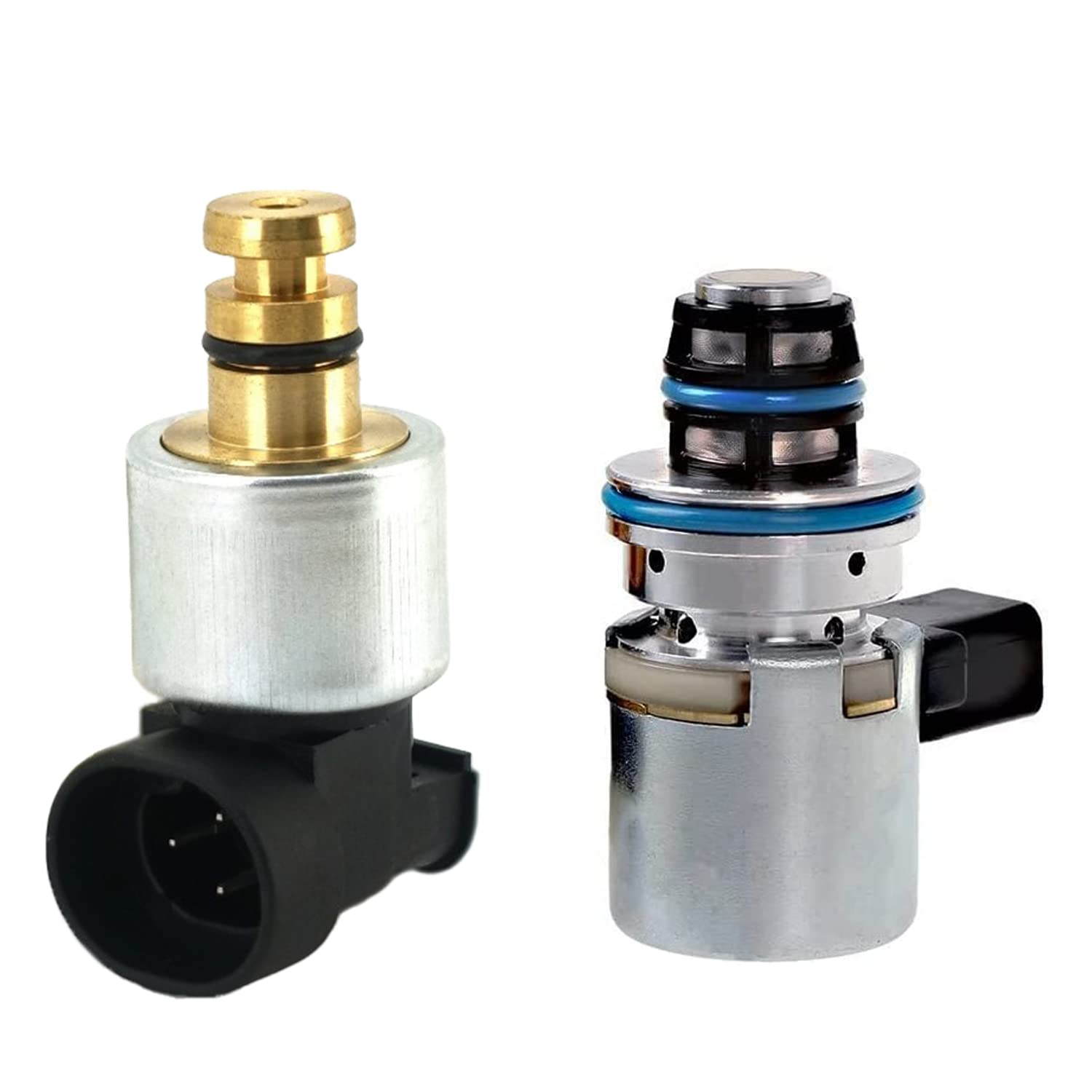
- Commanded, no overdrive pressure: replace the overdrive/TCC solenoid assembly and clean the valve body, including the feed orifice.
- Commanded, low or leaking pressure: valve body bores, overdrive piston seals, check ball.
- Shifts to fourth and slips or flares: overdrive clutch. Rebuild the overdrive unit and correct what caused the burn.
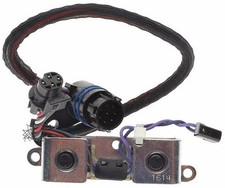
RE-Family Overdrive and Lockup Solenoid Pack, 1996-1999 (OEM 12432A)
The valve body solenoid pack that energizes the 3-4 shift and converter clutch on 1996-1999 RE units, from CoreTransmissionParts. Confirm your model year before ordering; 2000-up trucks use a different connector.
View the solenoid pack →Shop the RE solenoid pack →
Frequently Asked Questions
Why won't my 47RE shift into overdrive?
The most common causes are simple: the O/D OFF button in the shift lever was pressed, the fluid is still cold, or the PCM is missing a good signal from the speed sensor, TPS or fluid temperature thermistor. After that, check the overdrive solenoid circuit and fuse. Only if the solenoid is being commanded and fourth still does not happen do you look at the valve body or the overdrive clutch.
How do I know if my 47RE overdrive solenoid is bad?
Back-probe the overdrive solenoid control wire while driving. It should read battery voltage in first through third and drop to near zero when fourth is commanded. If the voltage drops but there is no fourth and no pressure at the overdrive clutch port, the solenoid or its feed orifice is the likely cause. Chrysler also calls for a continuity check of the solenoid whenever the unit will not shift into fourth.
Does the 47RE lock out overdrive when it is cold?
Yes. The PCM uses the fluid temperature thermistor in the governor pressure sensor to hold overdrive and converter clutch engagement out when the fluid is cold. Chrysler documents the lockout at about 10C (50F) on the related 48RE. A 47RE that stays in third for the first few miles on a cold morning and then shifts normally is working as designed.
What pressure should a 47RE have in overdrive?
Chrysler's Test Six spec at the overdrive clutch port is 68-72 psi at closed throttle, rising to 90-120 psi at half to three-quarter throttle, and it can reach about 130 psi at full throttle. No pressure means the oil is not getting there; pressure that bleeds off points to piston seals or the check ball.
Sources
- Chrysler — 1998 Ram Truck 1500-3500 Service Manual, Group 21, 46/47RE Clutch and Band Application Chart and road test analysis (pp. 21-216 to 21-217). Backs the overdrive clutch applying in fourth only, the direct clutch and overrunning clutch applying in all other ranges, slip during the 3-4 shift or only in fourth meaning the overdrive clutch, direct clutch failure costing Reverse and manual-2 coast braking, and the switch, solenoid or wiring as causes of no fourth. The same analysis appears in the 2001 BR/BE manual (p. 21-658). archive.org — 1998 Ram Truck Service Manual
- Chrysler — 1998 Ram Truck Service Manual, 46/47RE Diagnosis Chart, No 3-4 Upshift and Slips in Overdrive Fourth Gear (pp. 21-230 to 21-231). Backs the fifteen listed causes and corrections, from the O/D switch, fuse, sensors and solenoid through a blocked solenoid feed orifice, stuck 3-4 shift or timing valve, the incorrect overdrive piston spacer (check end play), replacing both piston seals, and checking the O/D check valve and bleed orifice in the piston retainer. The same chart appears in the 2001 manual (p. 21-670). archive.org — 1998 Ram Truck Service Manual
- Chrysler — 1998 Ram Truck Service Manual, 46/47RE Hydraulic Pressure Test Six, Transmission in Overdrive Fourth Gear, and the Pressure Test Analysis Chart. Backs the overdrive clutch pressure test (300 psi gauge on the overdrive clutch port, O/D switch on) and the 68-72 psi closed throttle, 90-120 psi at half to three-quarter throttle and about 130 psi full throttle specs, and low pressure in fourth pointing to the overdrive piston seal or check ball. Same test as the 2001 manual (p. 21-660). archive.org — 1998 Ram Truck Service Manual
- Chrysler — 1998 Ram Truck Service Manual, 46/47RE overdrive OFF switch, electronic governor, speed sensor and converter clutch engagement sections (pp. 21-212 to 21-215). Backs the momentary O/D OFF switch in the shift lever and its key-cycle reset, the switch and solenoid continuity checks with a 12 V test lamp or ohmmeter, the governor control components including the fluid temperature thermistor and TPS, the separate governor curve at or below 1C (30F), the output speed sensor over the park gear in the overdrive case, and TCC apply after the shift to third (about 35 mph, light throttle) with the O/D switch off. archive.org — 1998 Ram Truck Service Manual
- Chrysler — 1998 Ram Truck Service Manual, 46/47RE Transmission Fluid Temperature Thermistor (p. 21-212) and shift valve operation (p. 21-213). Backs the thermistor being part of the governor pressure sensor (about 1000 ohms at room temperature), the roughly 10C (50F) overdrive and TCC lockout, the 126C (260F) 4-3 downshift with third-gear lockup, the 110C (230F) return to fourth, and the 3-4 shift being blocked above 121C (250F) or with battery temperature below -5F. archive.org — 1998 Ram Truck Service Manual
- ATRA GEARS Magazine — 42-47RE troubleshooting (October 2006). Backs the NTC-to-PTC thermistor change starting in 1999, the gas PCM pinout (B21 overdrive solenoid control and B11 TCC control at 0.0 V when on, B1 temperature signal, OSS about 3.0 V AC at 30 mph), and case connector pin 1 feeding the solenoids. atracom (PDF)
- ATSG (Automatic Transmission Service Group) — 46RE, 47RE, 48RE Technical Service Information. Backs fourth gear coming from the rear overdrive unit, governor control of first through third, and separate solenoids for the fourth gear shift and converter clutch. atsg.biz (manual preview PDF)
- Sonnax — Chrysler 46RE, 46RH, 47RE, 47RH Vacuum Test Guide. Backs worn 3-4 quick fill and 3-4 timing valve bores causing a burned overdrive clutch, no fourth and gear ratio codes. sonnax.com
- Sonnax — Jim Dial, "Dodge 48RE Hydraulic Features Revealed." Backs the 46/47RE boost valve raising line pressure about 10-15 psi in fourth or third with TCC on, the 46/47RE TCC solenoid feed from the 1-2 shift valve, and the warning against interchanging 46/47RE and 48RE valve bodies. sonnax.com
- Transmission Digest — TECH/TALK, January 2005 issue. Backs P1740 (TCC or overdrive solenoid performance) on some 2000-01 46RE/47RE applications, the undersized reducing-pressure exhaust orifice in the boost valve cover plate delaying the pressure rise, and the fix of enlarging it to 0.069 in. or installing Chrysler cover plate 04617012. transmissiondigest.com
- Sonnax — 4-Spool Switch Valve 22771A-01 installation instructions (42RE through 48RE, PDF). Backs the 8-10 psi line boost at TCC apply and the 3-4 shift with no TV influence, and the checks that the boost valve cover is flat and leak-free and the auxiliary tube is tight. Sonnax instructions (PDF)
Shop 47RE overdrive/lockup solenoids, governor sensors, valve bodies and rebuild kits — shipped fast from the USA.
Shop 47RE parts →