A 46RE that bangs into gear, slams the 1-2, or thumps on every coast-down is one of the most common complaints on the Dodge Ram 1500/2500, Dakota, Durango and Ram Van trucks that carry this four-speed. The good news is that harsh shifts on a 46RE are rarely a sign the whole transmission is finished. On this unit, shift feel is set by three things you can measure and adjust from outside the case — the throttle valve (TV) cable, line and throttle pressure, and the electronic governor — plus a short list of valve body and accumulator wear points inside. Work them in order and most harsh-shift trucks get fixed without a rebuild.
This is the sequence I use on the bench and on the road, with the factory numbers so you know what "good" looks like.
The short version: On a 46RE, check the TV cable adjustment first — Chrysler calls it "extremely important" because it positions the throttle valve that controls shift speed and quality, and a cable that is too tight delays shifts and makes part-throttle downshifts very sensitive. Next, pressure-test line and governor pressure against the factory spec, then check the governor solenoid/sensor data. Only after those check out do you go after worn throttle-valve and governor-plug bores, a stuck accumulator, or band adjustment.
Why a 46RE Shifts Hard: How Shift Feel Is Controlled
The 46RE is hydraulically controlled with an electronic governor. The PCM does not command shift pressure directly the way a later EPC-controlled unit does. Instead, shift timing and firmness come from a balance of forces on the shift valves inside the valve body:
- Throttle pressure — created by the throttle valve, which is moved mechanically by the TV cable through the kickdown valve. Per the Chrysler service manual, the larger the throttle opening, the higher the throttle pressure (up to line pressure), and throttle pressure is also routed to the pressure regulator to raise line pressure with engine load. More throttle pressure means later, firmer shifts.
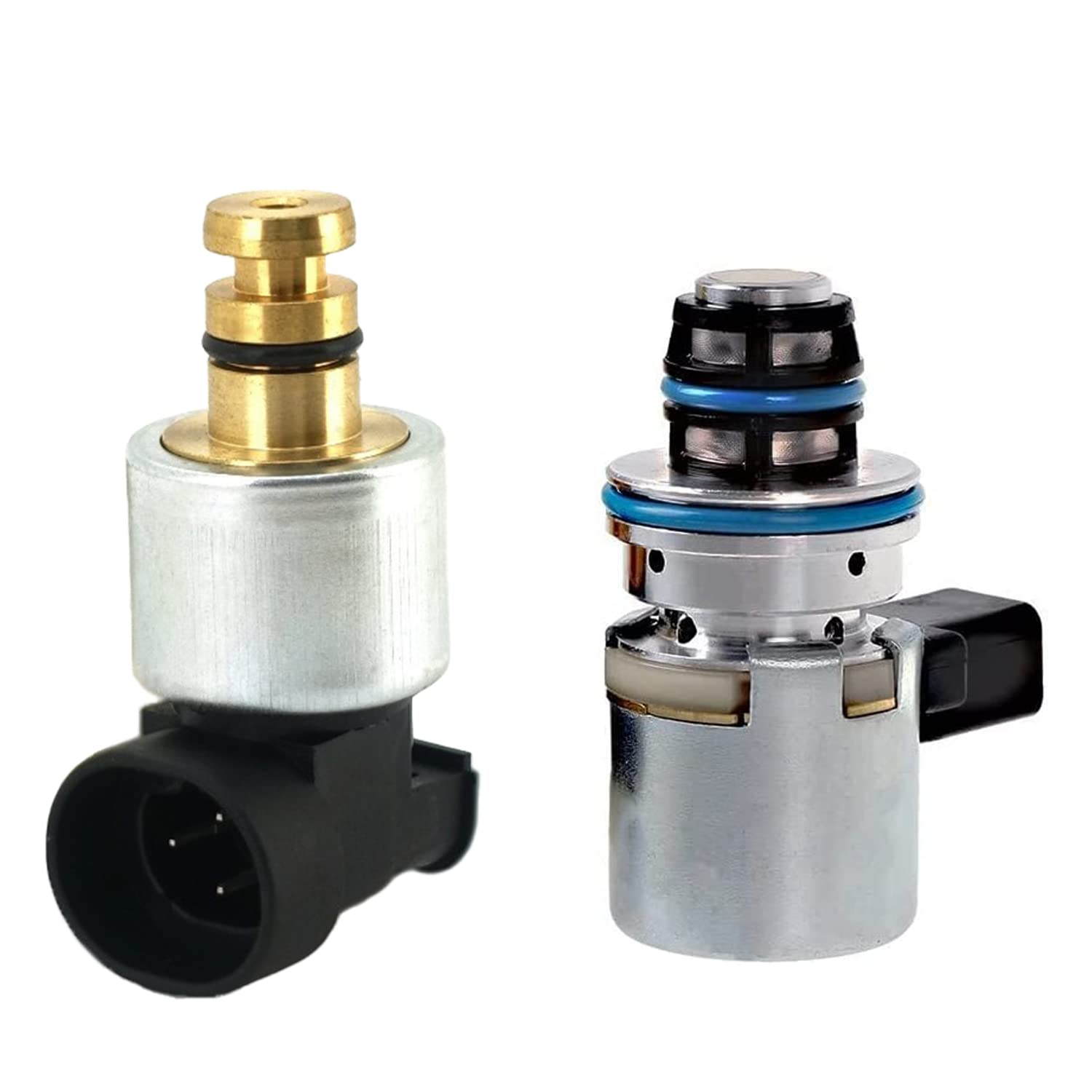
- Governor pressure — created electronically by the governor pressure solenoid and monitored by the governor pressure sensor. Chrysler notes the solenoid regulates line pressure down to governor pressure, with 1 amp producing zero governor pressure and zero amps producing maximum. Governor pressure pushes the shift valves toward the upshift. This PWM solenoid design is what replaced the old hydraulic governor on earlier "RH" transmissions, and TransGo's own repair documentation for it notes that contamination is the usual failure mode, with the sensor's feedback-vs-commanded mismatch being what actually drops the unit into limp-in.
- Line pressure — set by the pressure regulator valve and its adjusting screw. Every clutch and band apply is fed by it.
- Accumulators and servos — which cushion how fast a band or clutch applies. When they stick or lose their spring, the cushion disappears and the shift turns into a bang.
Because throttle pressure and line pressure are tied together, a single misadjusted cable can make every shift late and hard. That is why it gets checked first.
Harsh Shift Symptoms and What They Point To
| Symptom | Most likely cause to check first |
|---|---|
| All upshifts late and firm, sensitive part-throttle downshifts | TV cable too tight, or high throttle/line pressure adjustment |
| Hard, erratic shifts with governor codes (P1757, P1762–P1764) | Governor pressure solenoid, sensor, or circuit |
| Harsh shifts only when cold, fine once warm | Cold-fluid governor curve not being applied (sump temperature input), or fluid condition |
| Hard 1-2 bang, other shifts OK | Stuck case (intermediate) accumulator piston, broken spring, or front band / servo issue |
| Clunk into Drive or Reverse from Park | High idle, high line pressure, rear band adjustment, or worn engine/transmission mounts |
| Hard, abrupt downshift to low while rolling | Sticking 1-2 shift valve or governor plug in the valve body |
| Shift timing you cannot dial in with the cable | Worn throttle valve bore and 1-2/2-3 governor plug bores leaking throttle oil |
Step 1: Check and Adjust the TV Cable
The Chrysler 46RE service manual is blunt about this: throttle valve cable adjustment is important to proper operation (1998 Ram manual, p. 21-215). It positions the throttle valve, which controls shift speed, quality, and part-throttle downshift sensitivity. If the setting is too loose, you get early shifts and slippage between shifts. If it is too tight, shifts are delayed and part-throttle downshifts become very sensitive — which the driver feels as a late, hard shift and a truck that drops a gear at the slightest pedal.
The factory adjustment, condensed:
- Ignition off. Remove the air cleaner if needed and slide the cable end off the throttle bellcrank stud without prying.
- Confirm the transmission throttle lever is fully closed and the throttle body lever is at curb idle.
- Pry the TV cable lock up to unlock the adjuster.
- Apply just enough tension to take out the slack. Pulling too hard moves the transmission TV lever off its idle position and gives a wrong setting.
- Slide the cable sheath until the cable end and the bellcrank stud centerlines line up within 1 mm, then push the lock down.
- Reconnect and verify the transmission throttle lever and the throttle body lever move simultaneously through their travel.
Chrysler also warns that the cable housing can bind slightly where it enters the spring housing and give a false adjustment, so make sure the housing moves smoothly as you center it. On trucks that have been lifted, had an engine swap, or had a throttle body replaced, a kinked or rerouted cable is a common reason a correct-looking adjustment still shifts hard.
Step 2: Pressure-Test Line and Governor Pressure
If the cable is right and the truck still shifts hard, put gauges on it. The spec table in the 2001 Ram (BR/BE) service manual gives these 46RE values:
| Test | Factory spec |
|---|---|
| Line pressure at accumulator, closed throttle | 54–60 psi |
| Front and rear servo | No more than 3 psi lower than line pressure |
| Rear servo, R range | 160 psi at idle, building to 270 psi at 1600 rpm |
| Overdrive clutch, fourth gear only | 68–72 psi closed throttle, 90–130 psi at 1/2 to 3/4 throttle |
| Governor | Responds smoothly to mph; returns to 0–1.5 psi stopped in D, 2 or 1 |
High line pressure across the board is a direct cause of harsh engagements and shifts. Before you blame a part, look for a previous "fix": the line pressure adjusting screw on the valve body changes pressure about 1-2/3 psi per full turn, and turning it counterclockwise raises pressure, per the Chrysler service manual (1998 Ram manual, pp. 21-310 to 21-311). Someone who cranked it in to cure a slip has often built themselves a harsh-shift truck. The throttle pressure adjustment is made separately with gauge tool C-3763 between the throttle lever cam and the kickdown valve stem, with the kickdown valve spring fully compressed.
Do the gauge work on the road, not on the lift. Jeff Parlee of the Sonnax TASC Force, writing in Transmission Digest, points out that a lift can never load the transmission the way the road does, and gives a simple leak rule: if a clutch or band tap reads more than 10% below line pressure, that circuit is leaking. If line pressure is normal right up to the shift and the apply is still harsh, he points to a leak in the applying component or the wrong frictions or fluid, not to the pressure regulator. He also notes that the 42RE through 48RE are among the few units where the scan tool pressure reading comes from a real transducer instead of a PCM command, so governor pressure data on a 46RE is a measurement you can trust.
Late, firm shifts with high pressure after a rebuild or valve body swap? Check the TV parts before the adjusting screw. ATSG's Wayne Colonna, writing in Transmission Digest (May 2024), traces late 1-2 and 2-3 shifts with high TV and line pressure on RH/RE units to a mismatched TV plunger, plunger bushing and spring retainer bracket. He gives the OE idle line pressure spec as 55-65 psi in Drive. The trap is that 2005-up 48RE units use an electric TTVA motor instead of a cable, and their TV parts do not mix with cable-type parts. A TTVA retainer bracket on a cable unit, or a cable-type .677 in. plunger bushing on a TTVA unit, over-compresses the plunger spring. A TTVA .982 in. plunger in a cable unit, or either bushing installed backwards, loses TV balance oil pressure. A 46RE built from a mixed parts bin can be dead-on in cable adjustment and still shift late and hard. The fix is the correct matched OE parts for the cable system.
Governor pressure matters too. Chrysler notes that governor pressure above 1.5 psi at a standstill will prevent the transmission from downshifting, so the truck can come to a stop in a higher gear and then lug or bang as it is forced back down. Our line pressure testing walkthrough covers gauge hookup in detail.
Step 3: Read Governor Solenoid and Sensor Data
With a scan tool, watch governor pressure actual versus desired, throttle position, and transmission temperature on a test drive. Actual governor pressure should track desired closely. If it lags, overshoots, or jumps around, the governor pressure solenoid, the sensor, or their wiring is suspect, and codes such as P1757 or P1762–P1764 usually confirm it.
Check the sensor itself before you trust the number. Transmission Digest's October 2018 RE-series tech note gives the governor pressure transducer's normal output as roughly 0.5 volts at zero pressure, climbing to about 3.5 volts at maximum governor pressure. A transducer that reads well off 0.5 volts key on, engine off, or that sets a "volts too high" code shortly after a rebuild, can fail internally; TD documents new transducers blowing through internally on RE units that run higher line pressure.
Pay attention to temperature. Chrysler explains that with cold fluid, a conventional governor would delay shifts, "resulting in higher than normal shift speeds and harsh shifts," so the PCM uses a sump temperature input to run a higher low-temperature governor curve that brings shifts back to normal. A truck that shifts hard only on a cold morning and fine once warm is pointing you at that temperature input, fluid condition, or the governor circuit — not at the clutches. Chrysler also cautions never to turn the small calibration screw on the end of the governor solenoid; doing so ruins its calibration. Our 46RE solenoid guide covers resistance checks.
Step 4: Check Fluid Level and Condition
The 46RE takes Mopar ATF+4, and a pan-and-filter service takes roughly 4 quarts. Chrysler notes both low and overfilled fluid aerate the oil; air makes the fluid spongy so pressure builds slowly, which often shows up as a flare followed by a hard catch rather than a clean shift. Check it hot, in Neutral at curb idle, with the parking brake set. Burnt fluid with friction material in the pan changes the plan — at that point you are looking at internal wear, not an adjustment. See our 46RE fluid type and capacity guide for full specs.
Step 5: Valve Body Wear, Accumulators and Bands
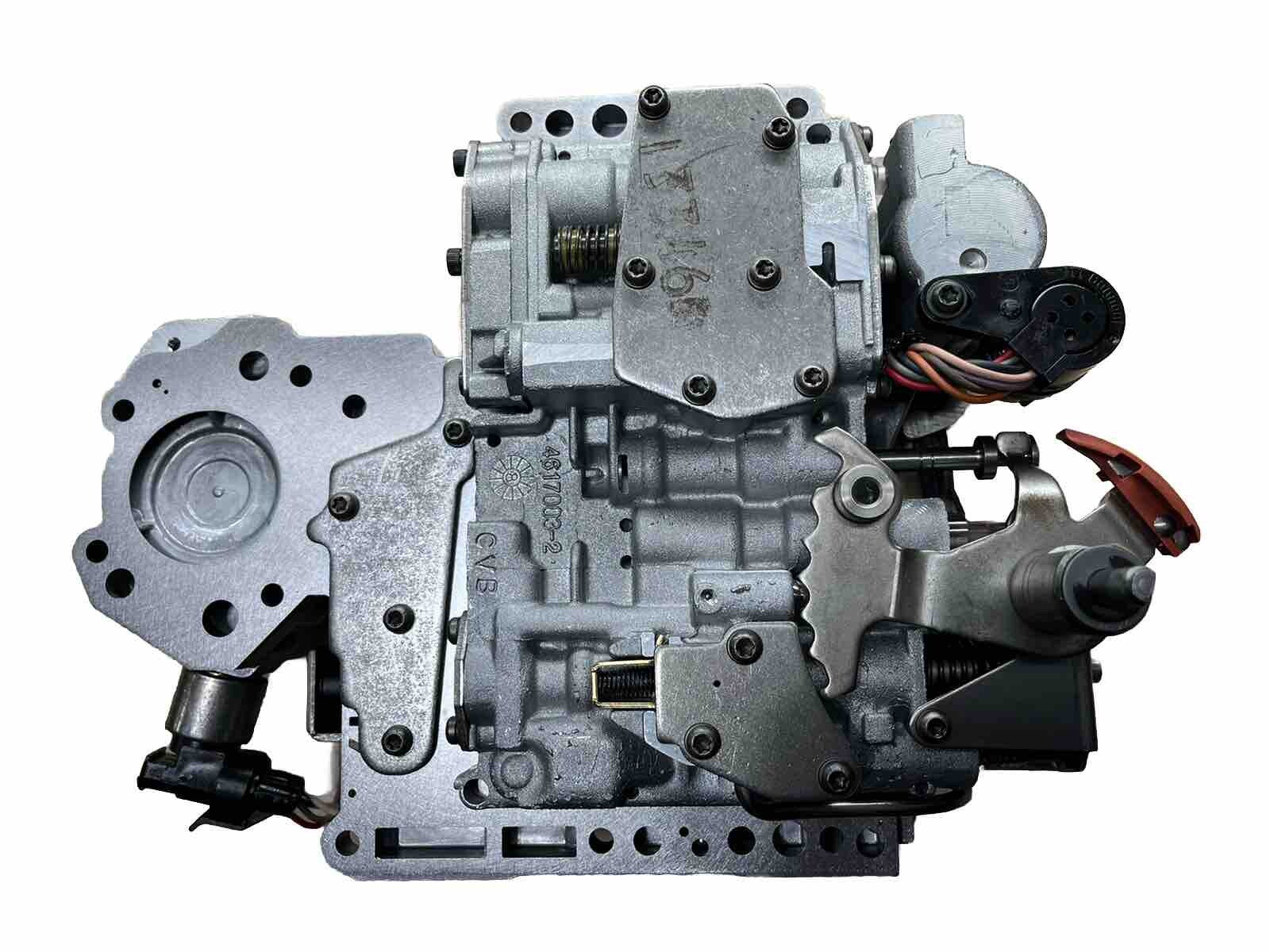
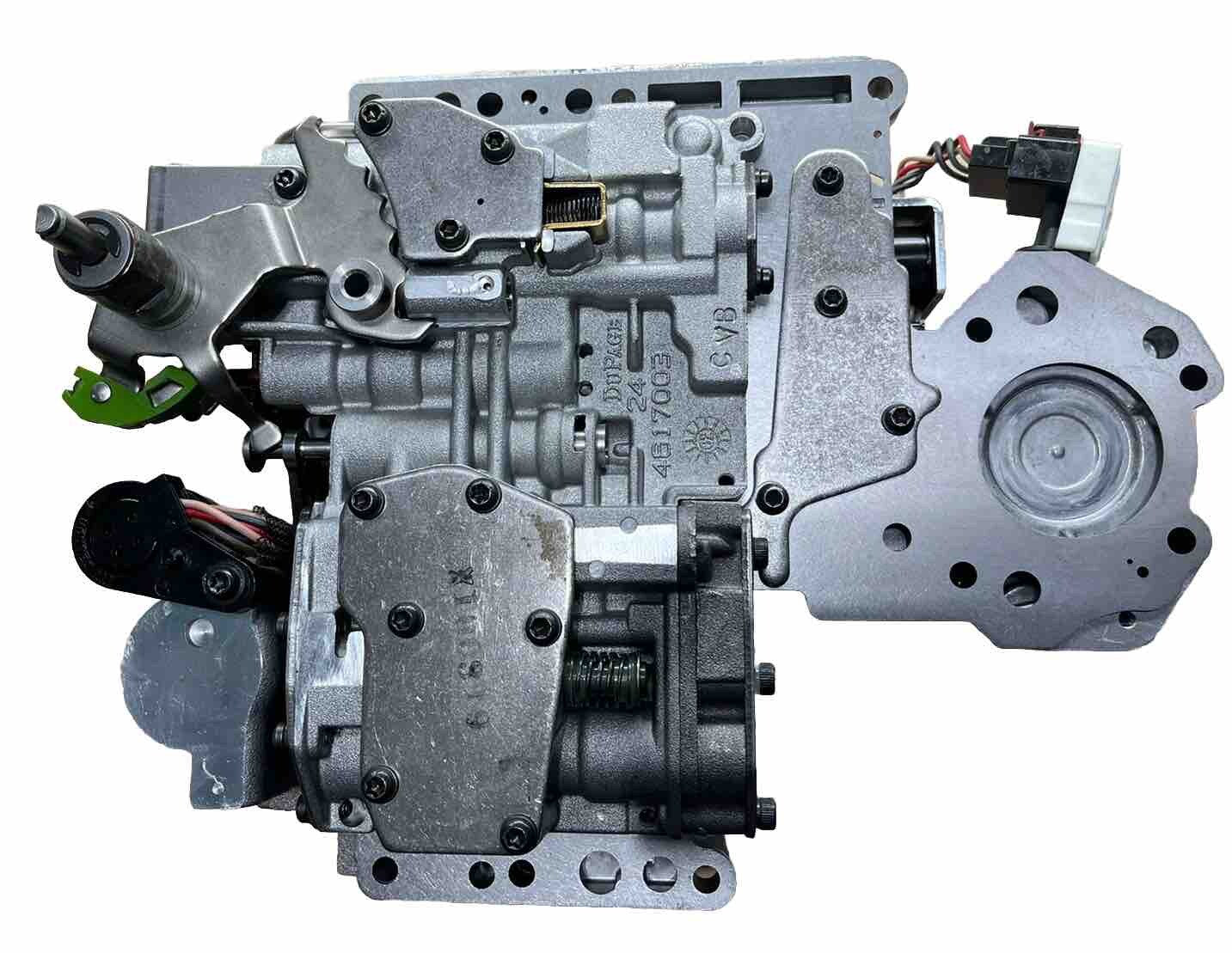
If the external checks all pass, the cause is inside. ATRA's GEARS magazine identifies four areas where RE valve bodies wear most: the throttle valve bore, the switch valve bore, the 1-2 and 2-3 governor plugs, and the line pressure plug and sleeve. Its classic example is a 46RE whose TV cable cannot be dialed in — loosen it and the truck is in third at 25 mph with no kickdown, tighten it slightly and the 1-2 holds to 25 mph. That is throttle control oil leaking through a worn bore, and because the throttle valve works with the governor plugs, all three bores have to be inspected together. Worn line pressure plugs and sleeves give line pressure instability.
Sonnax lists repairs for exactly these circuits on the 46RE: an oversized throttle valve kit (22771-04K) for shift timing concerns, throttle buzz, poor kickdown and an oversensitive 3-2; line pressure plug and sleeve kits (22229-01K for .200 in. plugs, 22229-04K for .264 in.) for poor line pressure control and poor Forward and Reverse engagement; and the Sure Cure kit (SC-46-47RHE-OS) for poor line pressure control and shift timing concerns. The factory diagnosis chart adds that an abrupt downshift to low while moving in 2nd or 3rd means a stuck 1-2 shift valve or governor plug.
The accumulators are the other half. The case (intermediate) accumulator softens the 1-2 by absorbing apply oil while the front band comes on. A piston that sticks in its bore, a torn seal, or a broken spring removes that cushion and the 1-2 lands with a bang. Pull the accumulator, check the piston moves freely, and check the spring. Finally, check front band adjustment. On the 2001 BR/BE 46RE, Chrysler specifies tightening the front band adjusting screw to 72 in-lb (47–50 in-lb if using adapter C-3705), backing it off 2-7/8 turns, and torquing the locknut to 30 ft-lb; the 1998 Ram manual lists the same 46RE figures on pp. 21-308 to 21-309. Always confirm the back-off figure for your model year in its own manual. For the full valve body teardown, see our 46RE valve body testing guide.
Don't Forget the Non-Transmission Causes
A clunk into gear is not always the transmission. A high idle from a dirty throttle body or a vacuum leak makes every engagement harder. Worn engine or transmission mounts, worn U-joints, and excess driveline or differential backlash all turn a normal engagement into a clunk. Check idle speed and put a bar on the mounts before you pull a pan.
Fixing It for Good
- TV cable out of adjustment: reset to the factory procedure and road test. No parts required.
- Line pressure screw turned up: reset line and throttle pressure to spec on the bench.
- Governor data out of range or governor codes: replace the governor pressure solenoid and sensor (and fix any wiring or relay fault first).
- Worn TV, governor plug, or line pressure plug bores: repair with oversized valves and sleeves, or install a remanufactured valve body with the circuits already corrected.
- Stuck accumulator or broken spring: replace seals, piston, or spring as needed.
Shop the part for this fix
Need a 46RE part that is not in our catalog? CoreTransmissionParts carries 46RE pumps, pump rebuild parts and other hard parts for the same trucks.
Browse 46RE parts at CoreTransmissionParts →FAQ
Can a TV cable cause harsh shifting on a 46RE?
Yes. Chrysler says the throttle valve cable positions the throttle valve that controls shift speed, quality and part-throttle downshift sensitivity. A cable set too tight delays shifts and makes part-throttle downshifts very sensitive, which feels like late, hard shifts. Reset it to the factory procedure before replacing parts.
Why does my 46RE shift hard only when it is cold?
Chrysler notes that cold fluid would normally delay shifts and make them harsh, so the PCM uses a sump temperature input to run a special low-temperature governor curve. If that input or the governor circuit is not working, or the fluid is old, you get hard cold shifts that clear up once the transmission warms up.
What line pressure should a 46RE have?
Per the Chrysler spec table, line pressure at the accumulator should be 54 to 60 psi at closed throttle, and rear servo pressure in Reverse should be about 160 psi at idle building to 270 psi at 1600 rpm. Readings well above spec cause harsh engagements and shifts.
Will a bad governor pressure solenoid cause harsh shifts?
It can. The governor pressure solenoid and sensor set when the 46RE upshifts, and a failing solenoid or drifting sensor gives erratic, harsh or badly timed shifts, often with codes P1757 or P1762 to P1764. Compare actual and desired governor pressure on a scan tool to confirm before replacing it.
Sources
- Chrysler — 1998 Dodge Ram Truck Service Manual, Group 21, 46RE/47RE Throttle Valve Cable Adjustment (p. 21-215) and adjustment procedure (Group 21 adjustments, near p. 21-308): throttle valve cable setting controls shift speed, quality and part-throttle downshift sensitivity; a setting that is too short gives early shifts and slippage between shifts, too long gives delayed shifts and very sensitive part-throttle downshifts; the transmission throttle lever must move together with the throttle body lever, within 1 mm (0.039 in.). The same procedure carries into the 2001 BR/BE manual. archive.org — 1998 Dodge Ram Truck Service Manual (full scan)
- Chrysler — 1998 Dodge Ram Truck Service Manual, Group 21, 46RE/47RE Hydraulic Pressure Tests (pp. 21-217 to 21-218) and pressure specifications (near p. 21-325): line pressure 54-60 psi with the throttle lever forward, rising to 90-96 psi as the lever is moved rearward; Reverse 145-175 psi; governor pressure returning to 0-1.5 psi when stopped in D, 1 or 2, with pressure above 1.5 psi at a standstill preventing downshifts. archive.org — 1998 Dodge Ram Truck Service Manual (full scan)
- Chrysler — 2001 Dodge Ram Truck Service Manual, Electronic Governor operation (page 21-541): governor solenoid current vs pressure (1 amp = zero, zero amps = maximum) and the low-temperature governor curve that prevents cold harsh shifts. The manualslib.com scan previously cited here no longer resolves; the PWM-controlled governor solenoid replacing the old hydraulic governor, and the limp-in result when the governor pressure sensor's feedback doesn't match the commanded value, are independently confirmed by TransGo's own repair-kit documentation for this solenoid family. transgo.com — OEM governor pressure solenoid repair kit, 40-48RE
- Chrysler — 1998 Dodge Ram Truck Service Manual, Group 21, band adjustment (pp. 21-308 to 21-309) and valve body line pressure adjustment (pp. 21-310 to 21-311): front band adjusting screw to 72 in-lb then back off 2-7/8 turns on the 46RE, locknut 30 ft-lb; one complete turn of the line pressure adjusting screw changes line pressure about 1-2/3 psi (9 kPa), counterclockwise increases and clockwise decreases. The 2001 BR/BE manual repeats the 46RE figures. archive.org — 1998 Dodge Ram Truck Service Manual (full scan)
- Chrysler — 1998 Dodge Ram Truck Service Manual, Group 21, 46RE/47RE Diagnosis Charts (pp. 21-224 to 21-231): stuck 1-2 shift valve or governor plug as a valve body cause of shift faults, with throttle valve cable misadjustment and incorrect valve body pressures listed as shift-quality causes. archive.org — 1998 Dodge Ram Truck Service Manual (full scan)
- ATRA / GEARS Magazine — Keith Clark, "Bringing it Back to Life: A Logical Approach to the RE Valve Body" (January/February 2023): the four main RE valve body wear areas (throttle valve bore, switch valve bore, 1-2 and 2-3 governor plugs, line pressure plug and sleeve) and the 46RE TV cable that cannot be dialed in due to leaking throttle oil. gearsmagazine.com
- Sonnax — Chrysler 46RE Transmission unit page: oversized throttle valve kit 22771-04K, line pressure plug and sleeve kits 22229-01K and 22229-04K, case accumulator and intermediate accumulator sleeve kits, and the symptoms each corrects. sonnax.com/units/400-46re
- Sonnax — The Sure Cure Kit SC-46-47RHE-OS: poor line pressure control, shift timing concerns, and poor Forward and Reverse engagement from worn bores. sonnax.com/parts/4466-the-sure-cure-kit
- Transmission Digest — Wayne Colonna (ATSG), "Chrysler RH/RE late shifts and high pressure," May 1, 2024. Backs the late 1-2/2-3 shift and high TV/line pressure complaint, the 55-65 psi OE idle line pressure spec in Drive, the 2005 TTVA phase-in on the 48RE, and the specific mismatched TV plunger, bushing (.677 in.), plunger (.982 in.) and retainer-bracket combinations that cause it. transmissiondigest.com
- Transmission Digest — "Diagnosis with Pressure Gauges," Jeff Parlee (Sonnax TASC Force), December 1, 2007. Backs road testing over lift testing, the 10% clutch-tap-versus-line leak rule, the harsh-apply diagnosis (leak in the applying component or wrong frictions/fluid), and the 42-48RE transducer-based pressure data. transmissiondigest.com
- Transmission Digest — October 2018 issue (Volume 35, No. 10), "Chrysler/Dodge/Jeep RE series units – P0868: Governor pressure sensor volts too high." Backs the roughly 0.5 V at zero pressure to 3.5 V at maximum governor pressure transducer range and internal transducer failure on higher-line-pressure RE units. transmissiondigest.com