The 46RE is the gas-engine member of Chrysler's RE family: the A518 four-speed with an electronic governor, bolted behind the 5.2L and 5.9L Magnum V8s in Ram 1500 and 2500 gas trucks, Dakotas, Durangos and some V8 Jeep Grand Cherokees. It is a tough transmission. ATRA's Keith Clark put it plainly in GEARS: the hard parts in these units stand up to heavy abuse, and the valve body is where the trouble lives. That matches what comes across the bench. Most 46RE complaints trace back to a short list of causes, and most of that list can be checked from outside the case before anybody pulls the pan.
This guide works through that list in the order a shop should: governor pressure first, then lockup and cooler flow, then valve body wear, then the known internal weak spots. Specs come from the Chrysler factory service manual for the 2001 Ram (BR/BE) 46RE section, ATRA's GEARS magazine, Sonnax and Transmission Digest. Sources are listed at the end.
The short version: On a 46RE, 1st through 3rd are shifted hydraulically by governor pressure, and the computer makes that pressure with a duty-cycled solenoid. If it will not shift 1-2 or 2-3 correctly, put a gauge on the governor port before anything else. If it starts in 3rd, it is in limp mode or has a crossleak. Lockup and 740/1740 complaints are usually cooler restriction or a worn switch valve, not a bad solenoid. Reverse complaints point at the rear band, rear servo and line pressure plug. Fill with ATF+4 (MS-9602) only.

How the 46RE Actually Shifts
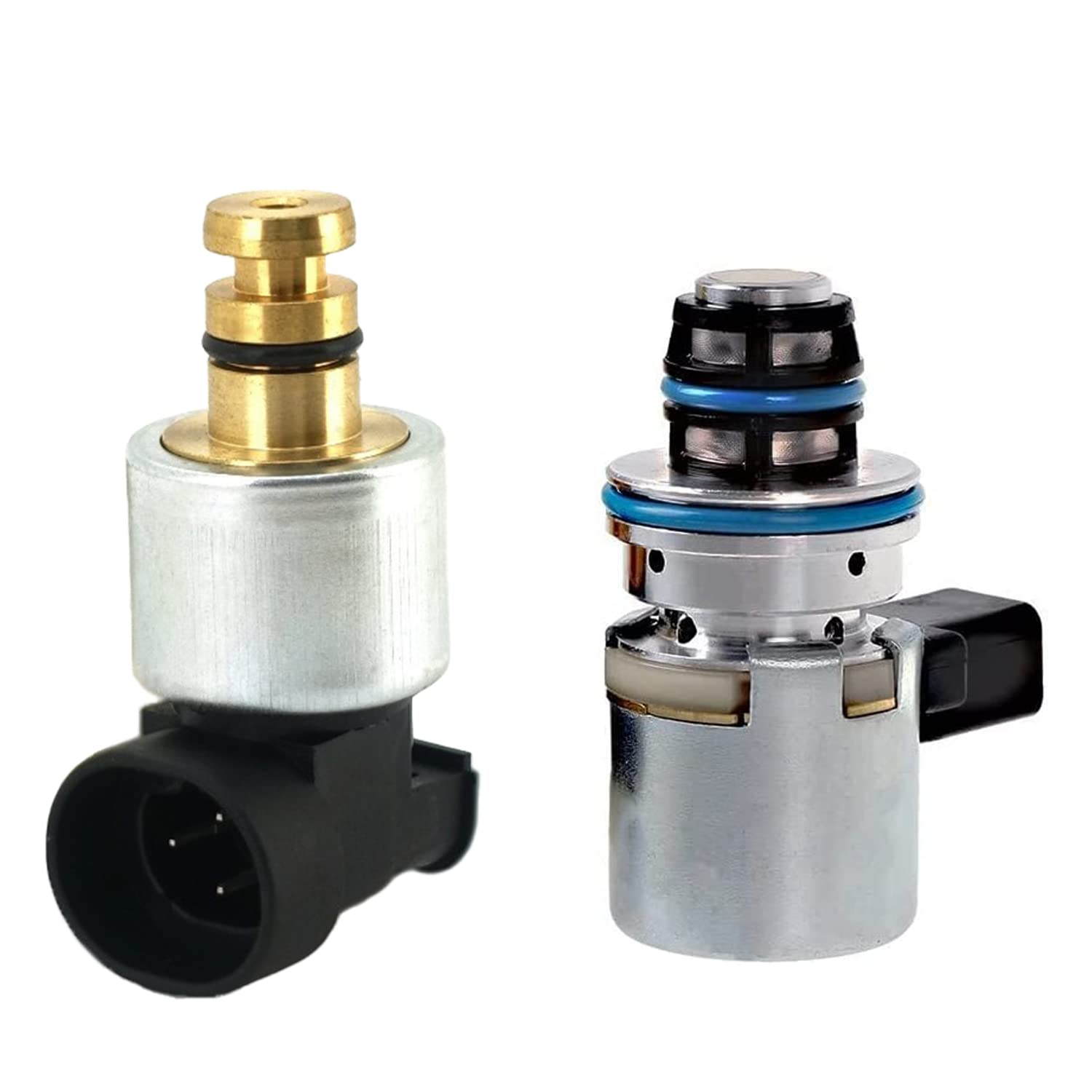
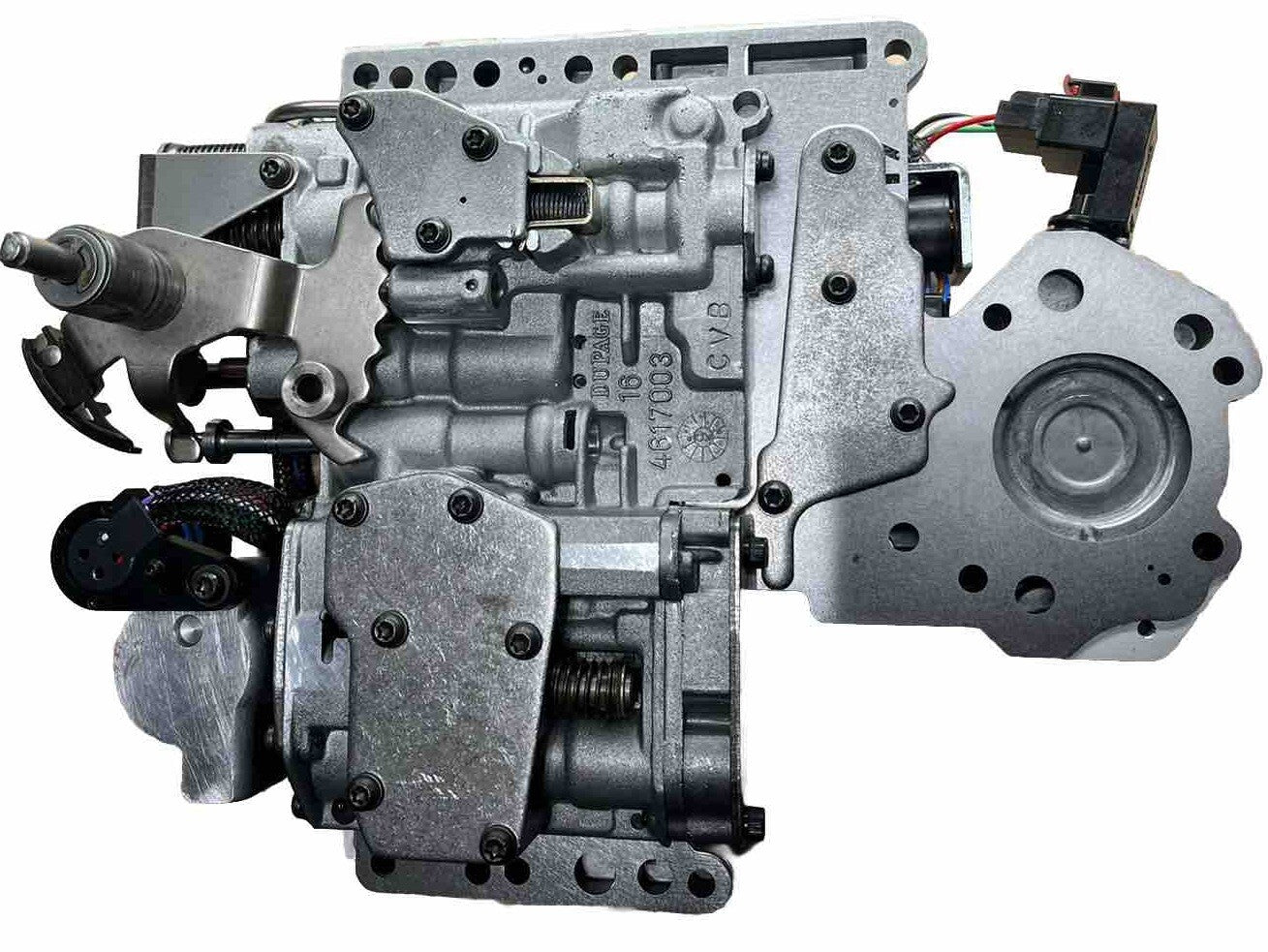
You cannot diagnose this unit without understanding one thing: it is basically a hydraulically controlled transmission with an electronic brain bolted on for the first three gears. Dave Skora's October 2006 GEARS article compares it to the TH350, TH400, Powerglide and C-4. Governor pressure pushes the shift valves over, just like those old units. The difference is where the governor pressure comes from. There is no spinning mechanical governor. The PCM reads output shaft speed and duty-cycles a governor pressure solenoid to create the pressure, then reads it back through a governor pressure transducer (sensor).
The 3-4 shift is different. It is handled by the overdrive solenoid on command from the PCM, and the converter clutch has its own solenoid. Above about 40 mph, the system sends mainline pressure into the governor circuit so the shift valves stay shifted. That is why, per GEARS, the governor transducer is actually watching line pressure once the truck is cruising in 4th.
The factory specs to hold the unit against, from the Chrysler 46RE specification and pressure test tables:
| Item | Factory spec (46RE) |
|---|---|
| Gear ratios | 2.45 / 1.45 / 1.00 / 0.69, reverse 2.21 |
| Governor pressure at a stop (D, 2, 1) | 0-1.5 psi. Above 1.5 psi at standstill prevents downshifts |
| Line pressure at accumulator, closed throttle | 54-60 psi |
| Overdrive clutch pressure, 4th gear | 68-72 psi closed throttle, rising to 90-130 psi at 1/2 to 3/4 throttle |
| Front and rear servo pressure | No more than 3 psi below line pressure |
| Reverse (rear servo) pressure | 160 psi at idle, building to 270 psi at 1600 rpm |
| Band adjustment | Tighten to 72 in-lb, then back off: front (kickdown) 2-7/8 turns, rear (low/reverse) 2 turns |
| Clutch disc count | Front 3, rear 4, overdrive 4, direct 8 |
| Fluid | Mopar ATF+4, type 9602 |
Problem 1: Will Not Upshift, Shifts Late, or Shifts Erratically
This is the most common 46RE complaint, and the rule from GEARS is simple: if it does not shift properly through the first three gears, your first check is always governor pressure. Governor pressure should be zero at a stop and rise about one psi per mph up to roughly 40 mph.
Skora's procedure is to install a gauge in the governor pressure port, connect a scan tool and road test while comparing three numbers: Governor Desired (what the PCM is commanding), Governor Actual (what the transducer reports) and the gauge reading. All three should match and follow the 1 psi per mph rule. How they disagree tells you where to look:
- All three agree and track correctly, but the shift is still wrong. The electronics are fine. Look for sticking shift valves, worn governor plugs or burnt clutches, the same way you would on an old hydraulic unit.
- Desired is zero or very low. The PCM does not think the truck is moving. Check the output shaft speed sensor signal. The GEARS voltage chart for 1996-2003 gas trucks shows about 3.0 V AC on the OSS signal at 30 mph.
- Desired is correct, but Actual and gauge are zero. Suspect the governor solenoid or a blockage in its feed or outlet.
- The gauge follows Desired but Actual is off. The transducer is lying to the PCM. The chart gives 0.60-0.66 V at 0 psi, about 3.0 V at 60 psi and about 4.5 V at 110 psi.
One 46RE-specific trap: the TV (throttle valve) cable still matters on this unit. Clark describes a 46RE whose cable could not be dialed in. Too loose gave a 3rd-gear engagement at 25 mph with no kickdown, and too tight held the 1-2 shift until 25 mph. That points to throttle valve bore wear in the valve body, not a linkage problem. If no cable setting fixes the shift timing, stop adjusting and look at the valve body.
Problem 2: Starts in Third Gear (Limp Mode)
A 46RE that pulls away in 3rd is either in limp mode or has a hydraulic fault that looks exactly like it. In limp mode the PCM de-energizes the governor solenoid, which opens it fully and sends mainline pressure into the governor circuit. Every shift valve strokes, and the truck starts in 3rd.
GEARS makes the distinction that saves time: the computer only goes into limp mode if it sets a code or loses power. A crossleak in the governor circuit or a sticking shift valve can cause 3rd-gear starts with no code at all. Check it this way:
- Code sets key on, engine off. A hard electrical fault. Check connections, transducer ground and the 5 V reference.
- Governor pressure in Park, Reverse or Neutral. There should be none, because the manual valve closes the governor feed in those ranges. Any pressure means a crossleak in the case, valve body or governor body.
- Pressure appears the moment you select Drive. A loose or warped governor body is common, as is a leaking solenoid. Also check that the scan tool shows the gear range as Drive and that the OSS reads 0 mph when stopped. Electrical noise on the OSS circuit can fool the PCM into thinking the truck is moving.
- No power at case connector pin 1. Pin 1 feeds the transmission solenoids and should have system voltage with the key on. Losing it puts the unit in limp.
If it goes into limp at highway speed in 3rd or 4th, watch Governor Actual at wide-open throttle. GEARS says more than 105 psi points to excessive line pressure or a bad transducer. For the full code list and circuit tests, see our 46RE solenoid guide.
Two gas-truck traps are worth checking before you buy a solenoid. First, the governor solenoid is fail-high by design: per Chrysler's 46RE electronic governor description (2001 Ram manual, page 21-541), one amp through the solenoid means zero psi and zero amps means maximum governor pressure, and its 12 volt feed comes through the transmission control relay. Transmission Digest found that relay coil is fed from the PCM's engine-running Generator Source circuit, so a key-on, engine-off "no power" reading can be normal. Start the engine before you condemn it. Second, Transmission Digest traced P1763 (governor sensor volts too high, 4.89 V or more for eight seconds) on gas-engine RE trucks to a shared sensor ground, most often a failing heated O2 sensor. Unplug the O2 sensors and road test before replacing the transducer. Our 46RE limp mode guide walks through both.
Problem 3: Lockup Shudder, TCC Slip and 740/1740 Codes
Converter clutch complaints are where 46REs eat the most unnecessary parts. Transmission Digest defines 740/1740 simply: the codes mean there is excessive slip at the TCC. The causes it lists are a restricted cooler or line, fluid without the correct friction properties, worn valve body bores or pump, and the converter itself.
Sonnax's Bob Warnke goes further on the cooler. His list of symptoms for 46/47RE cooler and converter restriction is TCC slip at high torque, delayed engagements, slow converter fill, excessive stall speed, hydraulic noise and 740/1740 codes. The restriction points are the drainback fitting, the radiator and auxiliary coolers, and the lines. Back pressure acts on the switch valve and can stage its spools mid-circuit, which restricts flow even more. The article flags this as a real problem as head pressure nears 80 psi. The test is cheap: temporarily bypass the cooler circuit and re-test. If the complaint goes away, you have found it.
Two more things to check before replacing the converter or harness:
- Switch valve wear. Clark ties the switch valve bore directly to overheated converters, TCC applying at idle, lugging or stalling the engine, and TCC slip or no apply. Sonnax lists an oversized 4-spool switch valve (22771A-13) for 46RE lockup shudder and the improved 22771A-01 for soft TCC apply.
- Converter-to-flexplate clearance after any R&R. Transmission Digest gives 0.125 inch minimum and 0.250 inch maximum on Chrysler rear-drive units, measured with the converter pushed back until the hub bottoms in the pump. Too little clearance restricts flow between the input shaft and the cover.
Problem 4: Delayed Engagement, Soft Reverse or No Reverse
Reverse on a 46RE uses the direct clutch and the rear (low/reverse) band, and reverse pressure should be 160 psi at idle building to 270 psi at 1600 rpm per the factory table. If a pressure test comes up short, Clark's fourth wear area is the one to suspect: the line pressure plug and sleeve. He ties its wear to delayed engagement, slip in reverse, poor converter and cooler charge, soft or slipping TCC apply and unstable line pressure. Sonnax sells the line pressure plug and sleeve kit (22229-01K or 22229-04K) for exactly that list on the 46RE.
If pressure is good but reverse still slips or is missing, the problem is mechanical. Sonnax lists an extended-length band strut (22900-10) or rear servo piston (22912) for no or soft reverse, and a reverse servo piston plug kit (22912-01K) for a burnt reverse band. A delayed Drive engagement with good pressure is often the rear (forward) clutch inner lip seal, which Sonnax lists as 3647-01. Before any of that, check the rear band adjustment: 72 in-lb, back off 2 turns.
Problem 5: Harsh or Missing Kickdown, and a Broken Band Strut
Sonnax says RE units often bend or break the kickdown band strut, because the factory part is stamped steel. When it goes, you lose 2nd gear and kickdown holding, and the pieces go through the pan. The fix is a solid heat-treated strut (Sonnax 22825-01), which fits the A727, 46RH/RE, 47RH/RE and 48RE. Any time the pan is off and the filter screen shows steel chunks, look at the strut before you blame the band.
On a unit that is still healthy, a correct kickdown band adjustment helps it last. Tighten the adjuster to 72 in-lb and back it off 2-7/8 turns per the 46RE spec table. A band that has been left alone for 100,000 miles is usually loose, and a loose front band makes for a soggy 1-2 and a sloppy 2-3.
Problem 6: Overdrive and Planetary Failures From Lost Lube
This is the internal failure that catches people off guard after a rebuild. Sonnax explains that too much clearance between the overdrive piston retainer and the intermediate shaft reduces lube flow to the gear train, and the result is failure of the reverse drum, retainer and planets. The fix is the Sonnax 22754N-01K piston retainer kit, which fits 46RH, 46RE, 47RH, 47RE and 48RE, with an oversized 22754N-02K version for salvaging a damaged reverse drum. Sonnax's 46RE unit page also lists bearing noise, overdrive roller clutch failure and output pilot bushing wear as common failures, with the 12509-01 oversized sprag pilot bushing and 12510-01 output pilot bushing as fixes.
If you open a 46RE with a blue, burnt planetary set in the overdrive or rear of the unit, assume lube loss and fix the cause. Replacing the gears alone just starts the clock again.
Sonnax 22771-14K governor bore repair kit (fits the RE family, including 46RE)
Sonnax lists 22771-14K on its 46RE page for 1-2 shuttle, shift sensitivity problems and shift timing that the TV cable cannot correct. It is the right fix when the gauge shows good governor pressure but the shifts are still wrong.
View the governor bore repair kit →Looking for other RE-family parts? Browse the RE-series parts collection →
Fluid: The Cheapest Way to Prevent Most of This
The 46RE takes Mopar ATF+4, type 9602. The factory manual gives the service fill after a pan and filter change as about 3.8 liters (4.0 quarts), but its fill procedure starts lower on purpose: add 3 pints (1-1/2 quarts) after a filter change, or 12 pints (6 quarts) after an overhaul with the converter drained and cooler flushed. Then start it, run through the gears, and top up to the MIN mark in Neutral with the park brake set. Drive it to operating temperature and bring it to the MAX mark, again in Neutral at curb idle. The manual warns that overfilling causes foaming and shift problems, so work up to the mark in small amounts.
Wrong fluid matters on this unit because the TCC is sensitive to friction properties, and Transmission Digest lists fluid without the correct friction qualities as a cause of 740/1740 slip codes. If a 46RE comes in with a lockup complaint and the fluid is a generic multi-vehicle ATF, change it to ATF+4 before anything else.
The Diagnostic Order That Saves Money
- Check fluid level and condition hot, in Neutral, engine idling. Low fluid causes aeration and erratic everything.
- Pull codes and note limp mode. A 3rd-gear start with codes is electrical until proven otherwise.
- Gauge the governor port and compare Desired, Actual and gauge on a road test.
- Pressure test line and reverse against the factory table.
- Bypass the cooler on any TCC or 740/1740 complaint.
- Adjust both bands to spec on a unit with high miles and no history.
- Only then go inside, and when you do, vacuum test the throttle valve, switch valve, governor plugs and line pressure plug bores.
Need parts for this job? Governor pressure solenoid and sensor kits, updated valve bodies, solenoid kits, pans, filters and master rebuild kits for the 46RE are all in one place. Shop 46RE parts →
FAQ
What is the most common problem with a 46RE transmission?
Shift problems in 1st through 3rd caused by the electronic governor system: the governor pressure solenoid, the governor pressure transducer, the output speed sensor signal, or a warped governor body. Put a gauge on the governor port first. It should read zero at a stop and rise about 1 psi per mph up to about 40 mph.
Why does my 46RE start in third gear?
It is either in limp mode or has a crossleak. In limp mode the PCM turns off the governor solenoid, which sends full line pressure to the governor circuit and strokes every shift valve. The PCM only goes into limp mode if it sets a code or loses power, so a 3rd-gear start with no code points to a crossleak or a sticking shift valve.
What fluid does a 46RE take and how much?
Mopar ATF+4, type 9602. The factory service fill after a pan and filter change is about 3.8 liters (4 quarts). Start with 3 pints, run it through the gears, and top up in Neutral to the MIN mark, then to MAX once the fluid is hot. Do not overfill, because it causes foaming and shift problems.
What are the 46RE band adjustment specs?
Per the Chrysler 46RE spec table, tighten each band adjusting screw to 72 in-lb, then back off 2-7/8 turns for the front (kickdown) band and 2 turns for the rear (low/reverse) band. Hold the adjuster while you tighten the locknut so the setting does not move.
Is a P1740 or P0740 code on a 46RE always a bad torque converter?
No. Those codes mean excessive TCC slip, and the most common causes are a restricted cooler or cooler lines, fluid with the wrong friction properties, and a worn switch valve or other valve body bores. Bypass the cooler and re-test before replacing the converter.
Sources
- Chrysler — 2001 Dodge Ram Truck (BR/BE) Service Manual, Automatic Transmission – 46RE: Specifications, Pressure Test and Fluid and Filter sections. Backs the 2.45/1.45/1.00/0.69/2.21 ratios, clutch disc counts, band adjustment from 72 in-lb (front back off 2-7/8 turns, rear 2 turns), ATF+4 type 9602, the pressure test values (governor 0-1.5 psi at a stop, line 54-60 psi, overdrive clutch 68-72 psi rising to 90-130 psi, servos within 3 psi of line, reverse 160-270 psi), the 3.8 L service fill, and the 3-pint / 12-pint initial fill procedure with the overfill warning. (Factory manual citation; the previous public mirror of this document has gone offline.)
- ATRA GEARS Magazine, October 2006 — Dave Skora, "Troubleshooting the 42-47RE Transmissions." Backs the hydraulic-shift comparison, governor pressure first rule, 1 psi per mph to about 40 mph, the Desired/Actual/gauge comparison and what each mismatch means, limp mode behavior and its code-or-power trigger, the Park/Reverse/Neutral crossleak test, warped governor body, case connector pin 1, OSS noise, the 105 psi WOT check, and the gas-engine voltage chart (OSS 3.0 V AC at 30 mph, transducer 0.60-0.66 V at 0 psi). atracom.blob.core.windows.net (PDF)
- ATRA GEARS Magazine — Keith Clark, "Bringing it Back to Life: A Logical Approach to the RE Valve Body." Backs the hard parts standing up to abuse, the four valve body wear areas and their symptoms (throttle valve, switch valve, 1-2 and 2-3 governor plugs, line pressure plug and sleeve), and the 46RE TV cable that cannot be dialed in. gearsmagazine.com
- Sonnax — Chrysler 46RE unit page, Heavy Duty Kickdown Band Strut 22825-01, and Piston Retainer Kit 22754N-01K. Back the 46RE problem-to-part list (22771-14K, 22771A-13, 22771A-01, 22229-01K/-04K, 22900-10, 22912, 22912-01K, 3647-01, 12509-01, 12510-01), the stamped OE strut that bends or breaks and the heat-treated replacement, and the overdrive piston retainer lube-loss failure with its fit list. sonnax.com (46RE) · band strut · piston retainer
- Sonnax — Bob Warnke, "46-47RH/RE Cooler and Converter Flow." Backs cooler restriction as the leading cause of the listed TCC and engagement symptoms, the restriction points, switch valve spool staging near 80 psi head pressure, and the cooler bypass test. sonnax.com
- Chrysler — 2001 Dodge Ram Truck (BR/BE) Service Manual, 46RE Electronic Governor (page 21-541). Backs one amp for zero governor pressure and zero amps for maximum, and the transmission control relay supplying 12 volts to the solenoid with PCM ground-side control. (Factory manual citation; the previous public mirror of this document has gone offline.)
- Transmission Digest — "46RE/47RE Power Circuit for Transmission-Control-Relay Coil." Backs the relay coil fed from the PCM Generator Source engine-running circuit and starting the engine before condemning a no-power reading. transmissiondigest.com
- Transmission Digest — March 2006 issue, RE governor pressure sensor volts too high. Backs the P1763 set condition (4.89 V for eight seconds) on gas-engine RE trucks and the shared ground with heated O2 sensors as the most common cause. transmissiondigest.com
- Transmission Digest — "740/1740 Codes and Chrysler Converter Flow." Backs the TCC slip definition of the codes, the cause list including incorrect fluid friction properties, and the 0.125-0.250 inch converter-to-flexplate clearance. transmissiondigest.com