The complaint shows up the same way on almost every one of these trucks. The Ram pulls through the gears, settles into overdrive somewhere around 45 to 55 mph, and a buzz comes up through the floor like you drove onto rumble strips. Touch the brake pedal or add a little throttle and it stops. Let it settle back into a light cruise and it starts again. Owners chase U-joints, tires and injectors. On a 47RE, the heavy-duty four-speed behind the 5.9L Cummins and 8.0L V10 in 1996-2002 Ram 2500 and 3500 trucks, the usual cause is the torque converter clutch slipping and grabbing while it tries to hold lockup.
Shudder is a symptom. The converter lining can be glazed, but the clutch can also be short on apply pressure, fighting release oil that cannot get out of the way, or running on fluid that no longer has the friction properties to engage smoothly. Put a new converter in a truck with a plugged cooler or a worn switch valve and the new one will shudder too. The factory facts below come from Chrysler's 2001 Dodge Ram Truck (BR/BE) service manual, with Sonnax and Transmission Digest supplying the known 47RE failure points. Sources are listed at the end.
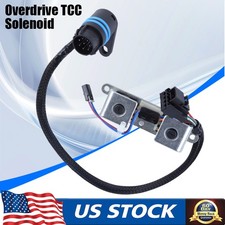
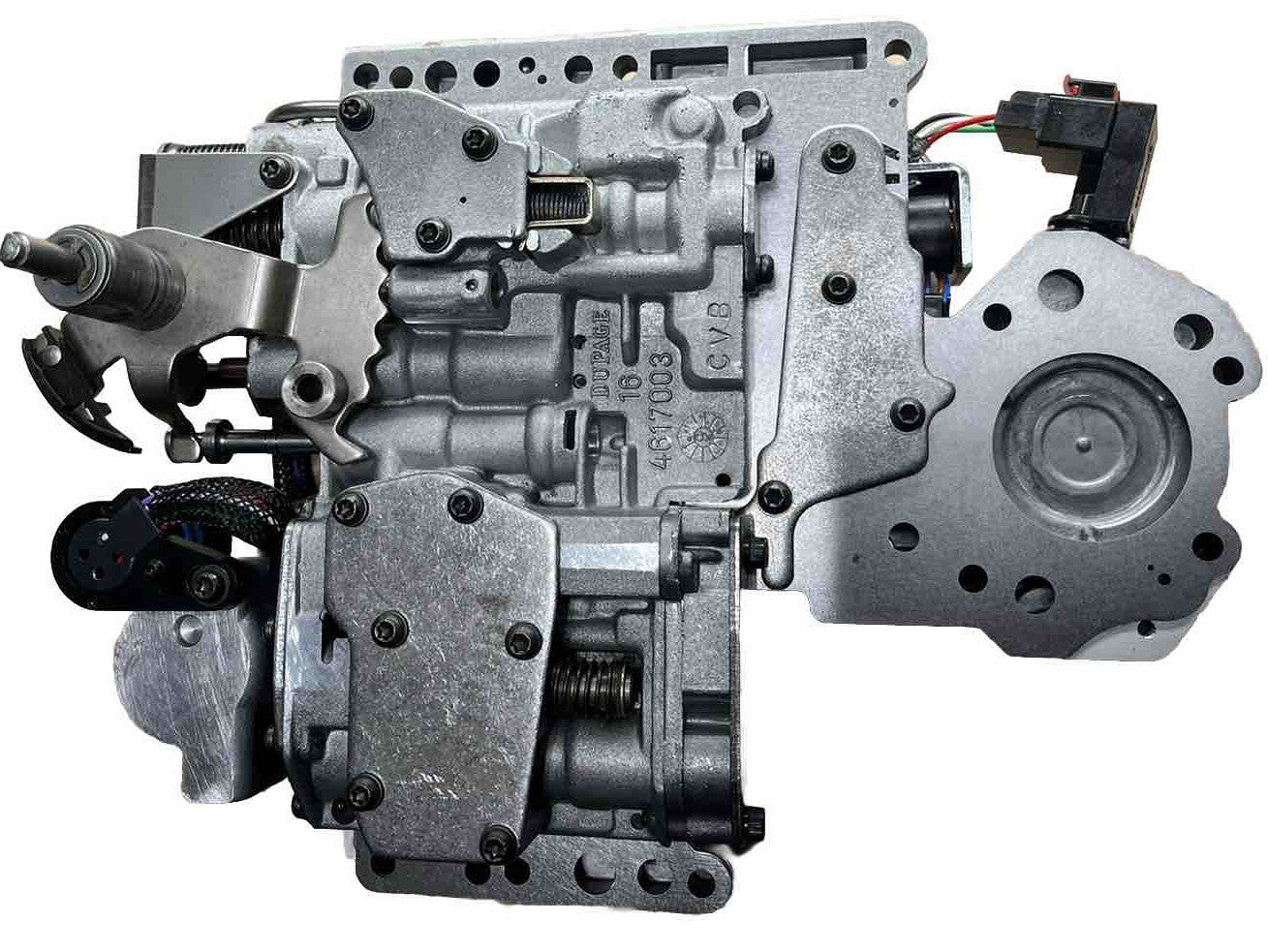
How the 47RE Locks the Converter
The 47RE converter has a turbine, impeller, stator with its own overrunning clutch, and an electronically applied converter clutch. Chrysler's description of the TCC is plain: a hydraulic piston on the turbine and a friction material on the inside of the front cover give the mechanical lock between engine and input shaft. The converter is a sealed, welded unit that Chrysler services only as an assembly.
Per the 2001 manual, the clutch is hydraulically applied and released when fluid is vented from the circuit by the TCC solenoid on the valve body, and the PCM controls that solenoid. It engages in fourth gear, and in third under some conditions, such as with the O/D switch off or when cruising on a level road after warmup. The manual also says the clutch disengages momentarily when the PCM senses an increase in engine load, such as starting up a hill or opening the throttle.
The valves behind lockup
Three valves in the valve body decide how cleanly the clutch applies:
- Switch valve. With the converter unlocked, it sends converter pressure through the input shaft into the converter, out past the clutch, and on to the cooler. When the TCC control valve moves, line pressure hits the tip of the switch valve, the valve shifts, and it vents the oil from the front of the piston while it feeds line pressure to apply the clutch.
- Lock-up valve. Controls the back (ON) side of the converter clutch. When the PCM energizes the TCC solenoid, pressure moves this valve and applies the clutch.
- Lock-up timing valve. Blocks a 4-3 downshift until the TCC is completely released.
The part of that sequence that matters for shudder is the vent. Release oil has to leave the front of the piston before apply oil can clamp the clutch. Anything that slows that exhaust gives you a soft, slipping apply, and a slipping lockup clutch at cruise is a shudder.
What makes the 47RE different from a 48RE
Sonnax's breakdown of the RE family hydraulics shows two 47RE details that matter here. First, the 46/47RE boost valve raises line pressure only about 10-15 psi in third with the TCC on or in fourth. The 48RE raises it 22-28 psi. The 47RE clamps the converter clutch with less pressure behind a Cummins, so anything that bleeds apply pressure shows up quickly. Second, the 47RE TCC solenoid is fed from the 1-2 shift valve, and a manual 2/1 passage on the spring side of the lock-up valve cancels lockup in manual second and first. If the truck shudders in manual 2, that points to a lockup circuit that is not being cancelled, not a worn lining. The 47RE vs 48RE comparison covers the other changes.
Step 1: Prove It Is the Converter Clutch
Plenty of trucks get a converter they did not need. Prove it first.
- Watch the tach. When the clutch applies at cruise, engine rpm drops a couple of hundred and the needle goes steady. If the shake starts at that moment and stops when rpm climbs back, it is lockup.
- Tap the brake. The brake switch drops lockup. If a light tap kills the vibration immediately without the truck slowing much, it is lockup related. A U-joint, tire or pinion angle problem stays with road speed.
- Check fluid temperature. The 2001 manual says the PCM will not engage the converter clutch below about 10°C (50°F). Above 126°C (260°F) it forces a 4-3 downshift and locks the converter in third, and fourth will not come back until the fluid drops to about 110°C (230°F). A truck that "shudders in third on grades" while towing may be in that hot-fluid mode, and the real problem is cooling.
- Pull codes. Transmission Digest notes that 2000-01 Rams with 46RE/47RE transmissions can set P1740, a TCC or overdrive solenoid performance fault, with a flashing check-engine light. Ed Lee's Transmission Digest article on these codes explains that a 740 or 1740 code means the PCM saw excessive slip at the TCC after it commanded apply. A P1740 on a shuddering truck confirms the clutch is not holding. It does not tell you why.
Step 2: Fluid Level, Condition and Type
Check the fluid first because it costs almost nothing and because it causes shudder on its own. The 47RE calls for Mopar ATF+4 (Chrysler MS-9602). The friction modifiers in a correct ATF+4 are what let a lockup clutch slip slightly during apply without chattering. Shell's Pennzoil Platinum ATF+4 technical data sheet lists friction durability and retention and shear stability gains over ATF+3, and states approval against Chrysler MS-9602; it also says ATF+4 is the correct fluid where ATF+3, ATF+2 or ATF+ (MS-7176) is specified, so an older 47RE labeled ATF+3 should get ATF+4. A universal fluid, a Dexron-type fluid or ATF+4 that has been cooked well past its service life can all make a good converter shudder.
Check the level hot, in Neutral, on level ground, and look at the fluid on a white towel. Clean red fluid that is just old or the wrong type is the case where a fluid change can cure shudder. A pan drop only replaces a portion of the fluid, since most of it is still in the converter and cooler, so plan on two or three changes a few hundred miles apart. Dark, burnt fluid with black flecks means the lining or a clutch pack has already been cooking, and fresh fluid will not fix it. Capacities and the fill procedure are in our 47RE fluid guide.
Step 3: Cooler Flow and the Drainback Valve
This is the check most shops skip. In its article on 46-47RH/RE converter and cooler flow, Sonnax calls cooler restriction by far the most common issue, from the drainback fitting, auxiliary coolers, radiator coolers or the lines. When the TCC is off, that restriction pushes the switch valve toward its spring, and the spools can stage mid-circuit and restrict converter and cooler flow even further. Sonnax says this can become a problem as head pressure nears 80 psi or more.
The test is simple. Monitor cooler flow from Drive at idle through the completion of lockup. Sonnax describes low flow until the TCC applies, then a slow apply or a slip or shudder on apply, as release oil restricted inside the converter. To check the cooler side, temporarily bypass the cooler circuit and retest. If the shudder goes away with the cooler bypassed, fix the cooler, not the converter.
Then look at the drainback valve. The 2001 manual puts it in the cooler outlet (pressure) line near the radiator tank, with a spring-loaded check ball that opens at about 2 psi. It is serviced only as an assembly. Chrysler says not to clean it if it is restricted or contaminated, and to replace it if it fails or after any failure that made sludge, clutch material or metal. The manual also says that a valve that is restricted, installed backwards or put in the wrong line will cause overheating and possible transmission failure.
Step 4: The Switch Valve, Boost Valve and Separator Plate
If fluid and cooler flow check out, go to the valve body. Three wear points and one design issue come up again and again on the 47RE.
Switch valve
Sonnax lists lockup shudder and an overheated converter as symptoms of a scratched or worn 4-spool switch valve. Debris and constant valve oscillation wear the spools. Bore wear toward the spring end reduces converter release oil, which hurts converter charge at idle and lube flow. Wear at the inboard end gives a poor TCC apply or less line pressure boost. Sonnax's improved switch valve is built to vent TCC release oil during apply for a firmer apply without shudder, and an oversized version (22771A-13) is available for worn bores.
Lockup boost valve
Sonnax says the lockup boost valve in 42-46-47-48RH/RE units is prone to wear. When it wears, converter and lube flow drop, and you get TCC slip and an overheated converter. The symptom list on its oversized boost valve kit (22771-19K, for '94-later units with the boost oil tube) includes TCC slip under load, no line rise during TCC apply in fourth, no lockup and TCC cycling. That line rise is something you can measure. Put a gauge on the line pressure port, which the 2001 manual places at the accumulator port on the right side of the case, and watch it when lockup applies. On a 47RE you are looking for the 10-15 psi rise Sonnax documents. No rise points to the boost valve.
The boost valve cover plate orifice
For 2000-01 trucks setting P1740, Transmission Digest traced one cause to a reducing-pressure exhaust orifice in the boost valve cover plate that is too small, which delays the pressure increase needed when the TCC applies. The fix is to enlarge that orifice to 0.069 in., or install Chrysler's revised cover plate, part number 04617012, which comes with the larger orifice.
Separator plate slot
The same Transmission Digest issue covers 47RE units, before or after a rebuild, with a soft TCC apply or repeated TCC failure. One cause is release oil not exhausting fast enough from the front side of the converter. The fix is to change or modify the narrow-slot separator plate to the wide-slot plate.
Rebuild the valve body with those parts, or install a 47RE valve body that has already been corrected. Either way, make sure it is the correct 47RE calibration for the year. Our 47RE valve body testing guide covers the other wear points worth checking while it is on the bench.
Step 5: The Converter, Pump and Alignment
Sonnax's article also points at the pump and alignment. The pump stator supports the turbine shaft, and the converter cover bushing centers it at the other end. If that bushing or the crankshaft pilot is worn, the turbine shaft sealing rings can cross-leak, which affects TCC apply and release oil. Ed Lee's Transmission Digest article on 740 and 1740 codes lists the same group of causes: a restricted cooler or lines, the wrong fluid, worn valve body bores, excessive pump clearance, wrong converter-to-flexplate spacing (minimum 0.125 in., maximum 0.250 in. on Chrysler rear-drive overdrive units), and turbine hub bushing or thrust washer mistakes inside the converter.
If lockup applies with the right line rise, cooler flow is good, the fluid is correct ATF+4, and it still shudders, the lining is glazed, worn or contaminated and the converter has to be replaced. The 2001 manual's diagnosis chart gives the correction for a faulty converter clutch: replace the converter and flush the cooler and lines before the new one goes in. The manual also says the converter must be replaced whenever a failure left large amounts of metal or fiber in the fluid.
On installation, lube the pump seal lip, push the converter in while rotating it until it seats in the pump gears, and check it with a straightedge. The 2001 manual specifies the converter lugs at 19 mm (0.75 in.) behind the straightedge when fully seated.
A Diagnosis Order That Works
- Confirm lockup triggers it: the shake starts with the rpm drop and stops with a brake tap.
- Scan for P1740 and note fluid temperature.
- Check the level hot, look at the fluid, and confirm it is ATF+4.
- Check cooler flow from idle through lockup, bypass the cooler and retest, and check the drainback valve.
- Gauge line pressure at lockup and look for the 10-15 psi rise.
- Service the valve body: switch valve, boost valve, cover plate orifice and separator plate.
- Replace the converter last, and flush the cooler and lines and replace the drainback valve when you do.
If the truck is also running hot, see our 47RE overheating guide. Heat glazes converter linings, and a truck that tows heavy with a weak cooler will shudder again.
Sonnax 4-Spool Switch Valve 22771A-43 (fits '93-later 47RE)
The direct-replacement switch valve Sonnax lists for lockup shudder and overheated converters in 42-48RE units, from CoreTransmissionParts.
View the switch valve →Shop RE transmission parts →
Frequently Asked Questions
What causes torque converter shudder on a 47RE?
The converter clutch lining can be glazed, but shudder is just as often caused by old or wrong fluid, a restricted cooler or drainback valve that traps release oil, or a worn switch valve or lockup boost valve in the valve body. Check those first, or a new converter will shudder too.
How do I know if it is the converter or the driveline?
Watch the tach at the speed where it shakes. If the vibration starts when rpm drops as the converter locks, and stops with a light brake tap or more throttle, it is the converter clutch. A U-joint, tire or driveshaft problem stays with road speed whether lockup is on or off.
Can a fluid change fix 47RE lockup shudder?
Sometimes. If the fluid is clean but old or is not ATF+4 (MS-9602), fresh ATF+4 can cure the shudder because its friction modifiers are designed for smooth lockup. One pan drop leaves most of the old fluid in the converter and cooler, so it may take two or three changes. Burnt fluid with debris means the lining is already damaged.
What does P1740 mean on a 47RE?
P1740 is a TCC or overdrive solenoid performance fault. It means the PCM saw excessive converter clutch slip after commanding lockup. On 2000-01 trucks, Transmission Digest traced one cause to an undersized exhaust orifice in the boost valve cover plate, fixed by enlarging it to 0.069 in. or installing Chrysler cover plate 04617012.
What should I do after replacing a 47RE torque converter?
Flush the cooler and lines before the new converter goes in, as the factory diagnosis chart says, and replace the drainback valve, since Chrysler says it cannot be cleaned. Check converter seating at 19 mm (0.75 in.) behind a straightedge across the bell housing, and refill with ATF+4.
Sources
- Chrysler — 2001 Dodge Ram Truck (BR/BE) Service Manual, 47RE Torque Converter and TCC (pages 21-773 and 21-778). Backs the converter components, the sealed assembly-only service, the replace-and-flush caution for contaminated fluid, TCC apply and release by the valve-body TCC solenoid under PCM control, engagement in fourth and in third, momentary release on engine load, and the 19 mm (0.75 in.) seating check. The manualslib.com scan previously cited for these pages no longer resolves.
- Chrysler — 2001 Dodge Ram Truck Service Manual, Drainback Valve and Transmission Temperature Sensor (page 21-779). Backs the approximately 2 psi drainback valve, no cleaning and replacement after sludge-making failures, the overheating warning for a restricted or reversed valve, TCC lockout below 10°C (50°F), the 126°C (260°F) 4-3 downshift with third-gear lockup, the 110°C (230°F) return to fourth. The manualslib.com scan previously cited for this page no longer resolves.
- Chrysler — 2001 Dodge Ram Truck Service Manual, Valve Body Switch Valve and Lock-up Valves, Diagnosis Charts and Pressure Test Ports (pages 21-795, 21-796, 21-663, 21-658). Backs the switch valve venting the front of the piston during apply, the lock-up and lock-up timing valve functions, the "replace converter and flush cooler and line" correction for a faulty converter clutch, and the line pressure port at the accumulator. The manualslib.com scans previously cited for these pages no longer resolve; the same 4-spool switch valve's role in the TCC apply/release circuit, and the bore wear that causes lockup shudder, an overheated converter and soft TCC apply on this valve body family, is independently confirmed in Sonnax — 4-Spool Switch Valve, 42RE/44RE/46RE/47RE/48RE/A727/A904. A real-world case of a 47RE's converter-clutch and switch-valve circuit misbehaving from a warped pump stator support, including the 40 psi cooler-circuit air test used to isolate it, is documented in Gears Magazine (ATRA) — "A Dead Stop: A Typical Dodge 47RE Problem With an Unexpected Solution" (August/September 2022).
- Transmission Digest — January 2005 Tech/Talk: "Chrysler 46RE/47RE: Diagnostic Trouble Code P1740" and "Chrysler 47RE: Soft TCC Apply." Backs P1740 on 2000-01 Rams, the undersized reducing-pressure exhaust orifice in the boost valve cover plate, the 0.069 in. enlargement, Chrysler cover plate 04617012, and the narrow-slot to wide-slot separator plate fix for soft TCC apply and repeat TCC failure. transmissiondigest.com
- Transmission Digest — Ed Lee, "740/1740 Codes and Chrysler Converter Flow" (September 2005). Backs 740/1740 codes meaning excessive TCC slip after commanded apply, the list of causes, and the 0.125-0.250 in. converter-to-flexplate spacing. transmissiondigest.com
- Sonnax — "46-47RH/RE Cooler and Converter Flow." Backs cooler restriction as the most common issue, switch valve staging near 80+ psi head pressure, the idle-through-lockup cooler flow check, the cooler bypass retest, and the cover bushing and crank pilot cross-leak. sonnax.com
- Sonnax — "Dodge 48RE Hydraulic Features Revealed." Backs the 10-15 psi (46/47RE) vs 22-28 psi (48RE) line rise at lockup, the 47RE TCC solenoid feed from the 1-2 shift valve, and the manual 2/1 lockup cancel. sonnax.com
- Sonnax — 4-Spool Switch Valves 22771A-43 and 22771A-13, and Oversized Lockup Boost Valve Kit 22771-19K. Backs the switch valve wear symptoms (lockup shudder, overheated converter, soft TCC apply, release pressure build-up), release oil venting for a firmer apply, and boost valve wear causing TCC slip, no line rise in fourth and TCC cycling. 22771A-43, 22771A-13 and 22771-19K (sonnax.com)
- Shell — Pennzoil Platinum ATF+4 Technical Data Sheet. Backs the Chrysler MS-9602 approval, ATF+4 as the replacement where ATF+3, ATF+2 or ATF+ (MS-7176) is specified, and the friction durability/retention and shear stability gains over ATF+3. shell-livedocs.com (PDF)
Shop 47RE lock-up solenoids, valve bodies, coolers and rebuild kits, shipped fast from the USA.
Shop 47RE parts →