A 46RE that runs hot usually tells you before it fails. Pull a trailer up a long grade, the O/D OFF lamp comes on by itself, the truck drops to third, and a few miles later fourth comes back. Most owners read that as a glitch. It is not. That is the PCM reacting to fluid temperature past its limit, and it is the most useful warning this transmission gives you. Ignore it enough times and you get burnt fluid, varnished valves, glazed bands and a converter that sheds lining into the cooler lines.
This guide covers how the 46RE senses heat, the two causes Chrysler lists for burnt fluid, the drainback valve that trips up so many repairs, how to test cooler flow instead of guessing, and what has to be done after a failure so the next unit does not cook too. Factory numbers come from Chrysler's 2001 Dodge Ram Truck (BR/BE) service manual, 46RE section. Flow data comes from Sonnax. Sources are listed at the end.
The short version: Chrysler names two causes of burnt 46RE fluid: restricted flow through the main or auxiliary cooler (usually a bad or wrongly installed drainback valve, a damaged cooler, or debris and kinked lines), and heavy-duty work on a truck not equipped for it. Check fluid level hot at 180F, flow test the cooler circuit, and bypass the cooler to confirm before you spend money on a bigger one.
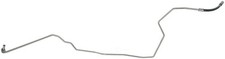

How the 46RE Knows It Is Hot
The 46RE does not have a separate fluid temperature sender in the pan. Per the 2001 service manual (section 21-606), the thermistor is built into the governor pressure sensor assembly on the valve body, where it sits in fluid at all times. Normal resistance at room temperature is about 1000 ohms. The PCM uses that reading to control three things: overdrive clutch engagement, converter clutch engagement and governor pressure.
The temperature logic is worth memorizing, because it explains most of the "weird shifting" complaints on hot trucks:
- Below about 50F (10C): the PCM will not apply the converter clutch or the overdrive clutch. A cold truck that will not shift into fourth for the first mile is normal.
- Above 260F (126C): the PCM forces a 4-3 downshift and applies the converter clutch on the third-gear schedule. The O/D OFF lamp lights when the shift back to third happens.
- Back below about 230F (110C): fourth gear is allowed again.
So a lamp that comes on and goes off by itself under load is a record of the fluid passing 260F. The downshift with lockup is a protective move: third with the converter locked stops the converter from slipping, and converter slip is where most of the heat comes from. Every time the impeller turns faster than the turbine, that difference turns into heat in the fluid. That is why a 46RE hunting between third and fourth on a grade, unlocking the converter each time, heats up so fast.
Because the thermistor shares a housing with the governor pressure sensor, a failing sensor can also send bad temperature data. If the lamp comes on with a cold transmission, or the truck refuses fourth on a warm day with no load, read the temperature on a scan tool before you chase the cooler. The factory fill procedure (21-546) uses the DRB to read transmission temperature, so the value is available on a capable scan tool. Watch the direction of the reading, too. ATRA's GEARS magazine (Dave Skora, "Troubleshooting the 42-47RE Transmissions," October 2006) notes that early units used a negative temperature coefficient thermistor, while some 1999-up vehicles switched to a positive coefficient one. If the scan tool shows the fluid hot at a cold start and cooling off as the truck is driven, someone installed the wrong sensor, and the PCM is making its overdrive and lockup decisions from backwards data.
The Two Causes Chrysler Lists for Burnt Fluid
Section 21-545 of the service manual is direct about it. Burnt, discolored fluid comes from overheating, and overheating has two main causes:
- Restricted flow through the main and/or auxiliary cooler. The manual says this is usually a faulty or improperly installed drainback valve, a damaged main cooler, or severe restrictions in the coolers and lines from debris or kinked lines.
- Heavy-duty work on a truck not equipped for it. Towing or similar high-load use will overheat the fluid if the vehicle is not equipped for it. Chrysler says such vehicles should have an auxiliary transmission cooler, a heavy-duty cooling system, and an engine and axle ratio that can handle the load.
Note the order. Restriction comes first, and it is a flow problem, not a size problem. A 46RE with a partly blocked circuit will overheat with any cooler bolted to it.
The same page lists a third cause that is easy to miss: the wrong fluid level. Low fluid pulls air into the pump, and overfill lets the gear train churn the fluid into foam. Either way the manual says the air bubbles cause overheating, oxidation and varnish that interferes with valve and clutch operation. Foam also expands and can push fluid out the vent or fill tube, which is easy to mistake for a leak. Check the level correctly before anything else: fluid at normal operating temperature of about 180F (82C), truck level, engine idling, parking brake set, shifted through all ranges and back to Neutral. Add Mopar ATF+4 (Type 9602) only up to the crosshatch, and wait at least 2 minutes after adding before you recheck.
The Drainback Valve: Small Part, Big Heat Problem
The part that causes the most trouble on these trucks is the converter drainback valve. Per sections 21-605 and 21-606, it sits in the cooler outlet (pressure) line near the radiator tank. It is a spring-loaded check ball that opens at about 2 psi, and it keeps the converter from draining into the cooler and lines when the truck is parked for a long time. Production valves have a hose nipple on one end, a flare fitting on the other, and an arrow showing flow direction.
The manual is blunt about how it fails:
- It is serviced only as an assembly. Do not clean it if it is restricted or full of sludge or debris. Replace it.
- If a failure made significant sludge, clutch material or metal shavings, the valve must be replaced.
- It must be removed whenever the cooler and lines are reverse flushed.
- If it is restricted, installed backwards or in the wrong line, it causes overheating and possible transmission failure.
A drainback valve that was reinstalled backwards after a flush, or put in the return line, blocks cooler flow completely. The truck can leave the shop with a fresh rebuild and overheat within days. It can be flow tested the same way you flow test a cooler, so test it rather than trust it.
Why a Restriction Gets Worse on Its Own
Sonnax's Bob Warnke, writing on 46-47RH/RE cooler and converter flow, calls cooler restriction by far the most common problem in this family, and names the same suspects: the drainback fitting, the auxiliary or radiator cooler, and the lines. He also explains why it snowballs. Back pressure in the circuit acts on the largest diameter of the switch valve when the converter clutch is not applied, pushing the valve toward its spring. The valve stages mid-circuit, its spools partly cover the ports, and cooler and converter flow drop even further. Warnke says this can become a problem as head pressure nears 80 psi or more.
The symptoms he ties to it go beyond heat: P0740 or P1740 converter clutch codes, TCC slip at high torque, delayed engagements, slow converter fill, high stall speed and hydraulic noise. If a 46RE shows several of these along with high temperature, look at flow first.
Line size matters too. Transmission Digest notes that manufacturers moving cooler lines from 5/16 in to 3/8 in improved flow by more than 30 percent. Sonnax's SonnaFlow chart for the 42-47RE family notes lower flow on units with 5/16 in lines. Measure the line on your truck. If it is 5/16 in, you have less margin for any added restriction, and a stacked set of aftermarket fittings and adapters can use it up.
How to Diagnose a Hot 46RE
1. Confirm the temperature
Read transmission temperature on a scan tool, or add a gauge if the truck tows regularly. GEARS Magazine puts the range where ATF works well at 160-200F. Above that, the fluid starts breaking down and oxidation speeds up. On a 46RE, a reading that climbs toward 260F and triggers the 4-3 downshift under normal load means there is a flow or capacity problem.
2. Check fluid level and condition
Use the 180F procedure above. Dark, burnt-smelling fluid confirms the unit has already been hot. Metal or friction material in the pan means internal damage, and that changes the repair plan (see below).
3. Flow test the cooler circuit
Per the SonnaFlow chart, the cooler return line is the lower line at the transmission. Disconnect it, run it into a graduated container, and measure flow with the fluid at operating temperature. Keep fresh ATF+4 on hand so the level does not drop. Sonnax describes a healthy circuit this way: low flow at low pump speed, a sharp rise on the 1-2 shift, and a clear drop when the converter clutch applies. Flat or sluggish transitions point to a staged switch valve or a restricted converter.
4. Bypass the cooler to confirm
Warnke calls this the most effective check. Loop the transmission's cooler outlet straight back to its inlet with a short hose, keep the test short, and see if the complaint goes away. If it does, the restriction is in the lines, drainback valve, radiator cooler or auxiliary cooler. If it does not, look inside the transmission.
A quick air check helps when you cannot run the truck. GEARS, in its 2022 article "A Dead Stop!" on a 47RE, loops the cooler lines and blows no more than 40 psi of shop air into the rear cooler fitting; it should take air with little resistance. A circuit that fights the air, or a return line that only trickles into a bucket with the unit in gear, has a restriction.
5. Rule out the converter
Monitor cooler flow from Drive at idle through full lockup. Per Sonnax, low flow until the converter clutch applies, followed by a slow apply or a shudder on apply, means release oil is restricted inside the converter. That converter has to be replaced.
After a Failure: Clean the Circuit or Cook the Next One
The fluid contamination list in section 21-545 is basically a list of ways repairs fail: wrong fluid, dirt from an unwiped dipstick, coolant in the fluid, internal failure debris, sludge from overheating, failure to reverse flush the cooler and lines after repair, and failure to replace a contaminated converter after repair.
The SonnaFlow chart describes what happens when that step gets skipped: repeated planetary failures and TCC lining failures, because a failed converter plugs the lines and then the planets overheat. Its fix is to replace the cooler lines and/or the radiator. After any failure that made metal or friction debris on a 46RE:
- Replace the torque converter. Do not reuse a contaminated one.
- Reverse flush the cooler and lines with the drainback valve removed. If the cooler still does not flow well after flushing, replace it or the radiator.
- Install a new drainback valve, in the pressure line, with the arrow pointing in the direction of flow.
- Flow test the finished circuit before the truck leaves.
Our cooler flushing guide walks through the flush itself.
Preventing Overheating on a Working 46RE
- Use the right maintenance schedule. Chrysler's 2001 maintenance section treats trailer towing as a Schedule "B" condition, which calls for changing the transmission fluid and filter and adjusting the bands at 30,000 and 60,000 miles. A truck that tows is not on the light-duty schedule.
- Add an auxiliary cooler if the truck works. This is Chrysler's own recommendation for heavy use. Install it so it does not add restriction: correct line size, no stacked adapters, and the drainback valve left in the pressure line.
- Hold third on long grades. Turn overdrive off when climbing with a load so the converter stays locked instead of unlocking on every 4-3 hunt.
- Keep the level right. Low and overfilled both cause aeration and heat. Check it hot, not cold.
- Use ATF+4 only. The manual warns that non-recommended fluid leads to erratic shifts, slipping, abnormal wear and failure from fluid breakdown and sludge.
- Take the O/D OFF lamp seriously. Each time it comes on by itself, the fluid went past 260F. Find out why before the next trip.
If the truck is already overheating while towing, our 46RE towing upgrades guide covers band settings, pressure tests and holding-power upgrades, and the 46RE fluid type and capacity guide has fill volumes by model.
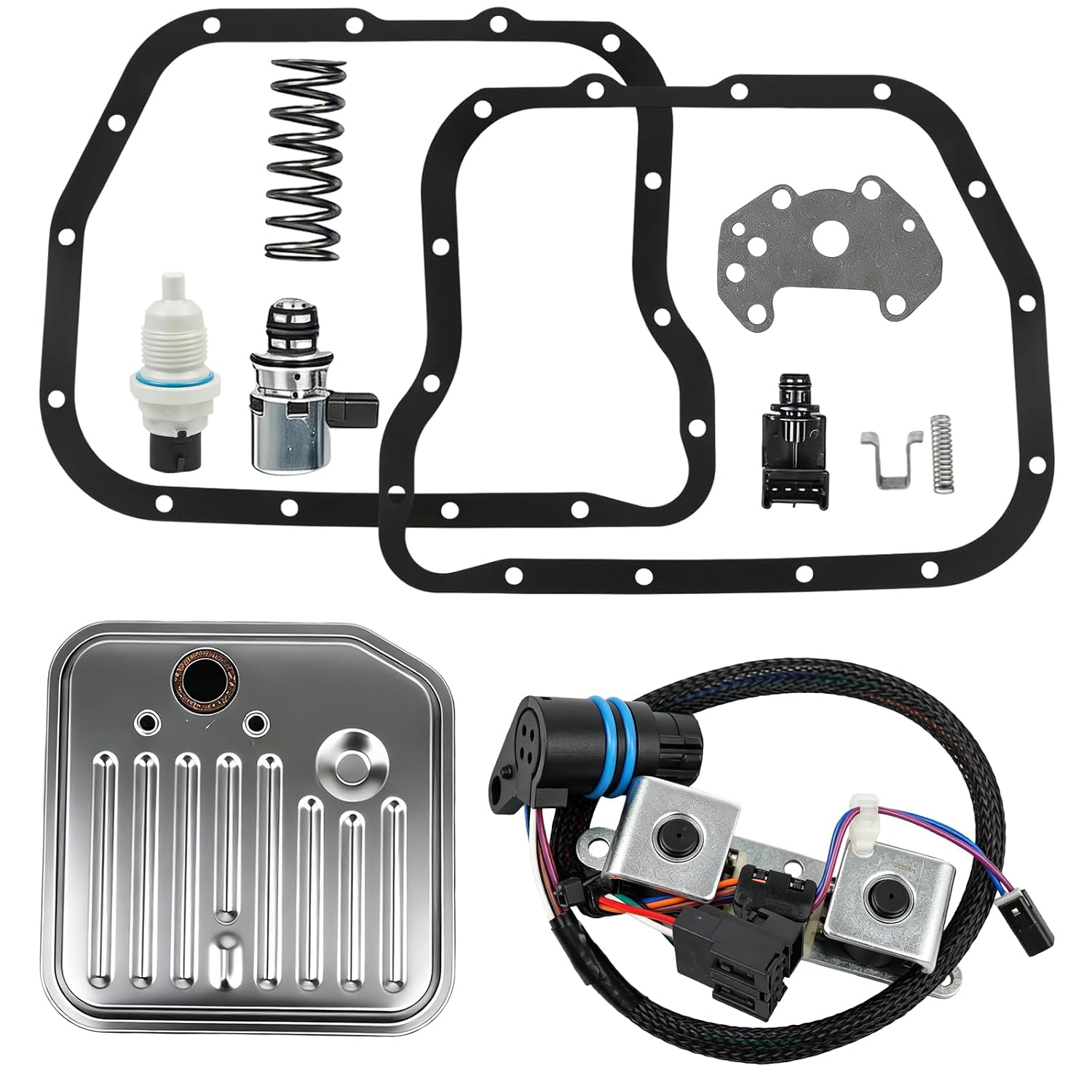
RE-Family Filter and Gasket Kit with Governor Pressure Sensor
The 46RE fluid temperature thermistor is part of the governor pressure sensor. This kit pairs a new sensor with the filter and pan gasket so the sensor and service can be done together. Check the sensor year listing against your truck before ordering. Sold by CoreTransmissionParts.
View the filter and sensor kit →Shop RE transmission parts →
Frequently Asked Questions
Why does my 46RE O/D OFF light come on by itself?
Per the 2001 Chrysler service manual, when fluid temperature passes 126C (260F) the PCM forces a 4-3 downshift, applies the converter clutch on the third-gear schedule and lights the O/D OFF lamp. Fourth gear comes back once the fluid cools to about 110C (230F). It means the transmission overheated, so check fluid level, cooler flow and the drainback valve.
Where is the 46RE transmission temperature sensor?
There is no separate pan sender. The thermistor is part of the governor pressure sensor assembly on the valve body and is always in fluid. Normal resistance at room temperature is about 1000 ohms, and the PCM uses it to control overdrive, converter clutch and governor pressure.
What causes a 46RE to overheat?
Chrysler lists two main causes of burnt fluid: restricted flow through the main or auxiliary cooler, usually from a faulty or wrongly installed drainback valve, a damaged cooler, or debris and kinked lines, and heavy-duty use on a truck not equipped with an auxiliary cooler, heavy-duty cooling and the right axle ratio. Low or overfilled fluid also causes overheating through aeration.
Can a backwards drainback valve cause overheating?
Yes. The drainback valve is a one-way check valve that belongs in the cooler pressure line with its arrow in the direction of flow. The service manual says a valve that is restricted, installed backwards or in the wrong line blocks flow and causes overheating and possible transmission failure.
What temperature should a 46RE run at?
GEARS Magazine puts the range where ATF works well at 160-200F, and Chrysler checks fluid level at about 180F. Readings that climb toward 260F under normal load mean a flow or cooling problem, and at 260F the PCM takes fourth gear away to protect the unit.
Sources
- Chrysler — 2001 Dodge Ram Truck (BR/BE) Service Manual, Automatic Transmission – 46RE (Temperature sensor and drainback valve p. 21-606; drainback valve description p. 21-605; burnt fluid and contamination p. 21-545; fluid level check p. 21-546). Backs the thermistor in the governor pressure sensor (about 1000 ohms; controls overdrive, converter clutch and governor pressure), TCC and overdrive lockout below about 50F, the 4-3 downshift with third-gear TCC and O/D OFF lamp above 260F and fourth returning at about 230F, the drainback valve (pressure line near the radiator tank, about 2 psi, arrow for flow direction, assembly only, replace after sludge or debris, remove when reverse flushing, backwards or wrong line causes overheating), the two causes of burnt fluid, the fluid contamination list, aeration from low or high level, and the 180F level check with Mopar ATF+4 Type 9602. The manualslib.com scan previously cited for these pages no longer resolves (403, bot-blocked as of October 2026); cited here as the factory manual by page number pending a working public mirror.
- Chrysler — 2001 Dodge Ram Truck Service Manual, Lubrication & Maintenance schedules (Schedule B conditions p. 22; Schedule B intervals p. 23). Backs trailer towing as a Schedule "B" condition and the Schedule "B" transmission fluid, filter and band adjustment service at 30,000 and 60,000 miles. Same manualslib.com availability note as above.
- Sonnax — Bob Warnke, "46-47RH/RE Cooler and Converter Flow." Backs cooler restriction as by far the most common issue (drainback fitting, coolers, lines), switch valve staging as head pressure nears 80 psi, the P0740/P1740, TCC slip, delayed engagement, slow fill, high stall and noise symptoms, the cooler bypass verification, and the converter restriction flow test. sonnax.com
- Sonnax — SonnaFlow Chart, 42-47RE Normal and Poor. Backs the lower line as the cooler return, the normal flow pattern (low at low pump speed, sharp rise on the 1-2 shift, drop at TCC apply), lower flow on 5/16 in line units, and repeated planetary and TCC lining failure when a failed converter plugs the lines, corrected by replacing lines and/or radiator. sonnax.com
- Transmission Digest — "Transmission Coolers, Part 2." Backs the move from 5/16 in to 3/8 in cooler lines improving flow by more than 30 percent. transmissiondigest.com
- GEARS Magazine (ATRA) — "Engine and Transmission Thermal Management Systems." Backs 160-200F as the range where ATF works well, and faster fluid breakdown and oxidation at higher temperature. gearsmagazine.com
- ATRA GEARS Magazine — Dave Skora, "Troubleshooting the 42-47RE Transmissions," October 2006. Backs the NTC thermistor on early units, the switch to a PTC thermistor on some 1999-up vehicles, and a reading that cools as the truck warms meaning the wrong sensor was installed. atracom.blob.core.windows.net (PDF)
- ATRA GEARS Magazine — "A Dead Stop! A Typical Dodge 47RE Problem With an Unexpected Solution" (2022). Backs the cooler air check at no more than 40 psi into the rear cooler fitting and the bucket flow check in gear. gearsmagazine.com
Shop 46RE coolers, pans, governor pressure sensors, filters and master rebuild kits, shipped fast from the USA.
Shop 46RE parts →