The 46RE shudder complaint almost always sounds the same. A Ram 1500, Durango or Dakota with the 5.2L or 5.9L gas V8 gets up to 40 to 55 mph, settles into a light cruise, and a vibration comes through the seat like the truck is running over rumble strips. Brush the brake or push the pedal a little further and it goes away. Let it settle back into a steady cruise and it comes right back. Usually the torque converter clutch is slipping and grabbing as it tries to hold lockup.
Treat shudder as a symptom, not a verdict. The converter lining can be glazed, but on a 46RE the clutch is just as often being starved of apply pressure, fighting release oil that cannot get out of the way, or running on fluid that has lost the friction properties it needs to engage smoothly. The factory numbers here come from Chrysler's 2001 Dodge Ram Truck (BR/BE) service manual, with Transmission Digest and Sonnax covering the known 46RE failure points. Sources are listed at the end.
The short version: First prove the vibration is the lockup clutch and not a misfire or the driveline. Then check fluid type and condition (ATF+4, MS-9602), cooler flow and the drainback valve, and the valve body lockup circuit — switch valve, lockup boost valve, and on 2000-01 trucks the boost valve cover plate orifice tied to P1740. The converter is the last thing you condemn, and if it goes, the cooler gets flushed and the drainback valve gets replaced with it.
How the 46RE Locks the Converter
The 46RE converter is a sealed, welded unit with an impeller, a turbine, a stator on an overrunning clutch, and a converter clutch made up of a piston and friction disc on the turbine side of the front cover. Chrysler rates the converter at a maximum torque multiplication of about 2.4:1 at stall.
Per the 2001 manual, the converter clutch is hydraulically applied and is released when fluid is vented from the circuit by the torque converter control (TCC) solenoid on the valve body, and the PCM controls that solenoid. The clutch engages in fourth gear, and in third under some conditions, such as with the O/D switch off or when cruising on a level road after warmup. It disengages momentarily when the PCM sees an increase in engine load, such as starting up a grade or opening the throttle.
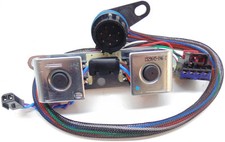
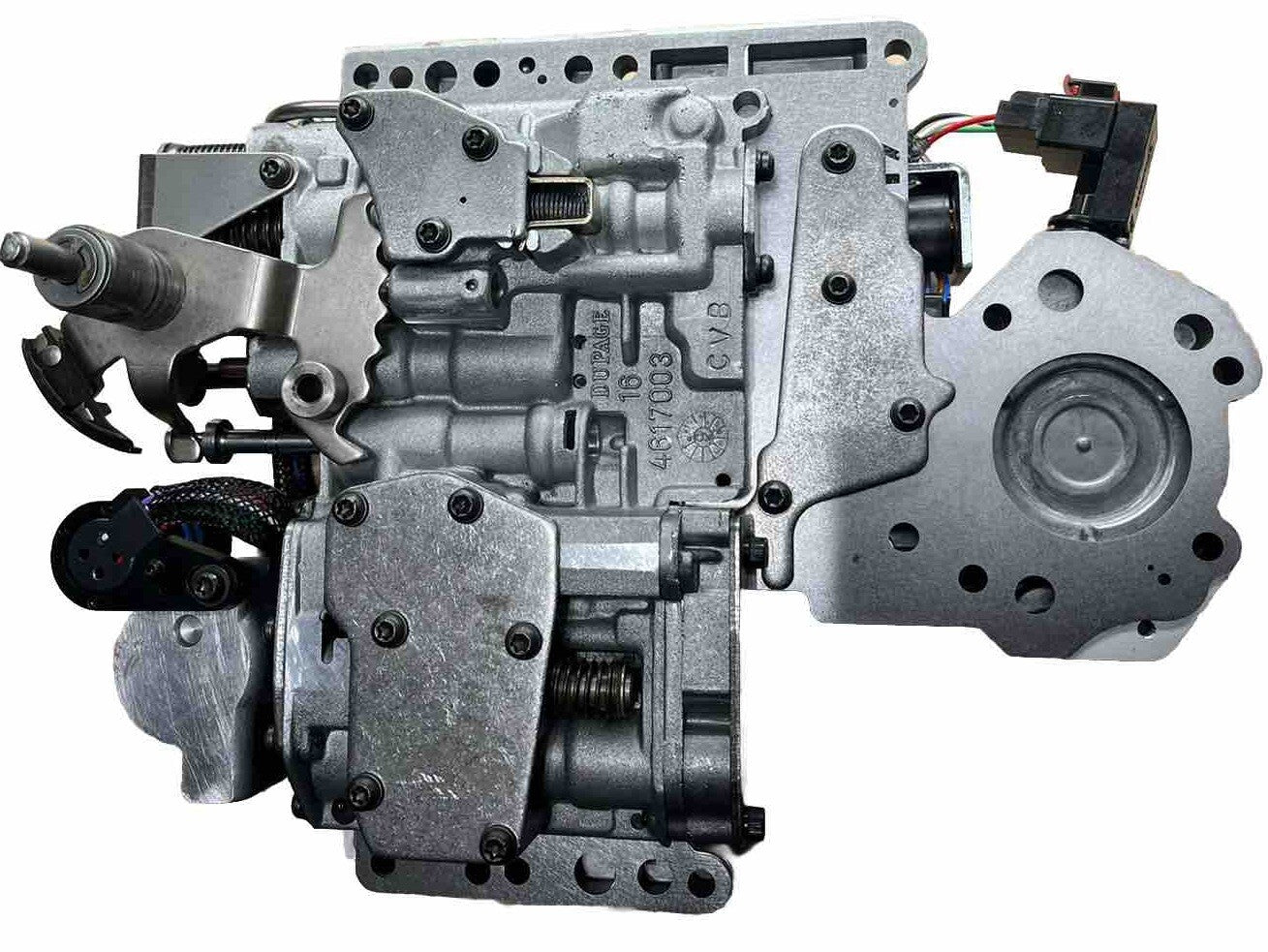
Inside the lower valve body housing, the manual's exploded view shows the parts that do the work: the converter clutch valve and spring, the converter clutch timing valve and spring, and the converter clutch solenoid alongside the overdrive solenoid. Up in the main body, the switch valve decides whether converter oil feeds the release side of the piston or line pressure feeds the apply side. When lockup is commanded, release oil has to leave the front of the piston before apply oil can clamp the disc. Anything that slows that exhaust or bleeds apply pressure gives you a clutch that slips while it is supposed to be locked. A lockup clutch slipping at cruise is a shudder.
Temperature changes when it locks
The fluid temperature thermistor is part of the governor pressure sensor, and Chrysler lists its resistance at about 1,000 ohms at room temperature. The PCM uses it to block converter clutch and overdrive engagement below about 10°C (50°F). Above about 126°C (260°F), the PCM forces a 4-3 downshift and applies the converter clutch on the third-gear schedule, and it will not allow fourth again until the fluid drops to about 110°C (230°F). So a truck that only shudders in third while towing or climbing on a hot day may be running on this overheat strategy. That points you straight at cooler flow.
Step 1: Prove It Is the Lockup Clutch
Plenty of 46RE trucks get converters they never needed. Prove it first.
- Watch the tach. When the clutch applies at cruise, engine rpm drops a couple of hundred and the needle goes steady. If the shake starts right at that moment and stops when rpm comes back up, it is lockup related.
- Break the lockup. A light tap on the brake pedal releases the TCC through the brake switch. If the vibration stops instantly at the same road speed, the clutch or its apply circuit is the problem. A tire, driveshaft or U-joint vibration stays with road speed whether lockup is on or off.
- Check for a misfire. This one matters on the gas V8s. Lockup pulls rpm down and puts the engine under real load at low speed, and that is exactly when a weak plug, cracked wire or worn distributor cap on a Magnum V8 starts to miss. A misfire at lockup feels like converter shudder. Watch misfire data, or at minimum look at the ignition parts, before you blame the transmission.
- Look for codes. Transmission Digest describes P1740 as a TCC or overdrive solenoid performance fault. Ed Lee's Transmission Digest article on 740 and 1740 codes explains that they set when the PCM sees excessive slip at the converter clutch after it has commanded apply. A 46RE with shudder and a stored P1740 is telling you the clutch is not holding.
Step 2: Fluid Level, Condition and Type
Fluid comes first because it is cheap and because it can cause shudder all by itself. The 46RE calls for Mopar ATF+4 (Chrysler MS-9602). Its friction modifiers are what let the lockup clutch slip slightly during apply without chattering. Shell's Pennzoil Platinum ATF+4 technical data sheet lists approval against Chrysler MS-9602 and calls out friction durability and retention as a core property, and that friction retention is exactly what keeps lockup smooth as the fluid ages. A generic multi-vehicle fluid, a Dexron-type fluid, or ATF+4 that has been cooked well past its service life can make a healthy converter shudder.
Check the level hot, in Neutral, on level ground, and wipe the dipstick on a white towel. Clean red fluid that is simply old or the wrong type is the case where fluid can fix it. A pan drop only replaces part of the fluid, since the converter and cooler still hold a lot of the old oil, so plan on two or three changes a few hundred miles apart. Dark, burnt fluid with black flecks means the lining or a clutch pack is already cooking, and fresh fluid will not save it. Capacities and the fill procedure are in our 46RE fluid type and capacity guide.
Step 3: Cooler Flow and the Drainback Valve
This is the check that gets skipped most, and on a 46RE it matters because converter release oil and cooler flow are the same oil. In its article on 46-47RH/RE converter and cooler flow, Sonnax calls cooler restriction by far the most common issue, with the drainback fitting, auxiliary or radiator coolers, and the lines all possible restrictions. With the TCC off, that restriction pushes the switch valve toward its spring, and its spools can stage partway through their travel and restrict converter and cooler flow even more. Sonnax says this becomes a problem as head pressure approaches 80 psi or more.
The test is simple. Sonnax recommends monitoring cooler flow from Drive at idle through the completion of lockup to isolate a converter restriction. Low flow until the TCC applies, followed by a slow apply or a slip or shudder on apply, points to release oil being trapped. Then temporarily bypass the cooler circuit and retest. If the shudder goes away with the cooler bypassed, fix the cooler, not the converter.
Next, the drainback valve. The 2001 manual puts it in the cooler outlet (pressure) line near the radiator tank, with a spring-loaded check ball that opens at about 2 psi. Chrysler services it only as an assembly, says not to clean it if it is restricted or contaminated, and requires it to be replaced after any failure that made sludge, clutch material or metal. The valve has a flow arrow. The manual warns that a valve that is restricted, installed backwards or put in the wrong line will cause overheating and possible transmission failure.
Step 4: The Valve Body Lockup Circuit
If the fluid is right and the cooler flows, go to the valve body. The 46RE has three well-documented problems here.
Switch valve wear
Sonnax says wear toward the spring end of the 4-spool switch valve bore reduces converter release oil, which hurts converter charge at idle and lube flow and can cause engine stumble and overheating. Wear at the inboard end gives a poor TCC apply or less line pressure boost. Its replacement switch valve (22771A-01, for '93-later units) is designed to control TCC release oil venting during apply for a firmer apply with no shudder, and an oversized version (22771A-13) is available when the bore is worn past the standard valve. Sonnax's 46RE/47RE vacuum test guide lists the same bore for lockup shudder, soft TCC apply and build-up of release pressure during lockup, so a low vacuum reading there is worth more than a guess.
Lockup boost valve and line rise
The lockup boost valve raises line pressure when the converter locks. Sonnax's comparison of the RE family hydraulics puts that rise at about 10 to 15 psi on the 46/47RE in third with the TCC on or in fourth. When the boost valve bore wears, the rise disappears, and Sonnax's oversized boost valve kit (22771-19K) lists TCC slip under load, no line rise during TCC apply in fourth, no lockup and TCC cycling among its symptoms. Tee a gauge into the line pressure port at the accumulator and watch it when lockup applies. No rise, no clamp. Our line pressure testing guide covers the gauge hookup. The vacuum test guide ties a worn boost valve bore to TCC slip under load and no line rise during TCC apply in fourth.
P1740 and the boost valve cover plate orifice (2000-01)
This one is specific. Transmission Digest's January 2005 Tech/Talk covers 2000-01 Dodge Ram Vans, Dakotas, Ram pickups and Durangos with a flashing check engine light from P1740. The cause is a reducing-pressure exhaust orifice in the boost valve cover plate that is too small, which delays the pressure increase needed when the converter clutch applies. The fix is to enlarge the orifice to 0.069 in. or install Chrysler's revised cover plate, part number 04617012, which comes with the larger orifice.
The factory diagnosis chart backs up the valve body angle from the other direction. For a 46RE with no 4-3 downshift, Chrysler lists a lockup solenoid that is not venting and a sticking 3-4 shift valve or lockup timing valve among the causes, with the fix being to replace the solenoid assembly or repair the stuck valve. See our 46RE valve body testing guide for the other bores to check while it is on the bench.
Step 5: The Converter, Pump and Installation
Sonnax's cooler flow article also points at alignment. The pump stator supports the turbine shaft and aligns it with the center of the converter cover. If the converter cover bushing or the crankshaft pilot is worn, the turbine shaft sealing rings can cross-leak, which disturbs both TCC apply and release oil. Ed Lee's Transmission Digest article on Chrysler converter flow lists the same group of causes for TCC slip codes: a restricted cooler or line, the wrong fluid, worn valve body bores, excessive pump clearance, and converter charge oil restrictions. It also gives the converter-to-flexplate spacing for Chrysler rear-drive overdrive units, including the 518 (46RE): a minimum of 0.125 in. and no more than 0.250 in.
There is one more converter killer to know about. Sonnax notes that the RH/RE units have no valve that limits apply-side converter pressure, so during full lockup the converter sees line pressure directly. Stock, that is near 130 psi in TCC or fourth. With a performance setup it can reach 150 psi or more, enough to balloon a converter. Its TCC apply limit valve kit (22771A-44K) replaces the OE switch valve and caps TCC apply near 130 psi without changing line pressure.
If the lockup rise is present, cooler flow is good, the fluid is fresh ATF+4, and the truck still shudders on apply, the lining is glazed, worn or contaminated and the converter has to be replaced. Chrysler's diagnosis chart pairs converter clutch problems with checking for a plugged cooler, doing a flow check and inspecting the pump for excessive side clearance. Do all three. When the new converter goes in, the 2001 manual says the surface of the converter lugs should sit 1/2 in. behind a straightedge laid across the bell housing when it is fully seated in the pump gears.
A Diagnosis Order That Works
| Check | What you are looking for | If it fails |
|---|---|---|
| Tach and brake tap test | Vibration starts at lockup, stops when TCC releases | If not, chase misfire, tires or driveline |
| Codes | P1740 (TCC or O/D solenoid performance) | Excess TCC slip confirmed; keep going |
| Fluid | Clean ATF+4 (MS-9602), correct level | Two or three changes if just old or wrong type |
| Cooler flow, idle through lockup | Steady flow, no drop at apply | Bypass test; flush or replace cooler; replace drainback valve |
| Line rise at lockup | About 10-15 psi rise when TCC applies | Boost valve bore wear; switch valve wear |
| 2000-01 boost valve cover plate | 0.069 in. orifice or plate 04617012 | Enlarge orifice or replace plate |
| Converter and install | 1/2 in. seating depth; 0.125-0.250 in. flexplate spacing | Replace converter, flush cooler, check pump and pilot |
Shop the part for this fix
Need a 46RE hard part that is not in our catalog? Our sister store CoreTransmissionParts carries 46RE pumps and hard parts for the same Ram, Dakota and Durango trucks.
Browse 46RE parts at CoreTransmissionParts →FAQ
What causes torque converter shudder on a 46RE?
The converter clutch lining can be glazed, but on a 46RE shudder is just as often caused by old or wrong fluid, a restricted cooler or drainback valve that traps release oil, or a worn switch valve or lockup boost valve in the valve body. Check those first, or a new converter will shudder too.
How do I tell 46RE converter shudder from an engine misfire?
Watch the tach and tap the brake. If the vibration starts when rpm drops at lockup and stops the instant the brake tap releases the converter clutch, it is lockup related. Lockup also loads the gas V8 at low rpm, which is when a weak plug or wire misses, so check misfire data before condemning the converter.
Will changing the fluid fix 46RE lockup shudder?
It can if the fluid is clean but old or is not ATF+4 (MS-9602), because ATF+4 friction modifiers are designed for smooth lockup. A pan drop leaves most of the old fluid in the converter and cooler, so it may take two or three changes. Burnt fluid with debris means the lining is already damaged.
What does P1740 mean on a 46RE?
P1740 is a TCC or overdrive solenoid performance fault, set when the PCM sees excessive converter clutch slip after commanding lockup. On 2000-01 Ram, Dakota, Durango and Ram Van trucks, Transmission Digest traced one cause to an undersized exhaust orifice in the boost valve cover plate, fixed by enlarging it to 0.069 in. or installing Chrysler plate 04617012.
What should I do when replacing a 46RE torque converter?
Flush or replace the cooler, replace the drainback valve with its arrow pointing the right way in the pressure line, and check the pump for excessive side clearance. Seat the converter so its lugs sit 1/2 in. behind a straightedge across the bell housing, and refill with ATF+4.
Sources
- Chrysler — 2001 Dodge Ram Truck (BR/BE) Service Manual, 46RE Torque Converter operation, TCC, and installation (pages 21-604 and 21-605). Backs the 2.4:1 maximum torque multiplication, TCC apply and release by the valve-body TCC solenoid under PCM control, engagement in fourth and in third, momentary release on engine load, and the 1/2 in. converter seating check. The ManualsLib scan previously cited for this page no longer resolves (403, bot-blocked as of October 2026); cited here as the factory manual by page number. The same 46RE converter clutch operation (hydraulic apply, release when the valve-body TCC solenoid vents, fourth and third gear engagement) is in the 1998 Dodge Ram Truck Service Manual, Group 21, full text on archive.org: archive.org.
- Chrysler — 2001 Dodge Ram Truck Service Manual, 46RE Drainback Valve and Transmission Temperature Sensor (page 21-606) and 46RE Diagnosis Charts (pages 21-498 and 21-500). Backs the approximately 2 psi drainback valve, no cleaning and mandatory replacement after sludge-making failures, the overheating warning for a restricted or reversed valve, the 1,000 ohm thermistor, TCC lockout below 10°C (50°F), the 126°C (260°F) 4-3 downshift with third-gear lockup and 110°C (230°F) return to fourth, and the lockup solenoid not venting, stuck lockup timing valve, and plugged cooler/pump clearance corrections. The drainback valve (about 2 psi), 1,000 ohm thermistor, 50/260/230°F temperature strategy and lockup diagnosis chart entries also appear in the 1998 Dodge Ram Truck Service Manual on archive.org (link in source 1).
- Transmission Digest — January 2005 Tech/Talk, "Chrysler 46RE/47RE: Diagnostic Trouble Code P1740," and Ed Lee, "740/1740 Codes and Chrysler Converter Flow." Backs P1740 on 2000-01 Ram Vans, Dakotas, Ram pickups and Durangos, the undersized reducing-pressure exhaust orifice, the 0.069 in. enlargement, Chrysler cover plate 04617012, the causes of excessive TCC slip codes, and the 0.125-0.250 in. converter-to-flexplate spacing. January 2005 issue / 740/1740 article (transmissiondigest.com)
- Sonnax — "46-47RH/RE Cooler and Converter Flow." Backs cooler restriction as the most common issue, switch valve staging near 80+ psi head pressure, the idle-through-lockup cooler flow check, the cooler bypass retest, and cover bushing and crank pilot cross-leak. sonnax.com
- Sonnax — 4-Spool Switch Valve 22771A-01, Oversized Lockup Boost Valve Kit 22771-19K, TCC Apply Limit Valve Kit 22771A-44K, "Prevent RFE, RH/RE Converter Failure," and "Dodge 48RE Hydraulic Features Revealed." Backs switch valve bore wear symptoms and release oil venting, boost valve wear causing TCC slip and no line rise, the 10-15 psi 46/47RE line rise at lockup, and the roughly 130 psi stock (150+ psi modified) TCC apply pressure. 22771A-01 / 22771-19K / 22771A-44K / TCC apply pressure / RE hydraulics (sonnax.com)
- Shell — Pennzoil Platinum ATF+4 Technical Data Sheet. Backs the Chrysler MS-9602 approval and friction durability/retention as a design property of ATF+4. shell-livedocs.com (PDF)
- Sonnax — Chrysler 46RE/46RH/47RE/47RH Vacuum Test Guide (46RE valve body shown). Backs the 4-spool switch valve symptoms (lockup shudder, soft TCC apply, release pressure build-up during lockup), lockup boost valve symptoms (TCC slip under load, no line rise during TCC apply in 4th) and the TCC timing valve link to TCC slip codes. sonnax.com (PDF)