Most 47RE lockup complaints come in as something else. One customer says the truck "feels like it slips at 50," another says the check-engine light flashes on the highway, and a third says the engine dies at every stop sign once the truck gets warm. All three can be the torque converter clutch circuit. On the 47RE, the heavy-duty four-speed behind the 5.9L Cummins and 8.0L V10 in 1996-2002 Ram 2500 and 3500 trucks, lockup is a mix of one simple electrical switch and a hydraulic circuit that is easy to get wrong. To diagnose it you need to know how both halves work, so that is where this guide starts.
This is the how-it-works and how-to-test companion to our 47RE lockup shudder guide. The hydraulic details come from Sonnax's RE-family tech articles and switch valve instructions, Transmission Digest and Gears Magazine (ATRA). The electrical specs come from ATSG's 46RE/47RE/48RE technical manual. Sources are listed at the end.
What Lockup Does on a 47RE
An unlocked converter always slips, and that slip turns into heat. The converter clutch is a friction-lined piston on the turbine. When it clamps against the inside of the front cover, the engine and input shaft turn together. That stops the slip, cuts fluid heat and helps fuel economy. A truck that has quietly stopped locking up will often run hot before it shows any other symptom.
The Electrical Side: One Solenoid, One Ground
The 47RE has three solenoids, and only one of them runs lockup. ATSG's manual lays out the layout and the case connector terminals:
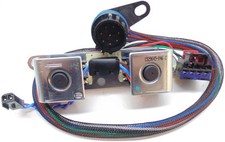
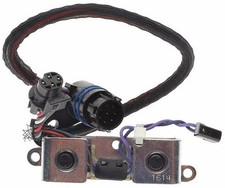
- Overdrive/TCC solenoid assembly. The overdrive and TCC solenoids sit together in one block on the valve body. That block is part of the internal wiring harness and case connector. The overdrive solenoid only handles the 3-4 shift. The TCC solenoid only handles lockup.
- Governor pressure solenoid. This one sits in the governor body under the transfer plate. It controls the 1-2 and 2-3 shifts and has nothing to do with lockup. It does share the 12V supply.
- Power and ground. The transmission control relay sends 12V to all three solenoids through case connector terminal 1. The PCM grounds terminal 7 to apply the TCC solenoid. Terminal 6 is the overdrive solenoid and terminal 5 is the governor solenoid.
- Resistance. ATSG says the TCC and OD solenoids should measure 25-40 ohms. The governor pressure solenoid reads about 3-5 ohms, so do not mix them up when you probe the connector.
The internal harness depends on the model year. ATSG notes four design levels of the governor pressure and fluid temperature sensor, and the late-2000-and-up 4th design will not retrofit to earlier trucks. When you replace a solenoid block or internal harness, match it to the truck's year and connector, or you will create a sensor code while fixing a lockup code.
The codes and what each one actually means
The RE-family code list in ATSG's manual separates electrical faults from slip faults, and that split tells you where to start:
- P0743, TCC solenoid circuit / transmission control relay circuit. This is an electrical fault. The PCM saw something wrong on the solenoid circuit itself: an open, a short or a relay problem. Test the wiring and the coil before you touch anything hydraulic.
- P0740, torque converter clutch, no rpm drop at lockup. The PCM grounded the solenoid, but engine speed did not fall the way a locked converter should make it fall.
- P1740, TCC or overdrive solenoid performance. This is a slip or performance fault on the lockup and overdrive circuit.
Ed Lee's Transmission Digest article on 740 and 1740 codes explains the logic. The PCM keeps comparing engine speed to transmission output speed. If the slip limits for a gear are exceeded and lockup was not commanded, you get a gear-ratio code. If they are exceeded while lockup was commanded, you get the TCC slip code. That means a P0740 or P1740 does not prove the solenoid is bad. It only proves the clutch did not hold once the PCM asked for it.
The Hydraulic Side: Release Oil Has to Get Out
Most bad 47RE lockup diagnoses start here. Ed Lee describes the oil path in his Transmission Digest article. With the converter released, converter charge oil comes in through the input (turbine) shaft. It passes through the grooves on the outside of the turbine hub bushing, fills the space between the cover and the front of the lockup piston, and spills around the piston's outer edge to fill the rest of the converter. That oil in front of the piston is release oil, and it is what keeps the piston off the cover.
When the TCC solenoid applies, the switch valve strokes. Charge oil now goes straight to the cooler, and the release oil trapped in front of the piston has to vent. It goes back out through the input shaft, past the switch valve spool and out through a slot in the separator plate. Only then can the piston move forward and clamp the cover. Sonnax's 46-47RH/RE cooler and converter flow article says the same thing: if release oil cannot exhaust, the piston will not hold.
So a 47RE lockup can fail with a perfect solenoid and a perfect clutch lining, simply because release oil is restricted. Anything that slows that vent gives a soft apply, slip or shudder. That includes a bent flexplate that pushes the converter rearward, a turbine hub bushing set too deep, a solid thrust washer, a worn switch valve or a narrow separator plate slot.
The valves in the circuit
- 4-spool switch valve. This valve sends oil to the release or apply side and vents release oil during apply. Sonnax lists lockup shudder and an overheated converter as symptoms of a worn or scratched switch valve, caused by debris and constant oscillation. Its improved 22771A-01 design is built to vent release oil at the same moment the TCC applies. Sonnax's drawing of the OE valve shows the release side exhausting before apply, which gives a soft apply and shudder.
- Pressure regulator. Sonnax notes that the pressure regulator supplies and regulates converter release oil and is also the source of TCC apply pressure. Bore wear here shows up as noise, high pressure or TCC slip.
- Boost valve. In third gear with the TCC on, or in fourth, apply oil moves the boost valve and line pressure rises. Sonnax measures that rise at about 10-15 psi on the 46/47RE, against 22-28 psi on a 48RE. Its switch valve instructions put it at 8-10 psi with no TV influence, and up to 40% over the idle setting under heavy throttle.
- Lockup valve and the manual-range cancel. In the 46/47RE, the TCC solenoid is fed from the 1-2 shift valve, so there is no lockup in first. A passage from the manual valve in manual 2 or manual 1 goes to the spring side of the lockup valve and cancels lockup in those ranges. The 48RE dropped that cancel. A 47RE that locks up in manual 2 has a hydraulic problem, or someone has swapped in a valve body from a different unit.
Sonnax also warns that a 46/47RE valve body in a 48RE can cost a converter clutch or overdrive clutch, because the 48RE needs its higher boost.
How to Diagnose a 47RE Lockup Problem
Work from the easy checks to the hard ones. Gears Magazine's 47RE stall case study uses the same order, and in that truck the converter was the last thing at fault.
1. Confirm what the converter is doing
Drive it warm at a steady 45-55 mph in overdrive and watch the tach. A lockup clutch that applies cleanly drops rpm and holds it steady. If rpm drops, then creeps back up, or flares a few hundred rpm when the converter applies, the clutch is slipping. If rpm never drops, lockup is not being commanded or is not getting through. On a scan tool, watch the TCC command against engine rpm and output speed so you can see whether the PCM is commanding lockup at all.
2. Check the fluid
The 47RE takes ATF+4. Ed Lee lists fluid without the right frictional qualities as a cause of 740 codes on its own. Check the level hot and smell the fluid. Burnt fluid with debris means the lining or a clutch pack is already damaged. For capacities and the fill procedure, see our 47RE fluid guide.
3. Test the electrical half at the case connector
With the connector unplugged, measure the TCC solenoid between terminal 1 and terminal 7. You want 25-40 ohms. Check for 12V on the harness side of terminal 1 with the key on, then use a test light to confirm the PCM grounds terminal 7 when lockup should apply. If a P0743 is stored, stay on this step until the circuit checks out.
To find out whether the converter is hydraulically stuck on, use the unplug test. Gears Magazine notes that unplugging the transmission connector cuts power and ground to the TCC solenoid without changing line pressure on a 47RE, because the 47RE controls governor pressure with a solenoid rather than controlling line pressure. Expect a third-gear start with the connector off. ATSG notes that governor pressure should go to about 60 psi at idle in Drive with the connector unplugged. If the truck still stalls coming to a stop with the connector unplugged, the lockup apply is hydraulic.
4. Measure cooler flow through lockup
Lockup changes cooler flow, so a flow test tells you a lot about lockup. Sonnax's switch valve instructions give the numbers for this family. From the cooler return at the rear of the case, you want at least 1 quart in 20 seconds (0.8 gpm) in Drive at idle. On a flow meter, good readings are 0.7-0.9 gpm at idle in Drive, about 1.8 gpm at 45 mph with the TCC off, and a quick rise to 2.1-2.2 gpm when the TCC applies. That rise happens because charge oil goes straight to the cooler once the switch valve strokes.
Sonnax's flow article explains how to read the results. Low flow before lockup, then a slow apply or slip, means release oil is restricted inside the converter. If you bypass the cooler circuit and the problem goes away, the restriction is in the cooler, lines or drainback fitting. Gears Magazine's version of the test is to loop the cooler lines and blow no more than 40 psi of air into the rear cooler fitting.
5. Gauge line pressure at lockup
Put a gauge on the line pressure tap. Sonnax places it on the passenger side of the case, in the middle, between the accumulators. Sonnax's spec is 60-65 psi at idle in Drive. Then watch for the boost when lockup applies: about 10-15 psi on a 47RE. No rise points to the boost valve, its cover plate or a leaking auxiliary tube. A rise far above spec can cause bind-up and converter damage. Sonnax has recorded lockup and fourth-gear line pressure as high as 200 psi with a very strong regulator spring.
6. Pull the valve body and pump only when the tests point there
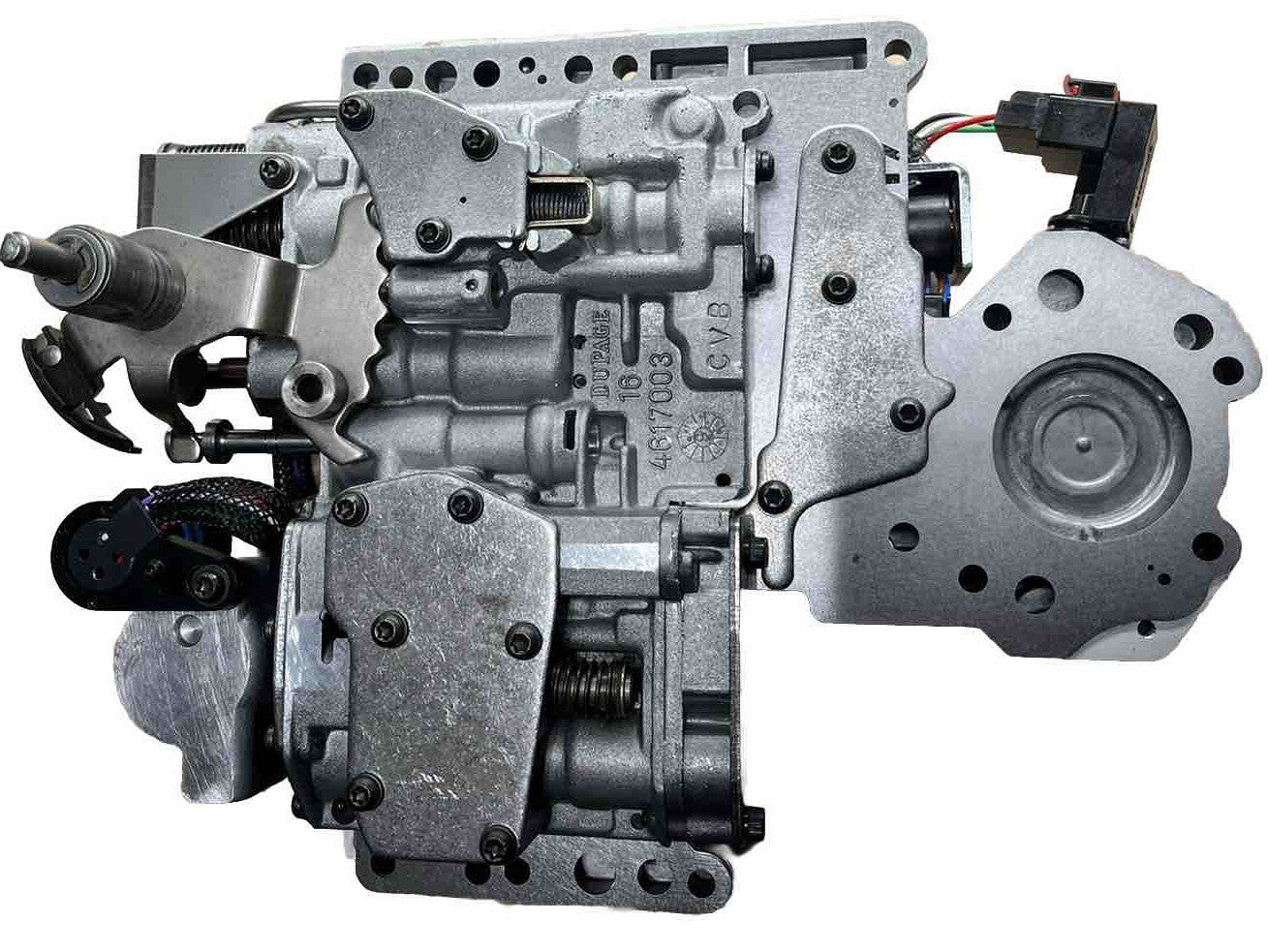
On the bench, check the switch valve and its bore for wear and free movement. Look at the separator plate exhaust slot. Sonnax opens it to 0.450-0.500 in. on diesels, because a wider slot vents release oil faster for a firmer apply. Check the valve body for warpage. Gears Magazine flattens it with 220-grit wet/dry paper on glass. Then check the pump. In the Gears case, the truck stalled at every stop because the stator support was warped near the feed holes, which cross-leaked the converter passages. Air sent into the front clutch circuit came out the converter in and out passages. A new converter would not have fixed that truck.
For a full bench routine, see our 47RE valve body testing guide.
When It Really Is the Converter
Condemn the converter only after the fluid, solenoid circuit, cooler flow and line rise all check out. Before you blame the new one, also check the converter install itself, because Ed Lee documents 740 codes caused by installation and rebuild mistakes:
- Converter-to-flexplate spacing. Push the converter back until the hub bottoms in the pump, then measure from the flexplate to the converter pad. On Chrysler rear-drive overdrive units, the gap should be at least 0.125 in. and no more than 0.250 in. A bent flexplate that pushes the converter rearward can restrict flow between the input shaft and the cover.
- Turbine hub bushing depth. It should sit flush to 0.020 in. above its bore. One that was installed 0.080 in. below flush completely blocked flow and set a 740.
- Thrust washer. A solid brass, fiber or phenolic washer between the turbine hub and cover leaves release oil almost nowhere to go. A one-sided grooved washer installed the wrong way does the same.
An aftermarket multi-disc converter clutch applies and releases harder, and Gears Magazine notes it can make a marginal valve body worse. If the truck needs a converter, build the valve body and cooler flow to match it.
If lockup is fine but the truck will not shift into fourth, the overdrive solenoid shares the same block. Start with our 47RE overdrive diagnosis.
RE Overdrive and TCC Lock-Up Solenoid, 2000-2004
A replacement OD/TCC lock-up solenoid for 2000-up RE-family units, from CoreTransmissionParts. Match it to your case connector and sensor design level before you order.
View the lock-up solenoid →Shop RE transmission parts →
Frequently Asked Questions
When does a 47RE torque converter lock up?
The PCM applies lockup at a steady cruise once the truck is warm, mainly in overdrive and in third under some conditions. The TCC solenoid is fed from the 1-2 shift valve, so there is no lockup in first, and the stock valve body cancels lockup in manual 2 and manual 1. Braking or a big throttle input releases it.
How do I test a 47RE TCC solenoid?
Unplug the case connector and measure between terminal 1 (12V feed) and terminal 7 (TCC ground). ATSG specifies 25 to 40 ohms for the TCC and overdrive solenoids. Then confirm 12V on terminal 1 with the key on and that the PCM grounds terminal 7 when lockup should apply.
What is the difference between P0740, P0743 and P1740 on a 47RE?
P0743 is an electrical fault in the TCC solenoid or transmission control relay circuit. P0740 means the PCM commanded lockup but saw no rpm drop. P1740 is a TCC or overdrive solenoid performance fault. P0740 and P1740 mean the clutch did not hold, which can be hydraulic, not just a bad solenoid.
Why does my 47RE stall when I come to a stop?
The converter clutch is staying applied at low speed. Unplug the transmission connector. If it still stalls, the apply is hydraulic, so check cooler flow, the switch valve and valve body, and the pump stator support for warpage that cross-leaks the converter passages. Gears Magazine traced one case to a warped pump.
Will a new torque converter fix 47RE lockup problems?
Only if the converter is the actual cause. Restricted cooler flow, the wrong fluid, a worn switch valve, a narrow separator plate slot or pump cross-leaks will make a new converter slip or shudder too. Check fluid, the solenoid circuit, cooler flow and the 10 to 15 psi line rise first.
Sources
- Transmission Digest — Ed Lee, "740/1740 Codes and Chrysler Converter Flow" (September 2005). Backs the PCM slip logic behind 740/1740 versus gear-ratio codes, the non-converter causes (cooler restriction, wrong fluid, valve body and pump leaks), the converter charge and release oil path, the 0.125-0.250 in. converter-to-flexplate gap, the turbine hub bushing depth and the thrust washer restrictions. transmissiondigest.com
- Sonnax — "46-47RH/RE Cooler and Converter Flow." Backs release oil exhausting past the switch valve and separator plate for apply, the pressure regulator as the source of release and apply oil, cooler restriction as the most common issue, the idle-through-lockup flow check and the cooler bypass test. sonnax.com
- Sonnax — "Dodge 48RE Hydraulic Features Revealed." Backs the 46/47RE TCC solenoid feed from the 1-2 shift valve, the manual 2/1 lockup cancel at the lockup valve, the 10-15 psi (47RE) vs 22-28 psi (48RE) line rise, and the valve body interchange warning. sonnax.com
- Sonnax — 4-Spool Switch Valve 22771A-01 installation instructions (42RE through 48RE). Backs the 8-10 psi boost at TCC apply, the 40% and 200 psi high-pressure cautions, the 60-65 psi idle line pressure and tap location, the 0.450-0.500 in. diesel exhaust slot, the 0.8 gpm minimum cooler flow and the 0.7-0.9 / 1.8 / 2.1-2.2 gpm flow readings, and the OE valve's early release exhaust. Sonnax instruction sheet (PDF)
- Sonnax — 4-Spool Switch Valve 22771A-43. Backs lockup shudder and an overheated converter as switch valve wear symptoms, caused by debris and valve oscillation, and the improved 22771A-01 for soft TCC apply and release pressure build-up. sonnax.com
- Gears Magazine (ATRA) — "A Dead Stop: A Typical Dodge 47RE Problem With an Unexpected Solution" (August/September 2022). Backs the easiest-to-hardest diagnosis order, the 40 psi cooler air test, the connector-unplug test being valid on the 47RE, switch valve timing and valve body flattening, the warped pump stator support cross-leak, and the multi-disc converter caution. gearsmagazine.com
Solenoid resistance values, the case connector terminal functions, the DTC descriptions and the 60 psi unplugged governor pressure come from the ATSG 46RE/47RE/48RE Technical Service Information manual (2011), a print reference.
Shop 47RE lock-up solenoids, valve bodies, internal harnesses and rebuild kits, shipped fast from the USA.
Shop 47RE parts →