These two get mixed up constantly, and it is an honest mistake. Both are GM Hydra-Matic FWD transaxles, both carry the "4T" four-speed electronic naming, and both showed up on W-body and related platforms through the late 1990s and 2000s. But they are not the same family, they do not share a bellhousing, and one of them was built around a completely different engine than the other. Here is what actually separates a 4T65E from a 4T80E, what fails on each, and which one is sitting under your hood right now.
The short version: the 4T65E is the third-generation evolution of GM's 4T60 FWD transaxle family, built for V6 cars like the Impala, Grand Prix and Century. The 4T80E is a separate, larger unit designed from scratch for the Cadillac Northstar V8. They share a control philosophy and a similar-looking valve body circuit, including the same failure-prone AFL valve, but the cases, torque converters and torque ratings are different enough that nothing physically interchanges without real fabrication.
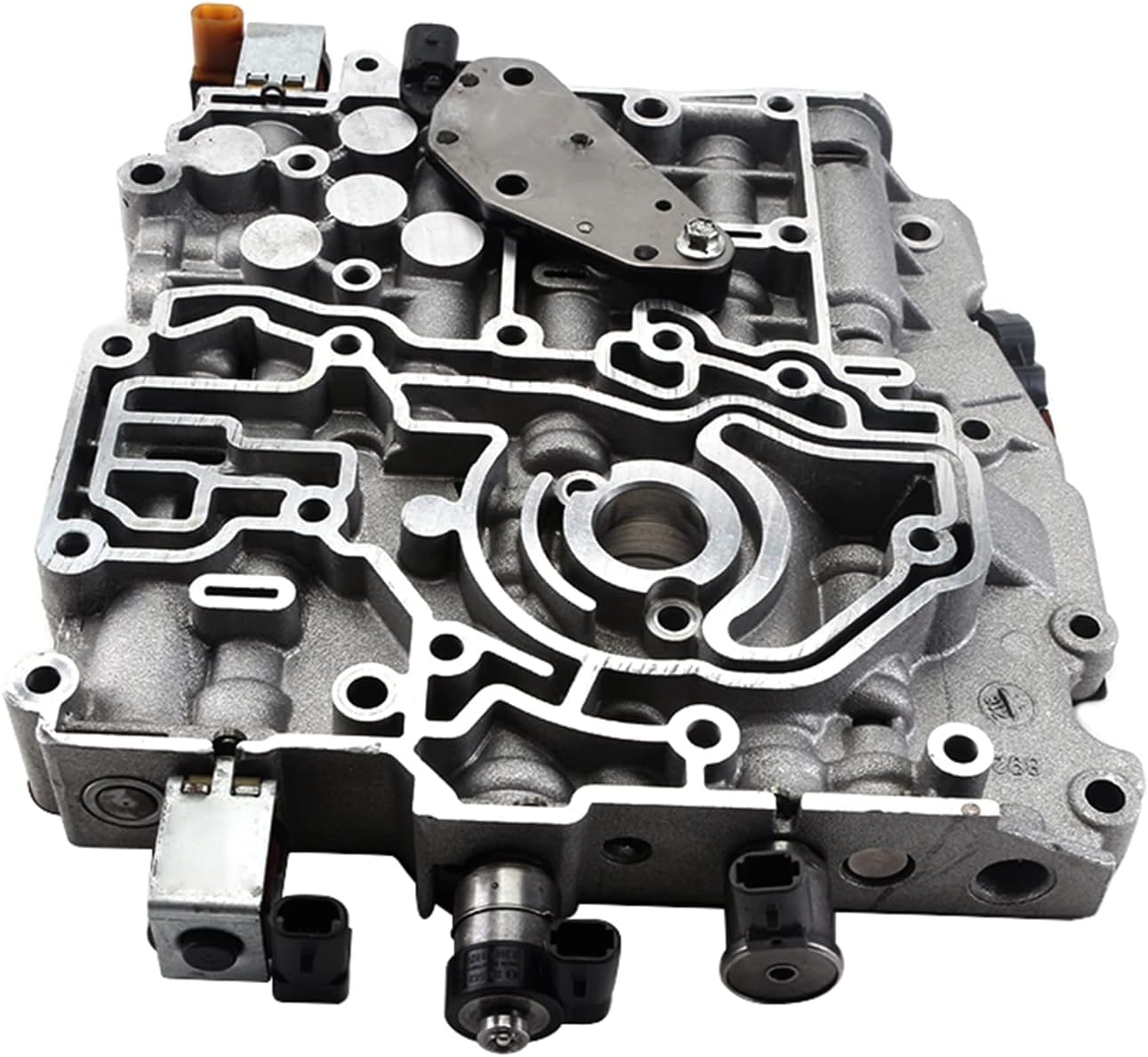
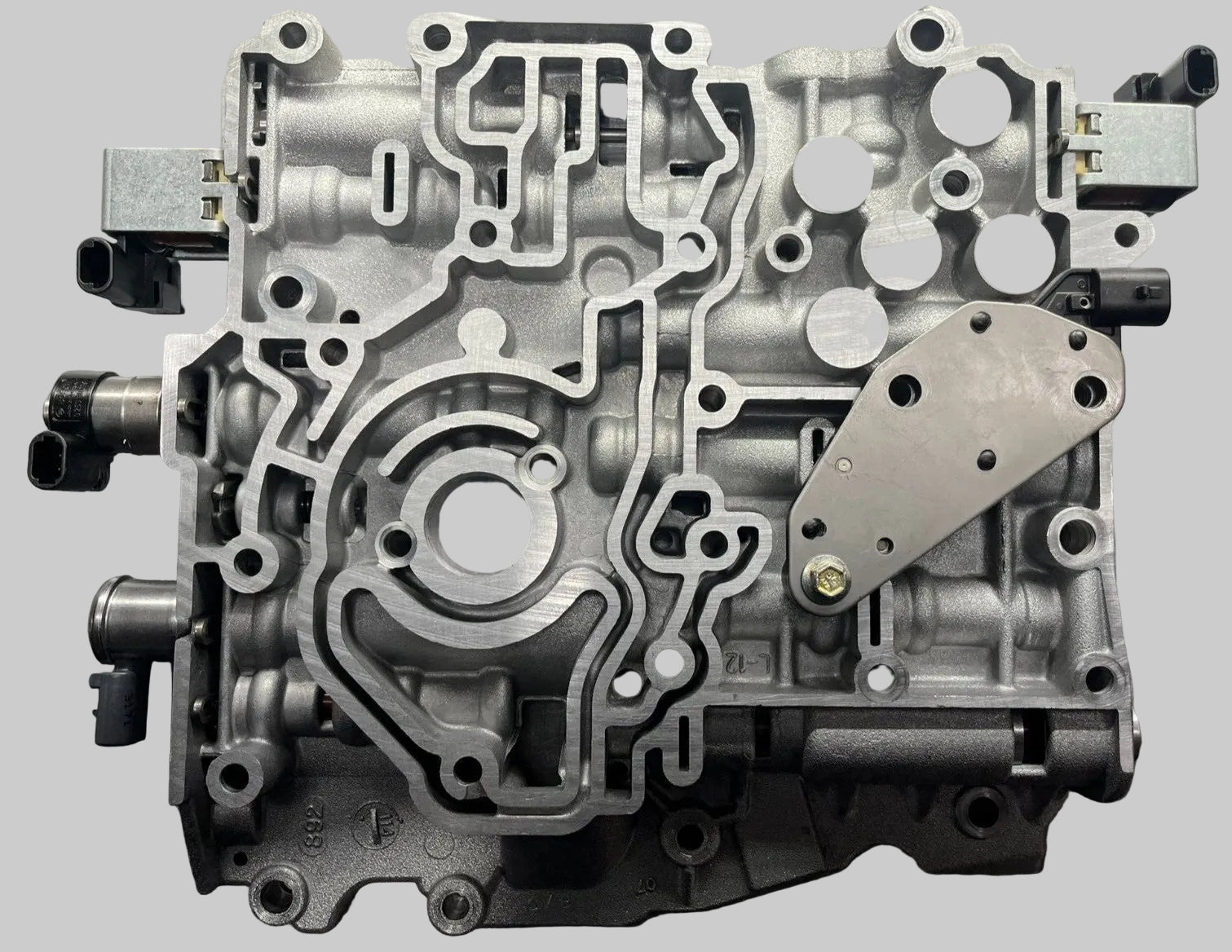

What each one was actually built for
GM's own SAE paper on the 4T65E describes it as the third evolution of the company's four-speed FWD transaxle family, with the design brief centered on fuel economy, reduced noise, and the ability to tune shift feel. The redesign brought a larger-diameter torque converter developed with 3-D modeling, a controlled-slip clutch for better cooling at higher power, a revised oil pump, and a new phased drive chain built around powdered-metal sprocket technology. It was built at Warren Transmission in Warren, Michigan, and went into production for the 1997 model year behind the GM 3.1L, 3.4L and 3.8L V6 engines in cars like the Century, Regal, Lumina, Monte Carlo, Grand Prix, Intrigue, Impala and Venture.
The 4T80E is a different animal entirely. GM's SAE paper on the unit describes it as a completely new transmission developed specifically for the Cadillac Northstar 32-valve V8, built to handle high torque and high shift speeds while keeping noise down and efficiency up. It debuted in the 1993 Cadillac Allante alongside the Northstar engine and went on to serve the Eldorado, Seville, DeVille, Buick Park Avenue and Oldsmobile Aurora V8. It was built at Willow Run Transmission in Ypsilanti, Michigan, a different plant from the 4T65E.
Gear ratios and torque capacity
| Spec | 4T65E | 4T80E |
|---|---|---|
| 1st | 2.921:1 | 2.96:1 |
| 2nd | 1.568:1 | 1.63:1 |
| 3rd | 1.000:1 | 1.00:1 |
| 4th (OD) | 0.705:1 | 0.68:1 |
| Reverse | 2.385:1 | 2.13:1 |
| Max engine torque in | 280 lb-ft | 305 lb-ft |
| Max gearbox torque | 400 lb-ft | 461 lb-ft |
| Weight (dry, approx.) | 195 lb | 292 lb |
The ratio spread is actually close between the two, which surprises people who assume the Northstar transaxle is a totally different animal on paper. The real separation is in what each case was engineered to carry. GM rates the 4T65E for 280 lb-ft of engine torque and a 400 lb-ft gearbox limit, while the 4T80E is rated for 305 lb-ft in and 461 lb-ft at the gearbox. That is nearly 100 lb-ft more headroom at the output, which tracks with the roughly 100-lb weight difference between the two cases. The 4T80E is simply a bigger, heavier unit built to live behind a torquier V8.
Why one will not bolt in for the other
This is the question that comes up most, usually from someone with a supercharged 3800 wanting more transmission behind it. The two use different torque converter bolt patterns: the 4T65E converter bolts up with a 3-bolt pattern, the 4T80E uses a 4-bolt pattern. Physically, the 4T80E case centerline sits about 0.375 inch wider than the 4T60/4T65 family's 9.125 inch centerline, which does not sound like much until you are trying to line up bellhousing bolt holes.
On the common 3800-to-4T80E swap, the rear lower bellhousing bolt holes on the 4T80E do not align with the existing threads in the 3800 block, so they have to be drilled fresh, and the block itself typically needs material trimmed away to clear the tail of the 4T80E case. Builders doing this swap also commonly add a stud through the center rear bellhousing bolt hole for extra rigidity, because the stock bolt pattern was never designed around that block. None of this is insurmountable for a dedicated swap project, but it is a fabrication job, not a parts-counter interchange.
The AFL valve: the failure both units share
Despite the case and converter being different, the two transaxles share a control architecture, and that includes the same weak point: the actuator feed limit (AFL) valve in the channel plate. On the 4T65E, the AFL valve regulates incoming line pressure down to roughly 115 psi before sending it on to the EPC solenoid and the 1-2/3-4 shift solenoid circuit. The valve oscillates constantly in a cast aluminum bore, and over time that bore wears. Once it does, regulated oil leaks off to the exhaust passage instead of reaching the solenoids, pressure drops, and the unit sets a P1811 low line rise code, runs at maximum shift adapt, can trigger a P0741 torque converter clutch slip code, starts off in second gear instead of first, and can even show an unintended 4th-gear disengagement. A worn axle bearing, a worn pump shaft sleeve, or a blown channel-plate-to-case gasket produce overlapping symptoms, so a full channel plate inspection covers all of it in one pass rather than chasing codes individually.
The 4T80E uses the same AFL concept to feed its pressure control and shift solenoids, and it wears the same way. On that unit, a worn AFL bore shows up as solenoid and ratio codes, clutch or band failure, harsh shifts, unwanted second-gear starts, and low line pressure. Sonnax catalogs a dedicated wear-resistant AFL sleeve and valve kit for the 4T80E for exactly this reason — it is common enough across both transaxle families to be worth a purpose-built fix rather than a full valve body replacement.
Identifying a 4T65E channel plate
If you are staring at a bare 4T65E valve body trying to figure out what you have, the channel plate casting number tells the story. GM ran five distinct castings across the unit's life, split between a GM-only worm track style and a Volvo/GM TAP-shift style (GM owned Volvo's passenger car division through this period, which is why the Volvo-spec plate exists). A mid-2002 running change added a new machined area to accommodate a redesigned 4th clutch with an added external tab on its steel plate, so an early casting and a late casting are not drop-in interchangeable even within the 4T65E family itself.
| Casting | Casting # | Years | Style |
|---|---|---|---|
| GM171 | 24211900 | 1997-2002 | GM, TCC blow-off only* |
| GM172 | 24224086 / 24229721 | Mid-2002+ | GM, TCC & drain-back blow-off |
| GM173 | 24224896 | Mid-2002+ | GM, TCC blow-off only |
| GM174 | 24213496 | 1999-2002 | Volvo, TCC & drain-back blow-off |
| GM175 | 24224897 / 24229720 | 2003+ | Volvo/TAP, TCC & drain-back blow-off |
*Some early plates carry both blow-off ball locations. Sonnax's own identification guide flags a specific trap here: having both a valve in the return line and one on the channel plate at the same time causes a lube restriction and a subsequent failure, so whatever configuration the original casting used has to be matched exactly on reassembly, not mixed and matched.
4T65E Remanufactured Valve Body, 2003-Up
If the AFL bore is worn past a clean repair or the channel plate is cracked, a fresh remanufactured valve body resets the whole hydraulic circuit at once instead of chasing individual valves. This is the 2003-and-later casting with the updated 4th-clutch machining.
View the 4T65E remanufactured valve body →Fluid: Dexron-VI covers both
Both transaxles were released on Dexron-III-era fluid, and Dexron-VI is backward compatible for both. The Pennzoil ATF Dexron-VI technical data sheet confirms a GM-approved Dexron-VI fluid meets GM specification GMN10060 and is fully back serviceable for Dexron-III(H), III and IIE applications, with better oxidation and shear stability than the older Dexron-III(H) spec. In practical terms, run Dexron-VI in either unit and you are covered.
Capacity is where they genuinely differ. A 4T65E pan-drop service typically pulls close to 8 quarts, with roughly 10 quarts total for a full overhaul fill. The 4T80E uses a dry-sump-style layout where most of the fluid lives in the side cover rather than the pan, so a pan service pulls noticeably less than that and the final fill has to be set by the dipstick procedure at operating temperature rather than by pouring in a fixed quart count.
Which one do you actually have, and which is stronger
If the car in front of you has a V6 — 3.1, 3.4 or 3.8 liter — and it is a Century, Regal, Lumina, Monte Carlo, Grand Prix, Intrigue, Impala or Venture from the 1997-2005 range, you are looking at a 4T65E. If it is a Northstar V8 car — Eldorado, Seville, DeVille, Aurora V8, or a Park Avenue Ultra — you have a 4T80E. The torque converter bolt count alone (3-bolt versus 4-bolt) confirms it in under a minute if the pan is already off.
On raw capacity, the 4T80E is the stronger unit by GM's own torque ratings, and it has to be — it was built to live behind a 300-plus lb-ft V8 instead of a V6. But "stronger" only matters if the case fits your application. For the overwhelming majority of GM FWD V6 owners, the 4T65E is the correct transaxle, and the AFL valve and channel-plate wear covered above are the actual failure points worth knowing before you diagnose a shift complaint as something more expensive than it is.
Need parts for this job?
Valve bodies, AFL repair components, rebuild kits and hard parts for the 4T65E, shipped from the USA.
Shop 4T65E parts →FAQ
Will a 4T80E bolt in where a 4T65E was?
No, not without real fabrication. The 4T80E uses a 4-bolt torque converter pattern versus the 4T65E's 3-bolt pattern, and the 4T80E's case centerline sits roughly 0.375 inch wider than the 4T60/4T65 family. On a common swap like dropping a 4T80E behind a 3800 V6, the rear lower bellhousing bolt holes do not line up with the block and have to be drilled, and the block itself typically needs to be trimmed to clear the tail of the 4T80E case. This is an engine-bay swap project, not a direct replacement.
Which has more torque capacity, the 4T65E or the 4T80E?
The 4T80E. GM's published ratings put the 4T65E at a maximum engine torque input of 280 lb-ft and a maximum gearbox torque of 400 lb-ft, while the 4T80E is rated for 305 lb-ft of engine torque and 461 lb-ft of gearbox torque. That extra headroom is why the 4T80E was built specifically for the Northstar V8 rather than the V6 engines the 4T65E was designed around.
Why does my 4T65E set a P1811 code and shift hard?
The most common cause is a worn actuator feed limit (AFL) valve bore in the channel plate. The AFL valve regulates line pressure down to about 115 psi before it reaches the EPC and shift solenoids. When the aluminum bore wears from the valve's constant oscillation, regulated oil leaks to the exhaust passage, pressure drops, and the unit sets a P1811 low line rise code, runs at maximum shift adapt, and can start in second gear instead of first. A worn axle bearing, a worn pump shaft sleeve, or a blown channel-plate-to-case gasket can produce similar symptoms and should be checked at the same time.
Does the 4T80E have the same AFL valve problem as the 4T65E?
Yes. Both transaxles route AFL-regulated pressure to the pressure control solenoid and the shift solenoids, and both wear the same way over time. On the 4T80E, a worn AFL bore shows up as solenoid and ratio codes, clutch or band failure, harsh shifts, unwanted second-gear starts, and low line pressure. Sonnax catalogs a wear-resistant AFL sleeve and valve kit for the 4T80E specifically because the failure is common enough to need a dedicated fix.
What fluid do the 4T65E and 4T80E use?
Both were released on Dexron-III-era fluid, and Dexron-VI is backward compatible for both. The Pennzoil ATF Dexron-VI technical data sheet confirms a GM-approved Dexron-VI fluid meets GM specification GMN10060 and is fully back serviceable for Dexron-III(H), III and IIE applications. The 4T65E takes roughly 8 quarts for a pan-drop service and about 10 quarts for a full overhaul fill. The 4T80E uses a dry-sump-style layout where most of the fluid lives in the side cover rather than the pan, so always confirm the final level with the dipstick procedure rather than pouring in a fixed number.
Related guides
Sources
- SAE International / Thompson, Marano, Schweitzer, Khan, Singh (GM Powertrain), "General Motors 4T65-E Electronic Four-Speed Automatic Transaxle," Technical Paper 980821 — backs the 4T65E's design goals (fuel economy, noise, tunable shift character), the larger-diameter torque converter with controlled-slip clutch, the revised oil pump, and the phased drive chain with powdered-metal sprockets. saemobilus.sae.org/papers/980821
- SAE International / McKenny, Mack, Saia, Whitney (GM), "General Motors All New Electronic Transverse FWD Automatic Transaxle (4T80-E)," Technical Paper 930669 — backs the 4T80E being an all-new transaxle built specifically for the Cadillac Northstar V8, with design goals of high durability, high torque, high shift speeds and low noise. saemobilus.sae.org/papers/930669
- Sonnax, "4T65-E Channel Plate Identification," Tech Resource 368 — backs the five channel-plate castings (GM171-GM175), their casting numbers and year ranges, the GM-only versus Volvo/TAP worm-track styles, the TCC and drain-back blow-off ball configurations, the mid-2002 running change for the redesigned 4th clutch, and the lube-restriction warning on mismatched blow-off ball setups. sonnax.com/tech_resources/368
- Sonnax, "GM 4T65-E Channel Plate: Common Problems & Solutions," Tech Resource 283 — backs the AFL valve's 115 psi regulation target, the P1811 low line rise code, the P0741 TCC slip code, second-gear starts, unintended 4th-gear disengagement, and the related axle bearing, pump shaft sleeve and channel-plate gasket failure points. sonnax.com/tech_resources/283
- Shell / Pennzoil, "ATF Dexron-VI" technical data sheet — backs that a GM-approved Dexron-VI fluid meets GM specification GMN10060 and is fully back serviceable for Dexron-III(H), III and IIE applications with improved oxidation and shear stability. shop.sclubricants.com (PDF)