The 66RFE is the six-speed Ram put behind the gas HEMI in its 2500 and 3500 trucks from 2012 through 2018. Raybestos describes it as a hybrid: a 545RFE case carrying 68RFE internals and the 68RFE gearset. Behind the 6.4L HEMI it was asked to handle 410 hp and 429 lb-ft, and Ram rated the 2014 2500 at up to 17,970 pounds of towing with that combination. That is a lot of trailer for a gas truck that spends most of its tow life at higher RPM than a Cummins ever would.
Most "towing upgrade" advice for this unit starts with a part number. I start somewhere else, because the cheapest upgrades are the ones Ram already built into the truck and the owner is not using. Then we work up through cooling, pressure, and the hard parts you put in only when the unit is on the bench anyway. In that order, because each step depends on the one before it.
Know What You Are Working With
| Item | 66RFE |
|---|---|
| Years / application | 2012-2018 Ram 2500/3500 gas (5.7L and 6.4L HEMI) |
| Construction | 545RFE case, 68RFE internals and gearset |
| Ratios 1-2-3-4-5-6 | 3.23 / 1.83 / 1.41 / 1.00 / 0.82 / 0.63 |
| Reverse | 4.44 |
| Clutch update | Revised overdrive clutch design from 2014 |
| Stock line pressure | About 60 psi in Drive at idle, 160 psi under heavy load |
| Fluid | ATF+4 (MS-9602) only |
Two of those numbers matter for towing. The 3.23 first gear is your friend on a loaded launch and on a steep, slow grade. The 0.63 sixth gear is the enemy of a heavy trailer at highway speed, because it drags engine RPM down to where the converter clutch has to carry all the load with no torque multiplication behind it. Most heat problems on towing 66RFEs come from asking the top two gears to do work the lower gears should be doing.
Upgrade 1: Use the Controls Ram Already Gave You
This costs nothing and it is the most skipped step in the whole list.
TOW/HAUL is not sticky
Per the Ram owner's manual for these trucks, TOW/HAUL is meant for hilly terrain, a trailer, or a heavy load whenever the transmission starts hunting between gears. It cuts excessive shifting, which is where a lot of heat comes from. The detail owners miss: normal mode is always the default at engine start-up, so TOW/HAUL has to be pushed again every time the truck is restarted. Stop for fuel, restart, and you are back in normal mode pulling 12,000 pounds. Tell the customer that in plain words.
Hold first gear on slow, steep pulls
The same manual says that when towing a loaded trailer up a steep grade at 20 mph or below, holding the transmission in first gear with the Electronic Range Select control helps avoid overheating. On moderate grades, select a lower range with ERS rather than letting the unit sit in fifth or sixth and slip the converter. In stop-and-go traffic in hot weather, the manual's advice is to shift to Neutral while stopped, without raising idle speed, because converter slip at low speed puts a big extra heat load into the cooling system.
Know what the truck does when it gets hot
When transmission temperature exceeds normal operating limits, the powertrain controller changes the shift schedule and expands the range where the torque converter clutch engages, specifically to protect the unit from heat. If it gets hotter than that, the Transmission Temperature Warning Light comes on. Ram's instruction is to pull over safely, shift to Park and idle the engine, or run it slightly above idle, until the light goes off. A driver who keeps pulling with that light on is the customer you rebuild the unit for six months later.
Upgrade 2: Put the Truck on the Severe Maintenance Schedule
The owner's manual is direct on this: if you regularly tow a trailer for more than 45 minutes of continuous operation, change the automatic transmission fluid and filters on the schedule listed for police, taxi, fleet, or frequent trailer towing. The manual's 150,000-mile maintenance chart lists that severe-service fluid and filter change twice, against once for the normal-service line. Most towing 66RFEs I see are still on the normal schedule because nobody told the owner the 45-minute rule exists.
Do the fluid level check before you hitch up. The manual calls that out for the six-speed specifically. A unit that is a quart low on a hot day gets aerated fluid at the pump inlet, and aerated fluid does not cool or hold pressure.
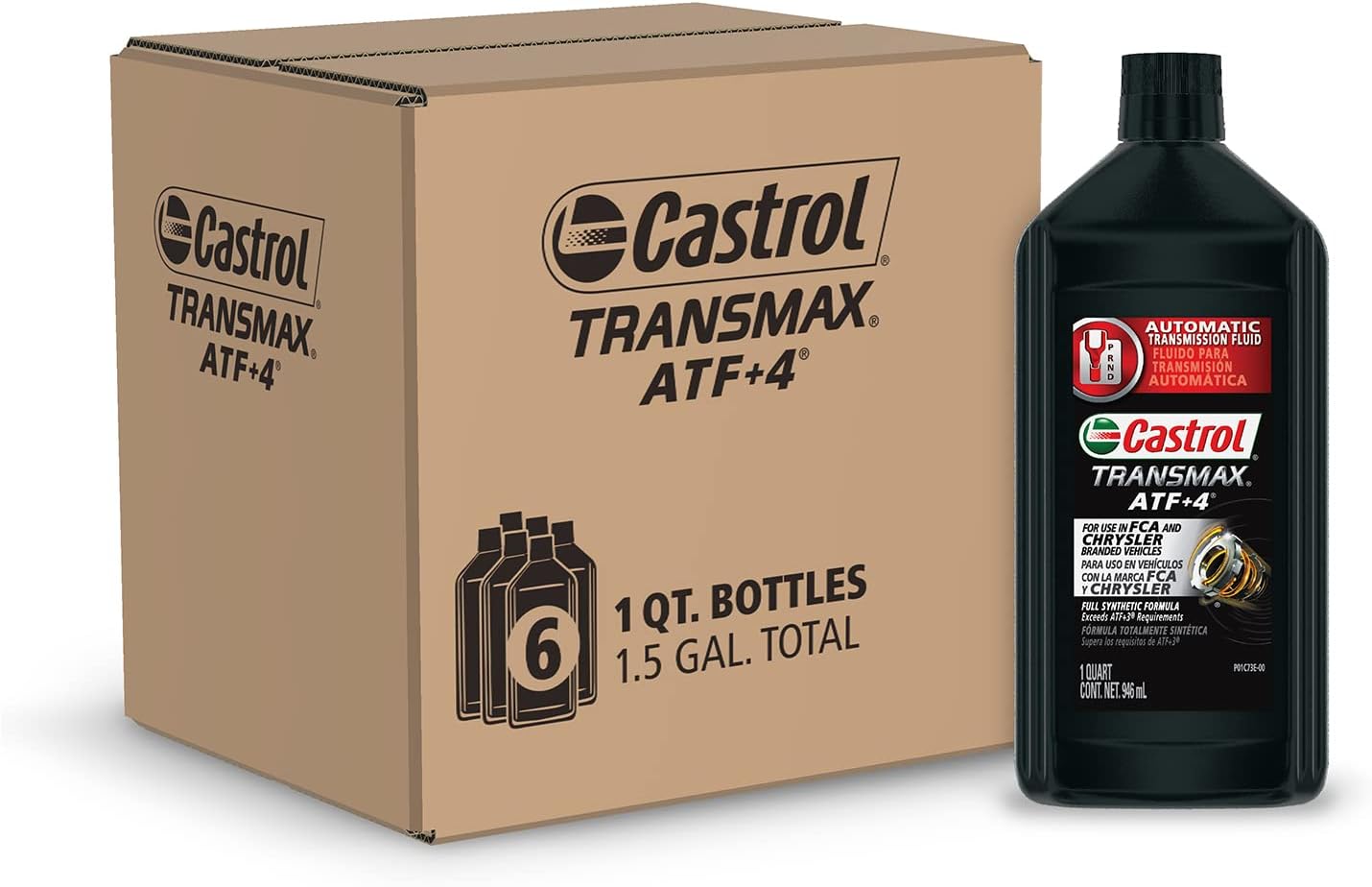
Two things not to do, also straight from the manual: no supplemental additives, because the manufacturer recommends against anything added to ATF+4 except leak-detection dye, and no chemical flushes, which Ram warns can damage transmission components and are not covered under warranty. Use fluid that meets ATF+4. Using a fluid that does not meet the spec can cause poorer shift quality, converter shudder, and a need for more frequent fluid and filter changes.
Upgrade 3: Know Your Real Temperature Ceiling
You cannot manage heat you are not watching. Get a gauge or a scan tool reading transmission temperature in front of the driver. ATRA's Gears magazine, writing about overheating in this family of Ram transmissions, puts the practical ceiling at 200 degrees F and gives the rule of thumb: every 20 degrees above that cuts expected transmission life in half. A truck that lives at 240 on a long pull is using up about a quarter of normal life for every mile it spends there.
With a gauge in view, the driver learns which grades call for a manual downshift and which ones the truck handles on its own. That knowledge is worth more than any part on this list.
Upgrade 4: Commit Flow to the Cooler
On this family, the OE cooler block has a thermal bypass valve that recirculates fluid during warm-up. According to Sonnax, that valve is known to stick in recirculation mode, which cuts flow through the cooler entirely. A towing truck with a stuck bypass will heat-soak on any long pull no matter how big the cooler is.
The fix for the 66RFE is the Sonnax thermal bypass eliminator 72760-01K. It plugs into the OE cooler block and keeps the block's built-in pressure relief, so a blocked cooler still cannot dead-head the circuit. Check your cooler block part number before ordering, because Sonnax splits these kits by block. The trade-off is longer warm-up in cold weather. On a truck that tows, it is worth it.
Sonnax Thermal Bypass Eliminator 72760-01K
The kit Sonnax lists for the 66RFE cooler block. It permanently routes fluid through the cooler and keeps the OE pressure relief. Match your block part number first.
View the 72760-01K kit →Or browse the full RFE parts collection.
Upgrade 5: Add Cooler Capacity the Right Way
An auxiliary cooler is the upgrade everybody wants, and it only helps if the circuit is already flowing. Before you add anything, run the return-line flow test: disconnect the cooler return line, run it into a measuring container, and measure flow with the engine running. Gears gives a minimum of one gallon per minute. Below that, you have a restriction or a pressure regulator valve problem to find, and bolting another cooler onto it will not help.
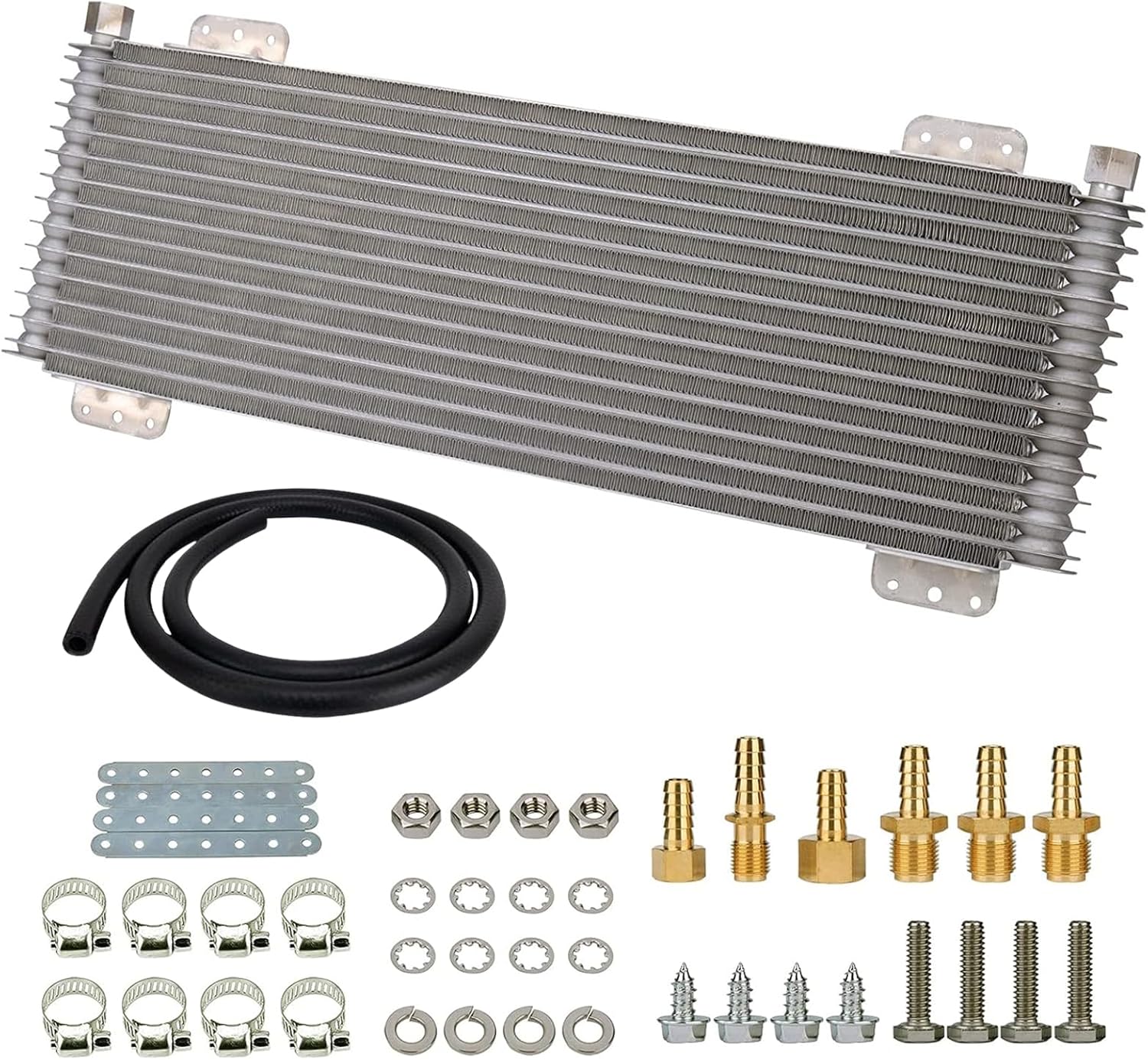
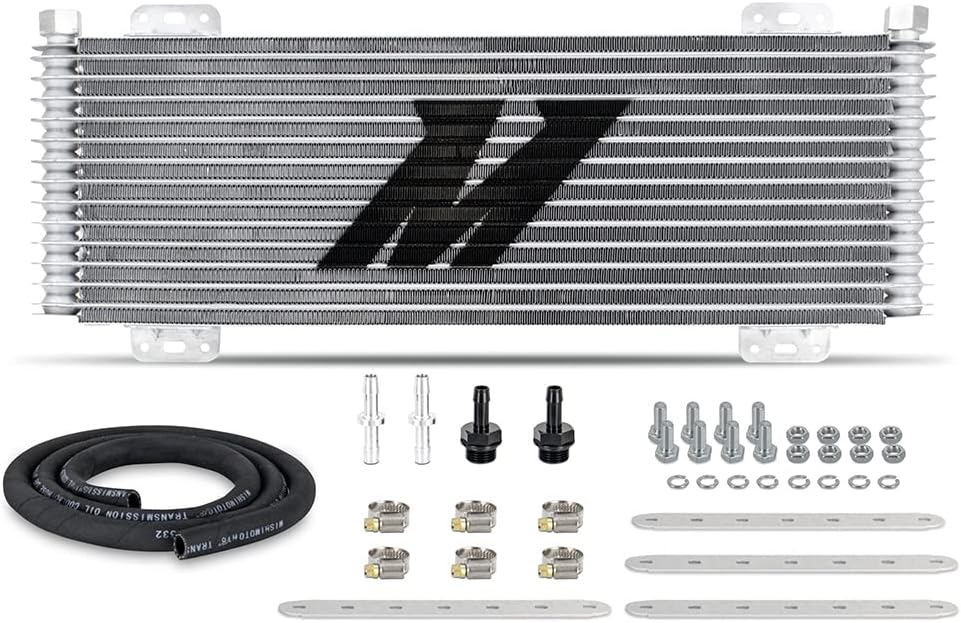
If flow is good and the truck still climbs on grades, add a stacked-plate cooler. For the same frontal area, a stacked-plate cooler rejects more heat than a tube-and-fin unit. Pick one sized for the job and built for low pressure drop, because this circuit already runs short on flow at low RPM and every restriction you add comes out of the converter and lube feed. Plumb it in series on the return side after the factory cooler, so fluid goes through the factory cooler first and the auxiliary cooler does the final cooling before the oil returns to the case. Mount it where it gets real airflow and not behind a tow-hook bracket. Then rerun the flow test. If the number dropped meaningfully, you created a restriction with hose size, fittings, or a kink, and you need to fix it before delivery.
Upgrade 6: Line Pressure, Done Without a Tune
Towing guys want firmer shifts and more clutch holding capacity. On an RFE, the old valve body tricks do not work. Sonnax explains why: the RFE runs a full-range pressure transducer and real-time adaptive closed-loop pressure control. Install a stiffer pressure regulator spring or a bigger boost valve and the TCM simply adapts the pressure control solenoid duty cycle until pressure is back at OE spec.
The Sonnax RFE-LB1 line pressure booster gets around that electronically. An integrated circuit modifies the pressure control solenoid signal so the TCM commands a lower duty cycle, and the result is a progressive increase of about 10 psi in the lower pressure range and about 25 psi in the higher range. It plugs in on the outside of the case, with no transmission removal and no tuning, and covers 1999-2018 RFE units including the 66RFE.
Read the cautions before you install one:
- Verify stock pressure first. Sonnax gives 60 psi in Drive at idle and 160 psi in Drive under heavy load. If the scan tool shows more than that, the truck is already tuned, and the kit is not recommended with tuning.
- Watch for P0868. Sonnax notes that high system voltage increases pressure control solenoid current and lowers duty cycle further. If it bottoms out at the solenoid's 5% minimum, you can get a low line pressure code.
Upgrade 7: If the Truck Is Already Tuned
A tuned 66RFE pulling a trailer is the worst case for cooler flow. Sonnax's testing on the RFE family showed tuned programming raising idle line pressure to 100-105 psi while cooler flow at idle dropped from 1.3 GPM to 0.5 GPM or lower, because the pressure regulator valve gives priority to line pressure and starves the converter and lube circuits. The drop-in answer is the lube-regulated pressure regulator valve 44912-17K, rated at a 60% increase in lube and cooler flow over stock at maximum line pressure.
Tuned trucks also put the converter at risk. Sonnax measures stock RFE TCC apply pressure at about 160 psi in the forward ranges, while modified units can exceed 220 psi, enough to balloon a converter and damage the flexplate and pump. The TCC apply limit switch valve, 44912-36K drop-in or 44912-41K oversized, caps apply at about 150 psi and is listed for the 66RFE.
Upgrade 8: Hard Parts When It Is on the Bench
Nobody pulls a healthy 66RFE just to upgrade hard parts. If it is coming apart for a rebuild, though, this is when the towing parts go in. Sonnax's towing upgrade guide for the RFE family lists the Smart-Tech overdrive clutch housing (72960-18K), a heavy-duty input shaft (72670B-01), and a heavy-duty overdrive clutch hub and shaft (72570-01), along with the TC limit valve (44912-03K) and oversized pressure regulator valve (44912-10K) kits. Since the 66RFE uses 68RFE internals, many of these carry over. Confirm fitment by year on each part, because the 2012-2013 and 2014-up units use different overdrive clutch packs. On friction material, Raybestos offers its GPZ plates for this unit for more capacity and durability than OE friction.
Do the vacuum tests on the pump and valve body while it is apart. A worn TC limit valve bore causes low cooler flow and an overheated converter, which works against every cooling upgrade above it.
The Order That Actually Works
- TOW/HAUL every restart, first gear on slow steep pulls, Neutral in hot traffic.
- Severe-service fluid and filter changes if the truck tows over 45 minutes at a time. ATF+4 only, no additives, no flushes.
- A temperature gauge the driver can see, with 200 F as the target.
- Thermal bypass eliminator 72760-01K, matched to the block part number.
- Flow test, then a stacked-plate auxiliary cooler in series on the return, then retest the flow.
- RFE-LB1 for pressure on a stock-program truck; 44912-17K and a TCC apply limit valve on a tuned one.
- Hard-part upgrades only when it is on the bench.
Need parts for this job?
Coolers, filters and pan kits, valve body and pump parts, rebuild kits and ATF+4 for the 66RFE, shipped from the USA.
Shop 66RFE parts →FAQ
Does TOW/HAUL mode stay on after I shut the truck off?
No. Ram's owner's manual states that normal mode is always the default at engine start-up, so TOW/HAUL has to be pushed again every time the engine is restarted. If you stop for fuel while towing, turn it back on before you pull out.
How often should I change 66RFE fluid if I tow?
If you regularly tow for more than 45 minutes of continuous operation, Ram says to change the fluid and filters on the police, taxi, fleet, or frequent trailer towing schedule. That severe-service line appears twice in the 150,000-mile maintenance chart, against once for normal service. Use ATF+4 only.
What is a safe transmission temperature when towing with a 66RFE?
ATRA's Gears magazine puts the practical ceiling at 200 degrees F, and every 20 degrees above that cuts expected transmission life roughly in half. If the Transmission Temperature Warning Light comes on, pull over, shift to Park and idle until it goes off.
Can I raise 66RFE line pressure with a stiffer spring?
Not effectively. The RFE uses a pressure transducer and adaptive closed-loop control, so the TCM adapts the pressure control solenoid and returns pressure to OE spec. The Sonnax RFE-LB1 booster raises pressure electronically by about 10 psi low and 25 psi high, and it is not recommended on a tuned truck.
Should I add an auxiliary cooler to my 66RFE?
Only after the factory circuit passes a flow test of at least one gallon per minute and the thermal bypass is not stuck in recirculation. Then a stacked-plate cooler plumbed in series on the return side, after the factory cooler, adds real capacity. Retest flow after installation.
Sources
- Stellantis / Mopar — 2018 Ram 1500/2500/3500 Owner's Manual (PDF). Backs TOW/HAUL use and its reset to normal mode at every start-up, holding first gear with ERS on steep grades at 20 mph or below, Neutral in hot stop-and-go traffic, the controller changing the shift schedule and TCC engagement when hot, the Transmission Temperature Warning Light procedure, the 45-minute continuous towing rule for the severe fluid and filter schedule, the pre-tow fluid level check, and the no-additive and no-chemical-flush cautions. vehicleinfo.mopar.com (PDF)
- Stellantis Media — 2014 Ram Heavy Duty press kit. Backs the 6.4L HEMI at 410 hp and 429 lb-ft paired with the 66RFE, the 5.7L HEMI also using the 66RFE, and the 2500's towing rating of up to 17,970 pounds. media.stellantisnorthamerica.com
- Raybestos Powertrain — 66RFE transmission page. Backs the 545RFE case with 68RFE internals and gearset, the 3.23/1.83/1.41/1.00/0.82/0.63 and 4.44 reverse ratios, the 2014 overdrive clutch revision, and the GPZ friction upgrade. raybestospowertrain.com
- Gears Magazine (ATRA) — "48RE/68RFE/AS68RC Transmission Overheating." Backs the 200 degree F ceiling, the life-halving rule for every 20 degrees above it, and the minimum one gallon per minute cooler flow test. gearsmagazine.com
- Sonnax — Thermal Bypass Eliminator Kit 72760-01K. Backs the OE thermal bypass valve sticking in recirculation mode, 66RFE coverage, and retention of the cooler block's built-in pressure relief. sonnax.com
- Sonnax — "Achieving a Progressive Pressure Boost in RFEs" and Line Pressure Booster Kit RFE-LB1. Backs the full-range transducer and adaptive closed-loop control that adapts out spring and boost valve changes, the roughly 10 psi and 25 psi progressive increase, the 60 psi idle and 160 psi heavy-load stock figures, the not-with-tuning caution, and the P0868 risk at the 5% PCS minimum. sonnax.com
- Sonnax — "Resolving Stalling & Overheat Issues After Performance Tuning on RFE Transmissions." Backs tuned idle line pressure of 100-105 psi, cooler flow falling from 1.3 GPM to 0.5 GPM or lower, and the 44912-17K valve's 60% lube and cooler flow increase. sonnax.com
- Sonnax — "Stop RFE, RH/RE Converter Failure: Limit TCC Apply." Backs stock RFE TCC apply near 160 psi, modified units exceeding 220 psi, and the 44912-36K and 44912-41K valves limiting apply to about 150 psi with 66RFE coverage. sonnax.com
- Sonnax — "Your Guide to Summer Towing Transmission Repairs & Upgrades." Backs the RFE towing hard-part list: 72960-18K overdrive clutch housing, 72670B-01 input shaft, 72570-01 overdrive hub and shaft, 44912-03K and 44912-10K. sonnax.com