Two six-speed automatics, the same family, the same bellhousing-side vocabulary, and a pile of parts on the shelf that may or may not cross. If you work on Ram heavy duties you will have both a 66RFE and a 68RFE on the bench eventually, and the questions are always the same: which one is this, which one is stronger, and can I use the parts I already have.
The short version is that these are siblings with different jobs. The long version is worth knowing, because the places they differ are exactly the places a wrong part turns into a comeback.

What Each One Was Built to Hold
Start with the factory pairings, because they define everything else. Ram's own material for the 2013 Heavy Duty lineup lays it out plainly: the 5.7-liter HEMI V-8, producing 383 horsepower at 5,600 rpm and peak torque of 400 lb-ft, is mated to the 66RFE six-speed automatic. The 6.7-liter Cummins, cranking out 370 horsepower at 2,800 rpm and 800 lb-ft at 1,600 rpm, gets the 68RFE. And when Ram went past that with the high-output Cummins at 385 horsepower and 850 lb-ft, they did not reach for a stronger RFE. They bought an Aisin AS69RC.
That is the whole hierarchy in one paragraph. The 66RFE lives behind roughly 400 to 430 lb-ft of gas torque. The 68RFE lives behind 800. And Ram themselves drew the line just above the 68RFE, which tells you where the factory thought the family topped out.
The 66RFE's job widened over the years rather than moving upmarket. By 2014 it was the transmission behind the new 6.4-liter HEMI, rated at 410 horsepower and 429 lb-ft, in the Ram 3500 Chassis Cab, and still behind the 5.7 in the same truck. Gas trucks, high rpm, lower torque, with the Aisin AS66RC as the optional upgrade above it on the heavier chassis.
The Family They Both Come From
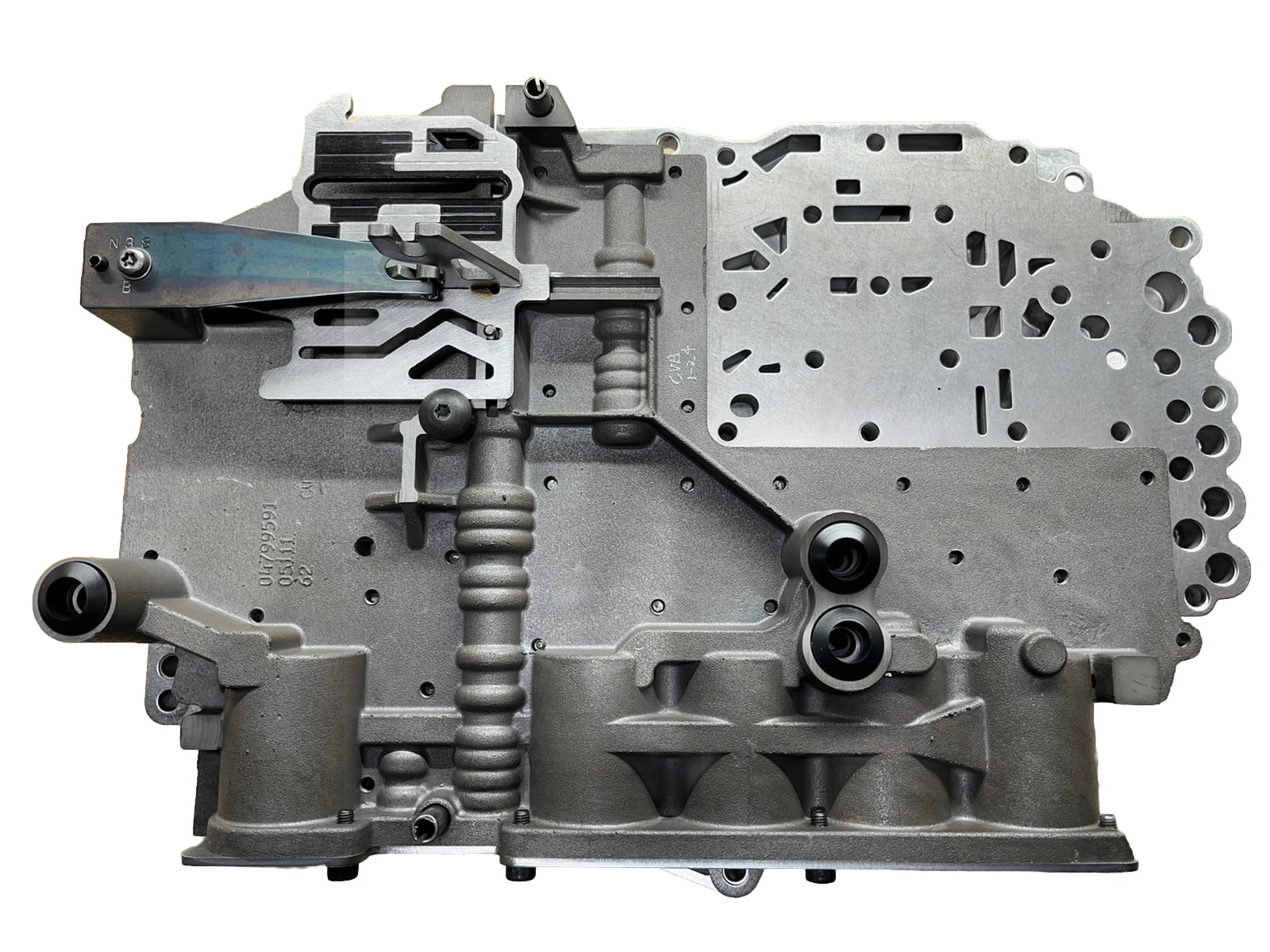
Both units are RFEs, which means both are clutch-to-clutch designs with no bands and no governor, running a solenoid pack that feeds individual clutch circuits through a valve body full of switch valves and accumulators. The lineage runs 45RFE, 545RFE, 65RFE, 66RFE, 68RFE, and the hydraulics are close enough across all five that Sonnax builds a single remanufactured valve body covering the whole group from 1999 through 2018, five-speed and six-speed alike, regardless of the OE checkball or solenoid configuration.
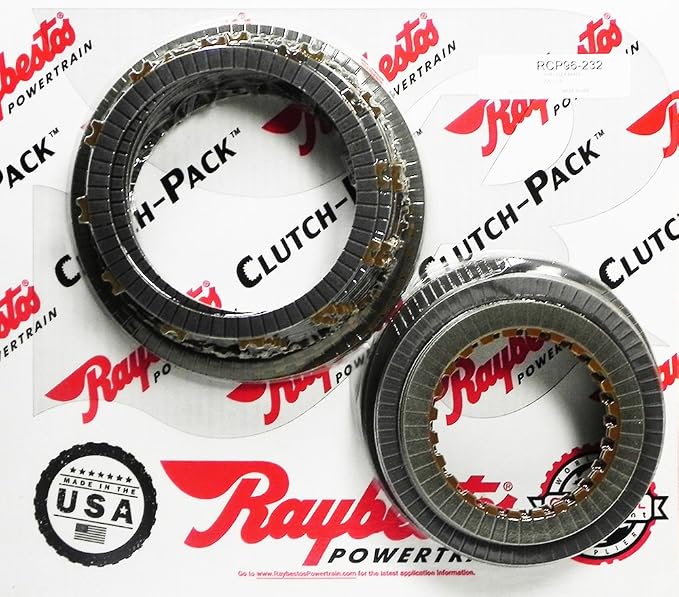
Raybestos puts it the same way from the friction side: the 66RFE uses a 545RFE case but carries many of the same internals and the same gearset as the 68RFE, with identical ratios of 3.23, 1.83, 1.41, 1.00, 0.82 and 0.63 and a 4.44 Reverse. The clutch packs are where the year split shows up. Raybestos lists separate 66RFE friction modules for 2012-2013 (RGPZ-273) and 2014-on (RGPZ-272), and the overdrive frictions differ between them, so order by year, not just by unit name.
Read that again, because it is the most practical interchange fact in this article. From a hydraulic-repair standpoint the 66RFE and the 68RFE are close cousins through 2018. From an assembly standpoint they are not the same transmission and never were.
Identifying What Is Actually On Your Bench
Do not go by the tag. Go by the pass-through case connector on the solenoid assembly, which dates the unit better than anything else you can see without opening it. ATSG laid the sequence out in Transmission Digest, and it runs like this:
- Black — the original, noisy four-speed-era solenoid pack.
- White — the quieter 2004 design, used in all 45RFE and 545RFE units. This is what the 68RFE launched with in 2007.
- Gray — from the 2010 running valve body changes, which eliminated the overdrive solenoid entirely.
- Blue — 2019 and later, and this one is a real break, not a running change.
The blue-connector units got two solenoids the family never had. A separate TCC solenoid moved into a small housing added to the lower channel plate, which means the Low/Reverse solenoid stopped doubling as TCC control and now only applies the Low/Reverse clutch in Park, Neutral and Drive first gear. And a normally applied Reverse clutch solenoid went into the spot where the overdrive solenoid used to live, something no previous RFE ever had.
Sonnax documents the rest of the 2019 change set: the pump lost the TCC accumulator retainer, spring and piston, the torque converter regulator valve was redesigned with a bore plug and wire retainer, the valve body gained a lower section carrying a Reverse accumulator assembly and its own separator plate, and the manual valve reverted to an earlier design to suit the new Reverse clutch control. Ford-style running changes these are not. Early and 2019-later units do not interchange through the pump, valve body and solenoid pack.
The gasket mistake that costs you a day
There are now two different silicone beaded solenoid block gaskets in circulation, and they look similar enough to grab the wrong one on a busy Thursday. ATSG spells out exactly what each mistake does, and both symptoms are dramatic enough that you will chase them if you do not know:
- Early gasket on a blue connector assembly. D21 line pressure reaches the normally applied Reverse clutch solenoid with the selector in Drive. The truck binds up the moment you release the brake to move forward.
- Late gasket on a white connector assembly. Feed to the overdrive solenoid is blocked. You get a neutral shift into third, though third-gear failsafe still works because the multi-select solenoid applies the OD clutch in that mode.
If a freshly assembled RFE does either of those two things, pull the solenoid block before you pull anything else.
The Failure They Genuinely Share
Here is where the comparison stops mattering and the shared DNA takes over. Both units burn overdrive clutches, and both do it for the same reason.
The Sonnax TASC Force framework, published through Transmission Digest, breaks repeat OD clutch failure across the entire RFE family into three areas. First is the solenoid switch valve, which is notorious for bore wear, especially at the bore plug. There are three plugs in that location and two of them are in motion depending on which gear you are in. On the 1-2 the switch valve strokes to feed the 2C clutch circuit. On the 2-3 the bore plug strokes up against the switch valve. On the 3-4 the plug strokes back the other way to feed the overdrive clutch circuit and hold the valve. That plug never stops moving, which is why the wear there is not a question of if but when.
Second is the stator. The overdrive dribbler valve in the stator controls the timing of the clutches coming on, and it is designed to be a controlled leak that pre-charges the circuit. A restricted dribbler delays overdrive apply and drags the clutches. A leaking dribbler holds them slightly applied so they drag anyway. Air-test it: apply air to the dribbler valve and listen for it at the corresponding passage. Flow should travel from the pump to the drum, not the other way.
One more shared weak point sits under the overdrive clutches. Sonnax calls overdrive hub and shaft failure common on both the 66RFE and 68RFE at any power level: cracks start at the lube cross holes and migrate through the shaft until the gear train lets go. The same OE hub and shaft (52119776AA) fits both units, which is why Sonnax's heavy duty 72570-01 replacement covers both.
Third is the clutch pack itself. Set clearance too tight and fill time drops, the clutch applies faster and you get a bind-up. Set it too loose and fill time lengthens, the clutches drag and overheat. The OE steels and frictions in these units are already thin and will not take that heat for long.
On top of all of that, ATRA's Gears Magazine points at the other big driver on the diesel side: valve body worm track erosion, caused by the excessive torque of engines running tuners in the calibration. The field fixes are flat sanding the valve body with a bonded separator plate, or an aftermarket billet channel plate. Both are working, but neither helps if the switch valve bore behind them is still leaking.
How to Prove It Before You Build It
Vacuum testing is the cheap step that decides whether you are buying a clutch module or a valve body. Sonnax's RFE vacuum test guide covers the 45RFE, 545RFE, 65RFE, 66RFE and 68RFE on one sheet, and it tells you both where to put the cup and what a leak there means.
- Solenoid switch valve and switch valve plugs. The headline test. A low reading here ties to codes 841, 868, 871, 988, 1775 and 1776, plus bind-up, failsafe mode, burned overdrive clutch, burned 4th clutch and wrong-gear starts. Note the OE valve comes in two diameters, .420 in. and .453 in., and the oversized repair valve you order has to match. Measure, do not assume.
- Accumulator pistons. Leakage here shows up as slide shifts, high clutch volume indexes, 1-2 shudder and coastdown clunk. Test opposite the bore plug and next to it.
- Pressure regulator valve in the pump. Wear here gives you harsh shifts, erratic or high line pressure, burnt clutches and restricted converter or lube flow.
If you have a scan tool that shows clutch volume index, use it. CVIs will point you at which circuit is losing its fill long before the clutch pack looks bad. And after any repair to one of these, run the fast learn. These are clutch-to-clutch units. Skipping the relearn leaves the adaptive tables calibrated to the transmission you just took apart.
Fluid and Service: One Answer for Both
ATF+4, which is Chrysler material standard MS-9602. Mobil, whose fluid carries that approval, states its ATF+4 meets Chrysler MS-9602 and is recommended for Chrysler vehicles requiring a fluid meeting the ATF+4 specification. This is not a place for a universal multi-vehicle ATF. Clutch-to-clutch shift quality in an RFE is built around the friction characteristics of that fluid, and the module adapts around it. Change the fluid chemistry and you change the fill times the transmission has spent 80,000 miles learning.
The Cummins-backed 68RFE also runs hotter and works harder by definition, which is why the diesel trucks got dual transmission coolers and a cooling system with 25 percent more heat-rejection capacity starting in 2013. If you are building one for a truck that tows, cooling is not an accessory decision.
So Which One Do You Want
If the question is which unit holds more, it is the 68RFE, and it is not close: 800 lb-ft of factory pairing against 400. If the question is which one is more reliable, that is a different answer. Both share the solenoid switch valve bore wear, both burn overdrive clutches, and the 68RFE gets there faster because it lives behind twice the torque and, very often, behind a tuner. The 66RFE's advantage is not design, it is duty cycle.
If the question is whether to swap one for the other, the honest answer is no, not as a bolt-in. They serve different engines with different interfaces and different calibrations. What does cross is the repair side: through 2018, valve body and hydraulic parts largely carry over across the RFE family, and the diagnostic procedure is identical. From 2019 forward, treat the 68RFE as its own unit and order by connector color.
FAQ
Is the 68RFE stronger than the 66RFE?
Yes, and the factory pairings tell you why. Ram's own 2013 Heavy Duty material puts the 66RFE behind the 5.7-liter HEMI at 383 horsepower and 400 lb-ft, and the 68RFE behind the 6.7-liter Cummins at 370 horsepower and 800 lb-ft. The 68RFE was engineered to live behind twice the torque. That does not make it bulletproof, it makes it the heavier-duty member of the same family.
Will a 68RFE bolt in where a 66RFE was?
Not as a plug-and-play job. The two are built for different engines, different bellhousing interfaces and different calibrations, and the powertrain module has to know what it is shifting. Swapping a 68RFE behind a gas HEMI is a conversion project involving the converter, the flexplate, the crossmember and the tune, not a parts swap. Where the two genuinely overlap is in valve body and hydraulic repair parts, not in the assembly.
What year did the 66RFE come out?
It arrived for the 2012 model year as the heavy-duty six-speed behind the gas HEMI in Ram 2500 and 3500. Ram's press material for the 2013 and 2014 trucks lists it behind both the 5.7-liter HEMI and, from 2014, the 6.4-liter HEMI at 410 horsepower and 429 lb-ft in the Chassis Cab 3500.
What do the solenoid connector colors mean on an RFE?
They date the unit. Black was the original noisy four-speed assembly, white arrived in 2004 and is what the 68RFE launched with, gray came with the 2010 running valve body change that eliminated the overdrive solenoid, and blue marks the 2019-later units that added a separate TCC solenoid and a normally applied Reverse clutch solenoid. Read the connector color before you order anything.
Why do the overdrive clutches keep burning in my RFE?
Nine times out of ten it is not the clutch pack. The solenoid switch valve bore wears, most heavily at the bore plug, and the resulting cross leak bleeds overdrive apply pressure so the clutches slip and cook. A restricted or leaking stator dribbler valve and incorrect clutch clearance are the other two. Vacuum test the switch valve and plug before you put a new clutch pack in, or you will see the truck again.
What fluid do the 66RFE and 68RFE take?
ATF+4, which is the Chrysler MS-9602 specification. Mobil states its ATF+4 meets Chrysler MS-9602 and is for Chrysler vehicles requiring a fluid meeting the ATF+4 specification. There is no universal substitute here. These are clutch-to-clutch units whose shift feel and clutch volume indexes are calibrated around the friction properties of that fluid.
Sources
- Stellantis Media (Ram Truck) — "Ram’s 2013 Heavy Duty Lineup Features Best-in-class Capability, New Technology and New Features." Backs the factory pairings and the torque numbers each unit was built behind: the 5.7-liter HEMI at 383 hp and 400 lb-ft mated to the 66RFE, the 6.7-liter Cummins at 370 hp and 800 lb-ft mated to the 68RFE, and the high-output Cummins at 385 hp and 850 lb-ft paired instead with the Aisin AS69RC. media.stellantisnorthamerica.com
- Stellantis Media (Ram Truck) — "2014 Ram Chassis Cab Offers All-new 6.4-liter HEMI V-8 and Takes Segment Leadership in Powertrain Options." Backs the 66RFE’s gas-engine role across the Chassis Cab line: the 6.4-liter HEMI at 410 hp and 429 lb-ft mated to the 66RFE in the 3500 Chassis Cab, and the 5.7-liter HEMI at 383 hp and 400 lb-ft matched to the same unit. media.stellantisnorthamerica.com
- Transmission Digest — "Spotting different 68RFE designs through the years to avoid issues," Technically Speaking (ATSG). Backs the connector-color identification chain (black, white in 2004, gray with the 2010 valve body change that eliminated the overdrive solenoid, blue in 2019), the 2019 addition of a separate TCC solenoid and a normally applied Reverse clutch solenoid in the old OD solenoid location, the two different silicone beaded solenoid block gaskets now in circulation, and the two specific failures caused by using the wrong one: a forward bind-up when the early gasket is used on a blue connector assembly, and a neutral shift into third when the late gasket is used on a white connector assembly. transmissiondigest.com
- Transmission Digest — "Troubleshooting RFE overdrive clutch failure: Three key areas to check," Caleb Perham, Sonnax TASC Force. Backs the three-area diagnostic framework for repeat overdrive clutch failure across the 45RFE, 545RFE, 65RFE, 66RFE and 68RFE: solenoid switch valve bore wear at the bore plug with the 1-2, 2-3 and 3-4 stroke sequence described in the article; the overdrive dribbler valve in the stator and what a restricted versus leaking dribbler does to clutch timing; and clutch clearance set too tight or too loose. Also backs the fast-learn requirement after any RFE repair. transmissiondigest.com
- Sonnax — "Chrysler 68RFE '19-Later Changes & Identification." Backs the 2019 hardware changes in detail: the pump losing the TCC accumulator retainer, spring and piston along with a redesigned torque converter regulator valve; the lower valve body section added to the channel plate housing a Reverse accumulator assembly, the new TCC control solenoid and its separator plate; the manual valve reverting to an earlier design; and the solenoid pack connector changing from gray to blue with the Low/Reverse solenoid no longer doubling as TCC control. sonnax.com
- Sonnax — "Chrysler 45RFE, 545RFE, 65RFE, 66RFE, 68RFE Vacuum Test Guide" (PDF). Backs the vacuum test targets and the code list tied to solenoid switch valve and switch valve plug wear (codes 841, 868, 871, 988, 1775 and 1776, plus bind-up, failsafe mode, burned OD clutch, burned 4th clutch and wrong-gear starts), the two OE switch valve diameters of .420 in. and .453 in., and the accumulator piston complaints of slide shifts, high CVIs, 1-2 shudder and coastdown clunk. sonnax.com
- Sonnax — "RFE Transmission Universal Valve Bodies: One SKU Does it All." Backs the interchange claim that a single remanufactured valve body covers 45RFE, 545RFE, 65RFE, 66RFE and 68RFE applications from 1999 through 2018 regardless of OE checkball or solenoid configuration, five-speed or six-speed, and that the solenoid connector is not included so the OE block carries over. sonnax.com
- Gears Magazine (ATRA) — "68RFE OD Clutch Failure," Rob Faucett, March 2019. Backs the valve body worm track erosion mechanism, its link to excessive torque from tuners loaded into the engine calibration, the switch valve plug bore wear and how second gear oil and overdrive oil move that plug in opposite directions, and the field fixes of flat sanding with a bonded separator plate or an aftermarket billet channel plate. gearsmagazine.com
- Sonnax — Chrysler 66RFE unit page. Backs the 66RFE-specific symptom and repair list referenced here, including burnt Low/Reverse and overdrive clutches, erratic and high line pressure, the oversized solenoid switch valve kits offered in both bore diameters, the heavy duty overdrive clutch hub and shaft, and the RFE-LB1 line pressure booster kit. sonnax.com
- Mobil (ExxonMobil) — Mobil ATF+4 product page. Backs the fluid specification for both units: Mobil states its ATF+4 meets Chrysler MS-9602 and is recommended for Chrysler vehicles requiring a fluid meeting the ATF+4 specification. mobil.com
- Raybestos Powertrain — 66RFE transmission page. Backs the 66RFE as a 545RFE case with 68RFE internals and gearset, the shared gear ratios, and the 2012-2013 (RGPZ-273) versus 2014-on (RGPZ-272) friction modules. raybestospowertrain.com
- Sonnax — Heavy Duty Overdrive Clutch Hub & Shaft 72570-01. Backs the common 66RFE/68RFE hub and shaft cracking at the lube cross holes and the shared OE part number 52119776AA. sonnax.com