Almost every 68RFE that comes back for a second repair comes back for a hydraulic reason, not a mechanical one. The clutches are what you see burned; the valve body is usually what burned them. These castings are aluminum, the valves and plugs cycle constantly, and after 100,000 miles of towing the bores are no longer round. Oil meant for a clutch goes somewhere else, and the clutch that was supposed to hold slips, heats, and distorts.
This is a bench article: what wears, how to confirm it on a scan tool before you drop the pan, how to find it with a vacuum test stand once the unit is apart, and the OE torque and fill numbers to put it back together.
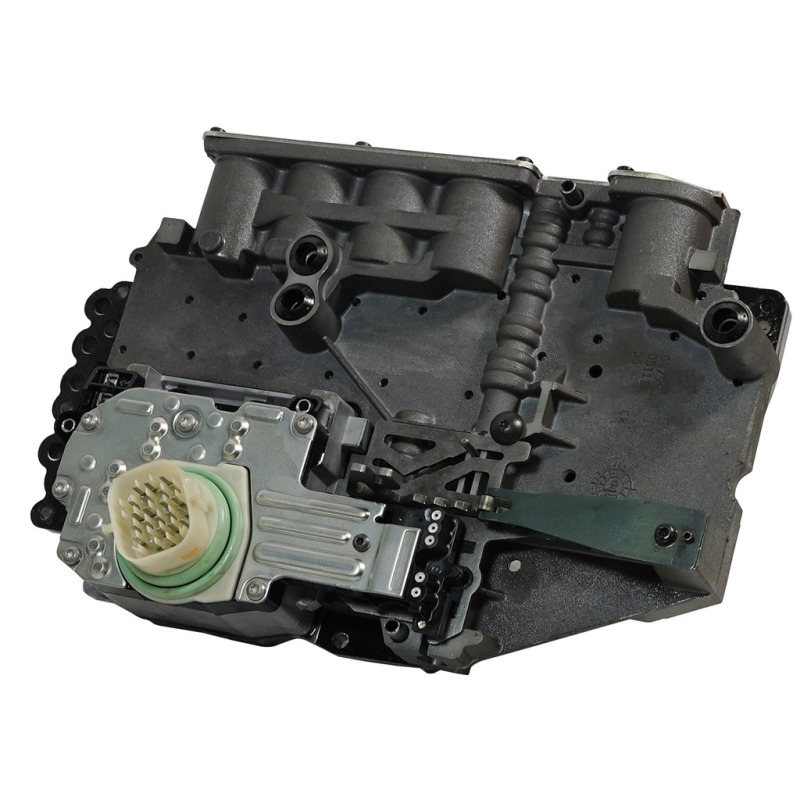

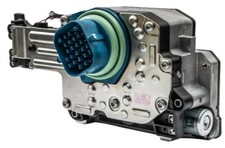
First: Know Which Valve Body Is On the Bench
The 68RFE ran behind the 6.7L Cummins in Ram 2500 and 3500 trucks from 2007-1/2 forward and stayed largely unchanged until 2019, when the pump, valve body and solenoid pack all got hydraulic control changes. Order parts for the wrong one and you lose a day.
Per Sonnax's identification guide, the 2019-and-later valve body added a lower section on the channel plate housing a new reverse accumulator, a new TCC control solenoid, and its own separator plate. The solenoid pack connector changed from gray to blue, and the low/reverse solenoid lost its TCC duties because TCC got a dedicated solenoid. On the pump side, the TCC accumulator retainer, spring and piston were eliminated and the TC regulator valve was redimensioned with a bore plug and wire retainer.
Two things did not change, and they are the two that matter most for this article: the pressure regulator lineup, and the solenoid switch valve. Those wear the same way on a 2008 unit and a 2020 unit.
Read the Truck Before You Pull the Pan
Bore wear shows up in live data long before it shows up in the pan. Graph three parameters together -- Commanded Line Pressure, Actual Line Pressure, and Line Pressure Duty Cycle % -- and drive the truck.
Keith Clark's 68RFE write-up for ATRA's GEARS magazine gives usable numbers. At idle in Park, a healthy unit sits around 60 to 70 psi commanded and actual, with Line Pressure Duty Cycle at roughly 22 to 24 percent. An idle duty cycle of 18 percent or higher means the pressure control loop still has authority; anything under 10 percent is not acceptable on this transmission. Duty cycle pinned at 5 percent with actual below commanded means the computer is maxed out and cannot make the pressure it is asking for, and the pressure regulator valve is out of balance where it also starves cooler and lube flow.
That condition is not always the valve body. Oversized tires and aggressive tuning make the TCM command pressure the pump cannot supply -- Clark notes a tuned truck on big tires can command 225 psi in 6th. Regear or fix the tune first, or you will rebuild it twice.
Do Not Trust the Sensor You Are Reading
Line pressure on a scan tool is only as good as the sensor reporting it. Sonnax points to OE line pressure adapter tool No. 8259, which installs into the case in place of the line pressure sensor so the sensor and a mechanical gauge can both be plumbed in. That is how you verify the sensor rather than believing it.
Sonnax gives normal OE pressure as 60 psi minimum and 150 to 160 psi maximum at stall. A truck showing 150 to 160 psi at idle in Park, Neutral and Drive and 250 psi in Reverse has an open circuit on the pressure control solenoid, not a worn bore. Chrysler has no dedicated circuit code for that fault, so you see P0933 (Line Pressure Sensor Performance, set when actual runs more than 172.4 kPa / 25 psi above desired) or P0869 (High Line Pressure) instead. Chasing P0933 to the sensor on a max-line truck is the classic wrong turn.
Wear Area 1: The Solenoid Switch Valve and Its Plugs
Sonnax calls the solenoid switch valve bore the most common wear area in this whole family of castings, and it is the reason so many 68RFEs eat overdrive clutches.
What the Valve Does
The RFE family has no bands, so every gear is clutch-to-clutch and every clutch depends on precise oil routing. The solenoid switch valve directs fluid between the low/reverse clutch and the TCC circuit, and routes oil to the 2nd and overdrive clutches through two shuttle plugs at the end of the bore. Those plugs stroke on nearly every shift, and over tens of thousands of cycles they wash the aluminum bore oval.
What Happens When It Wears
Once the bore is worn, oil crossleaks into and out of the OD circuit. Lower OD apply pressure means lower holding force, which means slip, which means heat. The 68RFE's overdrive clutches are single-sided with a steel core only.034 in. thick, against.080 in. for the OE steels in a 4L80-E direct pack, so they have almost no thermal mass to absorb it. They distort, clearance closes up, they stop releasing, and they burn.
The symptom list Sonnax publishes for this bore is worth memorizing:
- Codes 841, 868, 871, 988, 1775, 1776
- Burned overdrive clutches (P0871, OD pressure switch rationality, is the usual flag)
- Burned 4th clutch
- 2nd gear starts, sometimes with the MIL on
- Bind-up on shifts
- Wrong gear starts and failsafe mode
- TCC apply and release complaints
High line pressure makes this worse rather than better. Sonnax notes that excess line pressure will push through the extra clearance in a worn switch valve bore and partially apply the OD clutches, or keep them from fully releasing, which is exactly the condition that sets P0871.
Measure the Valve Before You Order Anything
There are two switch valve designs and they take different tooling. Every unit originally used a.420 in. diameter large spool with.453 in. diameter plugs. Chrysler later enlarged the large spool to.453 in. -- in the 41TE branch around the 2006 model year, and in the 45RFE branch, which includes the 68RFE, around the 2010 model year.
The plugs are.453 in. on both designs, so you cannot identify the valve body by measuring a plug. Measure the large spool on the switch valve itself. Sonnax is blunt about the consequence of getting this wrong: the wrong tooling setup can cause irreparable damage to the casting. Kits split by design too -- 92835-02K, 92835-18K, 92835-21 and 92835-32K for.420 in. valves, 92835-22K, 92835-31K and 92835-39K for.453 in. valves.
Wear Area 2: The Pressure Regulator Valve Bore
The pressure regulator valve generates mainline pressure and handles converter charge and TCC release oil from the moment the engine starts. When its bore wears, balance oil escapes, the valve no longer sits where it should, and line pressure control goes away in both directions. Sonnax lists the complaints as erratic or high line pressure, broken parts from excessive pressure, and at the other end soft shifts and burned clutches. A worn PR bore also restricts cooler and lube flow, which is how a pressure problem becomes a heat problem.
The repair is not a drop-in valve. The bore gets reconditioned and an oversized valve goes in -- Sonnax kit 44912-10K for the 45RFE/545RFE/65RFE/66RFE/68RFE family, requiring tooling F-44912-TL10 and the VB-FIX fixture. It ships with selective springs: green for OE pressure, yellow for the RFE-LB1 boost kit.
On high-horsepower builds, GEARS recommends confirming the unit has a line-to-lube circuit, either by drilling an orifice or using a modified pressure regulator valve, sized 0.055 to 0.062 in. Do not drill it if the casting already has one. It will not stop the unit from overheating, but it keeps converter charge and lube from starving while the unit runs high line pressure.
Wear Area 3: TCC Regulator Valve and TCC Accumulator
The TCC regulator valve works with the low/reverse-TCC solenoid to regulate converter clutch apply pressure. Its bore is a common wear location. GEARS lists the complaints it produces:
- Engine stall coming to a stop
- Harsh TCC engagement or release
- Excessive TCC slip, which is easy to misread as a flare on the 4-5 shift
The TCC accumulator plunger sits in the same circuit and smooths the pressure ripple the PWM solenoid puts into it. Its bore typically wears egg-shaped, and because it is a plunger it can cock in the bore and hand you a false pass. Locate it in the area of greatest wear, wiggle it while testing, and take the lowest reading.
Wear Area 4: The Solenoid Conductor Plate
This one gets missed on repeat OD failures. The 68RFE solenoid conductor plate is unsupported on one side while the connector seal pushes against it. Over years that force warps the plate so the mating surfaces are no longer parallel, and overdrive apply pressure bleeds out of the circuit right at the block. You can fit a perfect valve body and still burn the clutches if the block behind it is warped. Straightedge it; if it is contaminated or worn, replace it.
65RFE / 66RFE / 545RFE / 68RFE Solenoid Block
Direct replacement solenoid block for the RFE family when the conductor plate is warped, contaminated, or has a lazy solenoid. Ships from the USA.
View the solenoid block →The Bench Test: Vacuum, Not Eyeball
You can see severe bore wear. You cannot see the wear that is bad enough to cost a clutch circuit real pressure but not bad enough to look wrong. Vacuum testing turns that into a number.
With the valve body clean and dry and the valve in its rest position, seal the test cup over the specified port and pull vacuum. A low reading means oil is escaping past the valve-to-bore fit there. Sonnax publishes free vacuum test guides showing which ports to test on the 45RFE, 545RFE, 65RFE, 66RFE and 68RFE and which part corrects each location. Two details people get wrong:
- Test the switch valve with the center spool positioned in the opening, and test the plugs at the location the guide points to, not wherever the valve happens to sit.
- Test valves in their rest position unless the guide says otherwise.
Record every reading. After a dozen cores you will have your own average per bore and can set a shop minimum in in-Hg that matches the warranty you are willing to write. That is the real value of the test: it turns "that looks a little worn" into a pass/fail you can defend to a customer.
Check for Open Recall W03 Before You Quote the Job
If the truck is a 2019 or 2020 Ram 2500 or 3500 with the 68RFE (sales code DG7), run the VIN. FCA Safety Recall W03, NHTSA campaign 20V-043, covers roughly 85,000 of those trucks for a lower valve body separator plate defect that lets pressure and heat build inside the transmission and expel fluid out the dipstick tube, where it can reach the turbocharger and start a fire.
The remedy is to replace the lower valve body separator plate and confirm the PCM is on current software. The defective plate has two small holes identical in size; the replacement has one hole larger than the other. That is a five-second visual on the bench, worth doing on any 2019-2020 unit you open.
Reassembly Numbers That Are Not Optional
Straight out of the FCA W03 dealer service instructions for the 68RFE:
- Lower valve body separator plate fastener: 6.5 N-m (57.5 in. lbs.)
- Lower valve body fasteners (9 of them): 7.3 N-m (64.6 in. lbs.), tightened in the specified sequence. FCA states plainly that skipping the sequence can cause a transmission malfunction.
- Main valve body fastener: 7.3 N-m (64.6 in. lbs.)
- Transmission pan (15 fasteners): 9 N-m (80 in. lbs.), crisscross pattern
- Fluid: Mopar ATF+4, Chrysler material standard MS-9602-F. Budget 6 quarts for a pan-off valve body job; the procedure calls for adding roughly 5 quarts, then setting level.
Two details from the same document that save comebacks. The check ball between the main and lower valve body falls out when you separate them -- pack the hole with petroleum jelly to hold it during reassembly, and confirm the second check ball is still seated in the lower valve body cavity before closing up. And keep the lower valve body facing up so the accumulator does not lift out with the separator plate. FCA specifically recommends a digital torque wrench here, and at 57.5 in. lbs. they are right.
Setting the Fluid Level
The 68RFE level check is temperature dependent. Per the FCA procedure, fluid temperature must be at least 160 degrees F (71 degrees C) before you set level, and reaching that can take up to 20 minutes of idle in Park. Reading the stick cold leaves the truck low, and low fluid on a unit you just repaired for a pressure problem is a bad way to finish.
The Order That Actually Works
If a 68RFE comes in with burned overdrive clutches, work it in this order:
- Interview the truck: tires, tune, tow weight, VIN for open recalls.
- Graph commanded pressure, actual pressure and duty cycle. Idle near 60 to 70 psi at 22 to 24 percent. Under 10 percent is a fail.
- Verify the line pressure sensor with adapter tool 8259 before believing any of it.
- Pull the valve body and measure the switch valve large spool:.420 in. or.453 in. Order tooling to match.
- Vacuum test the switch valve, its plugs, the pressure regulator bore, the TCC regulator, and the TCC accumulator (wiggle test, lowest reading).
- Straightedge the solenoid conductor plate and both valve body halves. Flat sand or gasket as needed.
- Ream and fit oversized valves wherever the vacuum numbers failed. Do not reassemble a marginal bore.
- Torque to the OE numbers above, in sequence, with a digital wrench.
- Fill with ATF+4 MS-9602-F, bring it to 160 degrees F, set level, then relearn.
The valve body is the cheapest part of this transmission to get right and the most expensive one to get wrong. A worn switch valve bore costs a couple hundred dollars in tooling and parts. The overdrive pack it destroys costs a rebuild.
Sources
- FCA US LLC / NHTSA — Dealer Service Instructions, Safety Recall W03 / NHTSA 20V-043, "Transmission Valve Body," Revision 3, June 2022. Backs the 2019-2020 Ram 2500/3500 68RFE (sales code DG7) population of about 85,000 vehicles, the lower valve body separator plate defect and fluid-expulsion fire risk, the two-identical-holes versus one-larger-hole plate identification, and the OE torque values: separator plate fastener 6.5 N-m (57.5 in. lbs.), lower and main valve body fasteners 7.3 N-m (64.6 in. lbs.) in sequence, pan fasteners 9 N-m (80 in. lbs.), ATF+4 MS-9602-F fill, and the 160 degrees F minimum fluid temperature for setting level. static.nhtsa.gov (PDF)
- GEARS Magazine (ATRA) — "Fixing the Root Cause of the Problem: Solving Issues with the 68RFE Transmission," Keith Clark, Delivering the Goods. Backs the scan-tool method of graphing commanded pressure, actual pressure and Line Pressure Duty Cycle %, the 60 to 70 psi / 22 to 24 percent idle values, the 18 percent healthy threshold and the sub-10 percent fail point, the 5 percent maxed-out signature, the 225 psi commanded 6th-gear figure on tuned trucks with oversized tires, the 0.055 to 0.062 in. line-to-lube orifice size, and the TCC regulator and egg-shaped TCC accumulator bore wear symptoms including the wiggle test. gearsmagazine.com
- Sonnax — "All in the Family: Identification & Repair of Chrysler Solenoid Switch Valve Problems," Tory Royce, May 25, 2016. Backs the solenoid switch valve as the most common wear area in this casting family, its function routing oil between the low/reverse clutch and TCC plus the 2nd and OD clutches via two plugs, the codes 841, 868, 871, 988, 1775 and 1776, the.420 in. versus.453 in. large spool designs with.453 in. plugs on both, the roughly 2010 model year change point in the 45RFE branch, the warning about wrong tooling damaging the casting, and the kit part numbers by valve design. sonnax.com
- Sonnax — "68RFE Overdrive Clutch Failure: What to Check First When Troubleshooting OD Issues," Jason Larochelle, August 18, 2020. Backs the.034 in. single-sided OD steel core versus.080 in. in a 4L80-E direct pack, the solenoid switch valve plug crossleak mechanism as the weakest link in the OD circuit, OE line pressure adapter tool No. 8259 for verifying the line pressure sensor, the high-line-pressure-through-a-worn-SSV-bore path to P0871, and the warped solenoid conductor plate bleeding OD apply pressure. sonnax.com
- Sonnax — "Diagnosing Chrysler Transmission Max Line Pressure & P0933, P0869, P1745 Codes," Jim Mobley, January 12, 2023. Backs normal OE pressure of 60 psi minimum and 150 to 160 psi maximum at stall, the P0933 threshold of actual pressure more than 172.4 kPa (25 psi) above desired, the P0869 high line pressure description, the 150 to 160 psi idle / 250 psi Reverse open-circuit signature, and the absence of a dedicated Chrysler circuit code for the pressure control solenoid. sonnax.com
- Sonnax — "Chrysler 68RFE '19-Later Changes & Identification," Jim Dial, December 29, 2022. Backs the 2019 hydraulic control changes: the added lower valve body section with reverse accumulator and dedicated TCC control solenoid, the gray-to-blue solenoid connector change, the reassignment of low/reverse solenoid duties, the eliminated TCC accumulator retainer/spring/piston and redimensioned TC regulator valve in the pump, and the fact that the pressure regulator lineup and solenoid switch valve were unchanged. sonnax.com
- Sonnax — "Oversized Pressure Regulator Valve Kit 44912-10K" product and instruction page. Backs the pressure regulator bore wear symptom list (erratic and high line pressure, broken parts, soft shifts, burned clutches, restricted converter and lube flow), the bore-reconditioning requirement, the F-44912-TL10 and VB-FIX tooling, and the green (OE pressure) and yellow (use with RFE-LB1) selective springs. sonnax.com