A Ram heavy-duty with the 66RFE that shakes like it is driving over rumble strips at a steady 40 to 60 mph is almost always quoted a torque converter. But on this transmission the converter is only the part that shakes. The clutch inside it is applied by a solenoid it shares with first gear, routed by a switch valve, regulated by a valve in the pump, and cushioned by an accumulator. Any one of those can make a perfectly good converter chatter, and a new converter installed on top of a worn regulator bore will shudder again.
The 66RFE is the gas-engine six-speed behind the 5.7L and 6.4L HEMI in 2013-2018 Ram 2500, 3500 and cab chassis trucks. FCA lists it in its bulletins as sales code DFP. On the 6.4L the shudder complaint has a second wrinkle that diesel 68RFE owners never see: the HEMI's cylinder deactivation (MDS) adds its own drone and pulsation at light throttle, and FCA wrote three separate bulletins about it. This guide covers how the 66RFE runs its converter clutch, how to prove the shake is the converter, the factory software fixes, and the hydraulic repairs in order.

How the 66RFE Applies the Converter Clutch
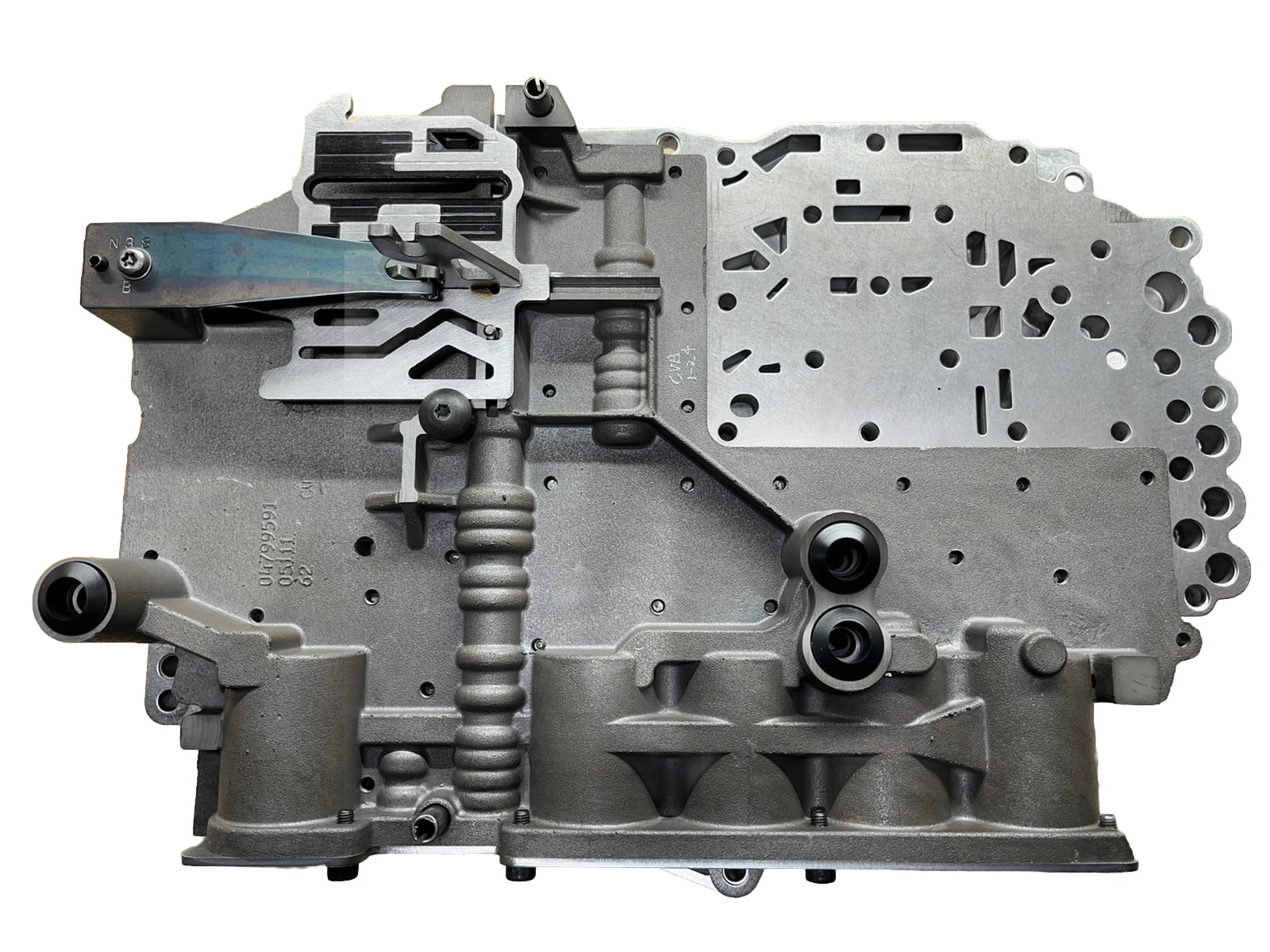
The 66RFE does not have a dedicated TCC solenoid. It uses one pulse-width modulated solenoid, the Low/Reverse-Converter Clutch (L/R-CC) solenoid, for two jobs. A solenoid switch valve in the valve body decides where that solenoid's oil goes. Latched one way, the L/R-CC solenoid feeds the low/reverse clutch for 1st gear; latched the other way, which is 2nd gear and above, the same solenoid controls the converter clutch. That is why the same worn switch valve shows up on Sonnax's complaint list for erratic TCC apply, no lockup, and TCC apply and release concerns and also for second-gear starts and L/R switch codes (Sonnax kit 92835-18K, listed for the 45RFE, 545RFE and 68RFE family).
Once the switch valve sends oil to the converter, the controller runs the clutch in two stages. ATRA's GEARS magazine laid out the RFE strategy in its P0740 case study:
- EMCC (electronically modulated): the solenoid is pulsed so the clutch slips on purpose. The target is engine speed within about 60 rpm of input shaft speed. This partial-apply state is where shudder lives.
- FEMCC (fully energized): the solenoid goes to 100 percent duty cycle for full lockup, and the controller keeps watching slip to confirm the clutch is holding.
Two valves in the oil pump shape the pressure between that solenoid and the converter. The TCC regulator valve sets how hard the clutch is applied during partial apply. Sonnax points out it only regulates during partial apply; at full apply, TCC apply pressure equals line pressure, about 160 psi maximum in forward ranges on a stock RFE. The TCC accumulator smooths the solenoid's pulses so the clutch sees steady pressure rather than a hammer. When the bores wear, the pressure the clutch actually gets stops matching what the controller commanded, the controller keeps chasing its 60 rpm slip target, and the clutch grabs and releases many times a second. That is the shudder.
Step 1: Prove It Is the Converter Clutch
Before anything comes off the truck, rule out the things that feel identical from the driver's seat: driveline angle and U-joints, a carrier bearing, tires, an engine misfire, and on the 6.4L, MDS.
- Log the right data. Record engine rpm, input speed, output speed, TCC mode (none, partial/EMCC, full), the L/R-CC solenoid duty cycle, and the MDS status (four- or eight-cylinder mode on the 6.4L). Converter shudder happens in EMCC with the slip value oscillating instead of settling.
- Tap the brake at the shudder speed. The brake switch drops lockup. If the shake stops the instant the converter unlocks, at the same road speed, the driveline is off the hook.
- Change load, not speed. Converter shudder is worst on a light, steady throttle climb and goes away with a firm push or a lift, because both change the lockup command. A driveline vibration follows road speed regardless of throttle.
- Watch MDS on the 6.4L. If the vibration only shows up when the logger shows four-cylinder mode, you are looking at the MDS drone the bulletins below describe, not a hydraulic fault.
- Pull codes. Per the GEARS P0740 case study, the RFE controller sets its TCC fault when it is in EMCC above 1,750 rpm input speed, the solenoid is at maximum duty cycle and still cannot pull engine speed within 60 rpm of input, or when slip exceeds 100 rpm for 10 seconds in full lockup.
Step 2: Check for the Factory Software Fix (6.4L)
On the 6.4L HEMI trucks, start with the bulletin search, because FCA has repeatedly addressed light-throttle shudder with calibration rather than parts.
- Service Bulletin 18-097-16 (August 20, 2016) covers 2015 Ram 2500, 3500 and 4500/5500 cab chassis with the 6.4L and the 66RFE (DFP). It carries an optional software file for customers specifically complaining of drone, shudder, pulsation or vibration under light throttle in MDS/ECO mode. The standard file also lists an enhancement to prevent shudder in Reverse when backing up a grade (DFP only), and the bulletin describes a surge, shudder or pulsation on smooth roads at 40-80 mph.
- Service Bulletin 18-040-17 Rev. A (June 24, 2017) covers 2017 trucks with the 6.4L and 66RFE built on or before May 22, 2017. Same optional "MDS NOISE" software path for light-throttle shudder in MDS/ECO, plus reduced drone noise at minimum converter clutch operating speed and reduced downhill gear hunting on cruise. It also adds P0870 (OD hydraulic pressure test, 66RFE only) to the codes it addresses.
- Service Bulletin 18-036-20 (April 9, 2020) carries the same optional "MDS NOISE" calibration for 2018 6.4L trucks with the 66RFE. It requires a battery charger holding 13.2 to 13.5 volts during the flash.
FCA notes that if the customer finds the shudder improvement objectionable, the PCM can be returned to the standard software. And software only fixes a calibration complaint. If your log shows the slip value oscillating with solenoid duty cycle climbing toward maximum, the hydraulics are leaking and no flash will cure it.
There is also one converter-specific bulletin to rule out on 2015 6.4L trucks. Service Bulletin 21-037-14 (November 12, 2014) covers 2015 Ram 2500/3500 6.4L 66RFE trucks built between September 10 and October 1, 2014, where a small number of converters were built with the oil grooves on the internal friction discs too wide, causing slip under heavy load and premature wear. The check is the bar code label through the starter opening: serials from TTP2544 through TTP2734, or a missing label, get replacement converter RL143186AB.
Step 3: Fluid Condition Comes Before Parts
The 66RFE takes ATF+4 (Chrysler MS-9602) and nothing else. Converter clutch smoothness depends on the friction modifiers in that fluid, and those are what wear out first when a truck tows hot. Pull a sample at operating temperature. If it is dark, smells burnt, or the truck has towed for years on original fluid, service it before anything else: drain the pan, new filter, refill with licensed ATF+4, and set the level hot on the dipstick (our 66RFE fluid type and capacity guide has the procedure). If a mild shudder comes right back within a few hundred miles of fresh fluid, the fluid was a symptom, not the cause.
Step 4: The Hydraulic Repairs, in Order
If software and fluid do not cure it, the cause is in the valve body or the pump. GEARS documented exactly this on an RFE P0740 truck: a worn solenoid switch valve in the valve body and a worn converter accumulator piston in the pump leaked enough oil that the clutch never got proper apply pressure.
1. Solenoid switch valve
If the switch valve plugs cock in a worn bore, the L/R-CC solenoid's oil leaks away or bleeds into the wrong circuit, and the converter sees erratic pressure. Vacuum test the bore with the valve body on the bench. Sonnax's 92835-18K oversized plug kit uses a guide stem that connects the two plug halves to keep them from cocking, and it uses reamer 92835-RM. Its complaint list includes erratic TCC apply, no lockup, and TCC apply and release concerns. If the truck also has second-gear starts or an L/R pressure switch code, the switch valve is almost certainly your problem.
2. TCC regulator and accumulator valves in the pump
Sonnax explains that the OE TCC regulator valve has minimal valve-to-bore sealing at the line-pressure-to-converter-feed circuit, so critical apply oil leaks past the spool to the sump. That shows up first as converter and lockup concerns. Their oversized kit 44912-12K (TCC regulator valve, oversized accumulator valve and a thicker accumulator spring retainer) fits the 45RFE, 545RFE, 65RFE, 66RFE and 2018-and-earlier 68RFE and uses tool kit F-44912-TL12.
The other direction of failure matters too. Sonnax warns that once the RFE regulator goes to full apply, the converter sees full line pressure, and performance kits can push that past 220 psi, which leads to converter ballooning, flexplate damage, pump damage and repeated converter failure. Their drop-in kit 44912-36K limits TCC apply to 150 psi. If the truck has a tune or a shift kit that raised line pressure, factor that in before you install another converter.
3. TCC accumulator spring
Sonnax notes that the OE accumulator spring in the RFE pump can fatigue or break. A broken or tired spring gives a harsh TCC apply instead of a smooth one, which feels like a single bump or a short chatter as lockup comes in. Their replacement spring 44912-01 is listed for the 66RFE.
4. The converter itself
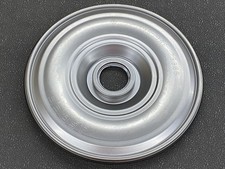
Only after the pressure side is right does the converter become the fix. If the clutch lining is glazed or has come apart, the converter has to come out. Sonnax's 66RFE unit page lists TCC lining failure, overheated converter and repeated converter failure among this unit's known complaints, and those are the trucks where someone kept replacing converters without fixing the feed. When it does come out, flush the cooler and lines, because a failed lining sends debris through the cooler and back into the new unit.
Repair Order That Saves Money
- Confirm converter shudder on the scan tool (EMCC, oscillating slip, goes away with the brake tap).
- On a 6.4L, check MDS status during the shake and run the VIN for 18-097-16, 18-040-17 or 18-036-20. On a 2015 6.4L, check the converter label against 21-037-14.
- Service the fluid with licensed ATF+4 and road test again.
- If it persists or a TCC code sets, pull the valve body and test the solenoid switch valve bore.
- If the converter is coming out anyway, rebuild the pump's TCC regulator and accumulator circuit with the converter. Never put a new converter behind the old pump valves.
Keeping It From Coming Back
- Fluid on schedule. Towing and plow trucks are severe service. Change ATF+4 at the severe interval, not the normal one.
- Keep the temperature down. Heat kills friction modifiers and glazes the converter clutch. A working cooler and clean cooler lines matter more on a heavy-towing HEMI than almost anything else.
- Fix the hydraulics with the converter. Every RFE converter job gets the pump TCC valves and a switch valve check.
FAQ
What does 66RFE torque converter shudder feel like?
It feels like driving over rumble strips, usually at a light, steady throttle between about 40 and 60 mph. It goes away when you press harder on the throttle, lift off, or tap the brake, because each of those changes or drops the converter clutch command. If the vibration stays when the converter is unlocked, it is a driveline or engine problem instead.
Can a software update fix 66RFE shudder?
On 6.4L HEMI trucks, sometimes. FCA bulletins 18-097-16 (2015), 18-040-17 (2017) and 18-036-20 (2018) include an optional calibration for drone, shudder or pulsation at light throttle in MDS/ECO mode. Software will not fix worn valve body or pump bores, so if the scan data shows slip oscillating with solenoid duty cycle near maximum, the repair is hydraulic.
Does the 66RFE have a separate TCC solenoid?
No. The converter clutch is controlled by the Low/Reverse-Converter Clutch solenoid, the same solenoid that applies the low/reverse clutch in 1st gear. A solenoid switch valve routes its oil to the converter in 2nd gear and above, which is why a worn switch valve can cause both lockup problems and second-gear starts.
Should I replace the torque converter for 66RFE shudder?
Only after the pressure side checks out. A worn TCC regulator valve, accumulator or switch valve will make a new converter shudder again. If the converter does come out, rebuild the pump's TCC regulator and accumulator circuit at the same time and flush the cooler.
What fluid does a 66RFE need to prevent shudder?
ATF+4 that meets Chrysler MS-9602, and nothing else. The converter clutch relies on the fluid's friction modifiers to slip smoothly in partial lockup, and those wear out with heat and miles. Old or overheated fluid is one of the most common shudder causes and the cheapest to fix.
Sources
- FCA US / NHTSA — Service Bulletin 18-097-16, "Flash: Diagnostic And System Enhancements" (August 20, 2016). Backs the 2015 Ram 2500, 3500 and 4500/5500 6.4L with 66RFE (DFP) coverage, the optional software for drone, shudder, pulsation or vibration under light throttle in MDS/ECO mode, the 40-80 mph surge/shudder/pulsation note, and the enhancement to prevent shudder in Reverse when backing up a grade. static.nhtsa.gov (PDF)
- FCA US / NHTSA — Service Bulletin 18-040-17 Rev. A, "Flash: 6.4L Powertrain Diagnostic and System Enhancements" (June 24, 2017). Backs the 2017 6.4L 66RFE build cutoff of May 22, 2017, the optional "MDS NOISE" software, the option to return to standard software, reduced drone noise at minimum converter clutch operating speed, reduced downhill gear hunting, and P0870 (66RFE only). static.nhtsa.gov (PDF)
- FCA US / NHTSA — Service Bulletin 18-036-20, "Flash: Powertrain Control Module (PCM) Updates" (April 9, 2020). Backs the 2018 Ram heavy-duty 6.4L with 66RFE (DFP) coverage, the optional MDS/ECO light-throttle shudder calibration, and the 13.2-13.5 volt charger requirement during the flash. static.nhtsa.gov (PDF)
- FCA US / NHTSA — Service Bulletin 21-037-14, "66RFE Transmission Slip Under High Engine Load And Premature Wear" (November 12, 2014). Backs the September 10 to October 1, 2014 build window, the over-wide friction disc oil grooves, the TTP2544-TTP2734 serial range and missing-label rule, and replacement converter RL143186AB. static.nhtsa.gov (PDF)
- ATRA GEARS Magazine — "Solving a 68RFE Mystery Code P0740." Backs the RFE EMCC and FEMCC lockup strategy, the 60 rpm slip target, the 1,750 rpm input speed and 100 rpm for 10 seconds set conditions, and the worn solenoid switch valve and pump accumulator root cause. gearsmagazine.com
- Sonnax — "Prevent RFE, RH/RE Converter Failure: Maintain Proper TCC Apply Pressure." Backs the TCC regulator valve regulating only during partial apply, full-apply pressure equal to line pressure at about 160 psi stock, performance kits exceeding 220 psi, converter ballooning and pump damage, and the 44912-36K 150 psi limit kit; lists the 66RFE. sonnax.com
- Sonnax — Oversized TCC Regulator & Accumulator Valve Kit 44912-12K. Backs the 45RFE, 545RFE, 65RFE, 66RFE and 2018-earlier 68RFE fitment, the minimal OE valve-to-bore sealing at the line-to-converter-feed circuit, converter and lockup concerns, kit contents, and tool kit F-44912-TL12. sonnax.com
- Sonnax — Oversized Solenoid Switch Valve Plug Kit 92835-18K. Backs the erratic TCC apply, no lockup, TCC apply and release, second-gear start and L/R switch code complaints, the guide stem that prevents plug cocking, and reamer 92835-RM. sonnax.com
- Sonnax — TCC Accumulator Spring 44912-01. Backs 66RFE fitment, the OE spring fatiguing or breaking, and the harsh TCC apply complaint. sonnax.com
- Sonnax — Chrysler 66RFE unit page. Backs the 66RFE complaint list including TCC slip, harsh TCC apply, TCC lining failure, overheated converter and repeated converter failure. sonnax.com