A 66RFE that slips almost never slips everywhere at once. It flares on the 1-2, or hangs in neutral going into 5th, or pulls fine empty and flares the first time it sees a hill with a trailer. That pattern is the most useful thing you have. This transmission is clutch-to-clutch with no bands, every gear is two clutches working together, and the controller is watching the speed sensors the whole time. If you know which gears slip, you already know which circuit to open up.
The 66RFE is the six-speed Ram put behind the gas HEMI in its heavy-duty and chassis cab trucks. It shares its control logic, solenoid pack, pressure sensor and most of its valve body with the 545RFE and 68RFE, so the factory RFE diagnostic procedures below apply directly. Here is how I work a 66RFE slip from the scan tool to the bench.
How the 66RFE Decides It Is Slipping
The RFE has an input speed sensor reading 60 teeth on the input clutch hub and an output speed sensor reading 30 teeth on the park gear, per Chrysler's RFE service information for P0732. Once a gear is commanded, the controller divides input rpm by output rpm and compares it to the known ratio. If the math does not match, it sets the in-gear ratio code for that gear: P0731 through P0736 for 1st through reverse. Chrysler notes the code can take up to five minutes of problem identification before the MIL comes on, which is why a customer may describe a slip for days before the light shows up.
That also means a ratio code is a statement about the math, not the clutch. A bad input or output sensor, a broken tone wheel or a speed sensor ground fault will produce the same code as a burned clutch. Chrysler's own P0732 cause list includes "missing teeth on input clutch hub tone wheel" and a broken weld between the reaction carrier and reverse sun gear, right next to the burned clutch and cut piston seal entries.
Use the apply chart as a slip map
Sonnax's CHR145/CHR146 valve body install sheet prints the 65/66/68RFE apply chart. Keep it in front of you:
- 1st (3.23:1): Underdrive (UD) plus Low/Reverse (L/R). The L/R clutch is only on below about 150 output rpm; after that the low overrun sprag carries 1st.
- 2nd (1.83:1): UD plus 2nd clutch (2C).
- 3rd (1.41:1): UD plus 4th clutch (4C).
- 4th (1.00:1): UD plus Overdrive (OD).
- 5th (0.81:1): OD plus 4C.
- 6th (0.62:1): OD plus 2C.
- Reverse (4.44:1): Reverse clutch plus L/R.
Read it backwards from the complaint:
- Slips in 1st through 4th, fine in 5th and 6th: the UD clutch or its feed.
- Slips in 4th, 5th and 6th: the OD clutch. This is the classic RFE failure when a truck tows heavy in the top gears.
- Slips in 2nd and 6th: the 2C circuit.
- Slips in 3rd and 5th: the 4C circuit.
- Slips in reverse and on a hard launch in 1st, fine on the road: L/R, or the sprag if reverse is fine.
- Slips in every gear, or delayed engagement in drive and reverse: it is not one clutch. That is line pressure, the pump, the filter or fluid level.
A single clutch problem only hurts the gears that clutch is in. If 2nd and 3rd both slip, the shared element is UD, not 2C and 4C failing at the same time.
Step 1: The Scan Tool Work Before Anything Comes Apart
Chrysler's RFE pre-diagnostic procedure is short and worth following in order, because it catches the cheap fixes:
- Check the pinion factor for the correct tire size and program it if needed. A truck with bigger tires or a regear and the wrong pinion factor does not see the ratio the controller expects.
- Check fluid level and charge the battery. Chrysler says many transmission symptoms come from a low fluid level, and testing should only be done with a fully charged battery.
- Read engine and transmission codes, including pending codes, and record the DTC event data before you clear anything. Chrysler is specific that a battery disconnect wipes the event data and resets all learned transmission values.
- For gear ratio codes, view the CVI monitor data and record the Clutch Volume Index for each clutch. CVI is the controller's measure of the fluid volume each clutch needs to fill and apply. A worn clutch or a leaking piston seal needs more volume and shows it here.
Then look at what else is set. On the P0732 flow, Chrysler's first step is to send you to any solenoid, line pressure, speed sensor or loss of prime code first, and to run P0944 (loss of prime) before anything else if it is present. A ratio code sitting next to a pressure code is usually a pressure problem wearing a clutch costume.
Step 2: Prove Line Pressure
RFE line pressure is closed loop. The Line Pressure Sensor reports actual pressure, and the controller changes the Pressure Control Solenoid duty cycle to hit a target. Per Chrysler's P0868 description, 5 percent duty is solenoid off and maximum line pressure, and 62 percent is solenoid on and minimum pressure. Desired pressure is torque based, with fixed shift and Park/Neutral levels of 120 or 135 psi to keep shifts consistent.
If actual line pressure stays more than 15 psi below desired for 3.5 seconds continuously, P0868 (line pressure low) sets. Chrysler's cause list for that code reads like a slip checklist:
- Low fluid level
- Cracked, plugged or mis-installed primary oil filter
- A loose cooler return spin-on filter, if equipped
- Stuck or sticking main regulator valve
- A poor line pressure sensor connection, or 5-volt supply circuit faults
- Internal transmission leakage
The connector check is free. With the engine off and the scan tool on Line Pressure, push in on the sensor connector. Chrysler says if the reading jumps to about 30 psi, reconnect and clean the terminals before going any further.
Verify the sensor with a gauge
Do not trust the sensor that you are testing. Chrysler's hydraulic pressure test uses Line Pressure Adapter 8259, which lets you run a mechanical gauge and the original sensor at the same time. The scan tool reading should match the gauge within plus or minus 10 psi. Take readings with the fluid full, at normal operating temperature, and the engine at 1500 rpm, and check any suspect element in at least two gears that use it.
Because the system is closed loop, Chrysler warns that individual element pressures can vary widely but should always follow line pressure. If line pressure is correct and one element still reads low, that element's circuit is leaking. If everything is low together, look upstream at the pump, filter and regulator.
For a sense of scale, Chrysler's 545RFE reference values show a 135 psi N-1 garage shift on the 4.7L and 165 psi on the 5.7L, and upshift pressures from 120 to 150 psi. Those are 545RFE numbers, not a 66RFE spec, but they tell you the range you should be seeing.
Step 3: What Is Actually Wrong Inside
Sonnax's 66RFE unit page and Chrysler's P0732 cause list point at the same handful of failures. In the order I find them:
Worn solenoid switch valve and plugs
Sonnax ties a burned OD clutch and a burned 4th clutch on the 66RFE to solenoid switch valve wear or excessive line pressure. The switch valve cycles constantly, the bore wears, and apply oil crossleaks out of the OD and 4C circuits. The clutch gets less apply force than the controller thinks it is getting, it slips, it heats, and it burns. Chrysler lists "worn solenoid switch valve or plugs" as a P0732 cause too. Vacuum test the bore and plugs on the bench. If the bore will not hold, it needs the oversized valve kit or a remanufactured valve body; new clutches alone will burn again.
Low pump output
Sonnax lists low pressure from damaged pump gears as a 66RFE condition. If line pressure is low in every range with a good filter and correct fluid level, and the main regulator moves freely, the pump is next.
Cut seals, cracked pistons and missing bleed orifices
For a 2nd-gear ratio code, Chrysler names burned UD or 2C clutches, cut 2C or UD piston seals, a broken 2C piston casting, broken or missing 2C or UD bleed orifices, cut or cracked accumulator pistons, and a cut or missing #5 or #7 check ball. Swap in the matching elements for the other ratio codes. The CVI numbers and the element pressure test tell you which clutch to look at first.
Burned L/R clutch
Sonnax ties a burned 66RFE Low/Reverse clutch to wear at the L/R switch checkball sleeve. If reverse slips and the L/R clutch is cooked, fix the sleeve or the new clutch goes the same way.
Rule out the factory converter and solenoid campaigns
Two FCA documents cover specific 66RFE trucks, and both are worth a VIN check before the unit comes out. FCA TSB 21-037-14 (November 12, 2014) covers 2015 Ram 2500 and 3500 trucks with the 6.4L HEMI and 66RFE built between September 10 and October 1, 2014: some torque converters were built with the oil grooves on their internal friction discs too wide, which can make the transmission slip under heavy load and wear prematurely. The check is reading the converter's bar code label through the starter opening. A serial number whose first seven digits fall between TTP2544 and TTP2734, or a missing label, means the converter gets replaced.
On 2016 and 2017 trucks, FCA Customer Satisfaction Notification T15 covers 65/66RFE solenoid packs whose coil terminals were built out of specification. The intermittent connection can hold the transmission in one gear at 30 to 45 mph with the MIL on, which owners often describe as slipping or "not shifting." The dealer remedy is a free solenoid pack. Neither of these is a clutch failure, and both are free if the VIN is open.
Read the Pan Before You Condemn the Unit
A light coating of clutch material on the bottom of the pan is not a problem by itself on a high-mileage unit. It only means something when it comes with a slip or shift lag, and that cuts both ways. A light haze on a truck with no complaint is normal wear. The same haze on a truck that flares into 5th is your burned OD clutch telling you where it went. Heavy friction material, steel, or aluminum in the pan means the unit is coming out regardless of what the codes say.
Check the primary filter and its seal while the pan is down. Chrysler lists a cracked, plugged or mis-installed primary oil filter as a cause of both P0868 and P0732. The seal belongs fully seated in the pump body, not pushed onto the filter neck first. A filter that is not sealed lets the pump draw air, and that is a slip in every gear that no clutch kit will fix.
The Fix, by What You Found
- Low fluid or wrong fluid: correct the level with ATF+4 and fix the leak. If the slip goes away and the CVIs settle, you caught it early.
- Sensor connector or wiring: repair the terminal or circuit, then clear and relearn.
- Filter or seal problem: replace the primary filter and seat the seal correctly.
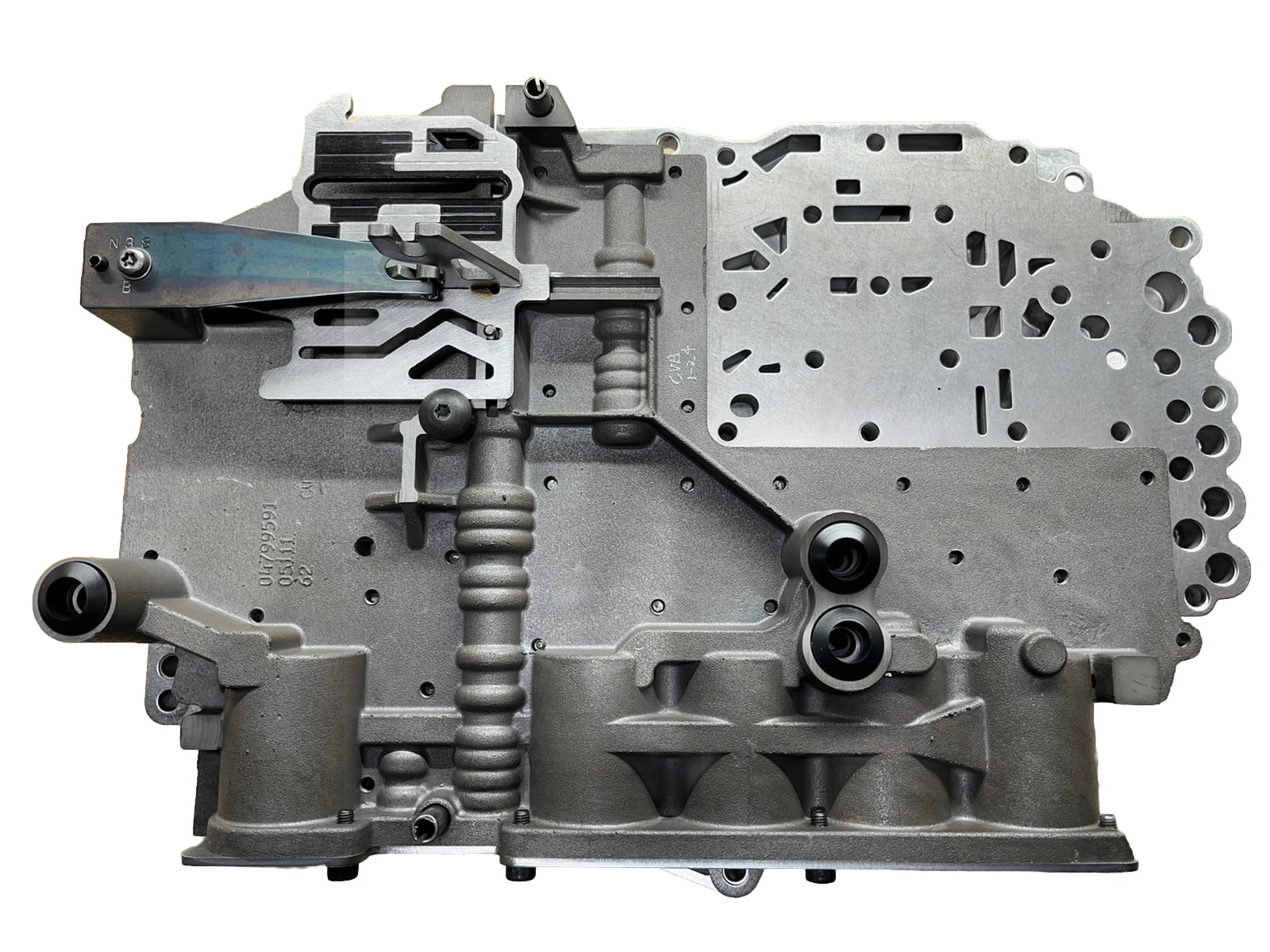
- Worn switch valve or regulator bore: oversized valve kit, or a remanufactured valve body if the casting is worn in more than one place.
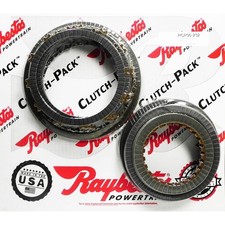
- One clutch burned: the unit comes out. Replace the clutch pack, inspect the piston, seals, bleed orifice and housing for that element, and fix the hydraulic cause that burned it.
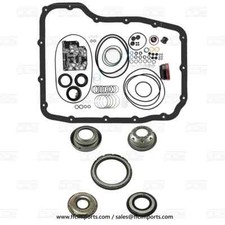
- Multiple clutches burned or debris through the unit: full overhaul with a master rebuild kit, new frictions and steels, and a clean or remanufactured valve body. Flush the cooler and lines.
After any repair, run a quick learn with a capable scan tool, then road test through repeated upshifts and downshifts so the controller relearns the clutch volumes. A 66RFE that slipped long enough to set a ratio code has adapted around the leak, and it needs to relearn on the repaired hardware.
How to Keep It From Coming Back
Heat kills RFE clutches. Keep the fluid full and on ATF+4, service the filter, and be careful with tunes that raise line pressure or move shift points. Sonnax lists excessive line pressure as a cause of burned OD and 4C clutches on this unit, so more pressure is not automatically a cure for a slip.
FAQ
Why is my 66RFE slipping?
The most common causes are low fluid, a cracked or poorly seated primary filter, low line pressure from a sticking main regulator or worn pump, and solenoid switch valve wear that leaks apply oil from the OD and 4th clutch circuits. Once a clutch has slipped and burned, it will keep slipping until it is replaced. Which gears slip tells you which clutch is involved.
What does code P0732 mean on a 66RFE?
P0732 is a gear ratio error in 2nd. The controller compared input speed to output speed in 2nd gear and the ratio did not match. Chrysler lists low fluid, input speed sensor faults, a worn solenoid switch valve, a sticking main regulator and burned UD or 2C clutches among the causes.
Can low fluid make a 66RFE slip?
Yes. Low fluid can cause loss of pump prime, low line pressure and slipping in every gear. Chrysler's pre-diagnostic procedure has you check the fluid level before anything else, because many transmission symptoms come from low fluid.
Which 66RFE clutch slips in 5th and 6th gear?
The overdrive clutch. It is applied in 4th, 5th and 6th, so an OD problem usually shows up as a slip or flare in the top three gears while 1st through 3rd feel normal. Sonnax ties burned 66RFE OD clutches to solenoid switch valve wear or excessive line pressure.
Will a fluid change fix a slipping 66RFE?
Only if the slip was caused by low or degraded fluid and the clutches are not yet damaged. If the controller has set a ratio code and there is friction material and a slip, the clutch is already worn and a fluid change will not bring it back.
Sources
- Chrysler/Jeep Service Information — 45RFE/545RFE P0732 Gear Ratio Error in 2nd. Backs the 60-tooth input / 30-tooth output speed sensor logic, P0731-P0736 ratio code behavior, the five-minute MIL delay, and the P0732 cause list (switch valve, main regulator, UD/2C clutches, seals, bleed orifices, #5/#7 check balls, tone wheel, primary filter). jeep.automotive-manuals.com
- Chrysler/Jeep Service Information — P0868 Line Pressure Low. Backs closed-loop line pressure via the Line Pressure Sensor and PCS (5% duty = max, 62% = min), torque-based line pressure, 120/135 psi shift and Park/Neutral levels, the 15 psi / 3.5 second set condition, the cause list, and the 30 psi connector check. jeep.automotive-manuals.com
- Chrysler/Jeep Service Information — 545RFE Hydraulic Pressure Test. Backs Line Pressure Adapter 8259, the plus-or-minus 10 psi sensor-to-gauge tolerance, 1500 rpm test conditions, element pressures following line pressure, and the 545RFE garage shift and upshift reference pressures. jeep.automotive-manuals.com
- Chrysler/Jeep Service Information — 45RFE/545RFE Pre-Diagnostic Troubleshooting Procedure. Backs the pinion factor check, fluid level and battery checks, recording DTC event data, the battery-disconnect reset warning, and reading CVI monitor data for gear ratio codes. jeep.automotive-manuals.com
- Sonnax — Chrysler 66RFE unit page. Backs burned OD and 4th clutches from solenoid switch valve wear or excessive line pressure, low pressure from damaged pump gears, and the burned L/R clutch tied to switch checkball sleeve wear. sonnax.com
- Sonnax — CHR145/CHR146 Universal Remanufactured Valve Body Tech & Install Tips (PDF). Backs the 65/66/68RFE clutch apply chart, gear ratios and the 150 rpm L/R note. cdn.transend.us
- FCA US / NHTSA — Service Bulletin 21-037-14, "66RFE Transmission Slip Under High Engine Load And Premature Wear" (November 12, 2014). Backs the 2015 Ram 2500/3500 6.4L 66RFE build window of September 10 to October 1, 2014, the over-wide friction disc oil grooves causing slip under heavy load, the TTP2544-TTP2734 serial range and the missing-label rule. static.nhtsa.gov (PDF)
- FCA US LLC — Customer Satisfaction Notification T15, Transmission Solenoid Pack. Backs the 2016-2017 Ram 65/66RFE solenoid coil terminals built out of specification, the one-gear, 30-45 mph limit with MIL on, and the free solenoid pack replacement. chrysler.com (PDF)