Most 68RFE "high-mileage services" are a pan drop, a filter, and a dipstick check. That covers the fluid. It does nothing for the part that actually ends most of these transmissions early: the overdrive clutch pack, and the valve body wear that quietly sets it up to fail. Sonnax and Transmission Digest both flag OD clutch burn-up as the single most common 68RFE failure, and the reason is simple arithmetic — the OD clutches are engaged in 5th and 6th gear, which is most of the miles a Ram 2500 or 3500 puts on the highway.
This is the checklist I actually run on a high-mileage 68RFE, in the order that catches problems before they get expensive. It starts with the fluid service, because that part is still necessary, but it does not stop there.

Step 1: The Fluid and Both Filters, Done Right
The 68RFE takes Mopar ATF+4 and nothing that merely "recommends" it — Stellantis's Ram 2500/3500 owner's manual states the engine and transmission require ATF+4, full stop. There is no gray area here the way there is on some multi-vehicle fluids.
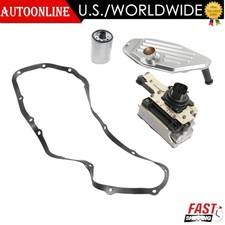
The transmission carries two filters, and a half-done service only touches one. There is the internal sump filter with a snout that seals into the pump, which comes as a kit with the pan gasket, and there is a separate spin-on cooler-return filter threaded into the case. If a quoted service only lists one filter, ask which one, because both wear and both matter at high mileage — the spin-on filter in particular catches debris circulating through the cooler loop that the sump filter never sees.
Stellantis's published maintenance plan calls for a fluid and filter change at 120,000 miles under normal service, or 60,000 miles if the truck is used for frequent trailer towing, police, or fleet duty. On a high-mileage truck with unknown history, treat the towing interval as the floor, not the exception — most of these trucks have towed something at some point.
| Item | Spec |
|---|---|
| Oil pan bolts | 12 N·m (105 in-lb) |
| Pan sealer (FCA 21-024-17 reseal) | Mopar RTV sealant 05010884AD, one tube per three trucks |
The pan figure comes straight from FCA service bulletin 21-024-17 (June 7, 2017), written for pan leaks on 2017 Ram 2500/3500 trucks with the 6.7L Cummins and 68RFE (sales code DG7) built between October 10, 2016 and March 31, 2017. Its repair is to scrape both sealing surfaces clean, lay a bead of Mopar RTV 05010884AD on the pan, torque the bolts to 12 N·m (105 in-lb), and refill with Mopar ATF+4. That pan torque matters more than it looks. The OE pan is stamped steel, and overtightening it on a truck that came in for a routine fluid change is a reliable way to warp the sealing surface and hand the customer a new leak they did not have before.
Step 2: Check the Solenoid Switch Valve Bore Before It Sets a Code
This is the part most fluid services skip entirely, and it is arguably the weakest link in the whole overdrive system. The solenoid switch valve (SSV) sits in a bore in the valve body, held in position by second gear oil pressure on one side and OD oil pressure on the other. That plug moves every time the transmission shifts into and out of overdrive, and repeated cycling wears the bore. Once the bore wears enough, fluid cross-leaks past the plug and the OD clutches lose apply pressure — they slip, slipping makes heat, and heat is what actually burns the friction material.
The tell is a specific set of trouble codes: P0841, P0868, P0871, P0988, P1775, and P1776. None of these mean the clutches are gone yet. They mean the SSV bore is leaking, and that is a valve body repair, not a transmission replacement — if you catch it here. The diagnostic step is a vacuum test on the bore: pull a vacuum and watch how fast it bleeds down. Excessive leakage confirms bore wear, and the fix is reaming the bore oversize and fitting an oversized plug, then re-testing to confirm the repair held.
Line pressure cuts both ways
Low line pressure starves the OD clutches of apply force, and the resulting slip burns them the same way an SSV leak does. But high line pressure causes a different failure: it can bleed past the worn SSV bore clearance and partially apply the OD clutches, or stop them from fully releasing, which is the specific mechanism behind code P0871. Before you condemn a clutch pack, verify both desired and actual line pressure on a scan tool, and confirm the line pressure sensor itself is accurate with the proper adapter rather than trusting a reading that could be coming from a failed sensor.
If the truck has a performance tune, assume the line pressure strategy has changed. Programmers commonly raise line pressure, shift the shift points, or engage the torque converter clutch earlier than stock ahead of the 3-4 shift — all of which load the OD clutch pack harder than the factory calibration the transmission was built around.
Step 3: Look at the Valve Body, Not Just the Clutches
ATRA's Gears Magazine makes a point worth repeating here: most OD clutch failures on the 68RFE trace back to valve body track erosion, not a bad clutch pack, and the leading cause of that erosion is excess torque from a tuned ECM running through fluid passages the factory separator plate was not built to handle at that pressure. On a high-mileage inspection, that means pulling the valve body and actually looking at the separator plate for washed-out channels, not just swapping solenoids and hoping.
Three more wear points worth checking while the valve body is off:
- The plug bore behind the switch valve — the same SSV wear point described above, confirmed with the vacuum test.
- The accumulator bore and piston — damaged seals or bore wear here cause leaks that mimic a clutch apply problem. Aluminum accumulator pistons hold up better than plastic ones, which can crack under the combination of heavy springs, heat, and fluid pressure over time.
- The case-to-valve-body sealing surface — a worn feed hole surface here leaks between the case and valve body. A depth micrometer across the surface will show wear that a visual inspection misses.
The fix for track erosion and case leaks is the same: flat-sand the mating surface and install a bonded separator plate, or in more severe cases an aftermarket billet channel plate built to hold up under higher pressure than the factory stamped plate.
What Actually Causes OD Failure That Isn't Mileage
Sonnax is direct about this: failures that don't line up with mileage usually trace to overloading or modification, not wear alone. Emissions deletes, oversized tires, towing beyond the truck's rating, and engine tuning all put more torque through the same clutch pack, housing, and valve body the factory built for stock output. A thin-walled aluminum OD housing that flexes under load pushes the clutch pack out of its designed clearance, and that happens faster on a truck making more power than it did when the transmission left the factory. None of that shows up on a dipstick.
The Checklist, in Order
- Scan for codes P0841, P0868, P0871, P0988, P1775, P1776 before you touch anything.
- Check desired and actual line pressure, and the line pressure sensor's accuracy, with the engine running and in gear.
- Drain the pan, replace the sump filter and pan gasket, and replace the spin-on cooler return filter — both filters, every time.
- Refill with Mopar ATF+4 only, torque the pan to 12 N·m (105 in-lb), and recheck the level per the hot dipstick procedure.
- If any SSV-related codes are present, or the truck is tuned or heavily loaded, pull the valve body and vacuum-test the SSV bore.
- Inspect the separator plate for track erosion and the accumulator bore for wear while the valve body is off.
- Pull a fluid sample in a clean jar. Dark but translucent is heat, not failure. Opaque, gray, or burnt-smelling means clutch material is already in suspension — that truck is past a fluid service.
68RFE filter and pan gasket kit
Sump filter and pan gasket for 4WD 6.7L Cummins Ram 2500/3500. Pair it with the spin-on cooler return filter and do both, every service.
See the filter kit →FAQ
What mileage does a 68RFE overdrive clutch usually fail at?
There is no fixed number, and that is the point of this checklist. Sonnax and Transmission Digest both describe overdrive clutch burn-up as the most common 68RFE failure because the OD clutches are engaged in 5th and 6th gear, which is most of the highway mileage on the truck — but both sources also say failures that cannot be explained by mileage alone usually trace to low or high line pressure, a worn solenoid switch valve bore, or a tuned ECM pushing more torque through the same clutch pack. A stock, untuned, well-maintained truck can go well past 150,000 miles on the original clutches. A tuned or overloaded truck can burn them well under 100,000.
What codes show up before a 68RFE overdrive clutch actually fails?
Watch for P0841, P0868, P0871, P0988, P1775 and P1776. These are the codes Sonnax lists as symptoms of a worn solenoid switch valve (SSV) bore letting fluid cross-leak between circuits, and P0871 specifically shows up when high line pressure bleeds past the worn bore and partially applies or fails to fully release the OD clutch. None of these codes mean the clutches are already gone — catching them at this stage is what lets you fix the valve body instead of rebuilding the transmission.
Does changing the 68RFE fluid and filters prevent overdrive clutch failure?
It helps, but it does not address the mechanical wear that actually kills most OD clutch packs. Fresh ATF+4 and both filters keep friction material and solenoid bores clean and keep line pressure control accurate, which slows wear. But Gears Magazine and Sonnax both attribute most OD failures to valve body track erosion, a worn SSV plug bore, or incorrect line pressure — none of which a fluid service fixes. A real high-mileage service checks line pressure and duty cycle on a scan tool, not just the dipstick.
What torque spec does the 68RFE transmission pan use?
12 N·m (105 in-lb) for the oil pan bolts, per FCA service bulletin 21-024-17, which reseals the 68RFE pan on 6.7L Cummins Ram 2500/3500 trucks with Mopar RTV sealant 05010884AD and refills with ATF+4. Overtightening the pan bolts on the stamped-steel OE pan is a common way to warp the sealing surface and create a new leak on a truck that came in for a routine fluid change.
Can you fix 68RFE overdrive clutch problems without a full rebuild?
Sometimes. If the clutches themselves are not yet burned, a vacuum test of the SSV bore, a line pressure and duty cycle check, and an inspection of the valve body separator plate for track erosion can catch the problem at the valve body stage. Gears Magazine describes flat-sanding the valve body and installing a bonded separator plate, or an aftermarket billet channel plate, as a fix for track erosion without replacing the whole unit. Once the clutch pack itself is burned or the housing has flexed enough to lose clearance permanently, that becomes a teardown.
Related 68RFE guides
Sources
- Stellantis / Mopar — 2022 Ram 2500/3500 Owner's Manual, Chassis Fluids And Lubricants. The requirement that the 68RFE behind the 6.7L diesel use "Only ATF+4 Automatic Transmission Fluid," with Mopar ATF+4 recommended. vehicleinfo.mopar.com
- Stellantis / Mopar — 2022 Ram 2500/3500 Owner's Manual, Maintenance Plan — Diesel Engine. The published 68RFE fluid-and-filter interval: 120,000 miles normal service, or 60,000 miles for police, fleet, or frequent trailer towing use. vehicleinfo.mopar.com
- Sonnax — "68RFE Overdrive Clutch Failure: What to Check First When Troubleshooting OD Issues." The solenoid switch valve (SSV) bore wear mechanism and vacuum test, diagnostic codes 841/868/871/988/1775/1776, the low- and high-line-pressure failure modes including the P0871 link, the single-sided .034 inch clutch steel core, housing flex, and the overloading/modification causes of failures not explained by mileage. sonnax.com
- Transmission Digest — "68RFE Overdrive Clutch Failure." Low line pressure failing to supply adequate OD clutch apply force and the resulting heat-driven burnup, and high line pressure bleeding through excess SSV bore clearance to partially apply or hold the OD clutches applied. transmissiondigest.com
- Rob Faucett, ATRA — "68RFE OD Clutch Failure," Gears Magazine, March 2019. Valve body track erosion as the leading cause of OD clutch failure, tied to tuned-ECM torque; the plug bore wear behind the switch valve and its vacuum test; the accumulator bore/piston wear and the case preference for aluminum over plastic pistons; the case-to-valve-body leak check with a depth micrometer; and the flat-sand-and-bonded-separator-plate or billet channel plate fix. gearsmagazine.com
- FCA US LLC — Service Bulletin 21-024-17, "Transmission Oil Pan Leaking" (June 7, 2017), via NHTSA. The 2017 Ram 2500/3500 6.7L Cummins 68RFE (DG7) build range of October 10, 2016 to March 31, 2017; the reseal with Mopar RTV sealant 05010884AD; the 12 N·m (105 in-lb) oil pan bolt torque; and the Mopar ATF+4 refill. static.nhtsa.gov (PDF)