The Ford 6R80 is the six-speed automatic behind a huge slice of Ford's rear-drive fleet — F-150, Expedition, Mustang GT, Lincoln Navigator, and the later Ranger. It is a rugged ZF-based unit, but almost every 6R80 that lands on the bench with a shift complaint has the same root cause: the valve body. The bores wear, the solenoids get contaminated, line pressure wanders, and the driver ends up with symptoms that feel like a dying transmission when the hard parts are often perfectly good.
This is what actually goes wrong inside a 6R80 valve body, how to test it and the solenoid body step by step so you stop guessing, and how to decide between a reseal, a bore repair, and a full replacement before you spend a dime on parts.
The short version: Most 6R80 shift complaints — flare, bind-up, delayed or no reverse, erratic line pressure, TCC slip and codes — are hydraulic, caused by worn valve bores and worn solenoids, not a failed control module. The 6R80 has no separate TEHCM to blindly swap; the electronics live in the solenoid body bolted to the valve body. Confirm line pressure and each solenoid's commanded amperage against actual pressure before you condemn anything. And if you fit a reman valve body, the PCM must be updated with the new solenoid strategy code, or you will damage the unit.
How the 6R80 Valve Body Works
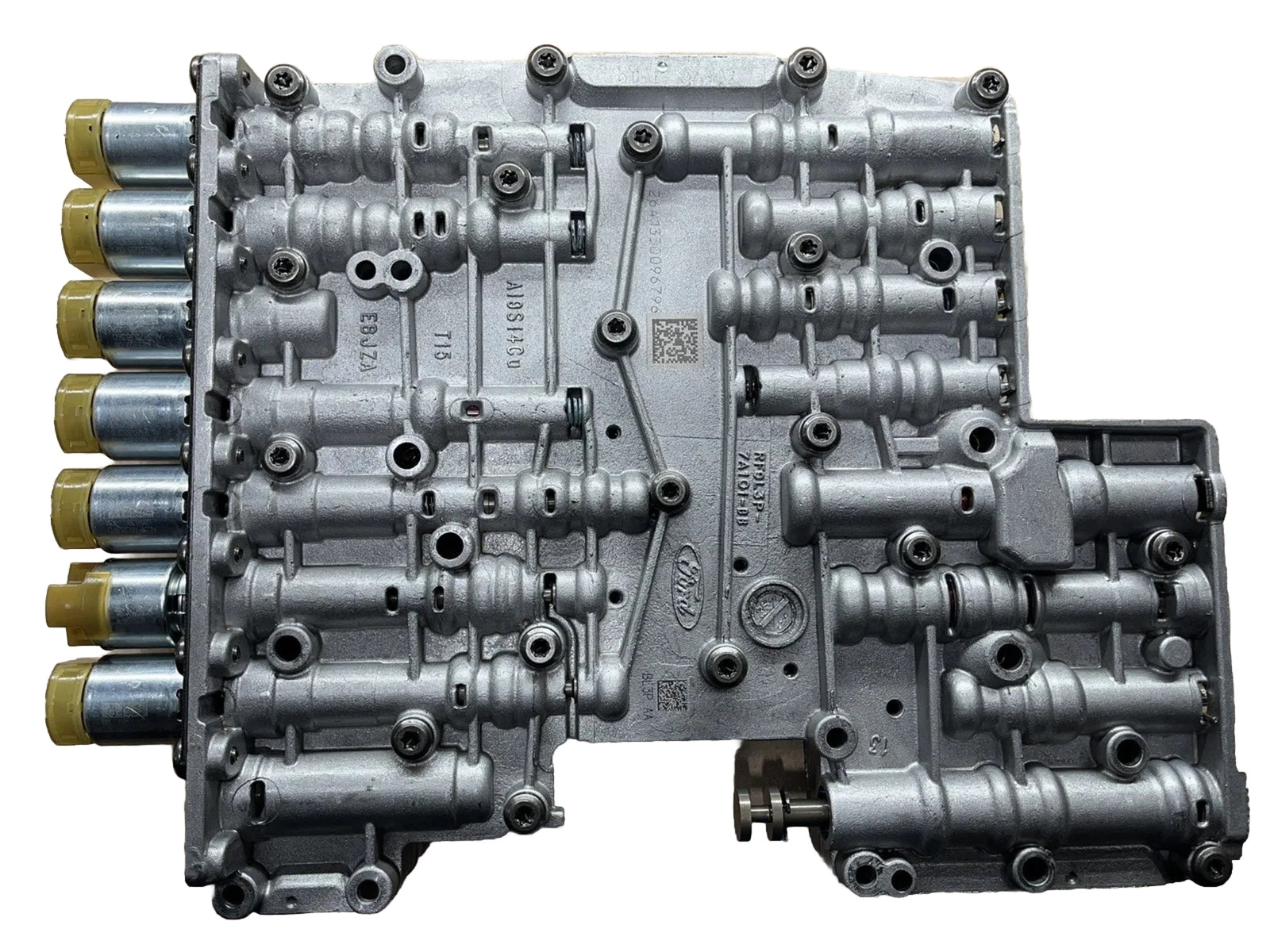
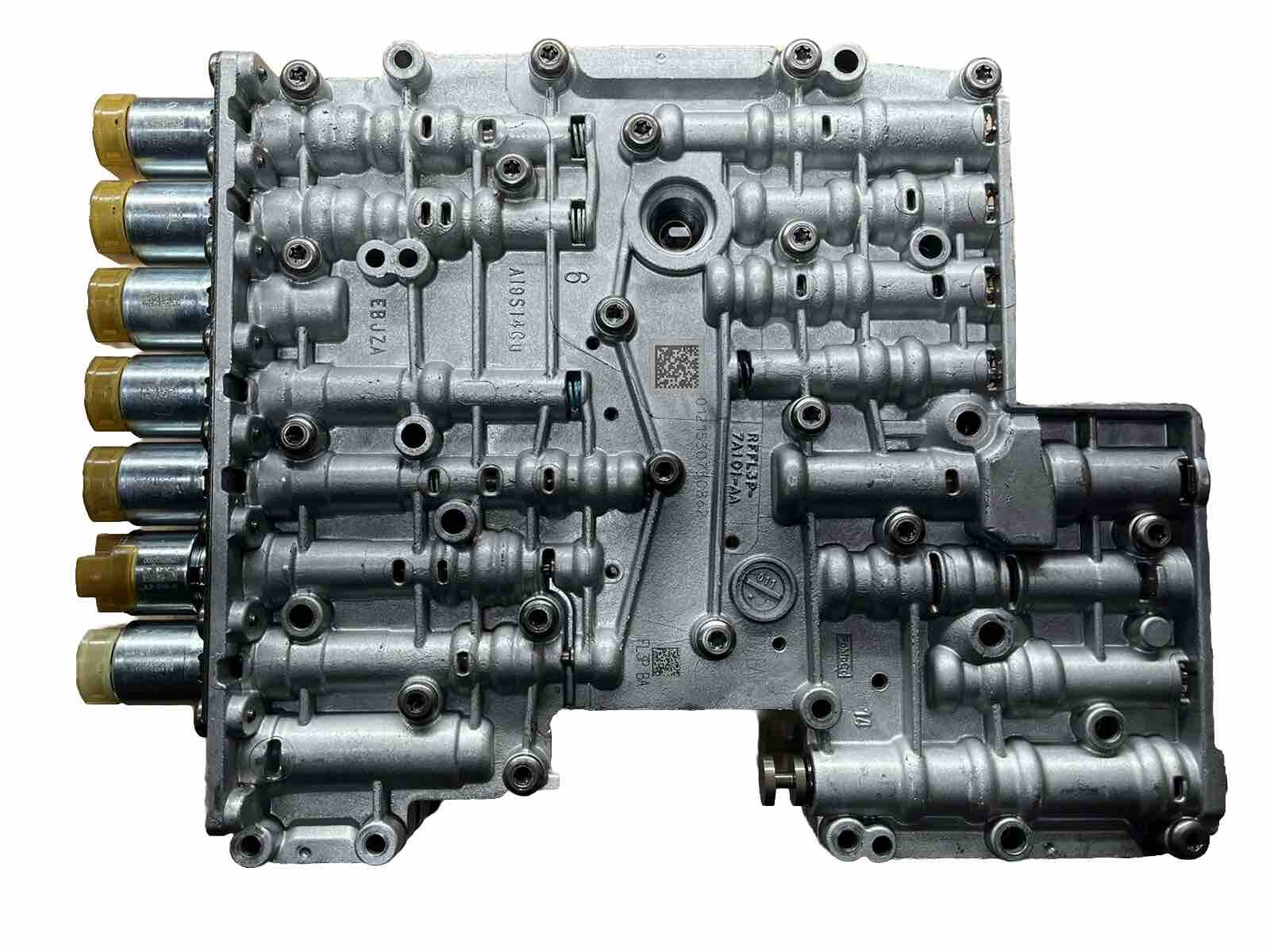
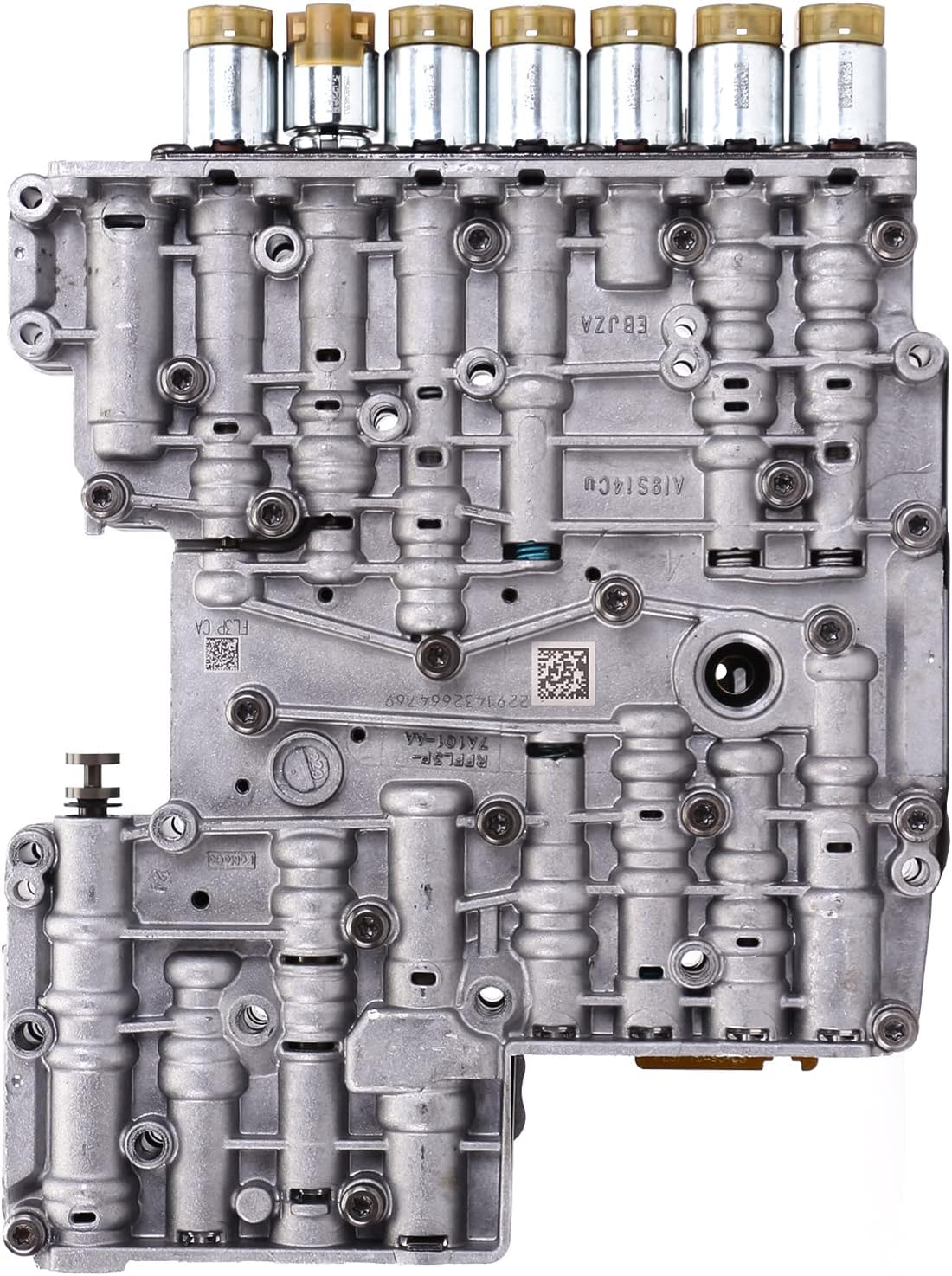
The 6R80 is a clutch-to-clutch transmission with five friction elements: the 1-2-3-4, 2-6, 3-5-R, 4-5-6, and low/reverse clutches. Each apply is metered hydraulically through the valve body, which is really two castings (upper and lower) with a separator plate between them, plus a bolted-on solenoid body carrying the variable force solenoids and the internal harness that runs to the bulkhead connector.
Those solenoids are identified by band numbers that reflect their exact flow calibration. That detail matters later: per Sonnax, unless you are writing a fresh calibration into the PCM, a replacement solenoid should carry the same band number as the one it replaces, in the same position. Get that wrong and shift quality never comes back.
Everything the driver feels — apply timing, shift firmness, line pressure, torque converter clutch (TCC) apply — is regulated by valves sliding in aluminum bores. When a bore wears oval or a valve sticks, pressure leaks past it. The computer commands the right pressure, the hydraulics don't deliver it, and you get a shift complaint with the electronics reading as perfectly healthy.
6R80 Valve Body Symptoms and Their Causes
Different bores produce different complaints. Sonnax's 6R80/6R100 valve body layout maps the common symptoms to the specific valve trains behind them — this is the map that keeps you from chasing the wrong circuit:
| Symptom | Likely valve / circuit |
|---|---|
| Poor shift quality, flare shifts, harsh shifts, delayed reverse | Pressure regulator (PR) valve wear |
| High or erratic line pressure, broken parts from over-pressure | PR valve sleeve wear |
| Downshift bind-ups, flare, excess clutch overlap | Clutch control valve bores (A / C) |
| Flare, neutral shifts, harsh up/downshifts, gear ratio codes, TCC slip | Solenoid pressure regulator valve |
| TCC codes, excess TCC slip, cycling RPM, low TCC release pressure | Bypass clutch control / converter release regulator valves |
| Downshift clunk, firm shifts, EDS codes | Worn accumulator pistons |
| Overheating, lube/bushing/planetary failure | Lubrication control valve |
The through-line is heat and mileage. Over time the aluminum bores wear, the solenoids' internal plungers stick on clutch dust and metallic debris, and the accumulator action that used to cushion each shift fades. What starts as a shift that is "soft one day, harsh the next" ends as flares, bind-ups, and stored codes. A cracked or worn PR valve sleeve is especially nasty: it can drive line pressure high enough to break hard parts, or so erratic that the unit never shifts the same way twice.
Reverse complaints deserve special mention. On the 6R80 the 3-5-R clutch carries 3rd, 5th, and Reverse, so a delayed or no-reverse condition combined with flare on the 2-3 shift often points at the reverse and clutch-control circuits in the valve body — not automatically at a burnt clutch pack.
How to Test Your 6R80 Valve Body and Solenoid Body
Do these in order. The point is to separate a hydraulic problem you can fix at the valve body from a solenoid or a hard-part failure — the price swings enormously between them, so you diagnose rather than guess.
Before any of it, check for an open recalibration. Ford TSB 20-2060 covers 2015-2017 F-150 trucks with the 6R80 that intermittently lose reverse engagement, or fall into a neutral state shifting from MANUAL 1 or MANUAL 2 to REVERSE at low speed while rolling, with no DTCs set. Ford attributes it to PCM strategy, and the entire published repair is reprogramming the PCM and running the adaptive learning drive cycle from Workshop Manual section 307-01 (labor op 202060A, 0.9 hours). A no-code reverse complaint on that model range is a software check first, not a valve body.
- Pull the codes and read the fluid first. Scan for gear-ratio, solenoid-performance, pressure-control-out-of-range, and TCC codes, and note exactly which clutch each one names. Then check the fluid: dark, burnt fluid with debris on the pan magnet points toward burnt frictions and a mechanical failure; clean fluid with shift and pressure codes points squarely at the valve body.
- Test line pressure at the tap. Hook a mechanical gauge to the line-pressure port and read it at idle in Drive and Reverse, then under a light load. Compare to Ford's spec across the range. Pressure that is high, low, or erratic and won't hold steady indicts the PR valve and its sleeve — the most common line-pressure offenders. Because the late 6R80 uses a different PR valve and sleeve than the early one, measure both the valve and the sleeve if you go into that bore.
- Watch each solenoid's commanded amperage versus actual pressure. On the scan tool, record the upshift transitions and compare what the PCM commands to what the solenoid pressure actually does (read psi, not kPa). In Sonnax's own 2-3 shift case, the normally-high "B" solenoid runs the 3-5-R clutch and the normally-low "C" solenoid runs the 2-6 clutch; watching amperage drop as pressure builds and releases in the right order proved the electronics were fine and pointed at a mechanical solenoid problem. A solenoid that is electrically commanded correctly but can't build or hold pressure is either a worn solenoid or a leaking bore feeding it.
- Inspect the solenoid body and lead frame. Pull the solenoid body and record each solenoid's band number and position before anything comes off. Check the internal harness (lead frame) and the bulkhead connector for chafing, corrosion, and spread terminals — a bad connection mimics a bad solenoid. Replace solenoids with matching band numbers unless you are loading a new calibration.
One resistance trap here is worth memorizing. Shift Solenoid "E" is the 6R80's only on/off solenoid, and Ford changed it mid-production: units built before Nov. 4, 2010 read 10.5 ohms with a tan snout (6L2Z-7G484-AA), and units built after Nov. 3, 2010 read 18 ohms with a gray snout (AL3Z-7G484-B), because the coil windings were increased. Per Transmission Digest, the PCM driver is matched to the resistance and the two are not interchangeable. Both design levels use blue o-rings, so the snout color and the resistance reading are your only field ID. - Do not condemn the lead frame on a temperature complaint alone. The ATF temperature sensor is mounted on the lead frame, directly below the low/reverse clutch pack. Transmission Digest documented a 2013 F-150 with erratic transmission temperature that rose and fell in cadence with vehicle speed; a PCM and a valve-body-with-lead-frame replacement both failed to fix it. The actual cause was a low/reverse clutch pack stacked too tight with .083 in. steels, burning the frictions right next to the sensor. Rebuilding it with four .070 in. steels and one .083 in. steel brought clearance back into the .039–.062 in. window and the readings went normal.
- Vacuum-test the critical valve bores. With the valve body on the bench, vacuum-test each suspect bore — PR valve, solenoid pressure regulator, the clutch control valves, and the reverse circuit. A bore that won't hold vacuum is worn and leaking pressure. This is the definitive bench check that tells you whether a bore needs an oversized valve kit or the casting is done.
- Check the TCC circuit separately. TCC codes, excess converter slip, cycling lockup RPM, or low TCC release pressure point at the bypass clutch control and converter release regulator valve bores. Vacuum-test those bores; low release pressure and harsh apply/release are classic wear signatures here rather than a bad converter.
- Confirm clutch clearances on assembly. If you go inside, stick to OE clutch clearances. Sonnax warns that tightening clutch packs beyond spec can create a bind-up that feels exactly like a valve-body fault — and it will send you back into the vehicle right after installing it.
Run that sequence and the 6R80's shift complaints stop being a mystery. A large share turn out to be worn bores and worn solenoids you can address at the valve body; the units that are genuinely burnt or broken reveal themselves clearly once the hydraulic causes are ruled out.
Repair or Replace: The Three Real Fixes
1. Reseal and re-bore (targeted valve-body repair)
The cheapest path, and the one most often missed. A Sonnax Zip Kit for the '15-later 6R80 (and 6R100) seals the critical pressure losses in the main line, solenoid regulator, reverse, clutch control, and solenoid apply circuits, and restores accumulator action — the drop-in parts install without reaming or special tools. Where a bore is worn oval, an oversized valve kit re-machines it back to a working clearance. This handles firm shifts, flare shifts and bind-ups, and pressure losses without a teardown.
2. Replace the valve body / solenoid body
When multiple bores are worn or the solenoids are contaminated, a remanufactured valve body is the reliable fix. A properly reman'd 6R80 valve body ships with new normally-high and normally-low solenoids and the key valve upgrades already installed, and is flow-tested so solenoid feed, clutch, converter, and line pressures meet or exceed OE. Critical: the PCM must be updated with the new solenoid strategy code that comes with the valve body — skip that step and you get erratic operation and damage.
3. Full teardown (hard-part failure)
If the fluid is burnt and debris is in the pan, or a clutch pack won't hold after the hydraulics check out, the unit comes apart. This is the most expensive fix, which is exactly why it is the last thing you confirm, not the first — the valve-body and solenoid causes above set nearly identical complaints for a fraction of the cost.
6R80 valve bodies, solenoids & shift kits
Reman valve bodies, solenoid bodies, oversized valve and Zip-style seal kits, filters, and the fluid to do the job — matched to your 6R80 and shipped fast from the USA.
Shop 6R80 valve body parts →Doing the job yourself? Our line pressure testing walkthrough covers the gauge-at-the-tap step in detail, and you can find every valve-body and solenoid part matched to your unit on our 6R80 parts page.
Sources
- Sonnax — Ford 6R80, 6R100 Valve Body Layout, the exploded location guide mapping each valve train (PR valve and sleeve, clutch control valves, solenoid pressure regulator, TCC bypass and converter release valves, accumulators) to its symptoms. sonnax.com/tech_resources/885
- Sonnax — Troubleshooting Ford 6R80 & 6R140 2-3 Shift Quality Issues (Jim Dial, TASC Force), on reading solenoid amperage vs. pressure on the scan tool, band numbers, the 3-5-R and 2-6 solenoids, and clutch-clearance bind-ups. sonnax.com/tech_resources/1141
- Sonnax — Spotting the Changes to Ford 6R80 '15-Later Valve Bodies (Maura Stafford, TASC Force), on casting/separator-plate identification and the PR valve and sleeve dimension change to measure during bore repairs. sonnax.com/tech_resources/803
- Sonnax — Zip Kit 6R80L-6R100-ZIP, on sealing critical pressure losses in the main line, solenoid regulator, reverse, clutch control and solenoid apply circuits and restoring accumulator action. sonnax.com/parts/5233-zip-kit
- Ford Motor Company, Technical Service Bulletin 20-2060 (March 6, 2020) — "6R80 Transmission - Intermittent No Engagement/Neutral State During Manual Shift to Reverse Events With No DTCs." Backs the 2015-2017 F-150 application, the no-DTC symptom description, PCM strategy as the stated cause, and the published repair of reprogramming the PCM plus the Workshop Manual 307-01 adaptive learning drive cycle under labor operation 202060A. static.nhtsa.gov (PDF)
- Transmission Digest, Wayne Colonna, "Ford 6R80 shift solenoid 'E' resistance change: How to tell the difference" (April 30, 2024) — backs Shift Solenoid E as the unit's only on/off solenoid, the 10.5 ohm pre-Nov. 4, 2010 design with the tan snout (6L2Z-7G484-AA), the 18 ohm post-Nov. 3, 2010 design with the gray snout (AL3Z-7G484-B), the increased coil windings and matched PCM driver, that the two are not interchangeable, and the shared blue o-ring seals. transmissiondigest.com
- Transmission Digest, Wayne Colonna, "Ford 6R60/6R80 Erratic Temperature Operation" (October 22, 2021) — backs the ATF temperature sensor being mounted on the lead frame directly below the low/reverse clutch pack, the 2013 F-150 case where a PCM and a valve body with lead frame were replaced without fixing the complaint, the too-tight low/reverse pack stacked with .083 in. steels as the real cause, and the corrected stack of four .070 in. plus one .083 in. steels giving .039–.062 in. clearance. transmissiondigest.com
- Sonnax — Remanufactured Valve Body FD6R80-3, on the complaints a corrected valve body addresses (shift complaints, erratic line pressure, slips in Forward/Reverse, TCC codes, solenoid issues) and the required PCM solenoid-strategy update. sonnax.com/parts/6019-remanufactured-valve-body