A lot of write-ups on the ZF 9HP48 - Chrysler, Jeep, Dodge and Ram badge it the 948TE - repeat the same half-true line: "this transmission is sealed for life, there's no filter to change." That is not quite right, and getting it wrong matters, because the part that actually is serviceable sits right behind the pan you are about to drop. This guide covers the Chrysler/Jeep/Fiat 948TE specifically, since that is the application with published Stellantis service bulletins behind the fluid spec, the fill procedure and the torque figures below. Honda/Acura and Land Rover/Jaguar license the same core ZF architecture under different badges with their own fluid part numbers and level-check procedures - we cover those differences in 9HP48 Fluid Type and Capacity.
What You're Actually Working On
Chrysler introduced the 948TE for the 2014 model year Jeep Cherokee, and the name tells you what it is: a ZF-designed 9-speed, transverse-mounted, electronically controlled automatic. The underlying architecture is documented in a SAE technical paper on the ZF 9HP48: nine forward gears built from four planetary gear sets and six shift elements, two of which are positive-locking dog clutches used for the first time in this application. ZF nested two of the planetary sets on top of each other to save space for a transverse front-wheel-drive layout, added an axially parallel vane-cell pump to cut drag losses, and built a new torque converter design around it - the combined result is rated at up to 16 percent better fuel economy than the 6-speed automatics it replaced. None of that engineering changes what you do with a wrench, but it explains why this case is tighter on serviceable access than something like a 6-speed 6L80 or 45RFE.
The Filter Question: What's Actually Serviceable
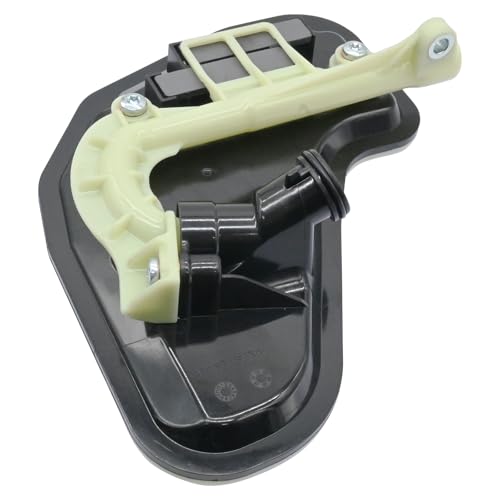
Here is the part most "sealed for life" write-ups skip past: the 9HP48/948TE uses an external, pan-mounted oil strainer, not a true internal filter buried past the valve body. The strainer sits inside the oil pan and feeds the pump, held in place by two screws, and it comes free once you break the rubber seal against the pump inlet. There is a magnet at the bottom of the pan that catches fine wear material - expect a light gray dusting on a healthy unit, and treat visible clutch material or metal chunks as a reason to stop and diagnose before you put the pan back on.
What is not back there is a second, deeper filter element that requires splitting the case or pulling the transmission to reach - that is the detail the "no filter" claim is actually describing, and it is true as far as it goes. For a routine maintenance interval, the pan-mounted strainer is the filtration you can service, and it is worth doing: a collapsing or clogged strainer starves the pump, and on this unit that shows up as harsh or delayed engagement, a shudder in the lower gears, and gear hunting in stop-and-go traffic before it turns into clutch damage from low apply pressure.
Pan and Strainer Service, Step by Step
- Confirm the application. This procedure and the torque/fluid figures below are for the Chrysler/Jeep/Fiat 948TE (sales code DFH/DHJ). Land Rover, Jaguar and Honda/Acura variants of the 9HP48 use different fluid part numbers and level-check procedures - see the fluid guide linked above before you buy parts.
- Get underside access. Chrysler's own service bulletins for this transmission call for removing the belly pan and front skid plate where equipped before any case-area work - plan for that extra time on Cherokee and Renegade chassis in particular, where the transmission sometimes needs to be lowered slightly to clear the pan.
- Drain and drop the pan. Remove the pan bolts evenly in a crisscross pattern rather than working around the perimeter in order - this transmission has had documented case-split leak issues from uneven fastener torque (more on that below), and the pan deserves the same discipline.
- Pull the strainer. Remove the two retaining screws and twist the strainer to break it free of its seal rather than prying at the pan rail.
- Inspect and clean the magnet. Wipe it down and look at what it caught before deciding this is "just a fluid service."
- Install the new strainer and pan gasket, seating the strainer squarely into its pump inlet before torquing anything down.
- Reinstall the pan, torquing the bolts evenly in sequence per the service manual for your specific casting. Chrysler has not published one universal pan-bolt torque figure across every 948TE application, so do not borrow a number from a different transmission or a forum post - and do not treat a pan gasket like a head gasket; overtightening warps the rail and creates the leak you were trying to prevent.
- Refill with the correct fluid and set the level using the temperature-indexed procedure below, not a quart count poured in and walked away from.
Fluid: the One Part Where There's No Substitute
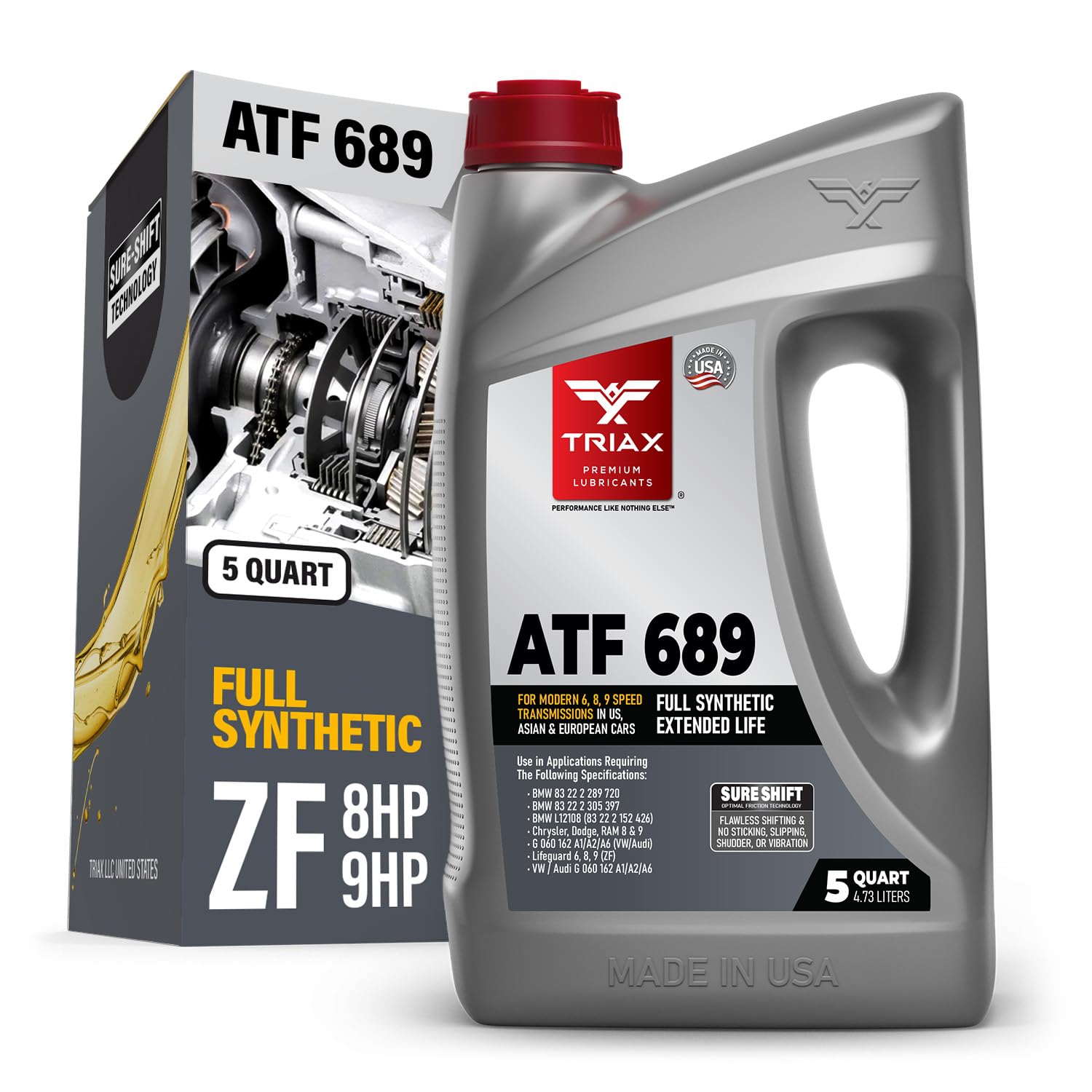
The factory fill is Mopar ZF 8 & 9 Speed ATF, part number 68157995AB, described in ATRA's own bench walkthrough of the 948TE as pale green. A more recent Stellantis parts bulletin for this same transmission lists the automatic transmission fluid under part number 68218925AB (global part 68218925GA) - both numbers cross to ZF's own LifeguardFluid 9 approval, which ZF's product data sheet states plainly was developed specifically for 8HP and 9HP passenger car transmissions and is the only fluid approved for them under ZF's List of Lubricants TE-ML 11.
Never use Mopar ATF+4 in a 948TE. ATF+4 is the fill for Chrysler's older hydraulically-controlled transmissions. ZF's data sheet warns that the wrong fluid in a LifeguardFluid 9-spec unit can cause a significant deterioration in shift behavior up to outright transmission failure - this clutch material was friction-matched to the ZF spec, not to ATF+4.
Setting the Level Correctly
This transmission does not use a conventional stick-it-in-and-read-the-line dipstick. Chrysler's documented procedure, per ATRA's Gears magazine walkthrough of the 948TE, uses a special tool - Mopar P/N 10323A - inserted at a fill plug near the differential and read in millimeters against a chart that is keyed to transmission fluid temperature, because fluid level reads differently warm than cold. ATRA's own published example: at 140 degrees F, the correct reading is 16 to 23 mm. Fill plug access also depends on which engine is under the hood - 2.4L applications require removing the left front wheel to reach it, while 3.2L and 3.6L applications are reached from under the hood after the engine cover comes off. ATRA's article also flags a specific trap: because the fluid is a pale color, it is tempting to add fluorescent leak-detection dye to help spot a leak, and the article specifically cautions against doing that on this unit.
What the Bulletins Actually Say About Torque
Chrysler TSB 21-041-20 (2019 Jeep Cherokee, 948TE sales code DFH/DHJ) addresses a transmission fluid leak at the case split line - not the pan, the bellhousing-to-case joint - traced back to under-torqued fasteners from the factory on units built in specific date-code windows. The documented fix: working from bolt #8 to bolt #1, torque the eight lower case bolts to 35 N·m (26 ft-lbs), with an explicit caution not to rotate any bolt counterclockwise during the sequence. After the repair, the bulletin's own procedure has the technician check and adjust the fluid level, then start the vehicle and confirm transmission fluid temperature is above 50°C (122°F) before judging whether the leak is actually fixed - a reminder that this transmission's fluid readings are only valid once it is at operating temperature.
That torque figure is specific to the case-split bolts, not the oil pan, and it is worth keeping separate: borrowing a case-bolt spec for pan bolts (or vice versa) is exactly the kind of shortcut that creates comebacks on a unit this particular about fastener torque.
Why the Fluid Level Is Not a "Close Enough" Spec
If the torque discipline above seems excessive for what looks like a routine fluid service, consider Chrysler TSB 21-006-23. It covers 2022-2023 Jeep Compass and Commander units built in a specific production window where the documented customer complaint was total loss of forward gear - and the documented cause was that the transmission did not have the specified amount of fluid for proper operation. The published repair was not a top-off: it was replacing the entire transmission, listed at 7.1 hours of highly-skilled labor. That is the real-world cost of treating this transmission's fill procedure as approximate. A unit built around two dog-clutch shift elements and six total shift elements does not have the margin for error that an older, simpler hydraulic transmission tolerated.
Common Mistakes on This Job
- Using ATF+4 or a generic "universal" ATF because it is on the shelf and the fluid looks similar. It is not approved for this clutch material.
- Pouring in a guessed quart figure instead of using the temperature-indexed procedure. There is no published dipstick capacity for this transmission because Chrysler does not set the level that way.
- Torquing the pan like a gasket you can crank down hard. Overtightened pan bolts warp a stamped rail and create the exact leak you were trying to fix.
- Confusing the case-split bolt spec with pan bolt torque. They are different joints with different requirements.
- Reading the level cold or without confirming fluid temperature first. Every documented Chrysler procedure for this unit is temperature-gated.
ZF 9HP48 / 948TE Filter and Pan Gasket Kit
The pan-mounted strainer and gasket set for this transmission, sized for the 948TE application covered in this guide.
View the filter & gasket kit →FAQ
Does the 9HP48 / 948TE have a filter you can change without pulling the transmission?
Yes, but it is not the full-size internal filter older transmissions use. The 9HP48/948TE uses a pan-mounted strainer that sits inside the oil pan and feeds the pump; it is accessible by dropping the pan and comes out on two screws once the pan gasket seal is broken. There is no separate deep-internal filter element that requires splitting the case - the pan strainer is the serviceable filtration on this unit.
What transmission fluid does a 948TE 9HP48 take, and can I use ATF+4?
No, do not use ATF+4. The 948TE takes Mopar ZF 8 & 9 Speed ATF, factory part number 68157995AB (pale green), which Stellantis' own parts bulletins also list under 68218925AB. Both cross to ZF's own LifeguardFluid 9 spec, which ZF's product data sheet states is the only fluid approved for 8HP and 9HP passenger car transmissions - ATF+4 is for Chrysler's older hydraulic units and is not built for this clutch material.
How do you check the fluid level on a 948TE without a normal dipstick?
Chrysler's procedure uses a special temperature-indexed tool, Mopar P/N 10323A, inserted at the fill plug near the differential and read in millimeters against a chart keyed to transmission fluid temperature - for example, 16 to 23 mm is correct at 140 degrees F in ATRA's published walkthrough. Fill plug access differs by engine: 2.4L applications require removing the left front wheel, while 3.2L and 3.6L applications are reached from under the hood.
What torque spec do the transmission bolts take on a 948TE?
It depends which bolts. Chrysler TSB 21-041-20 covers the eight lower case-half bolts at the bellhousing split line on 2019 Jeep Cherokee 948TE units, torqued in sequence from bolt 8 to bolt 1 to 35 N·m (26 ft-lbs), without backing any bolt counterclockwise. That spec is for the case split, not the oil pan - pan bolts should be torqued evenly in a crisscross pattern per the service manual for your specific casting, since Chrysler has not published one universal pan bolt figure across every 948TE application.
What happens if the fluid level is wrong after a pan and filter service on this transmission?
It can be severe. Chrysler TSB 21-006-23 documents 2022-2023 Jeep Compass and Commander units that lost forward gear completely because the transmission did not have the specified amount of fluid - the published fix was not a top-off, it was replacing the entire transmission at 7.1 hours of labor. This transmission does not tolerate a rough-guess fill the way an older unit with a simple dipstick might.
Related Guides
Sources
- ATRA — Gears Magazine, "Tales From the Bench," April 2017 ("948TE: Checking Fluid Levels"). Backs the Mopar ZF 8 & 9 Speed ATF part number (68157995AB) and pale green fluid color, the caution against leak-detection dye, the temperature-indexed level-check procedure using Mopar tool P/N 10323A (example: 16–23 mm at 140°F), and the engine-specific fill plug access (left front wheel removal on 2.4L; under-hood access on 3.2L/3.6L). gearsmagazine.com
- Stellantis (FCA US LLC) — Technical Service Bulletin 21-041-20, "Transmission Case Oil Leak," July 2, 2020. Backs the affected population (2019 Jeep Cherokee KL/K4, 948TE sales code DFH/DHJ), the eight-bolt case-split torque procedure (35 N·m / 26 ft-lbs, sequence bolt 8 to bolt 1, no counterclockwise rotation), the post-repair requirement to check fluid level and verify transmission temperature above 50°C (122°F), and the listed transmission fluid part number 68218925AB / global 68218925GA. static.nhtsa.gov (PDF)
- Stellantis (FCA US LLC) — Technical Service Bulletin 21-006-23, "Loss of Forward Gear in Transmission," February 15, 2023. Backs the 2022-2023 Jeep Compass and Commander 948TE population affected, the documented cause (transmission fluid below specified amount), and the repair summary of full transmission replacement at 7.1 hours labor. static.nhtsa.gov (PDF)
- ZF Friedrichshafen AG — Product Data Sheet, ZF LifeguardFluid 9 (revision 25.10.2019). Backs the statement that LifeguardFluid 9 was developed specifically for 8HP and 9HP passenger car automatic transmissions, that it is the only approved fluid for them, the warning that substitute fluids can cause shift deterioration up to transmission failure, and the TE-ML 11 approval reference. aftermarket.zf.com (PDF)
- SAE International — "The ZF Automatic Transmission 9HP48: Transmission System, Design and Mechanical Parts," Technical Paper 2013-01-1276. Backs the transmission architecture: nine forward gears from four planetary gear sets and six shift elements including two dog clutches, the axially parallel vane-cell pump, the new torque converter design, and the up-to-16-percent fuel economy improvement versus a 6-speed automatic. saemobilus.sae.org