"Slipping" on a ZF 9HP48, badged 948TE on Chrysler, Jeep, Ram and Fiat products, almost never shows up the way it does on an older four- or six-speed. You rarely get a dramatic, stay-in-one-gear flare across the whole pedal range. What you get instead is an RPM flare between specific shifts, a soft or delayed engagement into gear from a stop, or a 5-4 downshift that feels like the transmission briefly lost its grip before catching again. All three of those are documented, named failure modes on this transmission, and they do not all come from the same place — one is a snap ring that can physically come loose inside the case, one is wear in the hydraulic valve body that regulates line pressure, and one is nothing mechanical at all, just adaptive values the TCM never learned correctly.
This is what each of those three causes actually looks like, the Stellantis bulletins and Sonnax technical documentation behind them, the clutch clearance specs that matter if you are on the bench, and the order to test them in before you start buying parts.
The short version: On a 2014-2015 Jeep Cherokee or 2015 Chrysler 200, a dislodged C-clutch snap ring is a documented cause of poor shift quality on the 5-4 downshift with DTC U0402, per Stellantis TSB 21-008-15 REV. A — but it only applies to specific VINs on a Rapid Response Transmittal list, not every 948TE. If the VIN is not on that list, Sonnax documents wear at the pressure regulator valve bore and the 9HP48-specific Shift Valve-System Pressure (SV-SP) valve as hydraulic causes of unstable line pressure, slipping and burnt clutches. And before condemning any hard part, Stellantis TSB 21-053-15 lists erratic shift quality as the direct symptom for running a TCM Quick Learn, which resets the adaptive clutch values the transmission uses to time every shift.

What Slipping Actually Looks Like on a 9HP48
The 948TE/9HP48 carries six clutches — A through F — where A and F are hydraulically actuated dog clutches and B, C, D and E are conventional multi-disc packs, combined in pairs and triples to build nine forward gears plus reverse, per the transmission's design documentation published in Gears Magazine, ATRA's technical journal. Because every gear depends on a specific pair of clutches holding cleanly, a single worn or displaced component rarely causes a full stay-in-gear flare the way it would on a simpler unit. Instead you get symptom patterns tied to specific shifts or specific clutches:
- RPM flare on a specific shift — most often reported on the 5-4 downshift, where a momentary loss of clutch holding power lets engine speed rise before the next gear locks in.
- Soft, delayed, or harsh engagement from Park or Neutral into Drive or Reverse.
- A MIL with a shift-quality or gear-ratio-related code rather than a hard stuck-in-gear failsafe code.
- Shift quality that is inconsistent — fine some trips, flared or harsh on others — which is itself a clue that points toward an adaptive-learn problem rather than a worn part.
That last pattern matters because it changes where you start diagnosing, which is covered in the step-by-step order below.
Cause 1: A Dislodged C-Clutch Snap Ring
Stellantis TSB 21-008-15 REV. A, "Transmission Shift Quality C-Clutch Snap Ring," documents a specific and limited failure: on a range of 2014-2015 Jeep Cherokee (KL) and 2015 Chrysler 200 (UF) units built with the 948TE (sales code DFH or DFJ), the C-clutch snap ring can dislodge. The listed symptom is exact: "less than desired shift quality during a 5-4 downshift and/or Malfunction Indicator Lamp (MIL) Illumination," with DTC U0402 frequently found in PCM memory once the technician looks.
Stellantis is explicit that this is not a universal fix — the bulletin was released as Rapid Response Transmittal 15-006, and the repair procedure only applies to VINs that appear in Stellantis's VIP system or on the RRT VIN list. A technician working this bulletin checks the VIN first, before ever touching the transmission.
The repair itself is a full transmission teardown: remove the transmission, drain it, pull the valve body, split the bellhousing from the case, and work down through the gear train, D-clutch piston retainer, and C-clutch pack to reach the snap ring. The replacement snap ring (Mopar part 04736949AB) goes back in with its opening rotated 90 degrees counterclockwise from where the original ring's opening sat — a detail the bulletin calls out specifically, since installing it in the original orientation does not fully correct the issue. Stellantis specifies that once reassembled, input shaft end play should measure between .07 and .32 inches with the case properly torqued, bellhousing bolts at 29 Nm (21 ft-lbs), valve body bolts at 11 Nm (8 ft-lbs), and the TRS/speed sensor bolts at 6.5 Nm (5 ft-lbs). The job closes out with the same TCM Quick Learn procedure covered below — a reassembled transmission still needs its adaptive values reset.
Cause 2: Valve Body Pressure-Regulation Wear
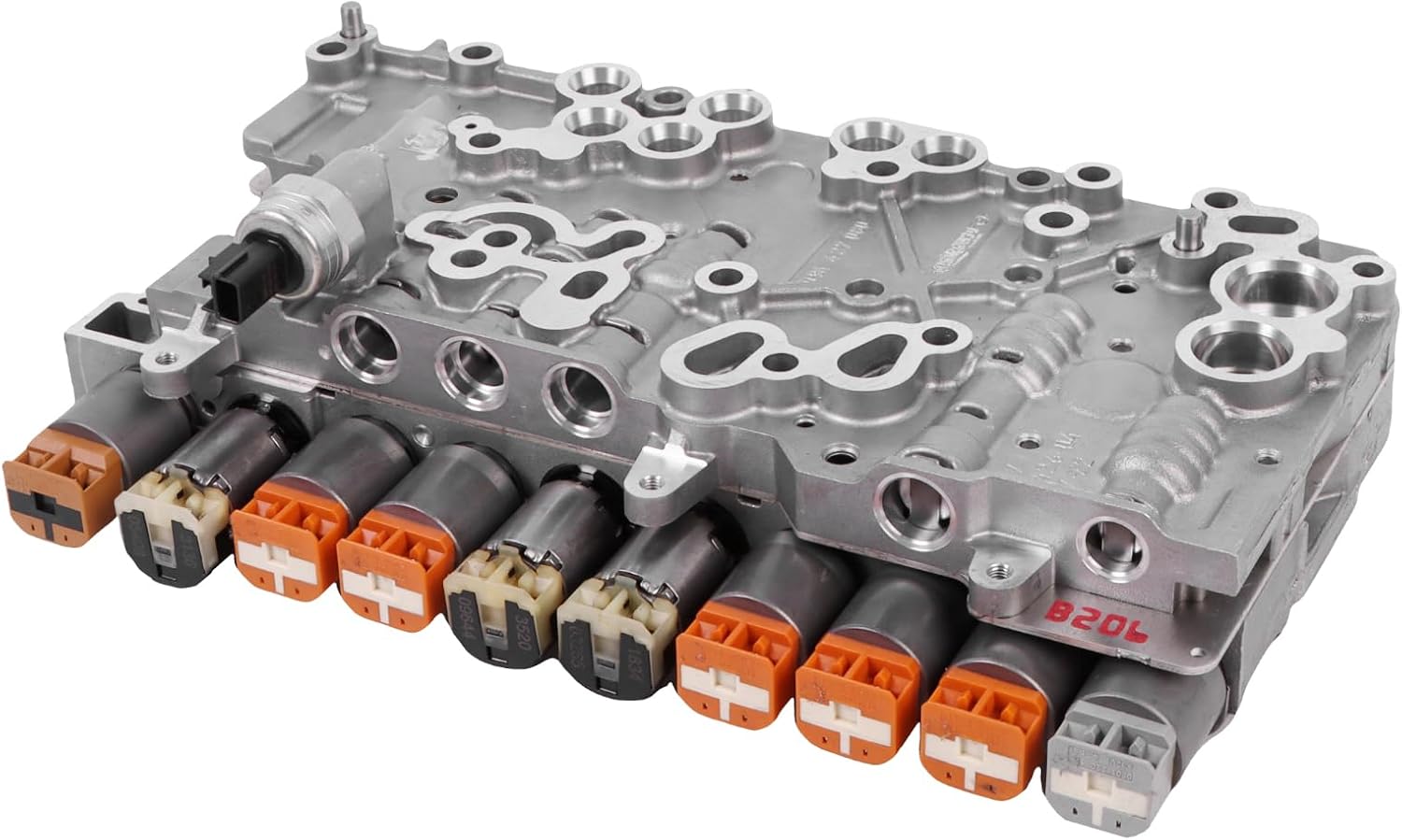
If the VIN is not on Stellantis's snap-ring RRT list, the next place to look is hydraulic, not mechanical. Sonnax, which builds oversized replacement valves specifically for this transmission, documents two distinct wear points inside the 9HP48/948TE valve body that both produce the same family of symptoms: unstable or low line pressure, poor shift quality, and in advanced cases, burnt clutches from a clutch pack that never got full clamping force.
Pressure regulator valve bore wear
The transmission uses a traditional pressure regulator valve to set overall line pressure. Per Sonnax's technical documentation, "excess valve and bore clearance due to oscillating valve bore wear allows critical pressure to exhaust," which directly undermines the regulator's ability to hold a stable line pressure. Sonnax's fix is an oversized valve kit (part 85740-15K) with a hardcoat-anodized aluminum valve and O-ringed end plug, reconditioning the bore back to a tight clearance rather than requiring a full valve body replacement.
SV-SP valve wear
The 9HP48 also carries a valve that most techs working on more common transmissions have never seen: the Shift Valve-System Pressure (SV-SP) valve, which regulates line pressure using EPC pressure fed from the system pressure solenoid to the balance end of the pressure regulator valve. Sonnax describes the SV-SP valve as "highly active" in normal operation and commonly overlooked next to the more familiar pressure regulator spool, but wear at this valve "will affect line pressure control, shifts and clutch durability" on its own. Sonnax's kit for it (part 85740-07K) is sold separately from the pressure regulator kit, because the two valves wear independently and a valve body can need one without the other.
Neither of these is visible from the driver's seat or even from a scan tool reading — they only show up when the valve body comes off the transmission and gets inspected or dyno-tested on the bench, which is why a slipping complaint that survives a fluid check and a Quick Learn attempt usually ends with the valve body coming off next.
Cause 3: TCM Adaptive Values That Were Never Relearned
Before any parts come off the vehicle, there is a third cause that costs nothing but a drive cycle: adaptive clutch values that are out of learn. Stellantis TSB 21-053-15, "948TE 9 Speed Transmission Quick Learn Procedure," states the symptom directly — "Customers may indicate that their transmission shift quality may be erratic" — and lists the Quick Learn procedure as "one of the first steps to improve a transmission shift quality concern on these vehicles," independent of any parts replacement.
The procedure itself is specific about conditions: warm the transmission to a minimum of 60°C (140°F) by applying the brake, cycling Park to Reverse to Drive, and accelerating to at least 45 mph so the transmission cycles through each gear, with the vehicle's start/stop feature disabled if equipped. With no active TCM DTCs present, a technician connects wiTECH, opens the TCM's Misc Functions tab, and runs Quick Learn to reset and relearn the clutch adaptive values. Stellantis requires this same procedure any time the transmission, valve body, or TCU is repaired or replaced, or whenever adaptation memory cells are cleared — which means a transmission that was recently serviced anywhere, by anyone, and still flares or shifts roughly is a strong candidate for a Quick Learn before it is a candidate for new parts.
Clutch Clearance Reference (Bench Work)
If a rebuild is already underway and a clutch pack is suspect, these are the documented clearance specs for the four multi-disc packs, measured with 45 lbs. of force applied, per Gears Magazine's 9HP48 technical breakdown:
| Clutch | Clearance | Configuration |
|---|---|---|
| B-Clutch | 0.050–0.070 in. | 3 double-sided + 2 single-sided plates |
| B-Clutch (alt.) | 0.040–0.060 in. | 2 double-sided + 2 single-sided plates |
| C-Clutch | 0.030–0.045 in. | 3-disc pack |
| C-Clutch (alt.) | 0.020–0.035 in. | 2-disc pack |
| D-Clutch | 0.040–0.059 in. | — |
| E-Clutch | 0.050–0.070 in. | — |
Clutch configuration varies by production run, so verify disc count on the actual pack in hand before measuring against these numbers rather than assuming the first spec that matches the clutch letter.
How to Diagnose 9HP48 Slipping
- Scan for codes and check the VIN against the snap-ring RRT list first. If the vehicle is a 2014-2015 Jeep Cherokee or 2015 Chrysler 200 with 5-4 downshift complaints and U0402 is present, check VIP or TechCONNECT for RRT 15-006 before doing anything else — this determines whether TSB 21-008-15 even applies.
- Check fluid level and condition. Low or degraded fluid produces the same flare and delayed-engagement symptoms as a hydraulic or mechanical fault and costs minutes to rule out.
- Run the TCM Quick Learn procedure per TSB 21-053-15 before replacing anything: warm to 60°C (140°F) minimum, cycle through each gear at 45+ mph, then run Quick Learn from the TCM's Misc Functions tab. This alone resolves erratic shift quality on a meaningful share of complaints.
- Road test again after the Quick Learn and note whether the flare is gone, improved, or unchanged. Unchanged points toward a hydraulic or mechanical cause rather than an adaptive-value issue.
- If the VIN matches the RRT list and symptoms match (5-4 downshift, U0402), proceed with the C-clutch snap ring repair in TSB 21-008-15.
- If the VIN does not match or symptoms persist, pull the valve body and inspect the pressure regulator valve bore and SV-SP valve for the wear Sonnax documents, ideally with the valve body dyno-tested rather than just visually inspected, since bore wear of a few thousandths will not always be visible to the eye.
- Reassemble and run Quick Learn again after any valve body or clutch pack work — per Stellantis, this step is required after any transmission or valve body repair, not optional cleanup.
9HP48 Valve Bodies, Filter Kits, and Solenoid Packs
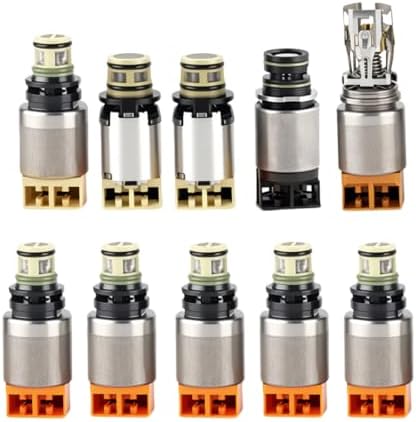
We stock remanufactured 9HP48 valve bodies with all 10 solenoids installed, the correct filter and pan gasket kit for a proper fluid service, and refurbished solenoid kits — shipped fast from the USA.
Shop 9HP48 parts →FAQ
What does slipping feel like on a 9HP48/948TE?
The most common complaint is an RPM flare between shifts, where engine speed rises faster than road speed for a moment before the next gear catches, along with delayed or soft engagement from Park/Neutral into Drive or Reverse. Stellantis's own bulletins describe the same family of complaints as erratic shift quality and reduced shift quality on specific gear changes, most notably the 5-4 downshift, rather than using the word slipping directly.
Can a dislodged C-clutch snap ring really cause slipping, and how is it fixed?
Yes. Stellantis TSB 21-008-15 REV. A documents a C-clutch snap ring that can dislodge on a specific range of 2014-2015 Jeep Cherokee and 2015 Chrysler 200 VINs, producing less than desired shift quality on the 5-4 downshift and sometimes setting DTC U0402. The fix is a full transmission teardown to the gear train, replacing the snap ring (part 04736949AB) with its opening rotated 90 degrees counterclockwise from the original position, and verifying input shaft end play of .07 to .32 inches before reassembly. It only applies to VINs listed in Stellantis's RRT 15-006 service action, not every 948TE.
Why does a TCM Quick Learn sometimes fix a 9HP48 that feels like it is slipping?
The 948TE's Transmission Control Module stores adaptive clutch values that it uses to fine-tune apply pressure and timing on every shift. TSB 21-053-15 lists erratic shift quality as the direct symptom for running the Quick Learn procedure, which resets and relearns those adaptive values after warming the transmission to at least 60°C (140°F) and cycling it through each gear at 45+ mph. If the adaptive values drifted or were never learned correctly, the transmission can flare or shift roughly even with no mechanical fault at all.
What wears out inside a 9HP48 valve body that causes slipping?
Sonnax identifies two specific wear points: the traditional pressure regulator valve bore, where oscillating valve movement wears the bore and lets critical line pressure exhaust, and the Shift Valve-System Pressure (SV-SP) valve, a 9HP48-specific valve that regulates line pressure using EPC pressure from the system pressure solenoid. Wear at either point causes unstable or low line pressure, which shows up as slipping, flare, and in advanced cases burnt clutches, and is corrected with Sonnax's oversized valve kits rather than a full valve body replacement in many cores.
Sources
- Stellantis/FCA US LLC — Technical Service Bulletin 21-008-15 REV. A, “Transmission Shift Quality C-Clutch Snap Ring” (February 7, 2015): the documented dislodged C-clutch snap ring on 2014-2015 Jeep Cherokee and 2015 Chrysler 200 948TE units, symptom of poor 5-4 downshift quality with DTC U0402, RRT 15-006 VIN restriction, full repair procedure with part number 04736949AB, snap ring orientation, and torque specs. static.nhtsa.gov (NHTSA TSB archive)
- Stellantis/FCA US LLC — Technical Service Bulletin 21-053-15, “948TE 9 Speed Transmission Quick Learn Procedure” (October 7, 2015): erratic shift quality as the listed symptom for the Quick Learn procedure, the 60°C/45 mph warm-up and drive-cycle requirement, and the wiTECH Quick Learn steps to reset clutch adaptive values. static.nhtsa.gov (NHTSA TSB archive)
- Sonnax — Oversized Pressure Regulator Valve Kit 85740-15K product documentation: pressure regulator valve bore wear causing critical pressure loss and unstable line pressure on the Chrysler 948TE, Honda/Acura 9-Speed, and ZF9HP48. sonnax.com
- Sonnax — “ZF9HP48/948TE Line Pressure Control Diagnostics” technical resource and Shift Valve-System Pressure Valve Kit 85740-07K: the SV-SP valve's role regulating line pressure via EPC pressure, documented wear effects on line pressure control, shift quality and clutch durability. sonnax.com
- Gears Magazine (ATRA) — “ZF 9HP48: A Mechanical Marvel” (December 2019): the six-clutch (A-F) design with A and F as dog clutches, documented B/C/D/E clutch clearance specifications measured at 45 lbs. of force, and the transmission's early shift-quality history on FCA models. gearsmagazine.com
- Ravenol — RAVENOL ATF 9HP Fluid product specification: ZF TE-ML 11 9HP48 spec, full-synthetic PAO base, and OEM cross-references including Mopar 68157995AB/68218925AA, confirming the fluid spec a proper service and Quick Learn attempt should start from. ravenol.de