The Allison shudder complaint shows up on the repair order the same way every time. Three-quarter-ton or one-ton Duramax, light throttle, steady cruise, a fine rapid vibration the driver describes as rumble strips or rough chip-seal. Let off or push in and it disappears. Nothing on the scan tool. The customer has already been told it needs a converter by somebody.
Sometimes it does. More often the converter is a symptom, and the two mistakes that cost the most money are condemning a converter for a vibration the engine is making, and pulling a pan without confirming which side of the lockup circuit is failing. Here is the order that works: separate engine from transmission with a measurement, verify the fluid, then vacuum test the specific bores before anything comes apart.
Start Here: Prove It Is Actually the Converter Clutch
This is the step almost everyone skips, and GM published the method. Preliminary Information bulletin PIP5541A, published 03/27/2019, covers 2017–2018 Silverado and Sierra plus 2019 Silverado 2500/3500 and Sierra 2500/3500 with the L5P 6.6L and RPO MW7, the Allison LCT1000. The condition list reads like every shudder ticket you have ever written: a vibration, shake or shudder during light throttle acceleration between 25 and 70 mph (40 and 112 km/h) steady state; a shudder described as driving over rumble strips or rough pavement; and a shudder after the 2-3 shift.
GM's listed cause is not the transmission. It is "possible engine performance issue," and the correction is a discrimination test rather than a repair. Put a scope vibration pickup on the passenger seat track, drive the truck under the conditions that reproduce the concern, record while it is happening, then add the E0.5 order to the capture. E0.5 is half engine order — one event every two crank revolutions, which is the signature of a single cylinder contributing unevenly. If E0.5 is the dominant disturbance in that file, GM's own bulletin says the concern is not torque converter clutch shudder and you should be looking at engine performance.
That matters on an L5P because a lazy injector or a soft cylinder produces a torsional pulse that the converter clutch, once locked, passes straight into the driveline. Lock the clutch and the fluid coupling that used to absorb that pulse is gone. The truck shakes the moment the clutch applies, which reads exactly like clutch chatter. Confirming E0.5 first is the difference between a balance-rate check and a $2,500 teardown.
No vibration scope? Run the truck in a lower manual range so the clutch cannot apply at that speed and load. If the vibration is still there unlocked, it is not the converter clutch.
The Fluid Question, Answered With Allison's Own Wording
A converter clutch on this unit is a controlled-slip clutch. It is designed to slip a small, stable amount, and that stability depends entirely on the friction modifier package in the fluid. When the modifiers are cooked, the friction coefficient stops falling smoothly with slip speed, the clutch grabs and releases in rapid succession, and you get shudder from a mechanically sound converter.
Allison is specific about what belongs in these units. Per Allison's approved fluids listing, "Allison TES 668 Approved Fluids are recommended for use in Allison 1000 Series, 2000 Series, 3000 Series, 4000 Series, H 40/50 EP, eGen Flex, and eGen Power on-highway products," while "Allison TES 295 and TES 468 Approved Fluids are approved for use in Allison 1000 Series, 2000 Series, 3000 Series, 4000 Series and H 40/50 EP on-highway products." Allison also states that customers running TES 295 or TES 468 should consider TES 668 at their next service.
Two practical takeaways for the bay. First, an Allison 1000 running generic DEXRON because somebody's bulk tank was closer is a legitimate shudder cause on its own, and no valve body repair will fix it. Second, if the unit is on old TES 295 and it shudders, a full service with a TES 668 approved fluid is a diagnostic step worth doing before you commit to a teardown — if the shudder goes away and stays away, you are done. If it goes away for two weeks and comes back, you have just proven the clutch is marginal and the fresh modifiers were masking a hydraulic problem.
Do a real service, not a drain-and-fill: pan down, filters out, magnet cleaned, and look at what is on it. Grey metallic paste is normal wear. Black fiber material on the magnet or floating in the pan is converter clutch lining, and at that point the fluid conversation is over and the converter is coming out.
Castrol TranSynd 668 Synthetic ATF, 1 Gallon
TranSynd is the fluid Allison co-developed, and the 668 formulation is the current spec for the 1000 Series. If you are servicing an Allison to rule fluid out as the shudder cause, this is the fill that makes the test valid — a shudder that survives a full TES 668 service is a hydraulic or mechanical problem, not a fluid problem.
See the fluid →The Two Valve Bores That Cause This, By Year
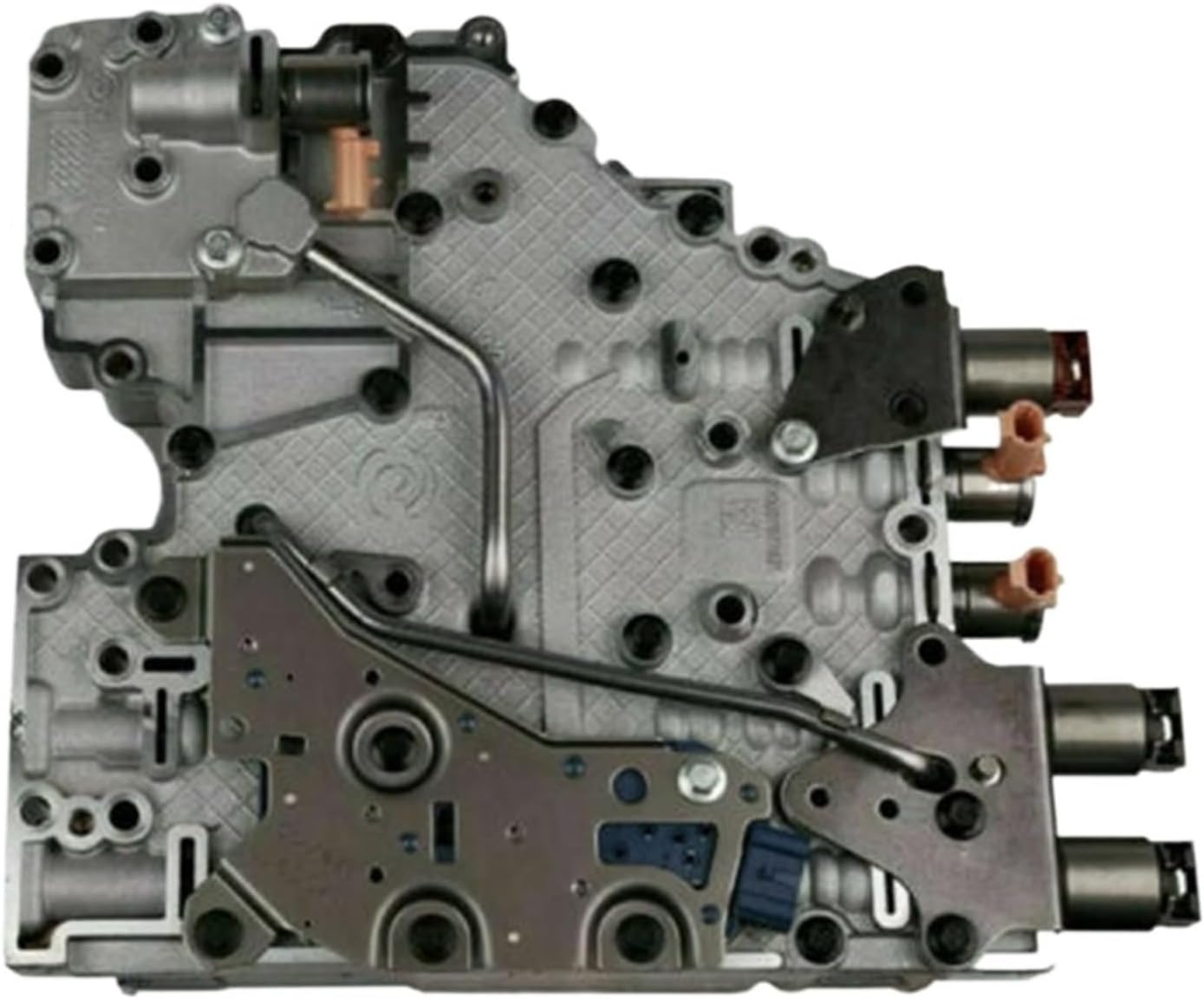
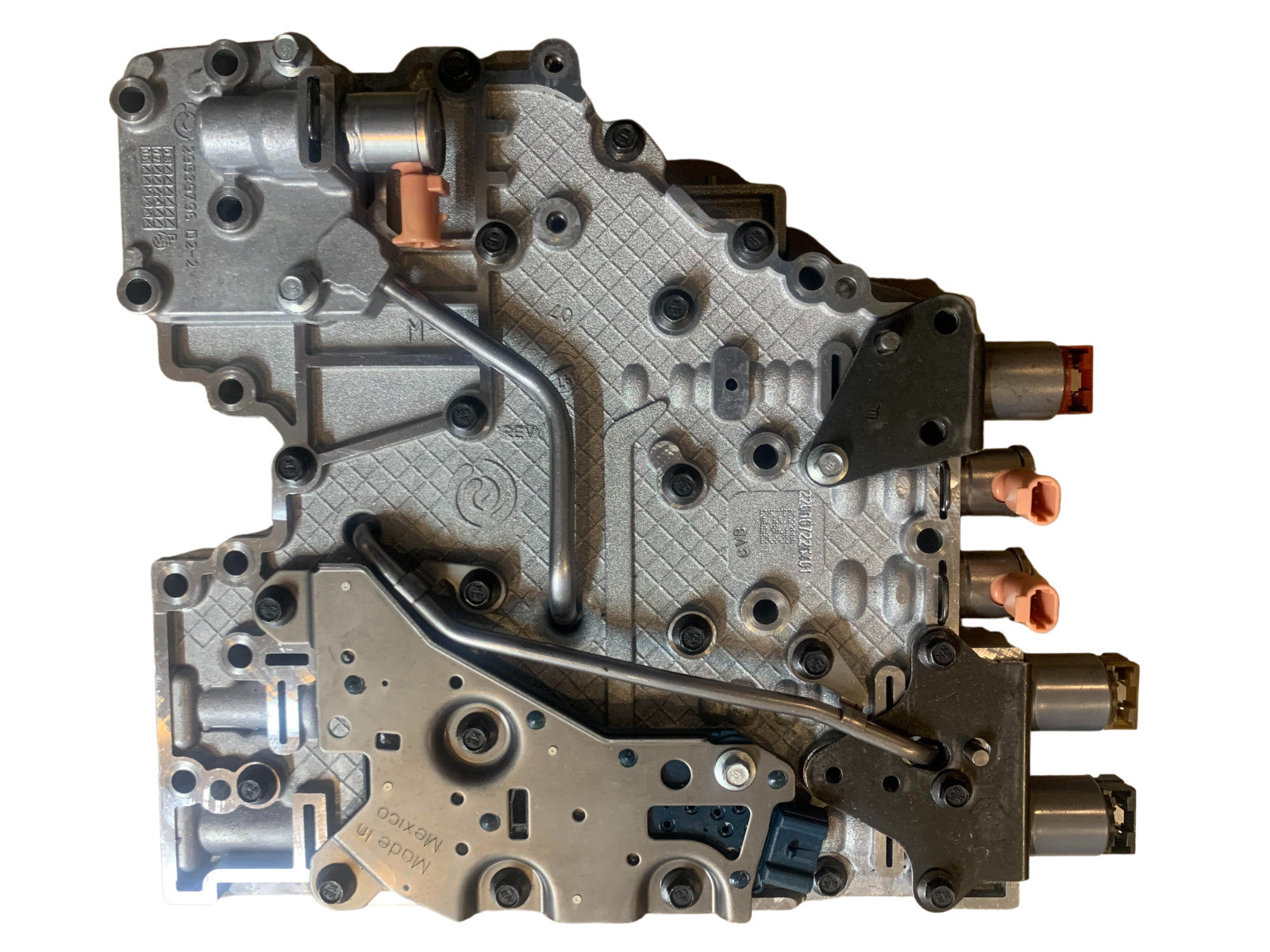
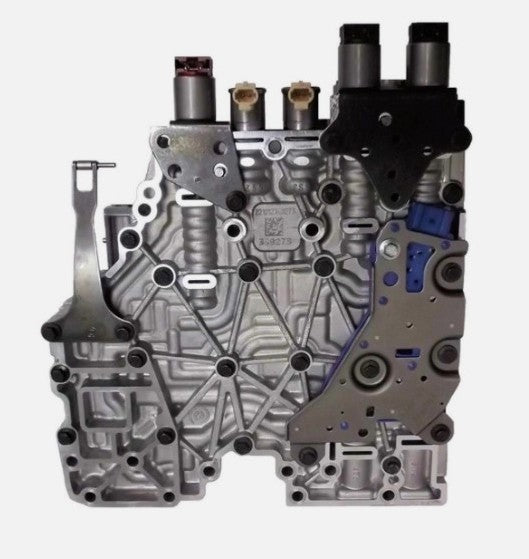
The Allison 1000 valve body changed substantially over its life, and the bore that fails depends on which one is bolted to the truck. Transmission Digest's valve body identification breakdown ranks the F-trim valve sleeve as the second most common problem in the '01–'09 family: the inside diameter of the sleeve wears, which causes TCC surge, TCC slip and trouble code P0741. That article also notes the consequence of ignoring it — when lockup stops working and P0741 sets, the converter overheats the fluid, which damages the converter and accelerates fluid deterioration. The F-trim valve sleeve is only used from '02–'04.
The '10-later six-speed valve body was redesigned from scratch and will not interchange with anything earlier. Solenoid G is gone, there are no tubes on the bottom of the valve body, and the separator plate (#29545980, stamped "5980") is the only Allison plate that uses bonded gaskets. Solenoid identification on the '10-later is by connector color: PCS-1 and MMS both black with #29541895 on the can, PCS-2 brown with #29541896, and the TCC solenoid red with #29541898.
On that '10-later valve body, the shudder bore is the TCC control valve itself. Sonnax describes the mechanism precisely: the TCC control valve in '10-later Allison 1000/2000/2400 units is controlled by a PWM solenoid that continuously oscillates the valve, and that constant motion wears both the bore and the low-gain TCC valve, causing a loss of converter apply pressure. The published complaints are exactly what walks in the door — no lockup, converter shudder, and TCC slip.
Understand why an oscillating valve is different from a shift valve. A shift valve strokes a few thousand times in a transmission's life. A PWM-driven control valve is in motion any time the clutch is being modulated, so the bore is lapped by its own valve for the entire service life of the unit. That is why it wears on a unit that is otherwise famously durable, and why it shows up on high-mileage trucks with clean pans.
The Vacuum Test That Ends the Argument
Once the engine is ruled out and the fluid is right, stop guessing at the valve body and measure it. Sonnax publishes a vacuum test guide specifically for the Allison 1000/2000/2400 '00-later. The rules are simple: OE valves are tested in their rest position unless the guide says otherwise, and a low vacuum reading indicates wear at that bore.
Two locations matter for a shudder complaint. The main valve body position identified as Solenoid "F" Trim Valve ('06-later) and TCC Control Valve ('10-later) is the one Sonnax flags with the symptom list delayed engagement, overheating, code P0741, and TCC surge. The parts that repair it are year-specific:
| Years | Bore / valve | Sonnax repair |
|---|---|---|
| '00–'05 | Solenoid F trim valve | 37000-30K oversized F-trim valve kit (37000-03 F-trim valve end sleeve also listed for these years) |
| '06–'09 | Solenoid F trim valve | 37000-33K oversized F-trim valve kit |
| '10-later | TCC control valve (low gain) | 37000-37K oversized TCC control valve kit |
One identification trap on the '10-later: 37000-37K only works with the low gain TCC control valve. Sonnax's quick check is the spring — if the spring is the innermost component in that bore, the kit fits. Look before you order. The kit itself is a reconditioned-bore repair: you ream the bore oversize with the matching tool and install a hardcoat anodized valve sized to the new bore, which is what makes the fix permanent rather than a parts swap that wears out again in 40,000 miles.
The Failure Almost Nobody Checks: The Converter's Exciter Dimples
This one is worth the price of admission, and it is the reason a rebuilt Allison can come back cycling lockup with a clean scan tool.
On the Allison 1000, the engine-speed input the controller uses is not taken off the crank. It comes from the input speed sensor in the bellhousing, which is excited by the row of dimples on the torque converter closest to the engine. Transmission Digest documented three field cases in a row where a rebuilt unit came back with a "lockup surge" complaint and no codes. In the first, a 2001 2WD Chevrolet 1500, the tachometer looked steady but live data showed a small repeating spike in engine speed — one dimple had been partially flattened by a handling mishap, and the resulting signal glitch made the controller drop the TCC solenoid at regular intervals. Replacing the converter fixed it.
In the second, a 2001 2500HD, the same complaint traced to a drain plug the converter rebuilder had added between two of the exciter dimples. A data movie showed an evenly spaced 150 RPM spike in engine speed while the controller ramped the PWM solenoid to roughly 60% and then shut the TCC solenoid off, repeating the cycle. The third case was traced to two small balance weights added to the cover where it meets the impeller, and it had originally been diagnosed as an engine miss.
The reference numbers if you are inspecting a core: both the early Aisin-built and later LuK-built converters have 31 dimples. Early dimples measure 0.835 in. tall, late ones 0.765 in., with the same diameter measured at the dimples. The input (engine) speed sensor is p/n 29536408, in use since May 2000, and most speed sensors run working clearances in the 0.030 in. range. At that clearance, a crease from the plate steel rolling process or a flattened dimple is enough to corrupt the signal.
The practical test: capture a data movie of engine speed at the moment the complaint occurs. A mechanical shudder produces a vibration with no clean signature in the speed data. A dimple problem produces an evenly spaced RPM spike that repeats with rotation, and the TCC command drops right behind it. That is a converter, not a valve body, and no amount of bore work will touch it.
Diagnostic Order That Actually Works
- Reproduce and classify. Steady cruise 25–70 mph, light throttle. Note whether it appears only after lockup and whether the 2-3 shift triggers it.
- Run the E0.5 test per PIP5541A, or lock the transmission out of lockup manually. If the vibration survives with the clutch unlocked, or E0.5 dominates the capture, go to the engine.
- Scan for stored and history codes. P0741 with a shudder complaint moves the F-trim / TCC control valve bore to the top of the list. No codes does not clear the transmission — a shudder is a small slip oscillation that never reaches the code threshold.
- Watch actual versus desired TCC slip in a data movie while the shudder is present, with engine speed graphed alongside. Steady slip with a shake means fluid or converter. Oscillating slip with flat throttle means apply pressure is unstable. An evenly spaced engine-speed spike means exciter dimples.
- Verify the fluid is a current Allison approved spec. Full service, inspect the magnet and filters. Black fiber material ends the diagnosis at the converter.
- Pull and vacuum test the valve body at the F-trim / TCC control valve position and repair with the year-correct oversized kit. Flat sand both halves on any '01–'09 unit — those castings warp, and there are no separator plate gaskets before '10 to hide a cross leak.
- Replace the converter if the clutch lining is in the fluid, if the exciter dimples are damaged, or if the shudder survives a correct fluid service and a verified valve body. Flush the cooler and lines when you do.
Related reading on this site: the Allison 1000 service guide covers the full fluid and filter procedure, checking line pressure covers the gauge work that supports this diagnosis, and reading transmission live data covers the data-movie technique used in step 4.
Sources
- General Motors — Preliminary Information Bulletin PIP5541A, "Shudder Or Vibration From The Transmission," published 03/27/2019 (via NHTSA ODI). Backs the affected population (2017–2018 Chevrolet Silverado and GMC Sierra, 2019 Silverado 2500/3500 and Sierra 2500/3500, L5P 6.6L, MW7 Allison Transmission LCT1000), the condition list (vibration, shake or shudder during light throttle acceleration between 25 and 70 mph / 40 and 112 km/h steady state; shudder described as driving over rumble strips or rough pavement; shudder after the 2-3 shift), the stated cause "possible engine performance issue," and the correction procedure: place the scope vibration pickup on the passenger seat track, record while the concern is present, add E0.5 to the file, and if E0.5 is the dominant disturbance the concern is not torque converter clutch shudder and may be an engine performance concern. static.nhtsa.gov
- Allison Transmission — Allison Approved Fluids. Backs the quoted fluid approvals: "Allison TES 668 Approved Fluids are recommended for use in Allison 1000 Series, 2000 Series, 3000 Series, 4000 Series, H 40/50 EP, eGen Flex, and eGen Power on-highway products," and "Allison TES 295 and TES 468 Approved Fluids are approved for use in Allison 1000 Series, 2000 Series, 3000 Series, 4000 Series and H 40/50 EP on-highway products," plus Allison's recommendation that customers using TES 295 or TES 468 consider TES 668 for their next service. allisontransmission.com
- Sonnax — Oversized TCC Control Valve Kit 37000-37K product information. Backs the mechanism statement that the TCC control valve in '10-later Allison 1000/2000/2400 transmissions is controlled by a PWM solenoid that continuously oscillates the valve, that continuous oscillation over time wears the bore and the low gain TCC valve leading to loss of converter apply pressure, the complaint list (no lockup, converter shudder and TCC slip, TCC shudder), the correction of reconditioning the bore and installing the oversized valve kit, the hardcoat anodized valve construction, and the low-gain identification check that the spring is the innermost component in the bore. sonnax.com
- Sonnax — "Allison 1000/2000/2400, '00-Later Vacuum Test Guide," critical wear areas and vacuum test locations. Backs the testing rules (OE valves tested in rest position unless otherwise indicated; a low vacuum reading indicates wear), the main valve body position identified as Solenoid "F" Trim Valve for '06-later and TCC Control Valve for '10-later, its symptom list (delayed engagement, overheating, code P0741, TCC surge), and the year-specific repair part numbers 37000-30K ('00–'05), 37000-33K ('06–'09), 37000-37K ('10-later, low gain TCC control valve only) along with 37000-03 F-trim valve end sleeve. sonnax.com
- Transmission Digest — "Identifying Allison 1000/2000/2400 Valve Bodies." Backs the ranking of the F-trim valve sleeve as the second most common problem in the '01–'09 valve bodies, the wear mechanism (inside diameter of the sleeve wears, causing TCC surge, TCC slip and trouble code P0741), the consequence that when lockup stops working and P0741 sets the converter overheats the fluid and damages the converter with rapid fluid deterioration, the note that the F-trim valve sleeve is only used from '02–'04, warped castings as the third most common problem with the requirement to flat sand both halves because no separator plate gaskets are used before '10, the complete '10 redesign that will not interchange with previous years, separator plate #29545980 stamped "5980" as the only Allison plate with bonded gaskets, and the '10-later solenoid identification (PCS-1 and MMS black connector #29541895, PCS-2 brown connector #29541896, TCC solenoid red connector #29541898). transmissiondigest.com
- Transmission Digest — "Lockup Surge in Allison 1000s" (Sonnax technical specialist, Torque Converter Rebuilders Association). Backs the exciter-dimple failure mode: the engine-speed pickup is the input speed sensor in the bellhousing excited by the row of dimples on the converter closest to the engine; the 2001 Chevrolet 1500 case where a partially flattened dimple produced a repeating engine-speed spike and cycling TCC with no codes; the 2001 2500HD case where a rebuilder-added drain plug between exciter dimples produced an evenly spaced 150 RPM spike with the PWM solenoid ramping to about 60% before the TCC solenoid was shut off; the third case caused by balance weights added at the cover-to-impeller joint and originally misdiagnosed as an engine miss; and the reference dimensions — 31 dimples on both early Aisin and later LuK converters, 0.835 in. dimple height early versus 0.765 in. late at the same measured diameter, input (engine) speed sensor p/n 29536408 in use since May 2000, and speed sensor working clearances in the 0.030 in. range. transmissiondigest.com