The 6R140 TorqShift is the six-speed automatic Ford put behind the Super Duty starting in 2011 — F-250 through F-550, behind the 6.7L Power Stroke diesel and the gas 6.2L and later 7.3L "Godzilla" V8s, and into the F-650/750 medium-duty chassis on the J1939 datalink. It replaced the five-speed 5R110W and it is a genuinely heavy transmission: Ford Component Sales rates it for up to 935 lb-ft of engine torque and it weighs about 345 pounds dry. It uses a Lepelletier gear layout — one simple planetary feeding one Ravigneaux set — controlled by five clutch packs, three rotating and two brake. That architecture is why a physically compact unit can give you six ratios and hold diesel torque.
It is a strong box. It is not a bulletproof box. After more than a decade in the field the 6R140 has a short list of failure patterns that repeat with enough consistency that an experienced hand can call most of them from the complaint. What sinks shops on this unit is misreading which one they are looking at — because a broken solenoid, a worn valve bore, and a cooked converter can all show up as "it flares on the 2-3." This is how I sort them, with the specs and the part numbers that make each call.
The short version: Scan and read live data before you condemn anything. On the 6R140, early 2011 flare complaints are a factory solenoid TSB, mid-life flares are valve body bore wear with a targeted Sonnax fix (no new casting), a no-move that air-checks perfectly is the input-shaft spin-weld, and overheating is usually the shared secondary cooling loop, not the transmission itself.

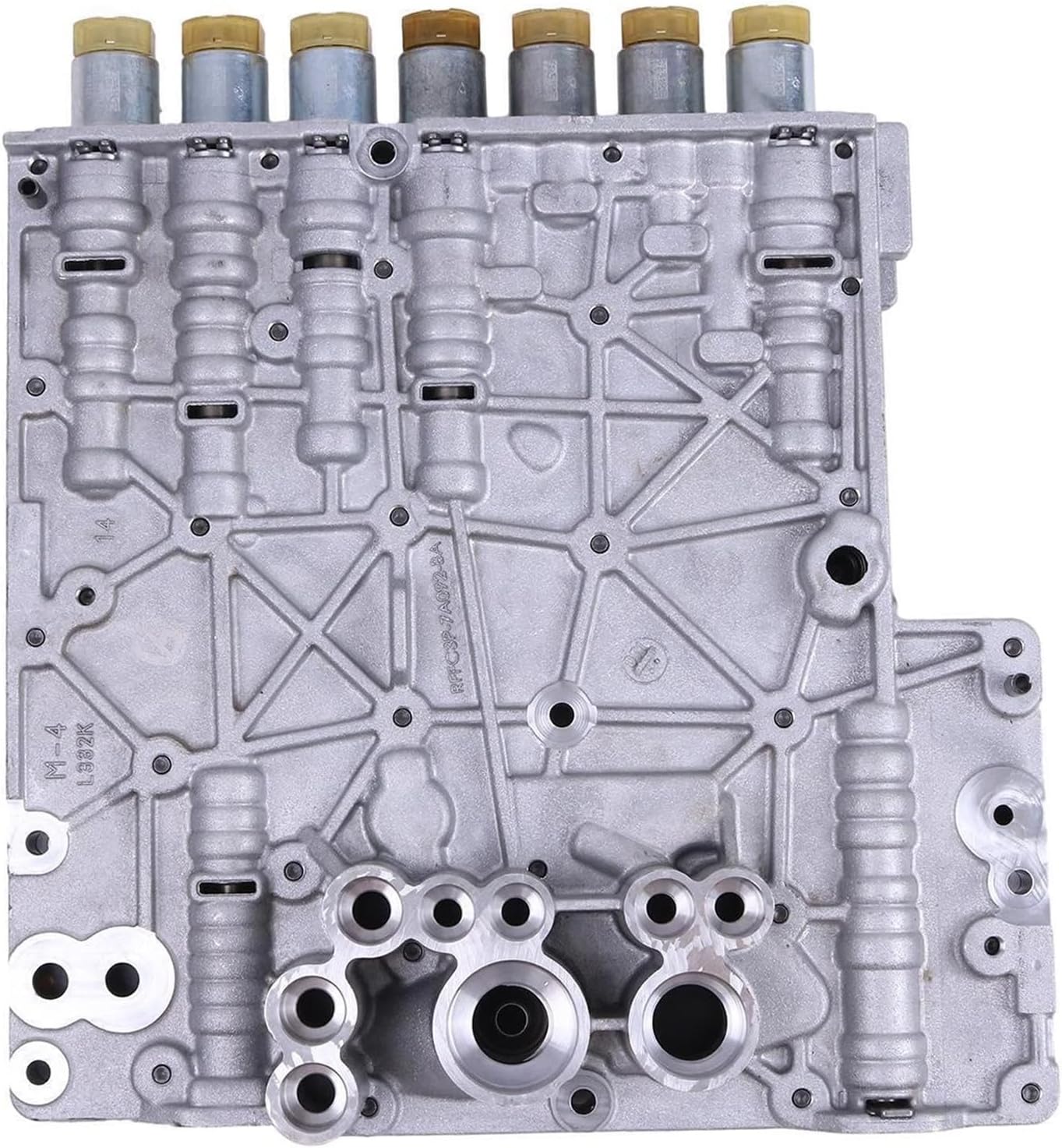
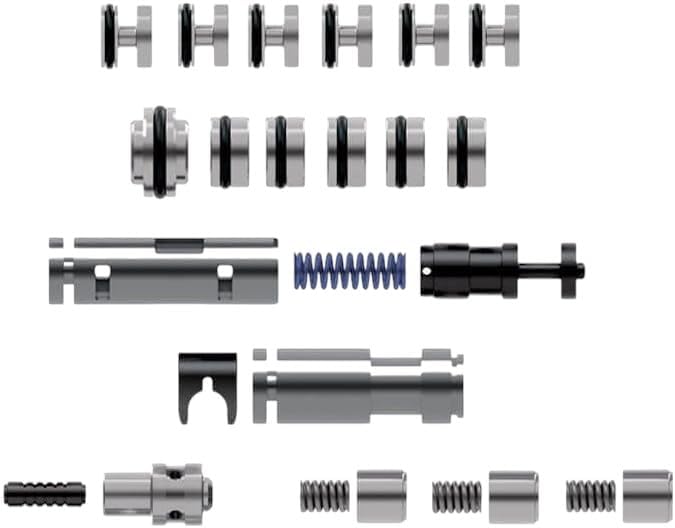
6R140 Quick Specs
| Item | Spec |
|---|---|
| Fluid | Motorcraft Mercon LV (do not substitute Mercon V) |
| Total capacity | ~4 gallons (~16 qt) dry, per Ford Component Sales |
| Pan drop + filter refill | ~10 quarts |
| Max engine torque | 935 lb-ft |
| Dry weight | ~345 lb |
| Gear ratios | 1st 3.974 / 2nd 2.318 / 3rd 1.516 / 4th 1.149 / 5th 0.858 / 6th 0.674 / Rev 3.128 |
| Normal operating temp | 195–230°F (250°F continuous max rating) |
| Controller | PCM on gas, standalone TCM on diesel; J1939 on medium duty |
Problem 1: The 2-3 Shift Flare on Early 2011 Trucks (TSB 11-7-10)
If a 2011 6.7L Super Duty comes in with a 2-3 flare, an illuminated MIL, or a delayed reverse engagement — and the owner says it feels worse after the truck has sat overnight — check the build date before you touch the transmission. Ford issued TSB 11-7-10 for exactly this. The stored code is typically P0733 (incorrect gear ratio, 3rd), and the fault is a factory solenoid concern, not general wear.
The bulletin splits the fix by build date, which is the detail most people miss. On 2011 6.7L trucks built on or before 11/19/2010, the repair is to replace the three "normally high" solenoids — and notably, Ford says the main control does not have to come out to do it. On trucks built 11/20/2010 through 4/11/2011, the solenoids are not the issue; those get a PCM/TCM reprogram/calibration update instead. Same symptom, two different repairs, and the VIN build date is what tells you which. Get that wrong and you either throw parts at a truck that needs a flash or flash a truck that needs solenoids.
This is a young-transmission failure. If you are working a high-mileage unit with the same flare, TSB 11-7-10 is probably not your answer — that is Problem 2.
Problem 2: Valve Body Bore Wear (The Mid-Life Flare and TCC Complaint)
The 6R140 valve body is where most out-of-warranty 6R140s actually fail. Like a lot of high-pressure aluminum valve bodies, the bores that hold the hardest-working spool valves wear out of round over time, and once a bore is oval the valve inside it can no longer seal. Regulated pressure bleeds past it, and the clutch or converter that circuit feeds stops getting clean, consistent apply pressure. Three circuits are the repeat offenders.
TCC apply regulator and boost valve
The torque converter clutch apply circuit is the classic 6R140 wear point. As the TCC apply regulator bore and its boost valve wear, the circuit loses the pressure it needs to lock and hold the converter clutch. Per Sonnax, the symptoms that fall out of this are TCC slip, no lockup, low cooler and lube flow, overheated fluid, hurt fuel economy, and TCC codes. Notice that "overheated fluid" is on that list — a worn TCC apply circuit is one of the ways a 6R140 cooks itself, because the same valve that regulates converter apply also governs the cooler/lube feed. The reconditioning fix is an oversized TCC apply regulator and boost valve (Sonnax 126740-15K), which reams the bore and fits hardcoat-anodized valves that resist re-wearing.
Direct clutch regulator valve
The direct clutch in the 6R140 is applied in 3rd, 5th, and reverse. Its regulator valve strokes constantly, and as that bore deteriorates the circuit exhausts pressure it should be holding. Sonnax documents the results as flares, slipping, erratic apply timing, ratio codes, bind-ups, and burnt direct clutches. That list should sound familiar — a worn direct clutch regulator bore is a very common reason a rebuilt 6R140 comes back with a 2-3 or 4-5 flare that no amount of new frictions will cure, because the pressure feeding those frictions is leaking past the valve. The fix is the oversized direct clutch regulator valve kit (Sonnax 126740-11K).
The 1-2-3-4 control valve and debris
Gears Magazine's ATRA teardown of the unit calls out the valve body's tendency to collect debris in high-mileage units that have gone too long between services. Wear metal and clutch material drop into the valve control channels and hang up the 1-2-3-4 control valve, which shows up as neutralizing at a stop or a harsh forced downshift — the 5-4 and 6-4 kickdowns get ugly. This is a maintenance-driven failure as much as a design one: fluid that is changed on time keeps the channels clean and the valve moving.
Why the whole-unit condemnation is usually wrong here. A shop that reads "flare + ratio code" and quotes a reman is often looking at a $40-to-$150 valve kit installed on the bench. Bore wear does not mean the casting is scrap — the oversized-valve and sleeve kits restore the hydraulic seal and, as Sonnax notes, can outlast the original OE valve. Rule out the cheap causes, pressure-test, then decide.
Scan tool with live transmission PIDs and bidirectional control
You cannot sort a 6R140 flare by code alone. You need to watch TFT (transmission fluid temp), commanded vs. actual gear, and TCC slip in real time, and command solenoids individually. The Foxwell NT604 Elite reads transmission and engine systems with live transmission-temperature data — enough to confirm a P0733, watch converter slip climb, and separate an electrical fault from a hydraulic one before the pan comes down.
See the NT604 Elite in the shop →Problem 3: The Input-Shaft Spin-Weld to the 4-5-6 Drum
This one bites rebuilders specifically, and it is worth knowing before it costs you a comeback. The 6R140 input shaft is spin-welded to the 4-5-6 drum from the factory. Per the ATRA/Gears writeup, that weld can break free from the drum entirely — and here is the trap: the unit can still air-check satisfactorily on the bench. The clutch applies, the drum holds air, everything looks right. But with the weld broken, the input shaft rotates independently of the drum under load, and you get a no-move condition after the rebuild.
If you have a freshly built 6R140 that air-checks clean and will not move the truck, do not start second-guessing your clutch clearances first — inspect the input-shaft-to-drum weld. It is a known failure that produces exactly this symptom, and it is invisible to a standard air check because the parts are still assembled; they just are not welded together anymore.
While we are on clearances: the same source warns that some of the factory clutch-clearance reference data on this unit proved inaccurate. Build clearances verified against known-good units rather than trusting a spec that has burned people before. On a transmission that holds this much torque, a lazy clearance is a repeat clutch failure waiting to happen.
Problem 4: Overheating Is Usually the Cooling Loop, Not the Trans
Normal 6R140 operating temperature runs roughly 195 to 230°F, and the unit is rated for 250°F continuous. When a diesel Super Duty runs the transmission hot, the reflex is to blame the converter or the clutches — but on these trucks the secondary cooling system is shared. That low-temperature loop serves the transmission, the charge-air (intercooler), the fuel cooler, and the EGR cooler all at once. A problem anywhere in that loop — low coolant, a tired pump, airflow restriction — shows up as high transmission temperature even when the transmission itself is fine.
There is also an internal cause worth knowing: the ATRA teardown describes a pump stator support sleeve that can partially rotate and block converter charge oil flow, starving the converter and driving temperature up. So overheating on a 6R140 has three buckets to check in order: the shared secondary cooling loop first (it is external and cheap to verify), then the TCC apply circuit from Problem 2 (a worn regulator kills cooler/lube flow), then the pump stator sleeve internally. Do not pull a transmission for heat until the external loop is proven good.
Service It Right: Fluid, Capacity, and Interval
Ford Component Sales lists the 6R140's total capacity at about four gallons (roughly 16 quarts) dry. In practice, a pan drop with a filter change returns about 10 quarts — you are not getting the converter, cooler, and lines with a simple drain-and-fill, which is why the pan service refill is well under the dry-fill number. To exchange the full charge you either do repeated drain-and-fills or run a proper fluid exchange.
On a diesel Super Duty that tows, service the fluid and filter around every 30,000 miles under severe-duty use rather than waiting for a "lifetime" claim. The pan drop is also your inspection window: read the magnet and the filter. Clean magnetic film with dark-but-not-scorched fluid is normal. Fluid that is black and smells burnt with clutch material on the magnet tells you the frictions are already going, and a fluid service alone will not save them.
A note on the fill procedure: like most modern units, the 6R140 is filled to a temperature-referenced level through a check port, not by dipstick guesswork. Bring the fluid into the specified temperature window (this is why you want live TFT on your scan tool) and set the level there. Overfill and you aerate the fluid and drive temperature up; underfill and you starve the pump. Get the level right against temperature, not against the ground being level and a hopeful eyeball.
The diagnostic order that keeps 6R140 repairs from coming back: (1) Scan and record — read the code but don't act on the label. (2) On a 2011 flare, check the build date against TSB 11-7-10. (3) Assess fluid and confirm level against temperature. (4) Verify the shared secondary cooling loop before blaming heat on the trans. (5) Pressure-test; worn regulator bores get the Sonnax oversized kits, not a blind reman. (6) On a fresh rebuild that air-checks clean but won't move, inspect the input-shaft-to-4-5-6-drum weld.
Doing a full teardown? Our valve body cleaning and inspection guide and pressure-testing walkthrough cover the bench steps that apply directly to this unit, and if you are cross-shopping the older five-speed, see our 5R110W TorqShift service guide. For solenoids, valve body components, seal kits, and hard parts, our sister store gearboxinsider.com ships them direct, and our own tool store carries the scan tools and bench tooling for the job.
Sources
- Ford Component Sales, LLC — 6R140 6-Speed Automatic Transmission Technical Specifications (OEM spec sheet): Mercon LV fluid, ~4-gallon capacity, 935 lb-ft rating, ~345 lb weight, Lepelletier layout with five clutch packs, and the full gear-ratio set. fordcomponentsalesllc.com/…/FCS_6R140_6-Speed_AutoTrans_web_R6.pdf
- Gears Magazine (ATRA) — "Problems and Fixes: Revisiting the 6R140 Transmission": the 1-2-3-4 control valve debris hang-up, the input-shaft-to-4-5-6-drum spin-weld failure that still air-checks, 195–230°F operating range, the shared secondary cooling loop, and the pump stator sleeve blocking converter charge oil. gearsmagazine.com/magazine/problems-and-fixes-revisiting-the-6r140-transmission
- Ford TSB 11-7-10 (as reproduced at Ford OEM DTC) — 2011 F-Super Duty 6.7L: 2-3 shift flare / MIL with DTC P0733 / delayed reverse; build-date split between replacing the three normally-high solenoids and a calibration update. ford.oemdtc.com/451/…-p0733-…-2011-ford-f-super-duty
- Sonnax — Oversized TCC Apply Regulator & Boost Valve Kit 126740-15K (6R140): TCC apply circuit wear symptoms (slip, no lockup, low cooler/lube flow, overheated fluid, TCC codes) and the bore-reconditioning fix. sonnax.com/parts/3898-oversized-tcc-apply-regulator-boost-valve-kit
- Sonnax — Oversized Direct Clutch Regulator Valve Kit 126740-11K (6R140): direct clutch applied in 3rd/5th/reverse, and the bore-wear symptoms (flares, slip, ratio codes, bind-ups, burnt direct clutch). sonnax.com/parts/3912-oversized-direct-clutch-regulator-valve-kit
- Sonnax — 6R140 Zip Kit (6R140-ZIP): the circuit-pressure losses the kit targets across main line, solenoid regulator, reverse, clutch control, and TCC circuits. sonnax.com/parts/4307-zip-kit
Need parts for this job?
Rebuild kits, hard parts, solenoids, valve bodies, filters, gaskets and the correct fluid for this unit — shipped fast from the USA on secure checkout.
Shop 6R140 parts →