If a 2015 to 2019 Silverado, Sierra, Corvette, Camaro, Escalade, or CT6 comes into your bay with a complaint of "it shudders on the highway" or "it feels like I got rear-ended when it shifts," you are almost certainly looking at the GM 8L90 or the smaller 8L45 eight-speed automatic. This is one of the most-discussed transmission complaints of the decade. GM issued a stack of service bulletins about it, and the vehicles are the subject of a certified class action lawsuit. The good news for a shop is that the majority of these cases are fixable without pulling the unit, as long as you understand what is actually happening inside the transmission and follow the procedure precisely.
This article breaks down the two distinct failure patterns, the official GM fix in TSB 18-NA-355, the fluid that matters, and how to tell the difference between a fluid-fixable shudder and a torque converter that is genuinely on its way out.
For more GM-specific diagnostics, see our 6L80 service guide and our broader torque converter clutch shudder diagnosis walkthrough.
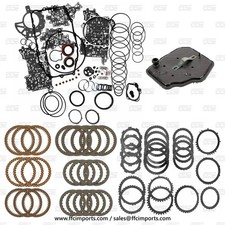
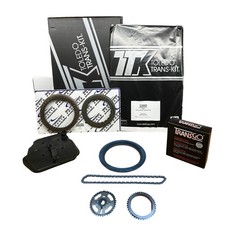
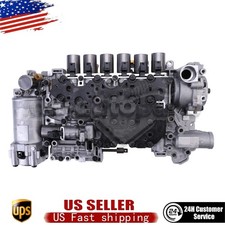
What the 8L90 and 8L45 Are
The Hydra-Matic 8L90 is a longitudinal, rear-wheel-drive eight-speed automatic GM introduced for the 2015 model year. It sits behind small-block V8s and the higher-output V6 applications: full-size trucks and SUVs (Silverado 1500, Sierra 1500, Tahoe, Yukon, Escalade), the C7 Corvette, and the Camaro. The 8L45 is the lighter-duty sibling with a lower torque rating, used in the Colorado, Canyon, and several Cadillac car lines (ATS, CTS, CT6). They share the same architecture, the same control strategy, and the same headline problem.
Both units use a torque converter with a clutch (TCC) that applies early and stays partially applied across a wide speed range to help fuel economy. That early, aggressive lockup strategy is central to the shudder story. When the clutch inside the converter cannot maintain a smooth grip, the driver feels it as a shake or shudder at cruise, exactly the speeds where the TCC is trying to hold partial lockup.
Two Different Complaints, Two Different Causes
Owners lump everything together as "the transmission is bad," but on the bench there are two separate patterns, and they do not always have the same fix.
Pattern 1: The Cruise Shudder
This is the shake or shudder felt during light-throttle, steady-speed driving, generally in the 25 to 80 MPH band, when the transmission is not shifting gears. Drivers describe it as driving over rumble strips, or a vibration that comes and goes with throttle. It is the torque converter clutch. Per GM, the root cause on the majority of these is the transmission fluid, not a mechanical converter failure. That distinction is what makes the fluid service worth doing before you condemn the converter.
Pattern 2: The Hard Shift
This is the harsh, banging engagement, most often felt on the 1-2 upshift and the 2-1 downshift, and sometimes as a clunk into gear from a stop. It can feel violent enough that owners in the lawsuit filings compared it to a collision. This pattern is a controls and clutch-apply calibration issue as much as a fluid issue, and it is the part that a TCM reprogram addresses. Fresh fluid alone will soften it somewhat, but the recalibration is what actually changes the shift-pressure command.
The Root Cause GM Identified: Fluid Moisture
Here is the part that surprises people. GM's engineering conclusion, reflected in the service bulletins, is that the original DEXRON HP fluid used to fill these transmissions is hygroscopic. It absorbs and holds moisture from the air, and it holds onto that water so tightly that it does not release it even at full operating temperature. Water in the fluid changes the friction characteristics at the torque converter clutch surface. That altered friction is what produces the shudder at partial TCC lockup.
The fix, then, is not a new converter. It is getting the moisture-loaded fluid out and replacing it with a reformulated fluid that resists this problem. That is exactly what the reformulated Mobil 1 Synthetic LV ATF HP (GM part number 19417577) was released to do. It is the factory-approved DEXRON HP replacement and carries the current GM license. Same base specification, corrected friction and moisture behavior.
The lawsuit's technical framing is worth knowing because customers will bring it up. Plaintiffs allege the shudder comes from too much friction inside the torque converter, driven by inadequate fluid flow to the clutch, and that in some cases the resulting heat and slip generate metal debris that circulates through the unit. Both descriptions point at the same component, the TCC. The practical takeaway for a shop is the same either way: address the fluid and the calibration first, and reserve converter replacement for units that do not respond or that show contamination.
The TSB 18-NA-355 Procedure
TSB 18-NA-355 is the bulletin that consolidated GM's fix. In broad strokes it does two things: it fully exchanges the fluid, and it reprograms the transmission control module. Neither step alone is the complete repair.
Why It Is a Multi-Pass Flush
You cannot fix this with a single pan drop. A drain-and-fill on an 8L90 only exchanges a fraction of the total charge because so much fluid stays trapped in the converter, cooler, and passages. The bulletin's approach is a complete fluid exchange, run in multiple passes, so that the old moisture-loaded fluid is diluted out and replaced by fresh DEXRON HP. The 8L90 holds roughly 11 to 12 quarts total when dry, so a proper exchange moves real volume. Getting the water content down means getting the great majority of the old fluid out, which is why a machine exchange or a repeated drain-fill-drive cycle is required rather than a one-shot service.
The Steps, in Order
- Verify the complaint on a road test and confirm it is TCC shudder at steady cruise, not a driveline vibration, tire balance issue, or a misfire mimicking a shudder. Rule out the cheap stuff first.
- Check for stored codes and current TCM software level. If the calibration is already updated and the fluid is fresh, you are chasing a different problem.
- Perform the complete fluid exchange with Mobil 1 Synthetic LV ATF HP. Multiple passes until the fluid coming out is clean and the full charge has effectively turned over.
- Set the fluid level to spec at the correct fluid temperature. These are check-plug units with a tight temperature window; overfilling or checking cold gives a false level and can itself cause a shudder or aeration.
- Reprogram the TCM to the latest calibration to correct the shift-pressure and TCC-apply strategy.
- Reset transmission adaptives and perform a relearn drive cycle so the unit re-adapts clutch apply to the fresh fluid.
- Road test again to confirm the shudder and the hard shift are gone.
12V Portable ATF Fluid Exchanger
A complete fluid exchange is the heart of the 8L90 fix, and doing it well means moving the full charge, not just a pan's worth. This portable 12V exchanger pushes fresh fluid in while pulling the old moisture-loaded fluid out, so you turn the charge over instead of diluting it one drain-and-fill at a time. Available in the Gearbox Insider store.
View in the StoreSetting the Fluid Level: Do Not Skip the Temperature Window
The 8L90 and 8L45 do not have a dipstick. Level is set through a check plug with the fluid inside a specific temperature range, and the vehicle level and running. If you check too cold, the fluid has not expanded and you will overfill. Overfilled DEXRON HP aerates at the converter and pump, and aerated fluid produces its own shudder and slip, which means you can create the exact symptom you were paid to fix. Use a scan tool to watch transmission fluid temperature and set the level in the window the service information specifies. If you are unsure which spec and fill procedure a given VIN takes, confirm it before you fill; our transmission fluid spec chart is a fast reference for fluid type by application.
When It Is Not the Fluid: Condemning the Converter
The fluid-and-reflash fix resolves a large share of these, but not all. You are past the fluid fix and into converter or internal repair when:
- The shudder returns shortly after a correct, complete flush with fresh DEXRON HP and an updated calibration.
- You find metallic debris or clutch material in the pan and on the magnet, which points to the TCC lining breaking down rather than a friction-chemistry issue.
- Line pressure or TCC apply pressure is out of specification on a pressure test, indicating a pump, valve body, or converter internal problem rather than fluid condition.
- There are hard-part symptoms beyond TCC shudder, such as slip in a specific gear, ratio-error codes, or a no-lockup condition.
At that point the repair is a torque converter replacement, and often a valve body inspection, because the same debris that condemned the converter can score valve bores. On a unit that has been shuddering and running hot for a long time, plan to flush the cooler and lines thoroughly before the new converter goes in, or you will pump the old debris straight back into it. We cover that step in detail in how to flush a transmission cooler after a failure. For deciding whether a high-mileage 8L90 is worth a converter and valve body versus a reman unit, our rebuild vs. replace vs. reman breakdown lays out the math.
Need OEM 8L90 / 8L45 Parts?
For a converter replacement or valve body job, source the correct GM-spec torque converter, solenoids, seals, and cooler line hardware from our sister store. Same drivetrain experience that writes the intel here.
Shop OEM Parts →What to Tell the Customer
Owners of these vehicles have often already been to a dealer, been told "that is normal characteristic," and left frustrated. It is not normal, and there is a documented fix. Be straight with them: on a vehicle in the affected range, a correct complete fluid exchange with the reformulated DEXRON HP plus a TCM reflash resolves most of these, and it is a service, not a teardown. If the shudder survives that, the next step is the torque converter, and you will know because you will have real diagnostic evidence, not a guess. That honesty is what turns a one-time shudder complaint into a customer who trusts your shop with the whole fleet.
The Numbers the Bulletin Actually Gives You
Quoting this job is easier once you have read the bulletin instead of a summary of it. Per GM bulletin 18-NA-355, the exchange uses 20 quarts of Mobil 1 Synthetic LV ATF HP, GM P/N 19417577 (US, 1 quart) — and 24 quarts on CT6 and Corvette, which get a triple drain and fill instead. The bulletin also lists the fluid as available only through local GM oil distributors, so plan the parts order before the vehicle is on the hoist. The transmission oil level check plug torques to 9 N·m (80 lb-in), and the procedure calls for the DT-52263 fluid exchange kit with the DT-45096 TransFlow cooler flush machine.
Two things in that bulletin protect you from a comeback. First, the flush machine reservoir has to be converted off DEXRON VI before you start, or you are diluting the new fluid with the old one. Second, GM states the shudder should improve immediately but may take up to 320 km (200 mi) to be fully eliminated, and the dealer is not required to drive it that far. Tell the customer that up front. A shop that does not sets itself up for an argument on day two.
Do Not Skip the Adaptive Relearn
After a fluid exchange and reflash, the clutch adapts are part of the repair. GM bulletin 16-NA-019 covers the 8L45 and 8L90 (RPOs M5U, M5T, M5N, M5X, MQD, MQE) and is explicit about two things shops get wrong. Completing a software or calibration update clears the clutch adapts on its own, so any learn you did before the reflash is gone. And the reset path in GDS2 is Module diagnostics → Transmission Control Module → Configuration / Reset Function → Transmission Service Fast Learn, which runs in the stall with no driving required.
If a specific shift is still harsh after the Fast Learn, the bulletin maps each shift to the clutches that need learning. On the 8-speed the 1-2 shift applies C4 and releases C3; the 2-3 applies C3 and releases C1; the 7-8 applies C4 and releases C3. A harsh engagement coming to a stop is usually the 3-1 downshift, not a 2-1. N-D and N-R are garage-shift adaptive learns. Fluid temperature must be between 35°C (95°F) and 95°C (203°F) during the learn drive — outside that window the clutches will not learn at all, which is why so many relearn attempts appear to do nothing.
One more caution straight from GM: performing the adapt procedure on a high-mileage vehicle may improve shift quality for a limited amount of time, but the vehicle will most likely return with the same symptoms. Adapts are a repair on a low-mileage unit and a diagnostic test on a worn one.
Check the Cooler Before You Blame the Fluid
If the complaint includes harsh shifting, surging, stalling, neutral/flare or high fluid temperature rather than pure cruise shudder, GM bulletin 22-NA-182 (March 2024, which replaced PIP5792E) is the one to read. It covers 8L90 alongside the 6L80, 6L90 and the 10-speeds, and on low-mileage vehicles it names a twisted transmission cooler line as the cause. Seeing it may require dropping underbody panels. If the lines are straight, the thermal bypass valve is next: on the 8L90 the TBV is external to the transmission and opens at 194°F (90°C), versus 158°F (70°C) on the 6L80 and 6L90. A unit that is not getting fluid to the cooler will cook the new HP fluid you just paid for.
Quick Reference
| Item | Detail |
|---|---|
| Transmissions | GM Hydra-Matic 8L90 (heavy) / 8L45 (light) |
| Affected years | Roughly 2015 through early 2019 production |
| Common vehicles | Silverado, Sierra, Tahoe, Yukon, Escalade, Corvette, Camaro, Colorado, Canyon, ATS, CTS, CT6 |
| Main bulletin | TSB 18-NA-355 (TCC shudder / harsh shift) |
| Root cause (cruise shudder) | Moisture-holding DEXRON HP fluid altering TCC friction |
| Fix fluid | Mobil 1 Synthetic LV ATF HP, GM P/N 19417577 |
| Approx. dry fill | ~11 to 12 quarts (complete exchange, multi-pass) |
| Also required | TCM reprogram + adaptive relearn |
| When fluid is not enough | Debris in pan, pressure out of spec, shudder returns, gear slip |
Sources
- GM Service Bulletin 18-NA-355, "Shake and/or Shudder During Light Throttle Acceleration Between 25 and 80 MPH at Steady Speed" (August 2019, NHTSA-hosted PDF). Backs: TCC shudder as the named cause, the affected 8L45/8L90 model and RPO list, the fluid exchange correction, Mobil 1 Synthetic LV ATF HP P/N 19417577 at 20 qt (24 qt on CT6 and Corvette), the 9 N·m (80 lb-in) level check plug torque, the DT-52263 and DT-45096 tooling, and the note that full elimination of the shudder can take up to 320 km (200 mi). static.nhtsa.gov/odi/tsbs/2019/MC-10163890-9999.pdf
- GM Service Bulletin 16-NA-019, "Information on Transmission Adaptive Functions and Correcting Low Mileage Harsh Shifts, Slips, or Flares" (May 2022, NHTSA-hosted PDF). Backs: the 8L45/8L90 RPO coverage, the adaptive learning mechanism (TCM watching ISS and OSS and trimming PC solenoid commands), the GDS2 Transmission Service Fast Learn navigation path, the note that a calibration update clears the clutch adapts, the per-shift clutch learn table (1-2 applies C4 / releases C3, 3-1 downshift on stop, garage shift learns for N-D and N-R), the 35°C to 95°C (95°F to 203°F) learn temperature window, and the high-mileage warning. static.nhtsa.gov/odi/tsbs/2022/MC-10211684-0001.pdf
- GM Service Bulletin 22-NA-182 (March 2024, version 4, replaces PIP5792E), NHTSA-hosted PDF. Backs: the harsh shift / shudder / surge / stall / neutral-flare / overheating condition list covering 8L90 along with 6L80, 6L90, 10L80, 10L90 and 10L1000; the twisted transmission cooler line cause on low-mileage vehicles; and the thermal bypass valve opening temperatures, 194°F (90°C) external on the 8L90 versus 158°F (70°C) on the 6L80 and 6L90. static.nhtsa.gov/odi/tsbs/2024/MC-10251353-0001.pdf
- Sonnax — GM 8L45 / 8L90 product and technical resource index. Backs: the aftermarket valve body and hard part repairs available when the fluid exchange does not resolve the complaint. sonnax.com/gm_8L45_8L90
- ACDelco — transmission fluids catalog (GM-licensed fluid specifications). Backs: the distinction between DEXRON VI and the DEXRON HP specification used by these 8-speeds. acdelco.com/parts/fluids-chemicals/transmission-fluids