"It's a ZF6 speed" is not an identification. ZF built that six-speed Lepelletier automatic in at least eight distinct variants across two generations, and the case will not tell you which one you have just by looking at it. Order a rebuild kit, a valve body, or even fluid off the wrong variant and you either get a part that does not fit or, worse, one that fits poorly enough to create a new pressure problem on top of the one you were fixing.
Here is how to actually nail it down: the case tag, the valve body separator plate stamp, the solenoid pack, and a door-jamb trick that works even with the transmission still in the car.
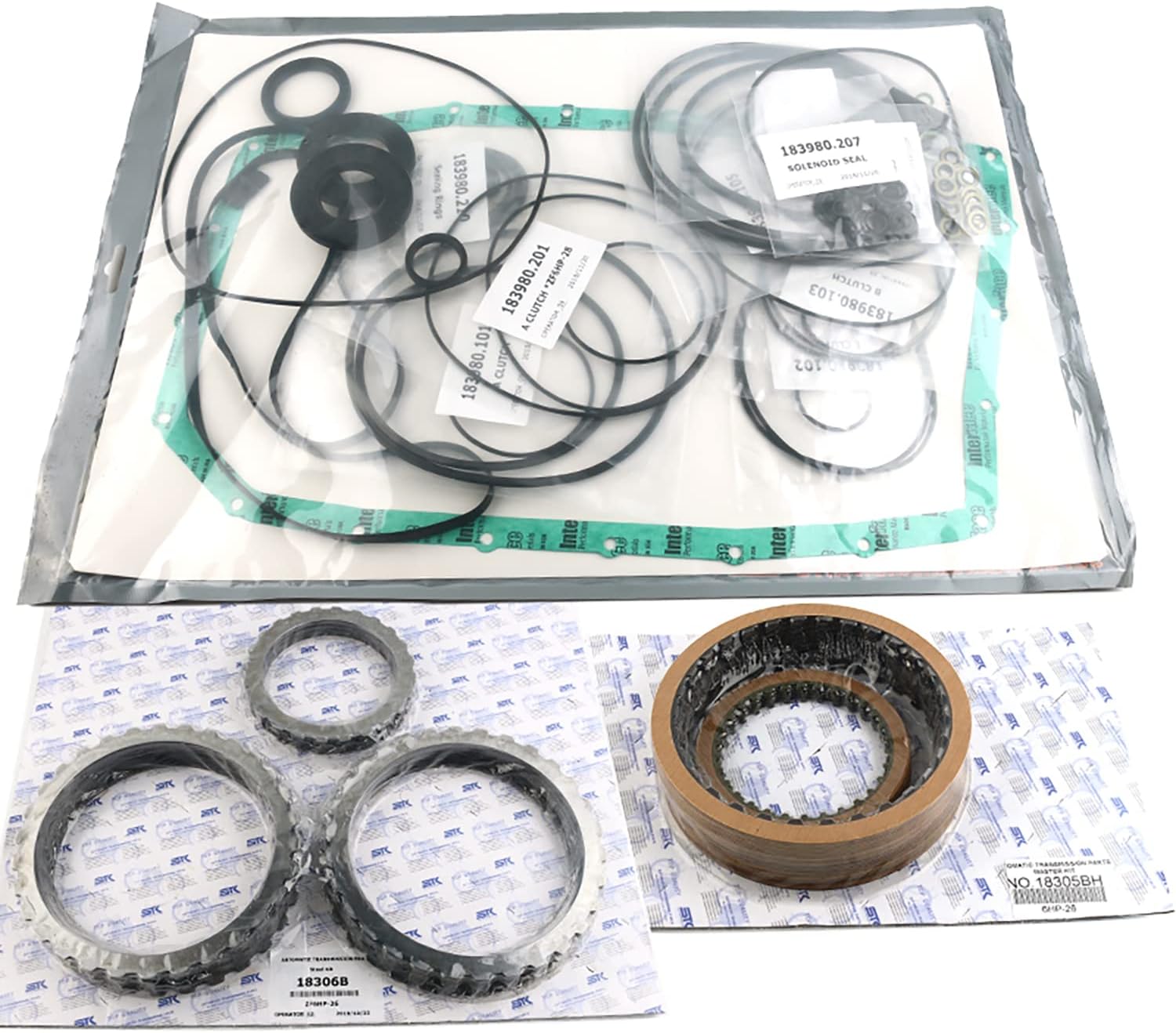
The variant lineup
ZF introduced the 6HP family with the 6HP26 in the 2001 BMW E65 7 Series, the first six-speed automatic in a production passenger car, built around a Lepelletier gear train instead of a conventional planetary chain. Per ATSG technical field advisor Niel Speetjens writing in Transmission Digest, the family splits cleanly into two generations by input shaft diameter and torque rating:
| Variant | Generation | Approx. torque rating | Typical applications |
|---|---|---|---|
| 6HP19 | Gen 1 | 400 Nm (295 lb-ft) | BMW 3, 5, 6, 7 Series; X3, Z4 |
| 6HP26 | Gen 1 | 600 Nm (444 lb-ft) | BMW 7 Series; Jaguar XK/XKR; Aston Martin; Bentley; Lincoln Navigator |
| 6HP32 | Gen 1 | 750 Nm (555 lb-ft) | BMW 745d; Audi Q7 6.0 TDI (6HP32A) |
| 6HP21 | Gen 2 | higher than 6HP19 | BMW 320d/335i/X1, 5 Series; Jaguar XF |
| 6HP28 | Gen 2 | higher than 6HP26 | Jaguar XF/XK/XJ; BMW F01/F02; Audi RS6 |
| 6HP34 | Gen 2 | planned, never produced | — |
That table gets you to a generation and a rough torque class, which is a start. It is not a positive ID, because the badge on the deck lid lies constantly: a 750i and a 550i can both run a 6HP26 depending on model year and market, and the X5 shares its box with sedans that look nothing like it. The only things that confirm the exact unit are stamped on the hardware itself.
Generation 1 versus Generation 2: the solenoid tell
Once the pan and valve body are off, the fastest confirmation is the solenoid pack, because ZF changed the control strategy between generations, not just the ratios. Gen 1 units (6HP19, 6HP26, 6HP32) carry the MV1 solenoid along with a single Normally Applied D/E solenoid, EDS4, that controls both the D and E clutches together. Gen 2 units (6HP21, 6HP28, 6HP34) eliminate MV1 entirely and split that shared D/E function into two separate Normally Vented solenoids: EDS6 for the D clutch and EDS4 for the E clutch. Solenoid location and control strategy differ enough between the two that a scan tool reading one generation's PIDs against the other's wiring diagram will send you chasing a code that is not really there.
Reading the case tag
The ZF identification tag is a metal plate riveted to the side of the case, with the serial number on one line and the ZF part number, what German parts counters call the stucklisten, on another. On other ZF transmission families the stucklisten format is well documented: the first four digits identify the base transmission type, the next three identify a design variation such as a transfer case or electronic control option, and the final three identify the specific vehicle application. A 1058.000.026 tag, for example, reads out to a ZF5HP24 for a Jaguar AJ26 application. ZF has not published that same digit-by-digit breakdown specifically for the 6HP tag, so treat the case tag as your serial-number and running-change reference, and use the separator plate code below for the hardware-level confirmation, which ZF and the aftermarket do document in detail for this family.
The real bench ID: the valve body separator plate
This is the one number that actually nails the variant down to a parts list. Every ZF6 valve body carries a separator plate stamped with a code, and the aftermarket cross-references that code directly to generation and to the correct replacement part:
| OE plate code | OE stamped number | Generation |
|---|---|---|
| A035/B035 | 1068-327-141 | ZF6HP19/26/32 (Gen 1) |
| A036/B036 | 1068-327-145 | Gen 1 |
| A046/B046 | 1068-327-162 | Gen 1 |
| A047/B047 | 1068-327-163 | Gen 1 |
| A051/B051 | 1068-327-179 | Gen 1 |
| A052/B052 | 1068-327-180 | Gen 1 |
| A053/B053 | 1068-327-189 | Gen 1, "tween" — see below |
| A063/B063 | 1068-327-210 | ZF6HP21/28/34 (Gen 2) |
| A065/B065 | 1068-327-224 | Gen 2 |
Per Sonnax's published separator plate application chart, these plates are not specific to one transmission model; they are specific to the valve body code. That is the opposite of what most techs assume, and it is why the plate stamp, not the transmission badge, is the number you order parts against.
The "tween": the 053 plate that does not fit either generation
There is one plate code worth a dedicated warning. The A053/B053 separator plate, stamped 1068-327-189, is what Transmission Digest's Maura Stafford of Sonnax calls a "tween": a Gen 1 valve body carrying some Gen 2-style hardware without actually gaining Gen 2 function. It shows up most commonly in 7-series BMWs, and because it does not match either generation's standard parts chart, it is the single easiest 6HP valve body to misidentify on a bench full of cores. Besides the plate stamp itself, the OE pressure regulator sleeve on an 053-coded unit measures differently than the sleeve on either a standard Gen 1 or a Gen 2 case, which is the secondary check if the plate is worn or hard to read.
ZF6HP26 Sonnax valve body separator plate, 95740-035
The direct aftermarket replacement for the OE A035/B035 plate on a ZF6HP19/26/32 Gen 1 case. Confirm your stamped code against the chart above before ordering.
See the separator plate →Identifying it through the vehicle, not the transmission
Sometimes the transmission is still in the car and pulling the pan is not an option yet. On Ford-platform rear-drive cars that could carry either a Ford-designed 6R60/6R75/6R80 or an actual ZF6HP26, Sonnax notes the three Ford variants are visually identical from the outside, making external inspection useless on its own. The workaround is the Vehicle Certification Label on the driver's door jamb: look for the code under "TR." An X code means 6R60, a C code means 6R75 (warranty-only valve body), a 6 code means 6R80 (also warranty-only), and an F or G code means the unit is actually a ZF6HP26, with F limited to 2005 Navigators and G covering every other 6HP26 model year. That label check takes thirty seconds and saves a wrong parts order.
Fluid: check the variant and the application, not just the gear count
ZF introduced LifeGuardFluid 6, an amber-colored semisynthetic low-viscosity ATF, specifically to support the 6HP family starting with BMW production in 2001, per Gears magazine's history of ZF fluid development. The original service interval was 100,000 km (62,000 miles); ZF later stretched that to 150,000 km (93,000 miles) as fluid chemistry improved, though ZF's own current product data sheets walk back the "fill for life" marketing, noting shorter intervals make sense under high heat, heavy load, or unknown prior use. Most 6HP variants run LifeGuardFluid 6, but a handful of specific applications are called out for the newer LifeGuardFluid 8 instead, including 6HP19A in the Audi A8, 6HP19X in the Audi Q7, 6HP26A61, and 6HP28AF. The variant alone does not tell you the fluid; the variant plus the specific application does.
Once you have confirmed the plate code and generation, we carry master rebuild kits, valve bodies, shift kits and overhaul gasket sets for the ZF6HP family.
Shop ZF6HP parts →Why a generation mix-up turns into a real repair bill
This is not a pedantic exercise. NHTSA's recall record for the related Ford 6R80 (Recall 16V-248, 2011-2012 F-150 and 2012 Mustang) documents an intermittent loss of the transmission output speed sensor signal to the powertrain control module, which could produce an unexpected downshift into first gear at speed. That recall is specific to the Ford-designed 6R80, not the ZF6HP26 it is sometimes confused with underhood, which is exactly the kind of application mix-up this guide exists to prevent. The fix, the recall population, and the correct parts all depend on first confirming which unit you are actually looking at.
Dimensionally, the stakes are just as real on the ZF side. Sonnax's fitment chart for its oversized pressure regulator valve kit lists three different sleeve lengths depending on whether the case is a standard Gen 1, a Gen 1 with the 053 "tween" plate, or a Gen 2 unit. Order against the wrong one and you are not fixing the original low-pressure complaint, you are adding a second one.
Quick ID checklist
- Note the vehicle and model year first; it narrows the variant list before you touch the transmission
- If the pan is still on and the vehicle is a Ford-platform RWD car, check the driver's door Vehicle Certification Label for the TR code
- With the pan off, read the case ID tag for the serial number and stucklisten part number
- Pull the valve body and read the separator plate stamp (A0xx/B0xx code and the 1068-327-xxx number) against the chart above
- If the plate reads A053/B053, treat it as the Gen 1 "tween" and verify the pressure regulator sleeve dimension before ordering parts
- Confirm the exact application (not just the variant) before ordering LifeGuardFluid 6 versus LifeGuardFluid 8
6HP26 separator plate → 6HP26 overhaul kit →
FAQ
How do I tell a ZF6HP19 from a 6HP26 or 6HP32 without pulling the pan?
Start with the metal ID tag riveted to the case, which carries the serial number and the ZF part number (the stucklisten). It will not spell out "6HP26" in plain text, but the application and running-change codes on it are what a dealer or ZF parts counter uses to confirm the exact variant. If the tag is gone or unreadable, the fastest shortcut on a Ford-bodied RWD car is the Vehicle Certification Label on the driver's door jamb: per Sonnax, a TR code of F or G means the transmission is actually a ZF6HP26 rather than a Ford-designed 6R60, 6R75 or 6R80, even though all four look identical from the outside.
What is the difference between ZF6HP Generation 1 and Generation 2?
Generation 1 covers the 6HP19, 6HP26 and 6HP32; Generation 2 covers the 6HP21, 6HP28 and 6HP34 (the 34 was planned but never reached production). The visible difference once the valve body is apart is the solenoid pack: Generation 1 uses the MV1 solenoid and a single Normally Applied D/E solenoid (EDS4) that controls both the D and E clutches. Generation 2 deletes MV1 and splits that single solenoid into two Normally Vented units, EDS6 for the D clutch and EDS4 for the E clutch, which changes solenoid location and scan-tool strategy on the bench.
What is the ZF6HP "tween" valve body and how do I spot it?
It is a Generation 1 valve body stamped with an 053 separator plate code (A053, B053, or part number 1068-327-189) that mixes Gen 1 functionality with some Gen 2-style hardware. Per Transmission Digest, it shows up most commonly in 7-series BMWs and is easy to misidentify because it does not fit cleanly into either generation's parts chart. The quickest bench check is the separator plate stamp itself; a secondary check is measuring the OE pressure regulator sleeve, which is sized differently than both the standard Gen 1 and Gen 2 sleeves.
Does every ZF6HP use the same transmission fluid?
Mostly, but not without exceptions worth checking. ZF introduced LifeGuardFluid 6, an amber semisynthetic low-viscosity ATF, specifically for the 6HP family starting with BMW production in 2001, covering 6HP19, 6HP21, 6HP26, 6HP28 and 6HP32 in most applications. A handful of 6HP variants and specific applications, including 6HP19A in the Audi A8, 6HP19X in the Audi Q7, 6HP26A61 and 6HP28AF, are instead specified for LifeGuardFluid 8. Identify the exact variant and application before ordering fluid, not just the gear count.
Why does getting the ZF6HP variant right actually matter for a repair?
Because the parts are not interchangeable across generations even when they look similar. Sonnax's own fitment chart for the oversized pressure regulator valve kit lists three different sleeve dimensions depending on whether the case is a standard Gen 1, a Gen 1 with the 053 separator plate, or a Gen 2 unit. Installing the wrong sleeve length or the wrong separator plate does not just fail to fix the symptom, it can create a new pressure problem. The same logic applies to solenoids, valve bodies and fluid: misidentify the unit and you are troubleshooting the wrong parts list.
Related guides
- ZF 6HP19 and 6HP26 Transmission Problems
- ZF6HP vs ZF8HP: Differences, Interchange and Which Is Stronger
- 6R80 vs ZF6HP: Differences
- ZF6HP Valve Body Symptoms
- ZF6HP Fluid Type and Capacity
Sources
- Transmission Digest — Niel Speetjens (ATSG Technical Field Adviser), "To 6HP or not to 6HP – Is That a Question?", March 1, 2007. Backs the 6HP26 as the first production six-speed automatic, introduced 2000/2001 in the BMW E65 7 Series; the Lepelletier gear train description; and the torque ratings for 6HP19 (400 Nm), 6HP26 (600 Nm) and 6HP32 (750 Nm). transmissiondigest.com
- Vehicle Service Pros — "ZF Generation 1 and 2," ZF 6HP solenoid comparison. Backs the Generation 1 versus Generation 2 split by variant (6HP19/26/32 vs 6HP21/28/34) and the solenoid differences: the MV1 solenoid and single EDS4 Normally Applied D/E solenoid in Gen 1 versus the Gen 2 deletion of MV1 and the split into two Normally Vented solenoids, EDS6 (D clutch) and EDS4 (E clutch). vehicleservicepros.com
- Sonnax — "ZF6 Valve Body Separator Plate Application Chart," May 14, 2015. Backs the separator plate code table: OE codes A035/B035 through A065/B065, their stamped part numbers (1068-327-141 through 1068-327-224), and the generation split, with A035 through A053 on ZF6HP19/26/32 Gen 1 and A063/A065 on ZF6HP21/28/34 Gen 2. Also backs that the plates are keyed to valve body code rather than to a single transmission model. sonnax.com
- Transmission Digest — Maura Stafford (Sonnax), "'Tween': How to Identify ZF6HP Series Valve Body that Bridges 1st & 2nd Generation Designs," June 1, 2016. Backs the 053 separator plate ("tween") description, its identification by the A053/B053 code and stamped number 1068-327-189, its common appearance in 7-series BMWs, and the pressure regulator sleeve dimension as a secondary identification check. transmissiondigest.com
- Sonnax — "Ford ZF Separator Plate Identification Guide / 6R60-75-80 Valve Body Identification," January 1, 2013. Backs the Vehicle Certification Label method for distinguishing Ford 6R60, 6R75, 6R80 and ZF6HP26 via the "TR" code (X = 6R60, C = 6R75, 6 = 6R80, F/G = ZF6HP26, with F limited to 2005 Navigators), and that the three Ford variants are visually identical externally. sonnax.com
- Gears Magazine (ATRA) — "ZF ATF: What Color Is Your ATF?", August/September 2025. Backs the introduction of LifeGuardFluid 6 as an amber semisynthetic low-viscosity ATF developed specifically for ZF's 6-speed transmissions starting with 2001 BMW production, the original 100,000 km / 62,000 mile service interval later extended to 150,000 km / 93,000 miles, and ZF's current product-sheet language softening the "fill for life" claim. gearsmagazine.com
- NHTSA — Recall 16V-248 (Ford Motor Company, Recall 16S19), Part 573 Safety Recall Report, Amendment 1. Backs the 2011-2012 Ford F-150 and 2012 Mustang 6R80 transmission output speed sensor signal loss recall and the resulting unintended downshift-to-first-gear condition, cited here as a reminder that Ford 6R-series and ZF6HP units are distinct platforms with distinct recall and parts histories. static.nhtsa.gov (PDF)