The ZF8HP does not warn you the way an old three-speed did. No band to adjust, no governor to blame, and the customer usually shows up with one vague complaint and no codes. What is actually happening in most of these units is boring and mechanical: aluminum bores that have been stroking valves for 120,000 miles are no longer round, oil that belongs in a clutch circuit is going somewhere else, and a clutch that was supposed to hold is slipping just enough to cook itself.
The good news is that this unit is unusually well documented at the valve level. Every valve has a published name in both ZF and Chrysler nomenclature, a published symptom list, and a published vacuum test location, so you can work backward from a complaint to a specific bore instead of guessing. This article is that map, plus the numbers to close it back up.
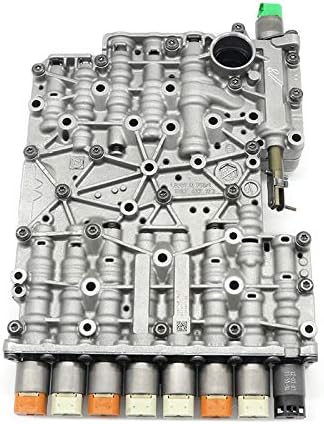
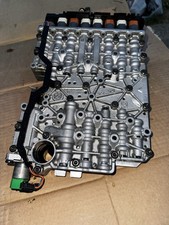
First, Identify What Is Actually On the Bench
The ZF8HP family splits in a way that will cost you a day if you order parts before you look. The first-generation group is ZF8HP45, ZF8HP55, ZF8HP70 and the Chrysler-built 845RE. The second-generation group is ZF8HP50, ZF8HP75 and the Chrysler 850RE. Sonnax splits its repair kits on exactly that line: ZF8-ZIP covers the first group, ZF8-GEN2-ZIP covers the second. They are not interchangeable.
There is a second trap inside the first group. The 8HP55 shares part numbers with the 8HP45 and 8HP70 but does not share valve locations or porting. Sonnax publishes separate vacuum test guides for the two and states plainly that you should not apply 8HP45/8HP70 information to an 8HP55. If you are working off a layout sheet, confirm which unit it was drawn for before you put a test cup anywhere.
The Solenoid Map Changes Names, Not Function
A BMW 8HP45 and a Chrysler 845RE use the same eight-solenoid layout with completely different labels, which is why cross-referencing forum posts goes wrong so often. Per the Sonnax identification guide, position by position:
| Position | BMW ZF8HP45/70 | Chrysler 845RE |
|---|---|---|
| A | MV-1 | SOL Park |
| B | EDS-7 (LP) | SOL LPS |
| C | EDS-2 (TCC) | SOL TCC |
| D | EDS-5 (C) | SOL C |
| E | EDS-4 (E) | SOL E |
| F | EDS-3 (B) | SOL B |
| G | EDS-6 (D) | SOL D |
| H | EDS-1 (A) | SOL A |
Both are push-button-shift, electronic-shift units. The Audi 8HP55 uses a third naming scheme again (SV-1, N88/EPC-SYS, N443/EPC-TCC, N371/EPC-C). Same hardware family, three vocabularies.
The Symptom-to-Valve Map
This is the part worth pinning to the wall. Sonnax's vacuum test guide for the ZF8HP45, ZF8HP70 and 845RE lists the complaints each bore produces. Read the customer's complaint, then go straight to the bore.
Lower Valve Body
Main pressure regulator valve and sleeve (ZF: SYS-DR-V, Chrysler: LP-V). The valve itself produces harsh or soft shifts, erratic or high line pressure, burnt clutches, and restricted converter and lube flow. The sleeve produces erratic or high line pressure and restricted converter and lube flow on its own. This is the single most consequential wear location in the casting, because a worn PR bore takes line pressure control away in both directions: too little pressure burns clutches, too much breaks parts, and either way cooler and lube flow suffers. Sonnax's fix is bore reconditioning plus oversized kit 35740-01K (tooling F-35740-TL and VB-FIX), with sleeve repair handled separately by 35740-13K. Test both PR passages together.
TC switch valve (SV-WD / SV-TC). No lockup, no TCC release, engine stall, TCC codes, excess TCC slip, premature TCC apply, soft or harsh TCC apply. Sonnax part 35740-05.
TCC valve (WK-V / TCC-V). Converter shudder and TCC slip, TCC codes, overheated converter, poor fuel economy, harsh shifts. Sonnax part 35740-03. If a customer describes a steady vibration at light throttle around lockup speed, this bore and the TC switch valve are the first two places to look, not the converter.
Clutch valves A, B1, C, D, E. Each one maps to its own clutch, and the pattern is consistent enough to diagnose from the driver's seat:
- Clutch valve A — slip in Drive or Reverse, gear ratio codes, A clutch burned
- Clutch valve B1 — slip on take-off, gear ratio errors, B clutch burned
- Clutch valve C — slip on take-off, gear loss, gear ratio codes, C clutch burned
- Clutch valve D — gear ratio errors, slips in Reverse, D clutch burned (4th through 8th gears)
- Clutch valve E — slip on the 1-2, flare, harsh or neutral shifts, gear ratio codes, E clutch burned
Holding valves B1, C and E. Bump and flare shifts, burnt clutches, gear loss, gear ratio and solenoid codes. Corrected with 35740-20K (tooling F-35740-TL20 and VB-FIX). Test both passages together.
Priming valve (DR-RED-V / PR-V). Delayed engagement and wrong gear starts. Two repair paths: 35740-37K priming valve and seal kit, or 35740-21K oversized priming valve. Watch the note on the guide here — the two indicated locations are suitable for vacuum testing the OE valve and 35740-21K only, and are not a valid location to check 35740-37K. People fail a good repair on the wrong port.
Park pawl release valve (PS-V / Park-V). Park will not release, park position errors. On a push-button-shift vehicle that is a no-drive tow-in, and it is a valve, not a module.
Upper Valve Body
TC pressure valve (WD-V / TC-V). Coastdown clunk, harsh TCC apply, excess TCC slip, TCC codes and overheating, TCC lining failure, low lube oil flow, low TCC release pressure. Sonnax 35740-18K, tooling F-35740-TL5 and VB-FIX.
Clutch valve B2 / B clutch NIC valve (KV-B2 / CV-B2). Delayed engagement, no Forward, no Reverse, neutral idle control complaints, gear ratio and solenoid codes, B clutch burned, flare and harsh shifts. Sonnax 35740-22, tooling F-35740-TL22 and VB-FIX. The neutral-idle-control function is why a stop-start-equipped car can come in with a launch shudder that has nothing to do with the converter.
Position and default position valves (Pos-V / PosD-V). Bump and flare shifts, delayed Forward and Reverse, burnt clutches, gear loss, delayed engagement, gear ratio and solenoid codes. Sonnax 35740-20K.
Holding valve B2 (HV-B2). B clutch burned, 5-6 flare.
End plugs and accumulator pistons. The end plugs produce soft, flare and harsh shifts, burnt clutches and general pressure loss — corrected with internal end plug kit 35740-30K (8 plugs) or 95740-15K. The accumulator pistons produce downshift clunk, firm shifts, and erratic EDS solenoid control or EDS codes. That last one matters: a bad accumulator can hand you an electrical-looking code from a purely hydraulic fault. Test the accumulator with the dampener upside down and the test plate orifice off center from the rubber piston end.
Sonnax ZF8-ZIP Valve Body Zip Kit — 845RE, ZF8HP45/55/70
Seals the pressure losses in the main line, solenoid regulator, reverse, clutch control and solenoid apply circuits. Contains the pressure regulator sleeve, priming valve and seal, 8 internal end plugs, 3 O-ringed end plugs, accumulator piston kit and 24 solenoid O-rings. No reaming or special tools required.
View the ZF8-ZIP kit →The Bench Test: Vacuum, Not Eyeball
Severe wear you can see. The wear that costs a clutch circuit real pressure but still looks fine under a shop light is the wear that produces comebacks. Vacuum testing turns it into a number you can defend.
Clean and dry the valve body, leave the valve in its rest position unless the guide says otherwise, seal the test cup over the specified port, and pull vacuum. A low reading means oil is escaping past the valve-to-bore fit at that location. Three specifics from the ZF8HP guide that people skip:
- On clutch valve A, remove the spring and center the valve spool in the opening before testing.
- On clutch valve B1, close the passage on the opposite side with the palm of your hand while you test.
- On the main PR valve and sleeve, and on the holding valves, test both passages together rather than one at a time.
Write every reading down. After a dozen cores you will have your own average per bore and can set a shop minimum in in-Hg that matches the warranty you are willing to write. That converts "that looks a little worn" into a pass/fail a customer can be shown.
Two Failures That Are Not the Valve Body
The "A" Clutch Backing Plate
A clutch burnup is chronic across ZF8 and the Chrysler 845RE and 850RE, and a perfect valve body will not stop it. Sonnax demonstrated the root cause on video: the OE backing plate flexes measurably during apply, which loads the clutch pack unevenly and concentrates heat. If you fix a hydraulic leak into the A circuit and reuse a flexing plate, you have fixed half the problem. The heavy duty billet steel replacements are 35577-45 for ZF8HP45, ZF8HP50, ZF8HP51 and Chrysler 845RE/850RE, and 35577-70 for ZF8HP55, ZF8HP70 and ZF8HP75.
Corroded CAN Terminals Inside the Valve Body
This one is worth knowing before you quote a rebuild on a late Jeep. Per FCA technical service bulletin 21-016-25, dated February 14, 2025, certain 2024-2025 Wagoneer and Grand Wagoneer models with the 3.0L Hurricane (sales codes EFH or EFC) and the 8HP75 (sales code DFR), built on or before August 22, 2024, suffer corrosion of the CAN terminals inside the valve body. The vehicle sets U0101 (lost communication with the TCM), U0402 (implausible data received from TCM) or U0418 (implausible data received from brake system control module 1), drops into limp-in, and once in Park will not shift back into gear. FCA's remedy is valve body replacement plus TCM programming, and the bulletin calls out guide sleeve 10377A and valve body alignment pins 10379A as required tools. That is a communication fault presenting as a transmission failure. Run the VIN before you sell a rebuild.
When the Factory Says Replace, Not Repair
Not every ZF8HP valve body complaint is a wear complaint. FCA bulletin 21-041-14, issued December 10, 2014, covers a bump sensation on the 2-1 downshift in 2013 Charger (LD) and 2013 300 (LX) models with the 3.6L (sales code ERB) and the 845RE (sales code DFL). The bulletin is explicit that no DTCs are set by this condition, and the diagnostic step is a road test: drive to at least 25 mph so the transmission shifts past second, then brake lightly to a stop and feel for the bump. If it is there, the repair is valve body replacement kit RL259301AA, followed by the 8-speed transmission shift adaptation drive learn procedure. Labor is published at 1.7 hours including the TCM flash.
Two takeaways. A converter-feeling bump with a clean scan report is not automatically a dead end, and the factory pairs every valve body operation with an adaptation relearn. Skip the drive learn on this unit and you hand back a shift quality complaint that looks exactly like the one you were hired to fix.
Fluid, Fill and Torque
ZF is firm on fluid. Per the ZF LifeguardFluid 8 product data sheet, only ZF LifeguardFluid 8 or 9 may be used, and no additives of any kind are permitted because they alter the chemical composition of the oil. Other oils, in ZF's own words, can cause anything from a significant deterioration in shifting characteristics to transmission failure. The fill-for-life position also carries a caveat worth quoting to customers: ZF recommends an oil change at 150,000 km (about 93,000 miles), and shorter intervals under high temperature and load or when the vehicle's history is unknown.
The Level Check Is Temperature-Gated
Getting this wrong undoes the repair. ZF's service procedure for the 8HP requires fluid temperature between 30 and 50 degrees C (86 to 122 degrees F) when the level is set, with a Maserati-specific window of 50 to 60 degrees C. The sequence: vehicle level on the lift, selector in Park, parking brake set, limp-home mode deactivated, lighting and accessories off, and a scan tool connected to read transmission oil temperature. Start the engine and hold 2,000 rpm for 30 seconds to fill the torque converter, return to idle, cycle through P, R and D, then manually select D1 and D2 holding each about 10 seconds. Open the fill plug. If nothing runs out, add fluid until it does; if it runs out, wait until only single drops fall, then close the plug.
Torque Values
| Fastener | Torque |
|---|---|
| Oil pan bolts — aluminum pan | 4 Nm + 45 degrees |
| Oil pan bolts — plastic pan | 10 Nm |
| Oil pan bolts — steel plate pan | 12 Nm |
| Drain plug, M18x1.0 | 8.0 Nm ± 1.0 Nm |
| Filler plug, M10x1.0 | 12.0 Nm ± 1.2 Nm |
| Drain plug, M18x1.5 | 35 Nm ± 3.5 Nm |
| Filler plug, M22x1.5 | 30 Nm ± 3.0 Nm |
Pan bolts go crosswise from the center outward. Start every bolt by hand first, then torque in sequence. The aluminum pan spec is a torque-plus-angle value, not a click-wrench number, and treating it as one is how pans warp and leak.
The Order That Actually Works
- Identify the unit and generation. 8HP45/55/70 and 845RE are one family; 8HP50/75 and 850RE are another. Confirm the 8HP55 separately — its porting differs from the 8HP45 and 8HP70.
- Run the VIN for open bulletins. On a 2024-2025 Wagoneer with U0101, U0402 or U0418, check 21-016-25 before touching hydraulics.
- Match the complaint to the bore using the symptom map above. Burned A clutch points at clutch valve A; 1-2 slip points at clutch valve E; delayed engagement and wrong gear starts point at the priming valve.
- Vacuum test every location on the guide, respecting the per-valve notes: spring out and spool centered on clutch valve A, opposite passage covered on clutch valve B1, both passages together on the PR and holding valves.
- Recondition and fit oversized valves wherever the numbers failed. Do not close up a marginal bore.
- Inspect the A clutch backing plate. Replace it with the heavy duty plate on any unit that came in with A clutch damage.
- Reassemble to the ZF torque values, pan bolts crosswise from center, aluminum pans by torque plus angle.
- Fill with ZF LifeguardFluid 8, set level in the 30 to 50 degree C window using the full ZF sequence, then perform the shift adaptation drive learn.
Almost every repeat failure on a ZF8HP traces back to someone who replaced a part that tested fine, or reused a bore that did not. The vacuum gauge settles that argument in about four minutes per valve.
Sources
- Sonnax — "ZF8HP45, ZF8HP70 & Chrysler 845RE Vacuum Test Guide," December 7, 2016 (rev. 2026). Backs the full valve lineup with ZF and Chrysler valve names, the per-valve symptom lists for the main PR valve and sleeve, TC switch valve, TCC valve, TC pressure valve, clutch valves A/B1/B2/C/D/E, holding valves, priming valve, park pawl release valve, end plugs and accumulator pistons; the Sonnax part numbers and tooling called out for each location; the test notes (remove spring and center spool on clutch valve A, close opposite passage on clutch valve B1, test both passages together on the PR and holding valves, accumulator dampener orientation); and the warning that 8HP55 valve locations and porting differ from the 8HP45 and 8HP70. sonnax.com
- Sonnax — "Oversized Pressure Regulator Valve Kit 35740-01K" product and instruction page. Backs the main pressure regulator wear mechanism (valve and sleeve wear allowing fluid loss and valve hang-up, loss of balance oil pressure putting the PR valve out of position, resulting line pressure instability and restricted cooler and lube flow), the symptom list including harsh and soft shifts, erratic and high line pressure, burnt clutches and broken parts, the ZF valve name SYS-DR and Chrysler valve name LP-V, the 845RE/ZF8HP45/8HP55/8HP70 application, and the F-35740-TL and VB-FIX tooling requirement. sonnax.com
- Sonnax — "Chrysler 845RE; ZF8HP45, ZF8HP55, ZF8HP70 Solenoid Identification Guide," April 20, 2022. Backs the eight-position solenoid map cross-referencing BMW ZF8HP45/70 naming (MV-1, EDS-7 LP, EDS-2 TCC, EDS-5 C, EDS-4 E, EDS-3 B, EDS-6 D, EDS-1 A) against Chrysler 845RE naming (SOL Park, SOL LPS, SOL TCC, SOL C, SOL E, SOL B, SOL D, SOL A), the push-button/electronic shift designation, and the separate Audi ZF8HP55 scheme (SV-1, N88 EPC-SYS, N443 EPC-TCC, N371 EPC-C). sonnax.com
- Sonnax — "Zip Kit ZF8-ZIP" product page. Backs the generation split between ZF8-ZIP (ZF8HP45/55/70 and Chrysler 845RE) and ZF8-GEN2-ZIP (ZF8HP50/75 and Chrysler 850RE), the circuits the kit seals (main line, solenoid regulator, reverse, clutch control and solenoid apply), the cause statement of pressure loss from worn components in critical oil circuits, and the kit contents: pressure regulator sleeve, priming valve and seal, 8 internal end plugs, 3 O-ringed end plugs, accumulator piston kit and 24 solenoid O-rings. sonnax.com
- Sonnax — "How to Prevent ZF8, 845RE, 850RE 'A' Clutch Failure," July 14, 2021. Backs A clutch burnup as a chronic problem across ZF8 and Chrysler 845RE/850RE, the OE backing plate flexing during apply as the underlying cause of uneven clutch wear and heat buildup, and the heavy duty replacement plate part numbers 35577-45 (ZF8HP45, ZF8HP50, ZF8HP51, 845RE, 850RE) and 35577-70 (ZF8HP55, ZF8HP70, ZF8HP75). sonnax.com
- FCA US LLC / NHTSA — Technical Service Bulletin 21-016-25, "Valve Body Replacement," February 14, 2025. Backs the 2024-2025 Wagoneer / Grand Wagoneer (WS) population built on or before August 22, 2024 with the 3.0L Hurricane (sales codes EFH and EFC) and 8HP75 (sales code DFR), the stated cause of CAN terminals corroding inside the valve body, DTCs U0101, U0402 and U0418, the limp-in and no-shift-from-Park symptom, the valve body replacement plus TCM programming remedy, the 2.0-hour labor operation, and special tools 10377A (remover/installer guide sleeve) and 10379A (valve body alignment pins). static.nhtsa.gov (PDF)
- Chrysler Group LLC / NHTSA — Service Bulletin 21-041-14, "845RE Harsh 2-1 Downshift," December 10, 2014. Backs the 2013 Charger (LD) and 2013 300 (LX) application with the 3.6L (sales code ERB) and 845RE (sales code DFL), the bump-on-2-1-downshift symptom occurring at any transmission temperature and most noticeable during light braking or coasting to a stop, the statement that no DTCs are set by the condition, the 25 mph road test diagnostic, valve body replacement kit RL259301AA, the required 8-speed transmission shift adaptation drive learn, and the 1.7-hour labor allowance including TCM flash. static.nhtsa.gov (PDF)
- ZF Friedrichshafen AG — Product Data Sheet, ZF LifeguardFluid 8, and Service Information "Oil change kit for ZF 8HP automatic transmission" (50130 EN, 11.2024). Backs the requirement that only ZF LifeguardFluid 8 or 9 be used with no additives, the warning that other oils can cause anything from deteriorated shift quality to transmission failure, the 150,000 km oil change recommendation and shorter intervals under high temperature and load, the 30 to 50 degrees C fill temperature window (50 to 60 degrees C for Maserati), the full level-setting sequence (2,000 rpm for 30 seconds to fill the converter, idle, cycle P/R/D, manually select D1 and D2 for about 10 seconds each, fill until it runs out, wait for single drops), the crosswise-from-center pan bolt sequence, and the torque values for aluminum (4 Nm + 45 degrees), plastic (10 Nm) and steel (12 Nm) pans plus the drain and filler plug specs. Fluid PDS (PDF) • Service Information (PDF)