The complaint arrives the same way every time. A Grand Cherokee, a Ram 1500, a 5 Series, a Charger. Light throttle, 30 to 50 mph, and the car feels like it just rolled onto rumble strips for a second and a half. No light, no code, and the customer has already been told it is a misfire, a bad tire, or that they all do that. On a ZF8HP it usually is none of those, and the reason it is so easy to mistake for an engine problem is baked into how this transmission uses its converter clutch.
It is also a diagnosis you can work in order. Every valve in this converter circuit has a published name in both ZF and Chrysler nomenclature, a published symptom list, and a published vacuum test port, so you can start at the customer's description and finish at a specific bore instead of guessing at a converter.
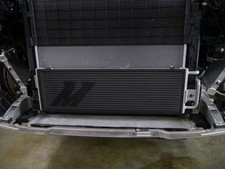
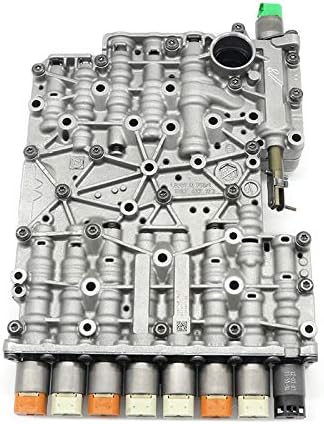
Why This Unit Shudders Where Older Units Do Not
Two design decisions set the stage. The first is how aggressively the clutch is applied. On the 8HP the converter clutch has a direct effect on fuel consumption, so it engages early and often. It can engage in first gear, and per Sonnax's circuit teardown of the unit the converter clutch can be applied in any forward gear from 1st through 8th. That puts the clutch in a slip-controlled state through most of normal driving instead of only at highway cruise.
The second is what ZF did to make that survivable. A clutch that locks that early feeds engine vibration straight into the driveline, so the converter carries a heavy torsional damping system rather than the single-stage damper you would find behind an older four-speed. That damper is doing real work at 1,200 rpm in traffic, and it is one more set of internal parts that can go out of tolerance.
The hydraulic side is the part most techs have not seen before. Sonnax's write-up on the ZF8 notes that this unit abandoned the two-path converter circuit used by the older ZF 6-speeds and went to a three-path circuit with a dedicated charge path. Four valves run that circuit, and all four are controlled by variable force solenoids:
| Function | ZF valve name | Chrysler valve name |
|---|---|---|
| Pressure regulator | SYS.DR-V | LP-V |
| TC pressure | WD-V | TC-V |
| TC switch | SV-WD | SV-TC |
| TC clutch | WK-V | TCC-V |
With the clutch released, the pressure regulator feeds the TC pressure valve, which regulates converter charge pressure; that charge goes through the TC switch valve into the converter and back out to cooler and lube. Both the regulator and the TC pressure valve are modulated by the EDS-7 (EPC) solenoid. On apply, the EDS-2 (TCC) solenoid strokes the TC switch valve and the TC clutch valve, converter return is exhausted through the return check valve with a minimum of 14.5 psi held inside the converter, and the TC clutch valve routes regulated line pressure into the apply circuit.
That is the mechanism of the complaint in one sentence: those four valves are extremely busy, they wear their aluminum bores, and a bore that leaks turns a controlled slip into an uncontrolled one. Uncontrolled slip of a few dozen rpm is a shudder.
Step One: Prove It Is the Converter Clutch
Do this before you touch the transmission, because a good share of these come back as something else.
The manual-downshift test
Get the vehicle into the condition where the shudder happens, then tap the paddle or shifter down one gear so the TCU has to drop lockup. If the vibration disappears the instant lockup drops and returns when it reapplies, you are in the converter clutch circuit. If it survives with the clutch released, it is not TCC-related and you should be looking at driveline or engine.
The load test
TCC shudder is load-sensitive. It shows up on light to moderate throttle at a steady speed and vanishes if you lift completely or push into a downshift. A driveline vibration does the opposite: it tracks vehicle speed and does not care much about throttle. A misfire tracks engine rpm and load and usually leaves a misfire counter behind even without a light.
The things that fake it
- Engine and transmission mounts. Collapsed liquid-filled or electronically controlled mounts transmit engine pulses straight into the body, and on cylinder-deactivation engines the deactivation event happens close enough to the lockup event that it gets blamed on the clutch every time.
- The guibo (flex disc). ZF recommends replacing it whenever the transmission is replaced, and wear between the rubber and the metal bolt guides is easy to miss. It also produces a 2-1 shift bump that gets logged as a transmission fault.
- Driveshaft phasing. If a shaft came out for a previous repair and went back 180 degrees off, the balance is gone. Mark the shaft to the differential before it comes out.
- Plugs and coils. A dying coil at light cruise load is the most common false positive on this complaint. Pull fuel trims and misfire counters first; it costs two minutes.
Step Two: Read the Right Data
You need three values and a temperature. Names vary by scan tool and by OEM, but the concepts do not:
- Engine speed and turbine/input shaft speed. Subtract them. That difference is TCC slip. In commanded full lockup you want that number essentially flat and near zero. In the controlled-slip band it should be small and steady. A slip figure that oscillates, swinging up and down repeatedly while the driver feels the shudder, is the signature. A slip figure that simply climbs and stays high is a clutch that is not holding at all, which is a different repair.
- TCC solenoid current or duty (EDS-2). If the module commands a stable apply and the slip is unstable, the problem is downstream of the solenoid: valve, circuit, or clutch. If the command itself is hunting, the module is chasing a slip target it cannot hit, which points the same direction.
- Transmission oil temperature. Note whether the shudder is worst cold, worst hot, or indifferent. Shudder that only shows up above roughly 90 C is usually fluid or clutch lining. Shudder that is present cold and warms out of it more often points at fill level or a lazy valve.
One caution on temperature: the 8HP runs a thermostatic bypass that keeps oil out of the cooler until it warms. In most applications it starts to open around 75 C (167 F) and is fully open near 90 C (194 F). Until that happens the cooler circuit is not in play at all, so a cold-only complaint is not evidence of a cooler restriction.
ZF 8HP70 Pan, Filter and ATF Service Kit
Pan with integrated filter, seal and the correct 8-speed ATF for 845RE, 850RE and 8HP70 applications. This is the first repair on a fluid-driven shudder, and the pan comes off anyway before any valve body work.
View the service kit →Step Three: The Fluid and the Level
ZF is direct about this in the LifeguardFluid 8 product data sheet: the friction behavior of the fluid is adapted specifically to this transmission and is consistent over the entire service life, and ZF calls those features a prerequisite for perfect shifting characteristics and vibration-free operation. A converter clutch designed to live in controlled slip depends on that friction curve. Put a generic ATF in it and the shudder is a specification mismatch, not a maintenance failure.
The published values for LifeguardFluid 8 are worth knowing so you can recognize the real thing: green in color, density 846 kg/m3 at 15 C, viscosity 26 mm2/s at 40 C and 5.6 mm2/s at 100 C, Brookfield viscosity 8,850 mPa.s at -40 C, pour point -42 C, flash point 206 C. ZF's 1-liter product number is S671.090.312. ZF also uses the same data sheet to walk back the lifetime-fill language: the units are generally filled with lifetime oil, but ZF recommends an oil change after 150,000 km, and shorter intervals under high temperature and load or where the vehicle's history is unknown.
Level matters as much as the fluid. The 8HP has no dipstick and is genuinely intolerant of a low fill. The cooler and lines alone hold roughly 0.8 to 1.0 liter, so any repair that opened a cooler line leaves the unit low even if you put the same volume back in. Set the level the way ZF specifies: run the unit up to 90 C (194 F), shut it down and let it cool to 35 to 40 C (95 to 104 F), then restart, raise the vehicle, pull the level control plug and fill until fluid runs out. That plug must be closed with the fluid below 45 C (113 F). Setting the level hot gives you a chronically low fill and a converter that aerates.
If you want the fill volumes and the rest of the fluid detail broken out in full, we covered it separately in our ZF8HP fluid type and capacity guide.
Step Four: Vacuum Test the Converter Circuit
If the fluid is correct, the level is right, and the slip data still oscillates, pressure is going somewhere it should not. This is where the ZF8 gets easy compared to most units, because Sonnax publishes a vacuum test map for the ZF8HP45, ZF8HP70 and Chrysler 845RE valve body with the exact test locations and the symptom list attached to each valve. Test at the port with the valve in its rest position, and a low reading means the bore is worn.
| Valve | Published symptoms | Sonnax repair |
|---|---|---|
| TC clutch valve (WK-V / TCC-V) | Converter shudder and TCC slip, TCC codes, overheated converter, poor fuel economy | 35740-13K oversized TCC valve kit |
| TC pressure valve (WD-V / TC-V) | Harsh TCC apply, excess TCC slip, TCC codes and overheating, TCC lining failure, low lube oil flow, low TCC release pressure | 35740-18K oversized TC pressure valve kit |
| TC switch valve (SV-WD / SV-TC) | No lockup, no TCC release, engine stall, premature TCC apply, soft or harsh TCC apply, excess TCC slip, TCC codes | 35740-05 oversized TC switch valve |
Read that table as a decision tree, not a parts list. Shudder plus slip with no other complaint is the TCC valve bore. Shudder that arrives with a harsh apply, a hot converter, or evidence of lining failure is the TC pressure valve, which Sonnax calls the 8-speed valve showing the most severe wear to date because of its EPC control and high activity. Engine stall at a stop, or a clutch that will not release at all, is the TC switch valve.
The repair on all three is the same shape: recondition the bore, fit the oversized valve, retest. Reassembling a worn bore with a new solenoid is the classic comeback on this unit. We go valve by valve through the rest of the body in our ZF8HP valve body wear guide.
When it really is the converter
If the bores vacuum test clean and the fluid and level are right, the clutch lining or the damper is the remaining answer. Glazed or burnt lining will not hold a controlled slip no matter how good the pressure is, and a damper with worn springs produces a vibration that behaves exactly like clutch shudder because it happens in the same operating window. Neither is repairable in the vehicle. When the converter goes back in, guide it over the input shaft with a handle screwed into the converter rather than letting its weight sit on the shaft, because the input shaft O-ring seals to the converter and is easy to cut on installation. Replace that O-ring every time the converter is removed.
Step Five: Adapt It, or It Will Come Back
This unit learns fill time and fill pressure per clutch and stores them in adaptation memory cells. Those cells zero out whenever the transmission is replaced or overhauled, the mechatronic is replaced, or the cells are cleared with a scan tool, and until the relearn happens the apply quality will not meet expectations. Per Chrysler bulletin 21-012-14, the drive learn carries hard windows:
- Transmission oil temperature between 30 C (86 F) and 100 C (212 F).
- On upshifts, input shaft torque between 100 and 150 Nm (74 to 111 lb-ft), monitored as engine crankshaft torque.
- On upshifts, input shaft speed of 1,250 to 2,000 rpm.
- Repeated accelerations to 64 to 80 km/h (40 to 50 mph) on smooth road. Potholes and tar strips deflect torque enough to stall the adaptation, and a grade steep enough to force a downshift restarts the procedure in the wrong gear.
The bulletin also gives you a completeness check: read the per-clutch counters and look for the filling counter at 12 or more (6 on 8HP70/8HP90) and the fast filling counter at 4 or more (2 on 8HP70/8HP90). Below that the adaptation has not taken and the drive route needs repeating. Finish by confirming the TCU is on current software; flashing costs nothing next to pulling the unit twice.
The Order I Work It
- Scan for codes and misfire counters. Rule out coils, plugs, mounts, guibo and driveshaft phasing.
- Road test with engine speed and turbine speed graphed. Confirm the vibration lives and dies with lockup.
- Verify fluid identity, service the pan and filter, and set the level cold in the ZF temperature window. Re-test here; a large share of fluid-caused shudder is gone at this point.
- If slip still oscillates, pull the valve body and vacuum test the converter circuit. Recondition and fit oversized valves wherever the readings are low.
- If the bores are clean, condemn the converter.
- Clear adaptations, run the drive learn inside the published windows, verify the counters, confirm TCU software.
Worked in that order, the ZF8HP is not a mystery unit. It is a well-instrumented transmission with a converter clutch that runs harder than the ones most of us grew up rebuilding, and the failures follow the pressure.
Shop ZF8HP pans, filters, ATF, valve body components, converters and the tools to set the level properly — shipped fast from the USA.
Shop ZF8HP parts →Sources
- Sonnax — "A New Path for ZF," November 9, 2016. Backs the three-path converter circuit with a dedicated charge path, the ZF-to-Chrysler valve name table (SYS.DR-V/LP-V, WD-V/TC-V, SV-WD/SV-TC, WK-V/TCC-V), EDS-7 modulation of the pressure regulator and TC pressure valves, EDS-2 as the TCC solenoid, the 14.5 psi minimum held in the converter on apply, converter clutch apply in any forward gear 1st through 8th, and the TC pressure valve as the 8-speed valve showing the most severe wear to date. sonnax.com
- Sonnax — "ZF8HP45, ZF8HP70 & Chrysler 845RE Vacuum Test Guide," December 7, 2016. Backs the vacuum test locations and the published symptom lists mapped to the TC pressure valve, TC switch valve and TCC valve, the instruction to test OE valves in the rest position, and the rule that a low vacuum reading indicates wear. sonnax.com
- Sonnax — Oversized TCC Valve Kit 35740-13K product page. Backs converter shudder, TCC slip, damaged TCC linings, TCC codes, overheated converter and poor fuel economy as the symptom set for bore wear at the torque converter clutch valve on 845RE, ZF8HP45, ZF8HP55 and ZF8HP70, and the recondition-plus-oversized-valve correction. Companion Sonnax pages back 35740-18K (TC pressure valve) and 35740-05 (TC switch valve). sonnax.com
- ZF Friedrichshafen AG — ZF LifeguardFluid 8 Product Data Sheet (revision 2021-07-19). Backs the friction behavior being adapted to the 8HP and consistent over the entire service life as the prerequisite for vibration-free operation, the recommendation to change oil after 150,000 km despite lifetime fill, shorter intervals under high temperature and load or unknown vehicle history, and the published values: green, 846 kg/m3 at 15 C, 26 mm2/s at 40 C, 5.6 mm2/s at 100 C, 8,850 mPa.s Brookfield at -40 C, -42 C pour point, 206 C flash point, and 1-liter product number S671.090.312. aftermarket.zf.com
- Chrysler Group LLC Technical Service Bulletin 21-012-14, "Transmission Shift Enhancements - Adaptation Drive Learn Procedure," April 8, 2014 (hosted by NHTSA). Backs the adaptation memory cell design, the cells zeroing on replacement or clearing, the drive learn windows of 30 to 100 C oil temperature, 100 to 150 Nm input shaft torque and 1,250 to 2,000 rpm input shaft speed, the 40 to 50 mph smooth-road route requirement, and the filling counter targets of 12 (6 on 8HP70/90) and fast filling counter of 4 (2 on 8HP70/90). Applies to vehicles with the 845RE, 8HP45 and 8HP70. static.nhtsa.gov
- Transmission Digest — "2009-2016 ZF 8-Speed Transmission Replacement," October 1, 2025. Backs the converter clutch engaging quickly even in first gear and the resulting heavy torsional damping system, the thermostatic bypass beginning to open near 75 C and fully open at 90 C, the 0.8 to 1.0 liter held in cooler and lines, the level-set sequence of 90 C then cool to 35 to 40 C with the plug closed below 45 C, the converter installation handle and input shaft O-ring replacement, guibo replacement and its 2-1 shift bump, and driveshaft phasing. transmissiondigest.com