A 200-4R that drives, shifts and holds every forward gear but has nothing in Reverse almost always comes down to one of three things: a burnt low/reverse clutch pack or a blown low/reverse piston seal, a worn reverse boost valve at the pump that can no longer deliver the extra line pressure Reverse needs, or a stuck valve in the reverse feed circuit from old, varnished fluid. These are not interchangeable guesses. Each one has a distinct symptom signature, and a pan drop plus a pressure check will tell you which repair you are actually looking at before you pull the transmission.
First, rule out what this isn't
Reverse-only complaints get misdiagnosed constantly because people jump straight to teardown. Before you touch anything, confirm the actual symptom pattern. Drive the car in every forward range. If 1st, 2nd, 3rd and 4th all engage cleanly, hold under load, and shift at normal points, the forward clutch and direct clutch are fine, and so is the pump's ability to build line pressure in general. That matters, because it rules out the two most expensive possibilities up front: a dead pump and a transmission that's simply out of fluid. Check the fluid level and color on the dipstick with the engine running and the transmission at operating temperature anyway, since it costs two minutes and a low or badly burnt-smelling fluid level can tip a borderline reverse circuit into a dead one even when it isn't the root cause. If forward gears are also weak, slipping, or delayed, you have a broader pump-priming or fluid problem and this article's three causes are not your diagnosis.
Once you've confirmed it's reverse and only reverse, you're looking at one of three places: the low/reverse clutch pack itself, the reverse boost valve circuit in the pump, or a blocked or stuck valve in the valve body's reverse feed passage.
Cause 1: Burnt low/reverse clutch pack or a blown piston seal
The 200-4R doesn't use a band to hold Reverse. Reverse and Manual Low both apply the same low/reverse clutch pack, a multi-disc pack near the rear of the case that's otherwise idle in Drive and Overdrive. That's the mechanical reason the symptom is so clean: if this pack is burnt or its apply piston seal has let go, Reverse and engine braking in Manual Low both disappear while every forward range keeps working exactly as before, because the forward and direct clutches never touch this pack at all.
A burnt pack is almost always a heat failure. It happens when the pack has been slipping under load, whether from the boost valve wear described below, from fluid that's gone past its service life and glazed the frictions, or from towing or hard use that outran what a factory clutch pack can hold. Once the frictions char, clamping force drops further, which accelerates the burn, so these failures tend to go from "a little weak in reverse" to "nothing" over a short window rather than failing instantly.
Diagnosing this one is a pan-drop job. Pull the pan and look at the filter and magnet. A fine, dark, almost charcoal-like debris is friction material, and it's the clearest physical confirmation you'll get that the low/reverse pack has cooked. Clean fluid with no debris, on the other hand, points you toward the hydraulic causes below rather than a mechanically burnt pack.
Cause 2: Worn reverse boost valve at the pump
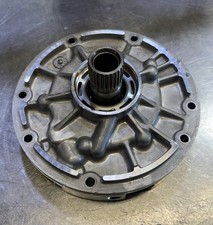
Reverse needs more clamping force on the low/reverse clutch pack than any forward gear needs on its clutches, because it's working against engine torque through a different gear path. The transmission gets that extra clamping force from a reverse boost valve inside the pump body, a spool valve that boosts line pressure specifically when the valve body signals Reverse. When this valve wears, Reverse doesn't disappear instantly the way a burnt clutch pack does; it gets progressively weaker first, which is a useful tell during diagnosis.
Sonnax's technical documentation for its reverse boost valve kit describes exactly this wear mechanism: the valve and its sleeve are made of different materials than the aluminum pump body, and as the transmission reaches operating temperature, differing thermal expansion rates let the sleeve develop excessive clearance in the bore. The sleeve then scrubs the bore rather than sealing against it, and boosted pressure bleeds off instead of reaching the clutch pack. Sonnax lists the resulting symptoms as "low Reverse boost, delayed Reverse, low line pressure, and poor upshift in manual low" — a progression that frequently ends in no Reverse at all once the bore wear gets far enough along.
This is good news relative to Cause 1, because it's a pump-level repair rather than a full case-opening job. Sonnax's K77898 kit replaces the worn valve and sleeve with a larger-ratio (.283") hardened-steel version and adds sleeve O-rings to seal the circuit in the pump body bore, which stops the exact leak path the stock parts develop. It's worth checking the companion TV boost valve circuit at the same time: Sonnax's documentation for that kit notes that throttle boost oil leakage in the same general area of the pump is a common cause of burned bands and 3-4 clutches on 200-4R and 4L60/700R4 units, so if one circuit in the pump has worn enough to cause a hydraulic symptom, it's worth confirming the other hasn't started down the same path before you put the pump back in.
Two more items belong on the same pump inspection, because reverse is the range with the highest pressure demand and it is the first to quit when line pressure runs low everywhere. Sonnax's GM 200-4R valve body layout lists an oversized pressure regulator valve (77917-06) for erratic line pressure, low line rise and clutch slippage, which tells you the regulator bore is a known wear point on this unit. And in its 4L60-family 3-4 clutch write-up, which covers the 200-4R regulator valve too, Sonnax notes that a binding pump slide can cause unexplained low line pressure. Shake the assembled pump with only the slide installed; if it does not move freely, no boost valve kit will bring reverse back.
Cause 3: Stuck valve or blocked passage in the reverse feed circuit
The least common of the three, but worth ruling out before you commit to a teardown. Transmission Digest's diagnostic writeup on chasing an elusive no-reverse condition lays out a "splitting the circuits" approach that applies here even though the specific article covers the 4L80-E's low/reverse band rather than the 200-4R's clutch pack: start by testing line pressure in Reverse against pressure in a forward range, since a healthy pump that's simply not routing pressure to the reverse circuit points at the valve body rather than the pump or the clutch pack itself. If pressure is present at the pump but isn't reaching the apply circuit, the next step in that same methodology is a mechanical check of the feed passage and the valve that controls it, rather than assuming the clutch pack itself has failed.
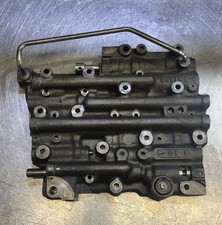
On a 200-4R specifically, this shows up as varnish or debris holding a reverse-circuit valve off its seat in the valve body, usually in fluid that's old enough that it's also darkened and lost its original smell. It's a valve-body-off diagnosis: pull the valve body, and check whether the relevant valve drops freely under its own weight when the body is held vertical, the same test used for a stuck shift valve elsewhere in this transmission. A scored aluminum bore needs a replacement valve body, since a scored bore will just stick again after cleaning.
Diagnosis in the order that actually saves time
- Check fluid level and condition first. Free, takes two minutes, and rules out a borderline fluid problem from masquerading as one of the three causes above.
- Confirm the symptom is reverse-only. If every forward gear is normal, you're in this article's territory. If forward gears are also weak, look at the pump and fluid supply generally, not these three causes.
- Pull the pan and check the filter and magnet. Dark, charred friction debris confirms a burnt low/reverse pack. Clean fluid points you toward the hydraulic causes instead.
- Pressure-test the reverse circuit if you have a gauge port. Low or absent boosted pressure in Reverse, with normal pressure in forward ranges, points at the reverse boost valve. Pressure present at the pump but not reaching the clutch points at a stuck valve or blocked passage in the valve body.
- Pull the pump before you pull the transmission. A worn reverse boost valve is fixed at the pump. Only move to a full teardown once the pan, the pressure test, and the pump inspection have ruled out the cheaper repairs.
FAQ
Why does my 200-4R have no reverse but all the forward gears work fine?
When every forward gear works normally and only reverse is missing, the fault is isolated to the parts of the transmission that only do work in reverse: the low/reverse clutch pack and the reverse boost valve circuit at the pump. The forward clutch and direct clutch, which handle 1st through 3rd, are untouched by either failure, which is exactly why they keep working. A full loss of movement in every gear points somewhere else entirely, usually fluid level or pump prime, not the causes covered here.
Can low transmission fluid cause no reverse in a 200-4R?
Low fluid level on its own usually produces slipping or hesitation in every gear, not a clean loss of reverse only, because the pump is starved regardless of which range you select. But a borderline-low fluid level combined with a worn reverse boost valve can be the difference between a weak-but-working reverse and no reverse at all, since reverse already needs boosted line pressure that a healthy boost valve circuit struggles to supply even with full fluid. Checking the level and condition on the dipstick with the engine running and the transmission warm is a two-minute check and the correct first step before anything else.
What is a reverse boost valve and why does it fail on a 200-4R?
The reverse boost valve is a spool valve in the pump body that boosts line pressure specifically when Reverse is selected, since reverse needs more clamping force than any forward gear to hold the low/reverse clutch pack against engine torque. Sonnax's technical documentation for its K77898 kit explains that differing thermal expansion rates between the steel valve and the aluminum pump body let the valve's sleeve develop excessive clearance as the transmission reaches operating temperature, and the sleeve then scrubs the bore, which bleeds off the boosted pressure the reverse circuit depends on.
Do I need to pull the transmission to fix a 200-4R with no reverse?
Not always. A worn reverse boost valve is a pump-level fix: the pump can be pulled with the transmission still in the vehicle on most 200-4R installations, and the Sonnax boost valve kit drops into the existing bore. A burnt or seal-blown low/reverse clutch pack is a different story, since that pack sits deep in the case and reaching it means pulling the transmission and dropping the case halves apart, which is the same labor as a full rebuild. The pressure test described in this article is what tells you which repair you are actually signing up for before you pull anything.
Is low/reverse clutch pack failure expensive to fix on a 200-4R?
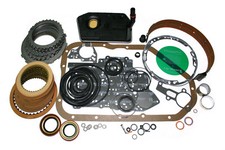
It costs more than a boost valve kit because it requires the transmission out of the vehicle and the case opened, but the parts themselves are not exotic: new frictions, steels, and a low/reverse piston seal are standard rebuild-kit components. Most shops doing a teardown for a burnt low/reverse pack replace the whole friction and seal package at once with a master rebuild kit rather than piecing it together, since the labor to get back in and fix a second failure later costs more than the extra parts would have up front.
Sources
- Sonnax — "2940 Reverse Boost Valve Kit" (K77898), technical product documentation for GM 200-4R and 4L60/700R4. Backs the thermal-expansion wear mechanism at the pump body, the resulting symptoms of low reverse boost, delayed reverse, low line pressure and poor manual-low upshift, and the kit's larger-ratio hardened valve and sleeve O-ring design. sonnax.com
- Sonnax — "2491 TV Boost Valve Kit," technical product documentation for GM 200-4R and 4L60/700R4. Backs the throttle boost oil leakage mechanism in the same pump assembly that causes burned bands and 3-4 clutches, used here to explain why the TV boost circuit is worth checking alongside a worn reverse boost valve. sonnax.com
- Randall Schroeder (Sonnax), "Diagnosing the Elusive No Reverse with the 4L80-E," Transmission Digest. Backs the "splitting the circuits" diagnostic methodology referenced in Cause 3: separating hydraulic, electrical and mechanical possibilities and testing line pressure in reverse against a forward range before assuming a mechanical failure, rather than guessing at a feed passage or valve first. The article covers the 4L80-E's low/reverse band specifically; the pressure-testing logic is general and is applied here to the 200-4R's different hardware. transmissiondigest.com
- Valvoline — ATF DX-3 Product Information Sheet. Backs the correct fluid specification for this transmission (GM 6297M / Dexron III) referenced when checking fluid condition as the first diagnostic step. valvoline product data sheet (PDF)
- Sonnax — "GM 200-4R Valve Body Layout," technical resource. Backs the oversized pressure regulator valve 77917-06 listed for erratic line pressure, low line rise and clutch slippage, and the K77898 and K77898A reverse boost valve kits listed for low reverse boost and delayed reverse on the 200-4R. sonnax.com
- Sonnax — "All Over the Map: Attacking 4L60-E Burnt 3-4 Clutches With Confidence." Backs the pump slide shake test and the statement that a binding pump slide can cause unexplained low line pressure, and lists the 77917-06 oversized pressure regulator valve for the 200-4R and 4L60. sonnax.com