A 200-4R that will not make 4th gear almost always comes down to one of four things: a TV cable that is holding throttle pressure too high, a governor that cannot deliver a clean road-speed signal, an overdrive servo or band that cannot hold the gear once it is commanded, or a 3-4 shift valve stuck in the bore. This unit has no PCM, no shift solenoids, and no scan tool PIDs to lean on. Everything that decides whether you get 4th gear is mechanical and hydraulic, which is actually good news: a 20-minute road test plus a pan drop will tell you which of the four you have, and none of the fixes below require guessing.

Why this unit has no electronic answer
The 200-4R was built from 1981 to 1990 with no PCM controlling the shift pattern. Line pressure and shift timing are set entirely by a mechanical throttle valve (TV) cable feeding the valve body, and a governor spinning with the output shaft feeding a road-speed signal to the other side of each shift valve. Converter lockup is the one electrical piece: a TCC solenoid that needs 12 volts and a ground to apply (more on that below). GEARS Magazine, published by ATRA, explains the balance plainly: a shift valve has governor pressure pushing it toward upshift on one end, and a spring plus throttle pressure holding it toward downshift on the other, so "to make the transmission upshift, governor pressure must exceed the shift valve spring and the effects of throttle pressure." There is no code to pull and no PID to watch. The fix comes from understanding which half of that balance is broken.
Cause 1: TV cable holding throttle pressure too high
This is the single most common reason a 200-4R will not make 4th gear, and it is the first thing to check because it costs nothing but five minutes. GEARS Magazine's account of these cable-controlled units states that on the related 700R4/200-4R cable system, "each click of the cable equated to about 10 PSI of line pressure increase," which is also throttle pressure holding every shift valve toward the downshifted side. If the cable has crept tight, been adjusted wrong after a transmission swap, or the slider housing is binding, throttle pressure stays elevated even at a steady cruise, and the 3-4 shift valve never sees governor pressure win the fight.
Transmission Digest's procedure for adjusting the THM700-R4 throttle valve cable, which uses the identical cable-and-slider design as the 200-4R, makes the point that this is set by road test, not by eye: with light, steady throttle, "the 1-2 shift must happen at about 15 mph and the 2-3 shift must happen at about 28 mph." If your 1-2 and 2-3 shifts are happening late or your transmission feels like it is holding gears too long across the board, the cable is the leading suspect, and a worn or improperly adjusted cable will suppress the 3-4 shift before it suppresses anything else, because 4th requires the lowest throttle pressure threshold of the three upshifts.
Pull the cable off the carburetor or throttle body linkage and check it moves freely with no binding, no fraying at the crimp, and that the D-shaped locking button on the slider resets cleanly. A cable that has stretched or whose housing is rusted in the bracket will read fine by eye and still hold pressure wrong under load.
Cause 2: A governor that can't deliver a clean road-speed signal
If the TV cable checks out, moves freely, and is adjusted to spec, but 1st and 2nd shift points are also inconsistent, erratic, or shift late across the board rather than just missing 4th, suspect the governor. The governor lives under a four-bolt cover at the rear of the transmission, directly in the path of the output shaft, and it is a wear item. GEARS Magazine's history of these cable-and-governor units describes exactly this failure path on older GM automatics: "The governor bores would wear, the governor weights and valves would hang up, and the gears driving the governors would wear." A worn governor bore or a sticking weight does not usually kill every shift outright, it makes the road-speed signal unreliable, so shifts happen late, early, or inconsistently from one drive to the next, and 4th, which needs the highest governor pressure of the four gears, is the one most likely to never arrive at all.
The governor is accessible without pulling the transmission; it comes out from the tail end after removing the speedometer driven gear housing on most 200-4R applications. Inspect the weights for free movement and the valve for scoring. If the bore is worn or the weights hang up, replacement is the only real fix, since a governor bore does not lap back to spec.
Cause 3: Overdrive servo or band can't hold the gear once it's commanded
This one has a distinct symptom: the transmission briefly hits 4th, you feel the RPM drop, and then it falls straight back to 3rd, sometimes repeatedly. That pattern means the shift valve successfully commanded the gear, so the cable and governor are not the problem. What failed is the overdrive band's ability to hold the gear under load once applied, which points at the servo or the band itself.
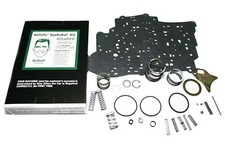
Sonnax's Super Hold Servo Kit documentation for this exact application states the kit "fits three GM transmission models: 200-4R, TH200, TH200C" and is "designed to remedy band failure and worn cases" in these units. The kit (K65703, with an updated K65703-1 version) uses a servo with "17% greater apply area than the Grand National servo" and an O-ring seal between the piston and pin specifically to stop cross-leakage between the apply and release sides of the piston, which is the internal leak path that lets a worn factory servo bleed off apply pressure under load. If your 4th gear is a momentary hit followed by a drop back to 3rd, this is where the problem lives, not in the cable or governor.
Worth checking at the same time: Sonnax's TV boost valve kit for the 200-4R and 4L60/700R4 addresses "burned bands and/or 3-4 clutches" caused by "throttle boost oil leakage," so if the servo and band both come out worn, a leaking TV boost valve bore is often the reason the band was starved for apply pressure in the first place. Fixing the servo without checking the boost valve risks burning the new band the same way.
Cause 4: 3-4 shift valve stuck in the bore
The least common but most absolute symptom: no 4th gear, ever, at any speed or throttle position, while 1st, 2nd and 3rd all shift normally. If the cable is correct and the governor is clean, a shift valve stuck in its bore from varnish or debris is the remaining explanation. GEARS Magazine's broader description of throttle valve problems in these units lists "sticking valves, incorrectly adjusted cables and linkages, restricted vacuum lines, and misrouted and worn or binding cables" together as the family of mechanical faults that produce exactly this kind of dead-stop symptom.
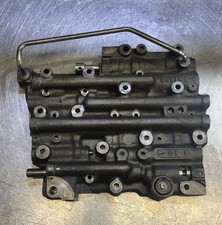
This is a pan-drop and valve-body-off diagnosis. Pull the valve body, and look specifically at the 3-4 shift valve bore for scoring or a valve that does not fall freely under its own weight when the body is held vertical. Varnish from fluid that went past its service life is the most common cause of a stuck valve on a transmission this old; a thorough cleaning in solvent sometimes frees it, but a valve body with a scored bore needs replacement rather than cleaning, because a scored aluminum bore will just stick again.
Not every “no overdrive” is a missing 4th gear
A common call on swapped 200-4Rs is high cruise RPM that the owner reads as “it never went into overdrive.” Sometimes it did shift. The converter just never locked. A 200-4R will not lock up unless something supplies the TCC solenoid with power and ground. TCI's instructions for its 376600 lockup kit (written for both the 700R4 and 200-4R) run switched 12 volts to terminal A at the case connector and ground the solenoid through a normally open 4th gear pressure switch and a vacuum switch, so the converter applies in 4th only above 8-10 in-Hg of vacuum. With no lockup wiring at all, the transmission upshifts normally but the converter slips at cruise, and RPM stays a few hundred higher than a locked unit would run.
To tell the two apart on a road test, watch the tach at the 3-4 shift: a clear RPM drop means 4th happened. A second, smaller drop a moment later is lockup. If you only ever see the first drop, chase the lockup circuit, not the servo. TCI gives 24.5 to 26.5 ohms as the resistance of a good solenoid circuit, and a zero reading means a short inside the pan. Sonnax's lockup troubleshooting article also notes the reverse problem on this unit: a defective 200-4R solenoid can apply the converter right after the 1-2 shift, because its signal oil is also 2nd clutch oil.
Diagnosis in the order that actually saves time
- Check the TV cable first. Free movement, correct adjustment, no binding. This is the cause in the majority of no-overdrive complaints and costs nothing to rule out.
- Road test at light, steady throttle. If 1-2 and 2-3 are also late or inconsistent, suspect the governor. If they shift at normal points and only 4th is missing, move to the servo and valve body.
- Note the exact symptom. "Never shifts" points at the cable, governor, or a stuck valve. "Hits 4th then drops back to 3rd" points squarely at the overdrive servo or band.
- Pull the pan and look at the filter and magnet. Band material in the pan with a momentary-4th symptom confirms the servo/band diagnosis before you even pull the valve body.
- Pull the valve body only if the first three steps come up clean. A stuck 3-4 shift valve is real but it is the least common of the four causes, and it is the only one that requires the valve body to come off to confirm.
FAQ
Why won't my 200-4R shift into 4th gear?
On a 200-4R the four most common reasons are a misadjusted or worn TV cable that never lets the throttle valve circuit relax enough to allow the 3-4 shift, a governor that is sticking or has lost a weight and can't deliver the road-speed signal the 3-4 shift valve needs, a worn overdrive servo or band that can no longer hold 4th once it is commanded, and a 3-4 shift valve stuck in the bore from varnish or debris. A road test combined with a pan drop separates these in about twenty minutes.
Can a bad TV cable prevent a 200-4R from shifting into overdrive?
Yes, and it is the first thing to check because it is free to inspect. The 200-4R has no PCM, so the TV cable is the only throttle-position input the valve body gets. GEARS Magazine, published by ATRA, notes that on the related 700R4 and 200-4R cable system, each click of cable adjustment changes line pressure by roughly 10 psi, and Transmission Digest's THM700-R4 cable procedure confirms the cable is adjusted by driving the car and checking actual shift speed in miles per hour, not by eyeballing a bracket. A cable pulled too tight holds throttle pressure high enough that the 3-4 shift valve never sees a low enough opposing force to stroke, so the transmission just stays in 3rd.
How do I know if it's the governor instead of the TV cable?
Drive it at a steady, light throttle and watch whether the 1-2 and 2-3 shifts happen close to their normal speeds. If 1-2 and 2-3 shift fine but 4th never shows up at any speed or throttle position, the TV cable is the more likely culprit because it affects every shift proportionally. If the earlier shifts are also high, erratic, or the transmission hunts, suspect the governor, since GEARS Magazine's history of these units describes governor bores wearing, weights hanging up, and the drive gears wearing as a known failure mode that produces an unreliable road-speed signal to every shift valve, not just the 3-4.
Is it the overdrive band or servo if the transmission tries to shift but falls back to 3rd?
That specific symptom, a brief hit of 4th followed by an immediate drop back to 3rd, points at the overdrive servo or band rather than the TV cable or governor, because the shift valve is successfully commanding the gear but the band cannot hold it under load. Sonnax's Super Hold Servo Kit K65703 documentation for the 200-4R, TH200 and TH200C specifically targets band failure and worn servo bores in these units as the cause of a 4th gear that will not hold.
What if the transmission has zero 4th gear no matter what?
A complete absence of 4th at any speed or throttle position, with normal 1-2-3 shifts, points at a stuck 3-4 shift valve or a blocked passage in the valve body rather than the cable or governor, since both of those only affect shift timing and feel, not whether the gear exists at all. Varnish from degraded fluid is the most common cause of a stuck valve bore, which is why a valve body inspection and cleaning, or a replacement valve body, is the fix when the cable and governor both check out normal.
Sources
- GEARS Magazine (ATRA) — "A Blast from the Past: Old School Transmissions and Other Forgotten Information." Backs the governor-vs-shift-valve pressure balance that determines upshift timing, the roughly 10 psi per cable click figure on the 700R4/200-4R cable system, and the description of governor bore wear, weight hang-up, and drive gear wear as a known failure mode. gearsmagazine.com
- Sonnax — "2937/2938 Super Hold Servo Kit" (K65703), technical product documentation for GM 200-4R, TH200 and TH200C. Backs the overdrive servo/band failure mechanism, the 17% greater apply area, and the piston-to-pin O-ring seal that stops the internal cross-leak responsible for a 4th gear that hits and then drops back out. sonnax.com
- Sonnax — "77917 TV Boost Valve Kit," technical product documentation for GM 200-4R and 4L60/700R4. Backs the throttle boost oil leakage mechanism that burns bands and 3-4 clutches, and the bore-size options used to correct line and throttle pressure on this valve body. sonnax.com
- Transmission Digest — "Adjusting Infamous THM700-R4 Throttle Valve Cable," Paul & Jamie Townsend. Backs the road-test-based cable adjustment procedure and the specific 1-2 (about 15 mph) and 2-3 (about 28 mph) target shift speeds used to verify correct cable adjustment on this cable-and-governor family, which the 200-4R shares. transmissiondigest.com
- TCI Automotive — 376600 Universal TCC Lock-Up Kit instructions (700R4 and 200-4R). Backs the 12 volt feed to terminal A, the ground path through a normally open 4th gear pressure switch and vacuum switch, 4th-gear-only lockup above 8-10 in-Hg vacuum, and the 24.5-26.5 ohm good-solenoid resistance spec. TCI instructions (PDF)
- Sonnax — “Troubleshooting Lockup Issues,” Sonnax TASC Force. Backs the 200-4R example of converter lockup immediately after the 1-2 shift caused by a defective solenoid, with the signal oil also serving as 2nd clutch oil. sonnax.com