A 200-4R pump does not usually die all at once. It gets tired. The slide starts to hang, the pivot pin wears an oval, the pressure regulator bore opens up, and line pressure drifts low in exactly the conditions where the unit needs it most: hot, at idle, in Reverse, or at wide-open throttle on the 2-3 and 3-4 shifts. By the time the customer notices, the 3-4 clutch is often already cooked, and the pump gets missed because the clutch pack is the thing that looks burned.
This guide covers how the 200-4R pump actually works, the specific parts that wear, the symptoms each one produces, how to prove it on a gauge and on the bench, and what to replace when you have it apart. The 200-4R shares its pump architecture with the 700-R4/4L60 family, which is why the same Sonnax and TransGo parts cover all of them, and why a lot of what the 4L60 world has learned the hard way applies directly here.
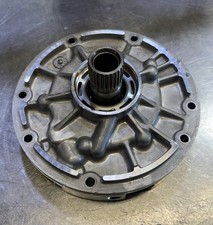
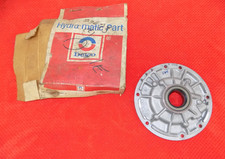
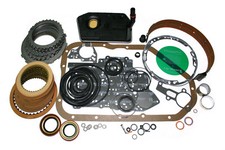
How the 200-4R Pump Works (and Why That Matters for Diagnosis)
The 200-4R uses a variable-displacement vane pump. A rotor driven by the converter hub carries a set of vanes, held out against a pivoting slide by vane rings. Swing the slide one way and the pumping chambers get bigger, so the pump moves more oil per revolution. Swing it the other way and output drops. A slide spring (or priming springs, depending on how you count the OE dual-spring setup) pushes the slide toward maximum output, and regulated oil acting on the decrease side of the slide pushes it back toward minimum output once the pressure regulator has all the oil it needs.
That design is efficient: at cruise the pump is not wasting horsepower pushing oil over a relief valve. The catch is that the slide position is controlled by a balance of forces, and anything that upsets that balance shows up as a line pressure problem rather than an obvious mechanical failure. A slide that binds in its pocket, a worn pivot pin, a leaking regulator bore, or a cross-leaking boost valve can all produce low or erratic line pressure with a pump that still turns smoothly and looks fine on the bench.
200-4R Pump Failure Symptoms
Sorted from what the driver notices to what you see on the gauge:
- Whine or moan that tracks engine RPM in every range, including Park and Neutral. The pump turns whenever the engine runs, so a noise that is there in Park and changes with RPM points at the pump, not the gear train. TransGo lists pressure regulator valve buzz or moan as a symptom of the pump ring and slide problem in this family.
- Delayed engagement into Drive or Reverse, worse when hot. Thin, hot fluid leaks past worn bores faster. A unit that engages fine cold and drags its feet after a highway run is giving you a leak path that opens with temperature. Our 200-4R delayed engagement guide covers the full range of causes.
- Reverse chatter or slipping in Reverse. Reverse needs the highest line pressure of any range. Sonnax ties reverse chatter, clutch slippage and 3-4 clutch failure directly to pressure regulator bore wear in the 200-4R/4L60 pump.
- Soft, slipping upshifts at wide-open throttle. TransGo describes line pressure dropping during maximum-throttle upshifts, producing soft shifts and friction material failure. The 2-3 and 3-4 shifts are where it bites.
- Burned 3-4 clutch with no obvious valve body cause. This is the expensive one. A 3-4 clutch that keeps burning after a correct TV cable adjustment often has a pump feeding it low pressure. See our 200-4R 3-4 clutch failure breakdown.
- Front seal leak with a groove worn in the converter hub. The pump bushing supports the converter hub. When it wears, the hub wobbles, the seal lip cannot keep up, and the bushing clearance itself becomes a leak path that bleeds off converter charge oil.
- Metal glitter in the pan. Bright, fine steel in the pan with a pump noise is a red flag for broken vane rings or a scored slide and rotor. TransGo states plainly that the original equipment pump rings are brittle and will break, causing extensive damage to the pump and severe metal contamination throughout the transmission.
Prove It on a Gauge Before You Pull the Transmission
The 200-4R is a hydraulic unit with no computer to set codes, so a line pressure gauge is your scan tool. Put a 300 psi gauge on the line pressure tap, get the fluid fully hot, and record pressure in every range at idle and at a steady higher RPM, then with the throttle opened against the brakes for a few seconds at a time. The readings that matter:
| Test condition | What a pump problem looks like |
|---|---|
| Hot idle, Drive | Base pressure low. Sonnax lists 72 psi idle base and 82-85 psi cracking pressure for the OE orange 200-4R/4L60 main regulator spring; a unit sitting well under that is suspect. |
| Hot idle, Reverse | Low Reverse boost. Sonnax says a dyno test on a worn regulator bore shows 50-100 psi less than specified in Reverse. |
| Throttle applied (TV rise) | Pressure climbs slowly or not at all. "Low line rise" is one of the symptoms Sonnax assigns to regulator bore wear. |
| Steady RPM, any range | Needle wanders or pulses. Erratic pressure points at regulator bore leakage, which Sonnax says contributes to erratic pump slide movement. |
| High RPM, WOT upshift | Pressure falls off as RPM climbs. TransGo attributes this to oil building on the slide's decrease area and overcoming the priming spring. |
Two cautions before you condemn the pump. First, set the TV cable and confirm it pulls through its full travel; a slack TV cable produces low line rise all by itself and costs nothing to fix. Second, rule out a clogged filter or a cracked filter neck seal, which starves the pump inlet and produces the same falling-pressure pattern. If pressures are low in every range and the cable and filter are good, the pump assembly is the prime suspect. If only one range is low, look at that range's circuit first.
What Actually Wears Inside the Pump
Pressure regulator valve bore
This is the most common failure point. Per Sonnax, pressure regulator valve bore wear allows leakage and contributes to erratic pump slide movement, and their listed symptoms are erratic line pressure, low line rise, clutch slippage, excess pump noise and 3-4 clutch failure. The fix is to ream the bore and install oversized valve 77917-06 (200-4R and 4L60). Sonnax recommends its carbide tool kit 77917-TLC because casting hardness in this pump family gives ordinary reamers trouble. Two details builders skip: check the boost valves for leakage at the same time, and when you oversize the regulator valve, move up one boost ratio.
Boost valves and sleeves
In the Sonnax article "All Over the Map," Brian Wing notes that boost valves are notorious for leaking, particularly with high line pressure, and that the boost sleeve actually moves in the pump and wears the bore. That is why the aftermarket replacements use a sleeve with external O-rings. A leaking Reverse boost valve gives you low Reverse pressure and delayed Reverse; a leaking TV boost circuit gives you low line rise under throttle. Vacuum test both.
Pump slide and pivot pin
The slide has to swing freely on its pivot pin. A slide that binds is one of the sneakiest causes of low pressure; Wing writes that a binding slide can often be the cause of otherwise unexplained low line pressure. The test is simple: assemble the clean, dry pump halves with only the slide inside, bolt them together, and shake the pump. You should hear the slide move freely. If it is silent, find out why before you go any further.
The pivot pin wears too. Sonnax says decreased oil pressure meant to maintain proper line pressure can leak past a worn pin, and lists pin 65797 (through-hardened steel) for both low and high line pressure complaints. It is a cheap part. Replace it any time the pump is apart.
Vane rings, vanes and rotor
TransGo's position is that the OE vane rings are brittle and break. When they do, the vanes lose their support, the rotor and slide score, and the debris goes everywhere. Hardened steel replacement rings exist for this family in two versions: TransGo's 700-PK for engines under 5400 RPM and 700-PKH with priming springs for engines that turn past 5400. Inspect the rotor, slide and pump pocket faces for scoring. If the pocket is scored deep enough to catch a fingernail, the pump body is done.
Cracks, check ball and stator press-fit
"All Over the Map" also calls for vacuum or wet-air testing of the pressure relief check ball, the forward clutch and 3-4 clutch oil passages (which can develop hairline cracks), and the stator-to-pump press-fit area with the stator installed. When pressing a stator, avoid stressing or warping the pump; runout of more than a few thousandths warrants a closer look. Flat-sand both pump faces to remove dings and high spots that cause cross-leaks.
Main regulator spring
Do not overlook the spring itself. Sonnax notes that low spring rates, incorrect spring heights and inappropriate replacements from previous rebuilds can lead to low base line pressure, and lists 77917-08 as a replacement that matches the OE orange spring at 72 psi idle base. A new spring will not cover for worn boost valves or a worn regulator bore; it only corrects a weak or wrong spring.
200-4R Sonnax Oversized Pressure Regulator Valve 77917-06
The single most common pump repair on this unit: ream the worn regulator bore and fit the oversized valve to restore stable line pressure. Requires the reamer tooling.
View at CoreTransmissionParts →Need something else for the pump? Browse the full 200-4R parts collection.
Rebuild the Pump or Replace It?
A pump with a worn regulator bore, a tired pivot pin and a worn bushing is a good rebuild candidate: ream and oversize the regulator, fit new boost valves, pin, vane rings, bushing, front seal and pump-to-case O-ring, and it will outlast the original. A pump with a deeply scored pocket, a cracked passage that fails the wet-air test, or a body that has been through a ring failure with metal embedded in the faces is cheaper to replace than to chase. If the old pump threw its rings, assume the debris made it to the cooler and flush or replace the cooler before the new unit goes in.
Replacement notes from the bench
- The transmission has to come out. Pull the pump with slide-hammer pullers threaded into the pump body; do not pry it out by the stator.
- Install a new pump-to-case O-ring, front seal and pump bushing every time. Inspect the converter hub. A grooved or scored hub will eat a new bushing and seal in short order, so replace or recondition the converter.
- Use guide pins or an alignment band to center the pump in the case, run the bolts down evenly, and torque to the figure in your factory service manual. Uneven tightening is a classic cause of a pump that binds or whines after a rebuild.
- Check input shaft end play before the pan goes on.
- Seat the converter fully (you should feel it drop over the pump drive) before the transmission goes back in. A converter that is not engaged with the pump drive will break the pump the moment the bellhousing bolts are pulled up.
- Fill with DEXRON VI. GM's DEXRON-VI service-fill specification, described in SAE paper 2006-01-3242, was introduced as the upgrade to the DEXRON III service fill this unit was serviced with. Then check line pressure hot again to confirm the repair.
How to Keep a 200-4R Pump Alive
- Keep the TV cable adjusted. Low TV means low line rise, which means the pump and clutches live at the low end of their pressure range under load.
- Respect the RPM limit on modified engines. TransGo's 700-PKH exists because engines that turn past the transmission's designed range can push the slide toward low output just when the unit needs volume.
- Fix pump problems before rebuilding the clutch packs. A new 3-4 clutch on a pump with a worn regulator bore is a repeat customer.
FAQ
What are the first signs of a failing 200-4R pump?
The usual early signs are a whine or moan that changes with engine RPM in every range including Park, delayed engagement that gets worse when the fluid is hot, and slipping or chatter in Reverse. Soft upshifts at wide-open throttle and a burned 3-4 clutch often follow, because a worn pump delivers low line pressure under load.
Can a bad pump cause a 200-4R to burn the 3-4 clutch?
Yes. Sonnax lists 3-4 clutch failure as a symptom of pressure regulator bore wear in the 200-4R and 4L60 pump, and TransGo describes line pressure dropping on maximum-throttle upshifts in this family. If the 3-4 clutch keeps burning after the TV cable is set correctly, check the pump before rebuilding the clutch pack again.
How do I test a 200-4R pump without removing the transmission?
Install a line pressure gauge, bring the fluid fully hot, and record pressure in every range at idle and with throttle applied. Low pressure in all ranges, low Reverse boost, slow pressure rise under throttle or a wandering needle point at the pump assembly. Set the TV cable and rule out a clogged filter or leaking filter seal first.
Should I rebuild or replace a 200-4R pump?
Rebuild it when the wear is in the regulator bore, boost valves, pivot pin, vane rings and bushing, since those are all serviceable parts. Replace it when the pump pocket is deeply scored, a passage is cracked, or the pump has been through a vane ring failure that embedded metal in the faces.
What fluid does a 200-4R take after a pump replacement?
Use a licensed DEXRON VI fluid. The 200-4R was originally serviced on earlier DEXRON fluids, and DEXRON VI is GM's current upgraded service-fill specification that superseded DEXRON III.
Complete 200-4R pumps, pump bushings and seals, regulator and boost valve parts, and full rebuild kits — shipped fast from the USA.
Shop 200-4R parts →Sources
- Sonnax — "Oversized Pressure Regulator Valve" (77917-06), product technical documentation. Backs the pressure regulator bore wear mechanism (leakage and erratic pump slide movement), the symptom list (erratic line pressure, low line rise, clutch slippage, excess pump noise, 3-4 clutch failure, reverse chatter), the dyno finding of 50-100 psi below spec in Reverse, the 77917-TLC carbide reamer recommendation due to casting hardness, and the advice to check boost valves at the same time and move up one boost ratio. sonnax.com
- Sonnax — "Pump Slide Pivot Pin" (65797), product technical documentation. Backs that oil pressure meant to maintain line pressure can leak past a worn pivot pin, the low and high line pressure symptoms, through-hardened construction, and 200-4R/4L60-family application. sonnax.com
- Sonnax — "Elevated Pressure Main Pressure Regulator Spring" (77917-08), product technical documentation. Backs the 72 psi idle base and 82-85 psi cracking pressure matching the OE orange spring, the causes of low base line pressure (low spring rates, incorrect spring heights, wrong replacements from previous rebuilds), and that the spring does not correct boost valve or bore wear. sonnax.com
- Sonnax — Brian Wing, "All Over the Map: Attacking 4L60-E Burnt 3-4 Clutches With Confidence." Backs the pump inspection procedure for this pump family: boost valve leakage and moving boost sleeves wearing the bore, vacuum testing the regulator, the dry slide shake test and the binding slide as a cause of unexplained low line pressure, pivot pin inspection, wet-air testing of the relief check ball and the forward and 3-4 passages for hairline cracks, stator press-fit leak testing and runout, and flat-sanding the pump faces. sonnax.com
- TransGo — "Unbreakable Pump Rings" (700-PK / 700-PKH) technical product information. Backs that OE pump rings in the 200-4R/700-R4/4L60 family are brittle and break, causing pump damage and metal contamination; the high-RPM slide decrease-area pressure drop and priming spring fix; the 5400 RPM split between kits; and the symptoms of regulator buzz or moan, low line pressure at hot idle and soft maximum-throttle upshifts. transgo.com
- SAE International — "General Motors DEXRON-VI Global Service-Fill Specification," technical paper 2006-01-3242. Backs DEXRON-VI as GM's upgraded service-fill specification succeeding the DEXRON-III service fill. saemobilus.sae.org