The 200-4R doesn't throw a code when its valve body starts failing. There's no PCM watching it, no scan tool PID to pull up, and no check-engine light to narrow things down. Everything that decides when and how hard this transmission shifts lives inside a block of aluminum full of spool valves, springs, and a throttle valve (TV) cable — so the first sign of trouble is always a shift complaint: a burned 3-4 clutch, a Reverse that's weaker every week, a transmission that won't kick down at wide-open throttle, or shifts that are suddenly harsh, soft, or happening at the wrong time. This article walks through what's actually failing behind each of those complaints and a testing sequence — pan drop, pressure gauge, and a valve-body-off bore check — that tells you which repair you're looking at before you buy a part.
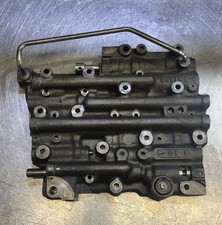
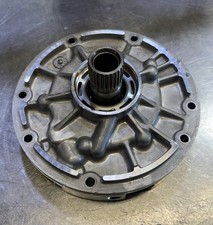
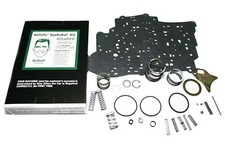
How the 200-4R Valve Body and Pump Actually Work
Like its close cousin the 700R4/4L60 — close enough that Sonnax lists most of its pump and valve-body hard parts as fitting both transmissions — the 200-4R is fully hydraulic. The pressure regulator (PR) valve sets base line pressure straight off pump output. The throttle valve (TV), physically pushed by the TV cable running back to the carburetor or throttle linkage, raises that line pressure in proportion to how far you're into the throttle. A separate TV boost valve, living inside the pump body as part of the same pressure-regulator valve train, multiplies the throttle signal further to get enough clamping force at higher load. A third valve, the reverse boost valve, also sits in the pump and adds the extra pressure Reverse needs to hold the low/reverse clutch pack against engine torque — a job no forward gear asks of the pump. Inside the valve body itself, the 1-2, 2-3 and 3-4 shift valves compare that throttle-pressure signal against governor pressure, a hydraulic read of road speed, to decide when each upshift happens.
The TV valve is the part that gets the most complaints and the least attention, because it's easy to confuse with something else. Pull the pan and you can watch the TV cable move a plunger — but that plunger isn't the valve that sticks. The actual TV valve sits to the side of its return spring inside the valve body and isn't visible without disassembling it, which is exactly why a sticking TV valve gets blamed on the cable, the cable gets re-adjusted, and the real problem comes right back.
Symptoms of a Failing 200-4R Valve Body or Pump Circuit
- Burned bands and/or a burned 3-4 clutch pack. Sonnax's documentation for its TV boost valve kits names this directly as "a common problem in GM 200-4R and 4L60 transmissions," caused by throttle-boost oil leaking past a worn boost valve and sleeve in the pump.
- Progressively weaker Reverse, delayed Reverse, or a sluggish manual-low upshift. Per Sonnax's documentation for its reverse boost valve kit, this combination of symptoms traces to a worn reverse boost valve sleeve or wear at the pump body — and because it's a wear failure, it gets worse gradually rather than failing all at once.
- No detent (wide-open-throttle) downshift. A sticking TV valve or a cable that isn't transmitting full travel starves the throttle-pressure signal every shift valve depends on.
- Harsh or bang shifts. Usually too much line pressure — a TV cable adjusted too tight, or a mismatched boost valve and spring combination.
- Soft, mushy, or flaring shifts, or slipping under load. Low pressure from a leaking boost valve or worn pressure regulator, letting the clutches and bands slip before they fully apply.
- Wrong-gear starts, erratic shift points, or a 3-2 "cut-loose" on deceleration. These point at a stuck shift valve or a worn valve-body bore rather than the pressure circuits in the pump.
The Root Causes, One at a Time
1. Worn TV boost valve and sleeve (burned bands, burned 3-4 clutch)
The TV boost valve and its sleeve live in the pump body, reciprocating constantly as the transmission runs. Sonnax offers this kit in more than one bore size and sleeve style — a .500" O-ring style and a factory-style .500" sleeve version among them — because the stock parts wear and let throttle-boost oil leak between circuits instead of building the pressure the 3-4 clutch and bands need to hold. The failure is progressive: pressure loss first shows up as slightly softer shifts under load, then as slip, then as the heat damage that chars the frictions.
2. Worn reverse boost valve sleeve (weak Reverse, delayed Reverse, poor manual-low upshift)
Sonnax's technical documentation for its reverse boost valve kit explains the specific wear mechanism: the valve and sleeve are different materials than the aluminum pump body around them, and as the transmission reaches operating temperature, the difference in thermal expansion rates lets the sleeve develop excessive clearance in its bore. The sleeve then scrubs the bore instead of sealing against it, and the boosted pressure Reverse depends on bleeds off before it reaches the low/reverse clutch pack.
3. Worn pressure regulator valve bore (erratic or low line pressure)
The pressure regulator valve shares the pump with the boost valves, and its aluminum bore wears too. Sonnax ties that wear to erratic line pressure, low line rise, clutch slippage, excess pump noise and 3-4 clutch failure, and gives a diagnostic marker: line pressure 50 to 100 psi below spec in Reverse under boost (Sonnax 77917-06). The repair is an oversized valve with the bore reamed to match. B&M adds that the regulator boost valve train can be assembled several ways and only one orientation works; get it wrong and you get low line pressure and burnt friction elements.
4. Sticking TV valve
Varnish from aged fluid, or simple wear in the aluminum bore, can hold the TV valve from moving freely even when the cable and its plunger look and move fine. Because every shift valve reads the throttle-pressure signal this valve produces, a stuck TV valve can affect every single shift at once — which is also why it's commonly misdiagnosed as a cable problem.
5. Stuck shift valves and worn valve-body bores
The 1-2, 2-3 and 3-4 shift valves live in aluminum bores that wear over the life of the transmission, and the same varnish that sticks a TV valve can stick a shift valve just as easily. A stuck or sluggish shift valve changes shift timing and feel in ways that look electronic on a transmission that has no electronics to blame.
How to Test It, in the Order That Saves Money
- Check fluid level and condition first. Confirm the correct fluid is in it — the 200-4R was factory-filled with Dexron II/III-spec fluid, and a correct Dexron III-type product like Valvoline's ATF DX-3 remains backward-compatible with that original specification. Dark, burnt-smelling fluid or a low level can mimic or mask the symptoms below, and it costs nothing to rule out first.
- Verify the TV cable adjustment before you measure anything else. The 200-4R shares its TV cable design with the 700R4/4L60, closely enough that the adjustment procedure used on that transmission applies directly. Transmission Digest's writeup on adjusting "the infamous THM700-R4 throttle valve cable" describes light-throttle shift points of roughly 15 mph for the 1-2 upshift and roughly 28 mph for the 2-3 upshift on a correctly adjusted unit, and says a transmission that won't make a light-throttle 2-1 downshift after the 1-2 upshift needs the cable moved back one click at a time. A cable reading loose or failing that downshift test is your answer before you touch a gauge.
- Hook a line pressure gauge to the case tap. Warm the transmission to operating temperature first; a cold check or a low fluid level will read as a pressure fault that isn't really there.
- Read pressure at minimum TV, then at full TV. B&M's 200-4R procedure runs both checks at 1000 rpm with the brakes applied: first with the TV cable at its normal setting, then with the cable pulled to full travel by hand, without opening the throttle wide. Their published minimums are 75 psi rising to 110 psi in Park, Neutral, Drive and manual Third, 92 psi rising to 200 psi in Reverse, and a steady 112 psi in manual Second and Low, with the note that most units read higher depending on the regulator parts GM used (B&M 35265 instructions). Pressure that stays flat, climbs erratically, or never reaches a clearly higher value at full throttle points at the TV valve, the TV cable, or the TV boost valve — not at the clutches themselves.
- Compare pressure in Reverse against pressure in a forward range. This is the test that isolates the reverse boost valve specifically. Normal pressure in Drive with low or weak boosted pressure in Reverse is the signature of a worn reverse boost valve sleeve; low pressure in both directions points further upstream, at the pressure regulator or the pump itself.
- Drop the pan and read the filter and magnet. Dark, fine, almost charcoal-like debris confirms a burned band or clutch pack already happened. Clean fluid with no debris means you caught the pressure problem before it did that damage.
- Pull the valve body and drop-test every valve in its bore. Hold the valve body so each valve — the TV valve, the shift valves, and anything else you can access — is vertical in its bore, and confirm it falls freely under its own weight. Binding, dragging, or a valve that hangs up points at varnish or bore wear right there. On reassembly, put every checkball back where it came from and torque the valve body and accumulator bolts to 11 N·m (8 ft-lb), per B&M; over-tightening distorts the bores you just cleaned.
- Pull the pump and inspect the TV boost valve and reverse boost valve bores. Scoring or a sloppy fit between the valve, sleeve, and bore confirms the wear mechanism Sonnax describes, and tells you whether a drop-in boost valve kit will actually seal or whether the bore itself is too far gone.
Pumps, valve bodies, shift kits, and rebuild kits for the 200-4R — shipped fast from the USA.
Shop 200-4R parts →Repair, in Order of Cost
- TV cable adjustment (cheapest). If the cable test in step 2 is the whole story and nothing's burned yet, a correct adjustment restores the throttle-pressure signal and the detent downshift at no parts cost beyond the cable itself if it's worn.
- TV boost valve or reverse boost valve kit. Both are drop-in repairs at the pump — the worn valve and sleeve are replaced in the existing bore — and the pump can be pulled on most 200-4R installations with the transmission still in the vehicle.
- Valve body service. A sticking TV valve or a stuck shift valve calls for cleaning varnish out of the bores or, if a bore is scored, a reconditioned or replacement valve body.
- Full rebuild (most expensive). If the filter shows charred friction material, the 3-4 pack or bands are already cooked, and installing new frictions behind a pump or valve body that's still leaking pressure just burns the new parts again.
The rule that keeps a 200-4R alive: fix the pressure or stuck-valve cause before or at the same time as replacing anything it burned. A fresh clutch pack behind a pump that still can't hold line pressure is a rebuild you'll be doing twice.
FAQ
What are the most common symptoms of a bad 200-4R valve body?
The most common complaints are burned bands or a burned 3-4 clutch pack from throttle-boost oil leaking past a worn TV boost valve, progressively weaker Reverse and a sluggish manual-low upshift from a worn reverse boost valve sleeve in the pump, a missing wide-open-throttle detent downshift, and harsh or soft shifts from line pressure that's running too high or too low. Wrong-gear starts or erratic shift timing point at a stuck shift valve rather than the pressure circuits.
Why do 200-4R transmissions burn the 3-4 clutch or bands?
Sonnax's technical documentation for its TV boost valve kits identifies this as a named, common failure on GM 200-4R and 4L60/700R4 units: throttle-boost oil leaks past a worn boost valve and sleeve in the pump body, line pressure drops below what the 3-4 clutch pack and bands need to hold under load, and the resulting slip generates the heat that chars the frictions. By the time the burn shows up as a hard failure, the pressure loss has usually been building for a while.
Can I test a 200-4R valve body without pulling the transmission?
Most of the diagnosis happens with the transmission still in the vehicle. A line pressure gauge on the case tap, a check of the TV cable adjustment, and a pull of the pump (which comes out without removing the transmission on most installations) cover the TV boost valve and reverse boost valve circuits. Only a stuck shift valve or a scored valve body bore requires pulling the valve body itself, which still doesn't require pulling the transmission on most 200-4R installations.
What's the difference between the TV valve and the TV boost valve on a 200-4R?
The TV valve is the plunger in the valve body that the throttle valve cable physically pushes; it converts cable travel into an initial throttle pressure signal, and it's the one that can stick and drag on every shift. The TV boost valve is a separate spool valve inside the pump body, downstream of the TV valve, that multiplies that throttle pressure signal further in the higher-pressure ranges. A sticking TV valve is a valve-body-off repair; a worn TV boost valve is a pump-off repair, and Sonnax documents both as separate, specific failure points on this transmission.
Does a sticking TV valve cause the same symptoms as a worn reverse boost valve?
They overlap but aren't identical. A sticking TV valve tends to affect every shift, since every shift valve uses the throttle pressure signal it produces, and it commonly kills the WOT detent downshift. A worn reverse boost valve is isolated to Reverse and manual low, since those are the only ranges that circuit boosts, so the forward shifts stay normal while Reverse gets progressively weaker. Testing line pressure in Reverse against a forward range is what tells the two apart. Our 200-4R no-reverse guide covers that specific failure in more depth.
Sources
- Sonnax — "2940 Reverse Boost Valve Kit" (K77898), technical product documentation for GM 200-4R and 4L60/700R4. Backs the thermal-expansion wear mechanism at the pump body, the resulting symptoms of low reverse boost, delayed reverse, low line pressure and poor manual-low upshift, and the kit's larger-ratio hardened valve and sleeve O-ring design. sonnax.com
- Sonnax — "2497 TV Boost Valve Kit" (77917-500), technical product documentation for GM 200-4R and 4L60/700R4. Backs burned bands and/or 3-4 clutches as a named common failure on these transmissions, caused by throttle-boost oil leakage past a worn boost valve and sleeve in the pump. sonnax.com
- Sonnax — "2491 TV Boost Valve Kit" (77917-04K), technical product documentation for GM 200-4R and 4L60/700R4. Backs the factory-style .500" sleeve variant of the same TV boost valve repair, confirming the fix applies across different pressure calibrations of this transmission. sonnax.com
- Transmission Digest — "Adjusting the Infamous THM700-R4 Throttle Valve Cable." Backs the approximate light-throttle 1-2 (15 mph) and 2-3 (28 mph) shift points and the one-click-back correction when the light-throttle 2-1 downshift is missing, applied here to the 200-4R's shared TV cable design. transmissiondigest.com
- Valvoline — ATF DX-3 Product Information Sheet. Backs the correct fluid specification referenced when checking fluid condition as the first diagnostic step. valvoline product data sheet (PDF)
- B&M Racing & Performance — Shift Improver Kit 35265 for 1981-90 THM200-4R, installation instructions. Backs the minimum/full TV line pressure test method and the TH200-4R pressure chart, the pressure regulator boost valve train orientation warning, and the 11 N·m valve body bolt torque. B&M instructions (PDF)
- Sonnax — "2492 Oversized Pressure Regulator Valve" (77917-06) for GM 200-4R and 4L60. Backs pressure regulator bore wear as a cause of erratic line pressure, low line rise, clutch slippage, pump noise and 3-4 clutch failure, and the 50-100 psi low-in-Reverse diagnostic marker. sonnax.com