Every quick-lube counter in the country sells a "transmission flush" as the upgrade option over a basic fluid service, usually with a few extra dollars and a promise that it gets all the old fluid out instead of just some of it. On a 4L60E, that pitch runs straight into a written GM position that most independent shops and DIY owners never see, because it lives in a dealer service bulletin instead of an owner's manual. GM's answer is not a style preference. It is a documented warranty and durability position, and it is worth understanding before you decide which service your truck actually needs.

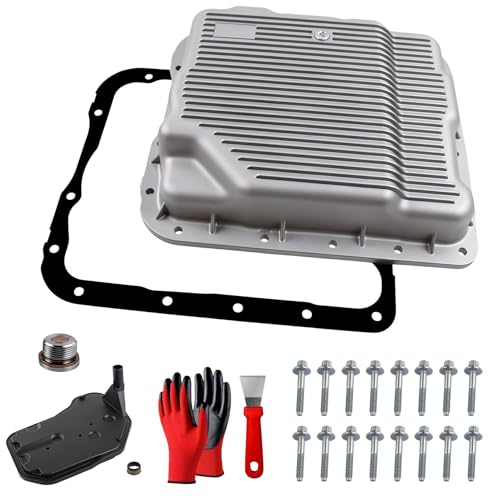
What a Pan-Drop Drain-and-Fill Actually Replaces
A 4L60E holds roughly 10 to 12 quarts of fluid total once you count the pan, the case, the valve body passages, the torque converter and the cooler lines running out to the radiator. Only about 4 to 5 quarts of that sit in the pan at any given moment. Drop the pan, pull the filter, scrape the magnet, bolt on a new gasket and filter, and refill, and you have only touched that bottom reservoir. The fluid parked in the converter and cooler circuit never moves. That is why a standard pan-drop service cycles out roughly 35 to 45 percent of the total charge, not all of it, no matter how clean the new fluid looks going back in.
This is also where the deep-pan and shallow-pan split matters if you are buying your own filter kit instead of a flat replacement. GM changed the 4L60E to a deeper pan partway through the 1997 model year to add fluid capacity for better heat dissipation, and the deep pan uses a longer filter neck to reach the lower pickup point. Put a shallow-pan filter in a deep-pan transmission and the pickup sits too high in the fluid, which starves the pump intake. Match the filter to the pan you actually have, not just the model year, since both styles existed within 1997 production.
What a Flush Machine Does Differently
An external flush or fluid-exchange machine connects to the transmission's cooler lines and uses the running engine's own pump, or a powered pump in the machine, to push new fluid through while displacing old fluid out the return line, cycling a much larger share of the total fluid charge in one visit than a pan drop can reach. That is the entire sales pitch, and on paper it sounds like the more thorough service.
The problem is what that forced, higher-volume flow does inside a transmission that has already accumulated wear debris, varnish, or degraded friction material, which describes most 4L60E units outside of fresh rebuilds. Normal operation moves fluid through specific passages in specific directions, sized and oriented for that flow. A flush machine does not necessarily replicate that same path or pressure, and material that had settled in the pan or was too large to pass through the normal filter screen can get mobilized and driven into checkballs, solenoid screens, or valve body orifices it was never going to reach under normal operation. Gears Magazine's own technical breakdown of solenoid flushing backs the debris side of that equation directly: it identifies valve body and valve bore wear as an ongoing source of circulating material inside the unit, and notes that even a direct flush of a solenoid only reaches the ball-and-seat area, since "the pin, spring, or the core inside of the coil" sit outside any flow path a flush can access — which means a flush is better at stirring wear debris loose than it is at actually removing it from the places that debris can cause trouble. That mechanism is consistent with what GM itself found when it examined parts that had gone through aftermarket flushes, covered next.
GM's Written Position on Flush Machines
GM Bulletin 04-06-01-029I ("Unscheduled Supplemental Services, Including Flushing Services and Additives"), issued to dealers in September 2017 and still in force as the current revision, addresses this directly. The relevant line reads: "The use of external transmission fluid exchange or flush machines is not recommended for the automatic or manual transmission. Use of external machines to replace the fluid may affect the operation or durability of the transmission. Transmission fluid should only be replaced by draining and refilling following procedures in Service Information." The same bulletin states plainly that "analyses of returned parts that have been exposed to these aftermarket ‘flushes’ show indications of potential damage and shortened durability," directly contradicting the shop-counter pitch that a flush is simply the more thorough version of the same service.
GM does authorize one flushing tool, but it is a narrower job than what most flush-machine advertising implies. The bulletin calls out the Automatic Transmission Oil Cooler Flow Check and Flush Tool, tool number J-45096, as the approved procedure, and it is specifically for the cooler and line circuit, not the internal fluid charge. It verifies the cooler is flowing correctly and clears debris from the external cooler loop. It does not exchange the fluid sitting in the case, valve body, or converter, which is the part of the job a drain-and-fill (done once or repeated) is responsible for.
GM's own description of that tool, in bulletin 02-07-30-052J, makes the scope clear. In flush mode the J-45096 cycles fluid through the cooler circuit and injects high-pressure shop air into the stream to agitate debris loose; in flow mode it reads cooler flow in gallons per minute against a minimum that depends on supply oil temperature, and it will not run with the supply fluid below 18°C (65°F). The same bulletin states the reason the test exists: insufficient oil flow through the cooler will cause premature transmission failure. On a 4L60E the bulletin lists the cooler feed (oil leaving the transmission) at the bottom case fitting and the return at the top, so that is where the hoses go when you check flow after a pan service or a repair.
Fluid Chemistry Doesn't Change the Calculation
Some of the confusion comes from the fluid itself getting an upgrade over the 4L60E's production run. GM's own DEXRON-VI Global Service-Fill Specification describes DEXRON-VI as fully back-serviceable into transmissions originally filled with DEXRON-III or DEXRON-II, which covers the entire 4L60E lineup regardless of build year. Fluid makers who license the GM spec confirm the same thing in their own published data: Valvoline's DEXRON-VI product sheet states the fluid "can be used in new and old GM automatic transmissions" and is "fully back-serviceable" wherever DEXRON-II or DEXRON-III is called for, and Castrol's Transmax DEXRON-VI data sheet lists the fluid as GM-approved for DEXRON-VI while also meeting DEXRON-IIE, III and III-H.
None of that touches the flush-versus-drain question. Upgrading the fluid chemistry is a separate decision from choosing how that fluid gets delivered into the transmission. A flush machine loaded with premium DEXRON-VI still pushes fluid through passages and at a flow path the case was not serviced through originally, and GM's bulletin does not carve out an exception for which brand or spec of ATF is in the machine.
When a Single Drain-and-Fill Isn't Enough
The honest tradeoff is that GM's approved method is also the slower one at getting old fluid out. If you want to cycle more of the total charge without reversing flow through a flush machine, do it with more drain-and-fills instead of a more aggressive one. A second pan drop a few hundred miles after the first replaces roughly 35 to 45 percent of whatever fluid is currently in the unit, which compounds to roughly 65 percent new fluid after two services and into the 80 percent range after a third, all through the same forward, low-pressure path the transmission sees in normal driving.
Use the filter and any magnetic drain plug as a diagnostic step between services, not just a part you swap on autopilot. A clean filter and a light dusting on the magnet is normal wear. Heavy metal flake, friction material, or a filter that looks packed is a sign the unit has a developing mechanical problem that no fluid service, flush or drain, is going to fix, and running more fluid through it before diagnosing that problem just delays the real repair.
| Service | What it actually does | GM's position |
|---|---|---|
| Pan-drop drain-and-fill | Replaces ~4-5 of ~10-12 qt total (35-45%); new filter and gasket | Approved — the specified Service Information procedure |
| Repeated drain-and-fill (2-3x, spaced out) | Compounds to ~65-80%+ new fluid over multiple services | Approved — same procedure, repeated |
| External flush/fluid-exchange machine | Forces fluid through cooler lines to exchange a larger share in one visit | Not recommended, per Bulletin 04-06-01-029I |
| J-45096 cooler flow check/flush | Checks and flushes the external cooler and lines only | Approved, but does not replace the internal fluid service |
The Practical Call
If the truck has a known, consistent fluid-service history and the fluid you drain looks and smells normal, a single pan-drop drain-and-fill with a new filter and gasket, on GM's severe-duty schedule if the vehicle sees towing or stop-and-go heat, is the correct and fully GM-sanctioned service. If you just bought the truck or inherited an unknown history, skip the flush-machine upsell and do two spaced drain-and-fills instead, inspecting the filter and magnet each time. If codes related to TCC apply pressure or line pressure are already present, or the fluid comes out dark and burnt rather than just old, that points to an internal problem a fluid service of any kind will not resolve, and it is time to look at the valve body or clutches directly rather than keep cycling fluid through a unit that is already failing.
4L60E Filter Kit with Pan Gasket (Shallow Pan), 1993-2008
CoreTransmissionParts carries the matching shallow-pan filter and gasket set for a correct drain-and-fill on earlier pans. Confirm your pan style before ordering, since shallow and deep pans use different filter lengths.
View the shallow-pan filter kit →Or browse the full 4L60E parts collection for your pan style
Shop 4L60E parts →
Frequently Asked Questions
Does GM approve transmission flush machines for the 4L60E?
No. GM's dealer bulletin on unscheduled supplemental services states plainly that the use of external transmission fluid exchange or flush machines is not recommended for the automatic or manual transmission, and that fluid should only be replaced by draining and refilling per the procedures in Service Information. The bulletin also notes that analysis of parts exposed to aftermarket flushes showed signs of potential damage and shortened durability.
What does a 4L60E pan drop actually replace?
A 4L60E holds roughly 10 to 12 quarts total, but only 4 to 5 quarts sit in the pan at any time. Dropping the pan, changing the filter and gasket, and refilling only replaces that bottom reservoir, leaving the fluid in the torque converter, cooler lines, and case passages untouched. That is why a single pan drop only cycles out roughly 35 to 45 percent of the total fluid charge.
Is there any flush GM does approve for a 4L60E?
Yes, but it is narrower than most people assume. GM's bulletin specifically calls out the Automatic Transmission Oil Cooler Flow Check and Flush Tool, listed under tool number J-45096, as the approved method. That tool checks flow through and flushes the external cooler and lines only. It does not exchange the internal fluid charge inside the case, valve body, or converter, which is a different job than what an aftermarket flush machine claims to do.
Does switching to Dexron VI make a flush safer?
No. GM's DEXRON-VI Global Service-Fill Specification and the fluid makers who license it (Valvoline and Castrol both publish data sheets confirming this) describe DEXRON-VI as fully back-serviceable into units that originally called for DEXRON-III or II. That is a chemistry upgrade for friction durability and oxidation resistance. It has nothing to do with whether forcing fluid backward through cooler lines and case passages is a safe way to service the transmission, and GM's position on flush machines does not change based on which DEXRON fluid is used.
How do I get more old fluid out of a neglected 4L60E without a flush machine?
Do two or three spaced-out pan drops instead of one. Each drain-and-fill replaces roughly 35 to 45 percent of whatever fluid is currently in the unit, so a second service a few hundred miles later gets you to roughly 65 percent new fluid, and a third gets you into the 80 percent range, all through the same low-pressure, forward-flow path the transmission was designed to be serviced through. Check the old filter and any magnetic drain plug for metal content between services before deciding the unit just needs fluid instead of parts.
Sources
- GM Bulletin 04-06-01-029I, "Unscheduled Supplemental Services (Including Flushing Services and Additives)," September 2017, hosted via NHTSA. Backs the direct quote that external transmission flush/fluid-exchange machines are not recommended, the note on damage found in parts exposed to aftermarket flushes, and the J-45096 approved cooler flow check/flush tool as the one sanctioned exception. static.nhtsa.gov (PDF)
- SAE Technical Paper 2006-01-3242, "General Motors DEXRON-VI Global Service-Fill Specification." Backs the DEXRON-VI back-serviceability claim into transmissions originally filled with DEXRON-III or II. saemobilus.sae.org
- Valvoline DEXRON-VI ATF Technical/Product Information Sheet. Backs the fluid-maker confirmation that DEXRON-VI is officially licensed with GM and fully back-serviceable into units calling for DEXRON-II or DEXRON-III. valvoline.com.au (PDF)
- Castrol Transmax DEXRON-VI Product Data Sheet. Backs the second fluid-maker confirmation of GM DEXRON-VI approval and backward compatibility with DEXRON-IIE, III and III-H. petroleumservicecompany.com (PDF)
- Gears Magazine (ATRA), "Solenoids: To Flush or Not to Flush," September 2020. Backs valve body and valve bore wear as an ongoing source of circulating debris inside the unit, and that a flush only reaches the ball-and-seat area of a shift solenoid, leaving the pin, spring, and coil core outside any flow path it can clean. gearsmagazine.com
- GM Bulletin 02-07-30-052J, "Automatic Transmission Oil Cooler Flow Test Essential Tool J-45096 TransFlow," May 2015, hosted via NHTSA. Backs the J-45096 flush mode (fluid cycled through the cooler circuit with injected high-pressure air) and flow mode (GPM reading tied to supply oil temperature), the 18°C (65°F) minimum supply temperature, the statement that insufficient cooler flow causes premature transmission failure, and the 4L60-E feed-bottom, return-top connector layout. static.nhtsa.gov (PDF)
Shop 4L60E pans, filters, gaskets and drain plugs, shipped fast from the USA.
Shop 4L60E parts →