Dropping a 4L60E pan is a ninety-minute job anybody with a drain pan and a 13 mm socket can do. It is also one of the few times a year the transmission opens up and tells you the truth about what is happening inside it. Most people throw the filter in, slap the pan back on, dump in whatever amount of fluid feels right, and learn nothing.
This is the version of the job that pays for itself: the intervals GM actually publishes, the capacity number that is not what most people quote, the 1998 pan-and-dipstick change that silently underfills units, how to read the debris you find, and how to set the level so the unit is not running a half quart down through every corner.
The short version: GM's own maintenance schedule calls for the ATF and filter to be changed at 50,000 miles under severe service and 100,000 miles under normal service. GM budgets 5.0 quarts (4.7 L) for a 4L60-E pan removal and filter replacement — not a full fill, because the converter, cooler and lines keep most of the charge. Almost every truck that matters to a 4L60E lives on the severe schedule, and if you tow with it, service it well ahead of 50,000.
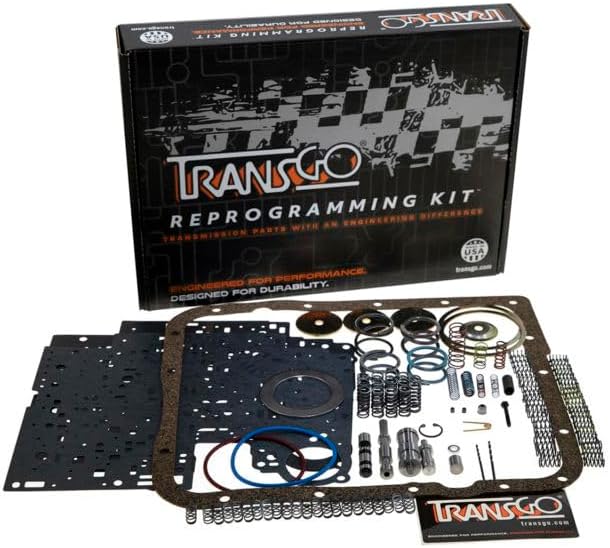
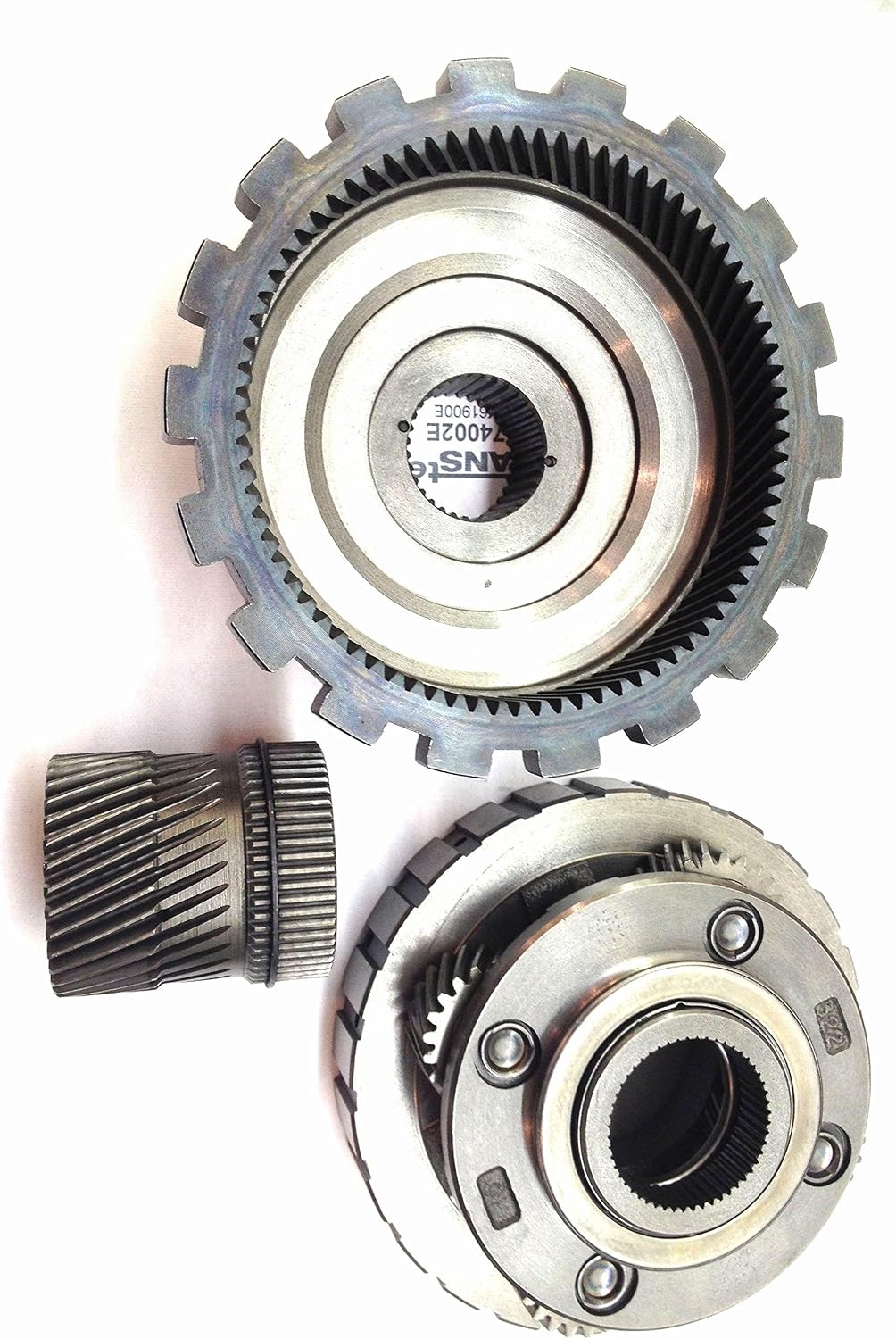
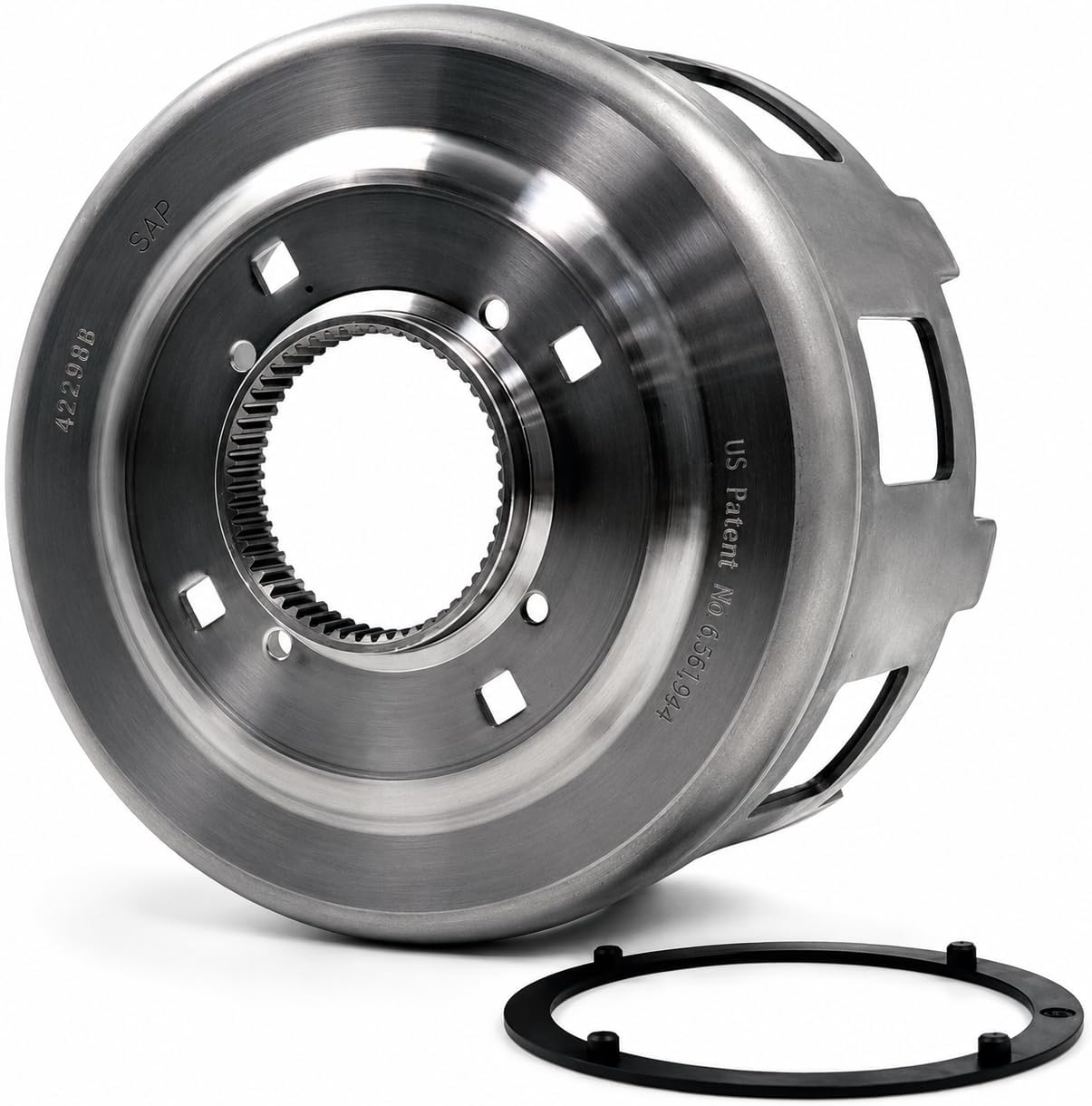
What GM Actually Publishes
Settle the interval argument by reading the factory manual instead of a forum. The 2007 Chevrolet Silverado owner manual lists "Change automatic transmission fluid and filter" twice in its Additional Required Services table, once for severe service and once for normal:
| Item | GM published interval |
|---|---|
| ATF and filter change, severe service | 50,000 / 100,000 / 150,000 miles |
| ATF and filter change, normal service | 100,000 miles |
| Specified fluid | DEXRON-VI ATF |
| Pan removal and filter replacement capacity, 4L60-E | 5.0 qt (4.7 L) |
| Hot check fluid temperature | 160°F to 200°F (71°C to 93°C) |
| Cold check fluid temperature | 80°F to 90°F (27°C to 32°C) |
The part everyone skips is footnote (h), which defines severe service. GM says change the fluid and filter on the severe schedule if the vehicle's GVWR is over 8,600 lbs, or if it is mainly driven in any of these conditions:
- Heavy city traffic where the outside temperature regularly reaches 90°F (32°C) or higher
- Hilly or mountainous terrain
- Frequent trailer towing
- Taxi, police or delivery service
Read that list honestly against the vehicle in front of you. A 3/4-ton with a hitch, a landscaping van, or anything living in Phoenix summer traffic is on the 50,000-mile schedule by GM's own definition. The 4L60E in particular has no thermal margin to spare — it is a light-duty unit that got put behind a lot of heavy work.
One more line from that manual: GM says it is usually not necessary to check the fluid level, because the only reasons for loss are a leak or overheating. That is a maintenance-schedule statement, not permission to ignore the unit. If you are finding it low, you have a second problem to chase, not just a quart to add.
The Pan Drop Only Gets Part of the Fluid
GM's capacity table lists 5.0 quarts (4.7 L) for "Transmission Fluid (Pan Removal and Filter Replacement)" on the 4L60-E. That is the number you plan the job around. It is not the unit's total charge — the converter, cooler, lines, valve body and case passages hold the rest, and none of that comes out when you pull the pan.
So a pan service is a partial fluid exchange. Doing it on a schedule still beats not doing it, but be clear about what it is. What a pan drop does that a flush machine cannot is put the filter, the magnet and the pan floor in front of your eyes.
Why the Filter Is Not Actually Protecting Much
Understand what that filter does before you decide how often to change it. Writing for Transmission Digest, Mike Steen of the Sonnax TASC Force ran the numbers: typical transmission filters block particles of 60 to 150 microns, depending on the unit. Finer than about 60 microns and the fluid stops flowing well, particularly cold. Meanwhile the clearance between a valve and its valve-body bore is roughly 0.0005 to 0.0015 inch — at most about 38.1 microns. A particle small enough to sail straight through the filter is large enough to hang a valve. For scale, the smallest thing the naked eye resolves clearly is about 40 microns.
That is the whole argument for changing fluid more often rather than trusting the filter: the filter is a debris net for the big stuff protecting the pump inlet, not a cleanliness system. Sonnax makes the same point from the hard-parts side in its 4L60E build guide — clean fluid is called out as essential to input sprag durability specifically to keep micron-sized debris from undermining sprag engagement, and the magnets are singled out because they collect the hardest contaminants, the ones most likely to affect the EPC solenoid. A 4L60E with a sticky EPC has a line pressure problem, and a 4L60E with a line pressure problem is on a countdown.
4L60E Transmission Filter Kit with Pan Gasket, Shallow Pan (1993-2008)
Filter and pan gasket in one kit for the standard shallow-pan 4L60E, so you are not chasing a gasket separately at the counter. Available at our sister store CoreTransmissionParts, alongside the full 4L60E parts collection if you need a deep-pan filter or a standalone molded-rubber gasket instead.
Shop the 4L60E filter and gasket kit →Shallow Pan, Deep Pan, and the Dipstick Trap
Order the wrong filter and you will find out immediately, because the neck either will not reach the pan floor or will not let the pan seat. The change point is worth knowing: Sonnax documents that in 1998 the 4L60-E series got a deeper oil pan on the C/K/G trucks and vans to raise fluid capacity, and that deeper pan came with a longer dipstick, a longer tube, and a different dipstick stop bracket. Units that kept the standard pan got a revised bracket of the same height as before but shorter than the deep-pan bracket. GM also added a small chamfer to the 1998-later valve body casting to clear the new brackets, which means those brackets physically will not install on a 1997-or-earlier valve body.
Here is why that matters on a routine pan service. Dipsticks are made deliberately long so they bottom on the stop bracket, which is what makes the reading accurate. Per Sonnax's testing, if the bracket is missing or wrong:
- Regular pan, no stop bracket: potential to underfill by up to 0.5 quart
- Deep dipstick without its bracket: potential to underfill by up to 0.75 quart
- New-design deep bracket on a regular dipstick setup: potential to overfill by 0.75 quart
- Deep dipstick and tube in a regular pan: reads in the normal band while the actual capacity is well below where it should be
The dipstick reads normal in every one of those cases. That is the trap. If you have a 4L60E that runs hot, slips on hard corners, or flares under load and the stick says full, get under it and confirm the pan style, dipstick length, tube length and stop bracket before you condemn anything internal. On an LS-swap car or a unit built from a core, assume nothing about that combination.
Reading What You Find in the Pan
Before the pan hits the parts washer, spend two minutes with it. What is stuck to the magnet is a diagnostic reading, not just mess.
- Fine gray paste on the magnet. Normal. Ordinary steel wear, accumulating exactly where the magnet is supposed to put it.
- Visible steel flakes or chunks. Hard-part damage. Something is coming apart — sprag, planet, sun shell — and you are past the point where a filter change helps.
- Black fiber sludge on the pan floor. Friction material. On a 4L60E that usually points at the 3-4 clutch pack or the 2-4 band, and means the unit has been slipping under load for a while.
- Yellow metal. Bushing material. Check pump and drum bushings before you spend money on this unit.
- Dark fluid that smells scorched. Heat damage. Transmission Digest puts the mechanism plainly: degraded fluid loses thermal stability and becomes prone to thermal shear, thinning as temperature climbs and costing you line pressure, while heat hardens and cracks seals into leaks.
Two rules for the magnets themselves. They go back in — Sonnax's build guidance is blunt that you never leave the magnets out, and that adding extra magnets is a good idea. And wipe them clean rather than just rinsing the pan, because the debris they are holding is what would otherwise be circulating past your EPC solenoid.
Doing the Job
- Confirm the pan style before you buy parts. Shallow and deep pans take different filters, and the deep-pan filter has a taller neck and a spacer to reach the sump floor.
- Loosen the rear bolts first and leave two front bolts loose to hold the pan while it drains. On a stamped-steel pan with no drain plug, break it loose at a corner and tip it.
- Pull the old filter straight down. The seal frequently stays behind in the case bore. Get a light on that bore and confirm it is out before the new filter goes in, or you will double up the seals, the filter will not seat, and the unit will suck air and lose pressure.
- Seat the new filter neck fully into the bore by hand. If a filter drops into the pan because the seal never entered the bore, the pump draws air and the unit is finished.
- Clean the pan and magnets. Scrape the case flange carefully — a gouged aluminum sealing surface is a permanent leak.
- Use the correct gasket for the pan. Molded rubber with a steel core is reusable and forgiving; cork-composition is single-use. Do not add RTV to a rubber gasket.
- Torque evenly in a crisscross pattern. GM service information lists the oil pan to case bolt at 11 N·m (97 lb in) — that is a low-torque fastener, roughly 8 ft-lb, and overtightening warps the flange and creates the leak you were trying to prevent. Aftermarket cast-aluminum pans are different: Mag-Hytec, for one, specifies 12 to 16 ft-lb on the allen cap screws it supplies with its 4L60E pan, so use the pan maker's number when you are not running the OE stamped pan.
- Refill with roughly 5 quarts of DEXRON-VI, then set the level by temperature, not by count.
Setting the Level the Way GM Says To
The 4L60E's fluid level rises with temperature, so a reading taken at the wrong temperature is meaningless. GM's procedure: park level with the engine running, apply the brake, move the shift lever through every range pausing about three seconds in each, return to Park, and let it idle at 500 to 800 rpm for at least a minute. Bring up TRANS TEMP on the driver information center. Cold check band is valid only from 80°F to 90°F and is a safety reference only; the accurate reading is the hot check at 160°F to 200°F, in the HOT crosshatch band.
Two details people get wrong: push the stick all the way in, wait three seconds, then pull it and read the lower of the two sides. And add small — GM notes it generally takes less than a pint to move the level within the band. Overfilling aerates the fluid, and aerated fluid is compressible fluid, which is unstable line pressure.
When a Pan Service Is the Wrong Call
Some 4L60Es should not get a fluid and filter service at all. If the pan is full of friction material and steel, the unit already has an internal failure and a clean filter buys you nothing — and the customer will believe the service caused what happens next.
The other case is a unit that just failed and got replaced. Whatever debris was in circulation is now sitting in the cooler and lines, and the pan filter never protected those. Lubegard's Pat Barrow, writing in Transmission Digest, notes that contaminated coolers and lines are a common cause of premature failure in replacement transmissions precisely because they get overlooked, and recommends an in-line filter on the low-pressure return line as added insurance once the cooler checks out reasonably clean. If your job follows a failure rather than a maintenance interval, read our 4L60E cooler and line flush guide before you fill it.
Bench Checklist
- Set the schedule honestly: 50,000 miles if the vehicle meets any of GM's severe-service conditions, 100,000 only if it genuinely does not.
- Confirm shallow versus deep pan before ordering the filter.
- Verify the old filter seal came out of the case bore.
- Inspect the magnets and pan floor before cleaning them. Fine gray paste is fine; flakes, fiber or yellow metal is a different conversation. Then put every magnet back in.
- Torque the pan evenly, crisscross, to the correct spec for the pan you are running.
- Plan 5.0 quarts of DEXRON-VI, and confirm the dipstick, tube and stop bracket match the pan before you trust any reading.
- Set the final level on a hot check, 160°F to 200°F, reading the lower side of the stick.
None of this is exotic. It is one afternoon's discipline standing between a 4L60E that goes another hundred thousand miles and one that comes back on a hook.
Shop 4L60E filters and pan gasket kits, deep pans, rebuild and shift kits, solenoids, and the tools to install them — shipped fast from the USA.
Shop 4L60E parts →Sources
- General Motors — 2007 Chevrolet Silverado Owner Manual (GM-hosted PDF). Backs: the Additional Required Services table showing ATF and filter change at 50,000/100,000/150,000 miles for severe service and 100,000 miles for normal service; maintenance footnote (h) defining severe service (GVWR over 8,600 lbs, heavy city traffic at 90°F or higher, hilly or mountainous terrain, frequent trailer towing, taxi/police/delivery use); DEXRON-VI as the specified automatic transmission fluid; the Capacities and Specifications entry of 5.0 qt (4.7 L) for 4L60-E pan removal and filter replacement; the statement that it is usually not necessary to check the fluid level because the only causes of loss are leaks or overheating; and the cold check (80–90°F) and hot check (160–200°F) procedures including the 500–800 rpm idle, three seconds per gear range, three-second dipstick dwell, reading the lower side, and adding less than one pint at a time. assets.gm.com — 2007 Chevrolet Silverado Owner Manual (PDF)
- Transmission Digest — Mike Steen (Certified Transmission, Sonnax TASC Force), "Micro Cleaning" (December 1, 2003). Backs: typical transmission filters block particles of 60 to 150 microns and finer filtration restricts cold flow; typical valve-to-bore clearance of 0.0015–0.0005 inch equating to at most 38.1 microns; the 40-micron naked-eye limit and 40–70 micron human hair reference. transmissiondigest.com — Micro Cleaning
- Sonnax — "Building the Killer 4L60E: Top Tips for Optimizing Your Transmission Upgrades" (March 2, 2016). Backs: clean fluid as essential to input sprag durability and the instruction to change fluid often to prevent micron-sized debris from undermining sprag engagement; never leaving the pan magnets out and the recommendation to add extra magnets because they collect the hardest contaminants most likely to affect the EPC solenoid; the recommendation that the pan have a drain plug; and that bore wear is common in the 4L60/E. sonnax.com/tech_resources/293
- Sonnax — Jason Larochelle, "How to Avoid a Dipstick Move in 4L60-E Series Transmissions" (February 19, 2021). Backs: the 1998 deep oil pan on C/K/G trucks and vans with its longer dipstick, tube and stop bracket; the revised standard-pan bracket; the 1998 valve body chamfer that prevents new-design brackets from fitting 1997-and-earlier valve bodies; and the tested outcomes including underfill up to 0.5 quart on a regular pan with no bracket, underfill up to 0.75 quart with a deep dipstick and no bracket, overfill of 0.75 quart with a mismatched deep bracket, and the deep dipstick and tube in a regular pan reading normal while capacity is low. sonnax.com/tech_resources/941
- Transmission Digest — Greg Jones, "What Happens If You Never Change the Transmission Fluid?" (May 28, 2026). Backs: aged fluid accumulating metal shavings, clutch material and debris; loss of thermal stability making fluid susceptible to thermal shear, thinning with temperature and losing pressure; and heat hardening and cracking seals into leaks and pressure loss. transmissiondigest.com — What Happens If You Never Change the Transmission Fluid?
- Transmission Digest — Pat Barrow (product-technical manager, Lubegard), "To Flush Or Not To Flush" (June 1, 2019). Backs: contaminated coolers and lines being a common cause of premature failure in replacement transmissions because they are overlooked; the dirt, sludge, clutch material and metal particles retained there; and the recommendation to install an in-line filter on the low-pressure return line from the cooler back to the transmission when contamination is minimal. transmissiondigest.com — To Flush Or Not To Flush
- Mag-Hytec — GM 4L60E/700R4 Transmission Pan Installation Recommendations (rev. 05/11/17, PDF). Backs: the 12–16 ft-lb torque specification for the 17 allen head cap screws supplied with the aftermarket cast-aluminum pan, and the drain plug with integral magnet. mag-hytec.com — GM 4L60E/700R4 Transmission Pan (PDF)