If you work on the 4L60E — the four-speed behind millions of GM trucks and rear-drive cars: Silverado and Sierra 1500, Tahoe, Yukon, Suburban, Astro, Express vans, plus the Camaro, Firebird, and the LS-swap crowd — there is one failure that lands on the bench more than any other: the 3-4 clutch pack. It's the friction pack that carries 3rd and 4th gear, and when it burns, the transmission tells on itself in a very specific way. The trap is that people see a slipping 3-4 clutch, replace the frictions, and hand the truck back — only to have the new pack cook itself in a few thousand miles because nobody found why the first one burned.
This is how the 3-4 failure actually works, how to read what the transmission is telling you, how to find the leaks that keep eating clutch packs, and what upgrade options genuinely stop the problem instead of postponing it.
The short version: A burnt 4L60E 3-4 clutch is almost never a random wear item — it is a symptom. Per Sonnax, the root cause of most 3-4 slipping is low line pressure and/or leaks of 3rd-gear oil, and the 3-4 apply circuit is long and interconnected, so small leaks add up until the pack can't hold and burns. Replacing the frictions without tracing the apply circuits and restoring line pressure is the single most common way to buy the same failure twice. On performance and heavy-tow builds, the weak OE input housing itself is the limiting factor, and a stronger housing with a taller clutch pack is the real fix.
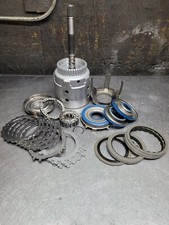
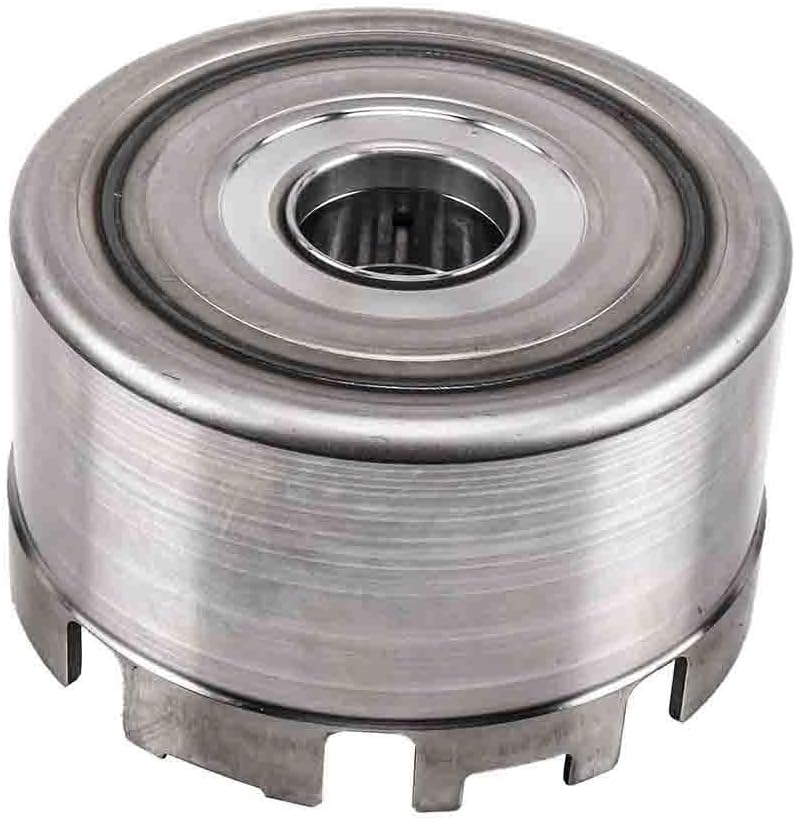
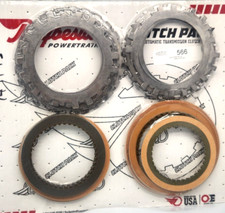
How the 4L60E Applies 3rd and 4th (and Why the 3-4 Pack Matters)
The 4L60E is a four-speed built on the 700-R4 architecture, and the 3-4 clutch lives inside the input housing (the input drum) up front. That single friction pack is applied for both 3rd gear and 4th gear (overdrive), which is why its failure signature covers the top half of the box. When the 3-4 can't hold, you don't lose one ratio — you lose the transmission's ability to carry load in the two gears it spends most of its highway life in.
The classic complaints when the 3-4 pack is going away:
- A flare or slip on the 2-3 shift — RPM jumps up as the shift is commanded, then the truck acts like it's in neutral before it catches.
- Slipping in overdrive under load, especially climbing a grade, with the tach surging up and down.
- A burnt smell and dark fluid with clutch debris once the pack starts cooking.
- Stored codes — commonly P1870 (transmission component slipping) and P0734 (gear 4 incorrect ratio).
Because the pack is applied in both 3rd and 4th, "slips on the 2-3, slips in overdrive, but 1st and 2nd feel fine" should point you straight at the 3-4 clutch and its apply circuit — not at a global pump problem and not at the torque converter by default.
The Codes, and What They Actually Point To
Two codes dominate a 3-4 complaint, and both are commonly misread as a converter or electrical fault when the real cause is a slipping clutch:
| Code | What it literally means | What it usually is |
|---|---|---|
| P1870 | Transmission component slipping | TCC slip under lockup — often a slipping 3-4 clutch or 2-4 band feeding it, not just the converter |
| P0734 | Gear 4 incorrect ratio | 3-4 clutch slipping in overdrive; input and output speed don't match commanded 4th |
Here is the part that saves money. P1870 is set with the vehicle in high gear and the converter clutch applied — which means the forward clutch, the 3-4 clutch, and the 2-4 band are all applied at the same time. If the 3-4 clutch or the band slips for any reason, the PCM sees the driveline slip and sets P1870 even though the converter clutch itself may be fine. The other classic P1870 cause is a worn TCC regulator valve bore in the valve body, where apply oil leaks past the valve and the converter clutch never gets full clamp. In other words, a P1870 is a slip code, not a "buy a converter" code — you have to prove which slipping element set it before you spend anything.
Why the 3-4 Clutch Really Burns: Chase the Leaks
This is the heart of the job, and it's where most repeat failures come from. According to Sonnax, low line pressure and/or leaks of 3rd-gear oil are the root cause of most 3-4 slipping, and the 3-4 hydraulic circuit is long and interconnected — it shares junctions with the D4, forward clutch, 2nd, 2nd clutch, and 3rd accumulator circuits. Even small leaks at a few of those junctions add up to a big enough pressure loss to let the pack slip and burn. A clutch can only slip so long before the heat destroys it.
Sonnax's guidance is blunt about method: any time you find a burnt clutch pack, all three apply circuits must be inspected methodically to find and eliminate every leak, and finding one obvious leak — even something as clear as a cracked apply piston — should not stop you from investigating the others. Fix one leak, miss two, and the new frictions burn just like the old ones. The common leak points worth checking on a 3-4 job:
- The input drum bushing and sealing rings feeding the 3-4 apply oil.
- A cracked or porous 3-4 apply piston, and a tired OE piston return spring that lets the apply plate float.
- Worn valve-body bores that bleed off line pressure and 3rd oil before it reaches the clutch.
- Low or unstable line pressure — and because AFL (actuator feed limit) pressure feeds the line-pressure circuit, a worn AFL circuit drags line pressure down too, so the 3-4 burns even when its own circuit is technically working.
The takeaway: on the 4L60E, "replace the 3-4 clutch" is only step one. The job is to restore line pressure and seal every circuit that feeds the pack, or the new frictions are on borrowed time.
Diagnose Before You Tear Down
The order matters because it decides whether you're doing a valve-body and pressure repair or pulling the unit for a full input-housing job:
- Pull codes and note the exact one. P1870 and P0734 both point at 3-4/overdrive slip. Don't act on the word "converter" in a P1870 description until you've ruled out the clutch.
- Check the fluid. The 4L60E runs Dexron (Dexron VI in later trucks). Dark, burnt fluid with friction debris confirms the 3-4 pack is cooking. Note it, but don't assume the pack is the root cause — it's the victim.
- Test line pressure under load. Low or unstable line pressure is the number-one enabler of 3-4 burnup. Verify it with a gauge before you condemn anything mechanical.
- Watch live data. Command overdrive and watch commanded vs. actual ratio and TCC slip. Slip that grows with load, with pressure marginal, indicts the 3-4 apply circuit.
- Inspect all three apply circuits. Input drum rings and bushing, apply piston and return spring, and the valve-body bores that feed 3rd oil and line pressure. Find every leak, not just the first one.
- Decide the fix. Stock daily driver with good pressure once the leaks are sealed? A quality frictions/steels reset and valve-body correction may be all it needs. Performance, heavy tow, or a repeat burnup? The OE input housing is the limiting factor — upgrade it.
Follow that order and the burnup stops being a mystery
A large share of "3-4 clutch" jobs are really pressure and leak jobs with a burnt pack as the symptom. Seal the circuits, restore line pressure — Sonnax recommends addressing the pressure regulator and boost valves plus the AFL circuit on units with pressure problems — and a stock-power truck will hold. The units that keep burning packs after the leaks are fixed are telling you the housing itself is out of capacity.
Upgrade Options That Actually Fix It
When the truck makes real power or tows heavy, the OE input housing is the root cause of the burnup, not the frictions. Sonnax's position is that the weak OE backing plate flexes during clutch apply, which lets heat build unevenly across a clutch pack that already lives in a tight space — and the result is another burnt 3-4 clutch no matter how carefully you rebuild it. The upgrade path, from mildest to most serious:
1. Heavy-duty backing plate and load-release springs
A thicker, stiffer backing plate resists the flex that concentrates heat, and adding load-release springs helps the light OE return spring keep the apply plate from floating and the clutches from dragging and glazing. This is the cheapest capacity gain on a stock housing and worth doing on any rebuild.
2. Sonnax Smart-Tech input housing (the real fix)
The Smart-Tech input housing is engineered to make room for a taller clutch pack anchored by a much stronger backing plate, with apply and backing plates that surround a larger clutch area to keep the clutches parallel and maximize protection against overheating. Depending on the kit, it runs either eight.067" frictions with seven.095" steels, or nine.062" frictions with eight.077" steels — a real jump in torque capacity over the stock pack. For high-power and heavy-duty builds, this is the part that ends the repeat 3-4 failure rather than delaying it.
3. Fix the pressure side while you're in there
Capacity means nothing without pressure to clamp it. On units with pump-pressure problems Sonnax recommends an oversized pressure regulator valve, the matching boost valve and O-rings, and an AFL valve kit so line pressure is high and stable enough to hold the bigger pack. Do the housing and the pressure work together or the new pack still slips.
Doing the job? Our line pressure testing walkthrough covers the gauge step that makes or breaks this diagnosis, and the full 4L60E service guide covers the rest of the unit.
Sources
- Sonnax — Rebuild Tips for 4L60/E 3-4 Clutch Burnup, on low line pressure and 3rd-gear oil leaks as the root cause of most 3-4 slipping, the long interconnected 3-4 circuit sharing D4/forward/2nd/3rd-accumulator junctions, inspecting all three apply circuits, and load-release springs. sonnax.com/tech_resources/659
- Sonnax — Eliminate 3-4 Clutch Failure with the Smart-Tech Input Housing, on the weak OE backing plate flexing during apply and building heat unevenly, and the stronger backing plate/larger clutch area that fixes it. sonnax.com/tech_resources/554
- Sonnax — 4L60-E Smart-Tech Input Housing Kits, for the taller clutch pack counts: eight.067" frictions with seven.095" steels, or nine.062" frictions with eight.077" steels. sonnax.com/smart_tech_input_housings
- Sonnax — Building the Killer 4L60E, on restoring pump pressure with an oversized PR valve, boost valve and O-rings, and AFL valve kit so the clutch pack has the line pressure to clamp. sonnax.com/tech_resources/293
- Sonnax — GM 4L60E Transmission (unit overview), reference for the 4L60E/700-R4 architecture and the input housing that carries the 3-4 clutch. sonnax.com/units/300-4l60e