P0748 lands on a lot of 4L60E work orders, and it gets misdiagnosed just as often. The definition is Pressure Control Solenoid A Electrical, and the key word is electrical. This is not a code that says the transmission is worn out. It says the PCM watched the current in the EPC solenoid circuit, compared what it commanded to what it actually saw, and the two did not agree. Nine times out of ten the fix is a solenoid, a connector, or a piece of wire - not a rebuild. The trick is proving which one before you pull anything.
For more GM automatic coverage, see our Chevrolet transmission hub and GMC transmission hub.
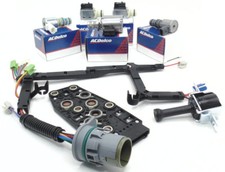
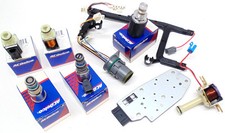
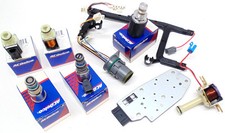
What the Pressure Control Solenoid Actually Does
The EPC solenoid - GM also calls it the pressure control solenoid, or PCS - is a variable-force solenoid that sets line pressure for the entire transmission. It is not an on/off shift solenoid. The PCM feeds it a variable current, and that current controls how much oil the solenoid bleeds off the spring side of the pressure regulator valve. Per ATRA's Gears Magazine writeup on GM pressure control, the pressure control solenoid is fed by an actuator feed limit valve and "uses that oil to act upon the spring side of the pressure regulator valve to raise line pressure as required."
The relationship between current and pressure is inverse, and this trips up a lot of techs. More commanded current means lower line pressure. Less current means higher line pressure. At idle the PCM sees roughly 10% engine load and commands about 0.9 to 1.1 amps, which holds line pressure low for a smooth, light-throttle drive. Roll into wide-open throttle and engine load climbs to 90-100%, so the PCM drops the command toward 0.2 to 0 amps and line pressure rises to clamp the clutches for the load. As ATRA puts it, "as engine load comes up, solenoid amperage drops and line pressure should rise."
That inverse logic is also why P0748 defaults to a harsh transmission. When the circuit faults, the PCM cannot trust its own current feedback, so it commands the solenoid off - zero current - which drives line pressure to maximum. You get failsafe pressure, banging shifts, and a transmission that runs hot. It is protecting the clutches from slipping, at the cost of shift quality.
Symptoms of P0748
- Harsh, slamming shifts. The most common complaint. Failsafe maximum pressure applies every clutch and band with full force, so the 1-2 and 2-3 shifts land like the truck got rear-ended.
- Check engine light with P0748 stored. On 1996-and-later vehicles this is an emissions-monitored code and will command the MIL on.
- Elevated fluid temperature. Running maximum line pressure all the time makes the pump work harder and heats the fluid.
- Intermittent behavior. If the fault is a chafed wire or a cracked connector terminal rather than a dead coil, the shifts may be normal one minute and hard the next, with the code setting and clearing as the connection makes and breaks.
- Soft shifts or slip in the opposite case. A related but different problem - a worn boost valve or pressure regulator bleeding off pressure - produces low line pressure and flared, slipping shifts. That combination can set pressure-performance codes and, in some circuits, contribute to an electrical fault reading. More on that below.
Diagnosis: Prove It Electrically Before You Open Anything
P0748 is an electrical code, so the diagnosis is an electrical one. Do it in this order and you will not throw parts at it.
0. If several solenoid codes set at start-up, check voltage first
When P0748 shows up alongside other solenoid codes right after the engine starts, the problem is often supply voltage, not the solenoid. Sonnax's tech note on 4L60-E solenoid codes set on start-up says to watch battery voltage while cranking: if it drops below 10.5 volts, charge or replace the battery and clean corroded cables before you go any further. If the battery checks out, Sonnax suggests running a fused jumper from battery positive to the "Trans" fuse so the solenoids keep power during cranking. If the codes stop setting with the jumper in place, the ignition switch is the cause.
1. Read live data and command the solenoid
With a capable scan tool, pull up the EPC/PC solenoid commanded current (amps) PID and the line pressure / TFP and transmission fluid temperature PIDs. At warm idle in Drive you want to see the command sit around 0.9-1.1 amps. Snap the throttle and watch the command fall toward 0.2-0 amps as load rises. If the amperage PID is pinned, flatlined, or does not track load, you have a control-side or circuit problem.
2. Do not trust the amperage PID by itself
This is the single most important warning on 4L60E pressure diagnosis. ATRA documents a case where a low-amp clamp on the EPC wire read erratically - "erratic imitating the pressure on the gauge" - while the scan tool amperage PID "appeared to be steady." The mismatch pointed to a failed EPC driver inside the computer, most common on 1993-1997 units, not a bad solenoid. The lesson: put a real gauge and an inductive amp clamp on the circuit and compare them to the PID. If the clamp and gauge disagree with what the scanner reports, suspect the PCM driver, not the solenoid.
3. Measure line pressure with a mechanical gauge
Hook a 0-300 psi gauge to the line pressure tap and read it hot. A healthy 4L60E sits around 60-70 psi in Park/Neutral/Overdrive at idle and rises with load, and it should climb to roughly 180-190 psi under a wide-open-throttle load. If the code is set and pressure is pinned high across the board, that is the failsafe default confirming the electrical fault. If pressure is low and wandering under load, you are chasing a hydraulic problem, not just a solenoid.
4. Ohm the solenoid and split the circuit
Kill the key, drop the pan, and measure resistance across the two EPC solenoid terminals with a DVOM. A healthy coil reads in the neighborhood of 3 to 6 ohms cold. An open coil reads OL/infinite; a shorted coil reads well below spec. Then measure the same circuit at the external case connector. If the solenoid is in spec at the solenoid but out of spec at the case connector, the internal wiring harness or the 20-pin case pass-through connector is your fault. That connector is a known 4L60E trouble spot - fluid intrusion and spread or cracked terminals give a high-resistance connection that reads exactly like a failing solenoid from the outside.
5. Inspect the internal harness and case connector
With the pan down, check the internal harness for chafing against the pan rail and the valve body, look for oil-soaked or discolored insulation, and pull the case connector to inspect for pushed-back or corroded terminals. Wiggle-test the connector with the meter attached. A reading that jumps as you move the connector is your smoking gun.
Working a 4L60E this week?
EPC solenoids, internal wiring harnesses, case connectors, valve body components, filters and DEXRON VI — the parts to fix P0748 right, shipped from the USA.
Shop 4L60E parts →The Hydraulic Trap: When "Low Pressure" Is a Worn Boost Valve
Not every 4L60E pressure complaint is the solenoid. The EPC solenoid duty-cycles constantly, and that motion wears the bore it works in. Sonnax documents that the duty cycle of the EPC solenoid causes the boost valve sleeve to wear quickly: oil entering the torque signal orifice leaks past the boost valve and exhausts at the Reverse orifice, which produces poor line rise. Their diagnosis note is worth memorizing - a worn OE pressure regulator valve shows up on a dyno as low line pressure during boost, "50-100 psi less than specified in Reverse," and on the road as clutch slippage, reverse chatter, and 3-4 clutch failure.
Here is why it matters for a P0748 job: if you replace the EPC solenoid because the shifts are wrong and never check the boost valve and pressure regulator, you can end up with a transmission that still slips or shifts poorly and a customer who thinks you guessed. When the electrical side checks out clean but pressure is still low and wandering under load, the fix is on the hydraulic side. Sonnax offers an oversized pressure regulator valve (77917-07, per its Sonnax tech page) and boost valve kits (the 77898E family) to restore hydraulic integrity in worn pump bodies. Reaming and fitting those is bench work, not a solenoid swap.
The Fix and the Parts
Once diagnosis points to the solenoid or its wiring, the repair is straightforward but worth doing completely:
- Replace the EPC solenoid if the coil is out of spec or fails a commanded-current test. On the 4L60E it is a 1.5-inch variable-force solenoid with a two-prong side connector.
- Replace the internal wiring harness if terminals are damaged, insulation is chafed, or resistance is out of spec between the solenoid and the case connector. Do not reuse a harness with pushed-back terminals - the code comes right back.
- Refresh the case connector if the pass-through shows fluid intrusion or spread terminals.
- Address the boost valve/pressure regulator only if the hydraulic testing above showed low line rise. Confirm the RPO and valve body style first, using a resource such as Sonnax's 4L60-E valve body identification guide, so you order the right boost valve ratio for the pump.
On a high-mileage unit, doing the EPC solenoid, the shift solenoids, the internal harness, and the filter together while the pan is off is cheap insurance against a comeback for the next failing solenoid. A master rebuild or solenoid service kit covers most of that in one box.
Fluid and Torque Specs
Refill with DEXRON VI. GM moved the 4L60E family to DEXRON VI, and it is backward compatible with the older DEXRON III fill, so use DEXRON VI on any 4L60E on the bench today. A pan drop and filter takes roughly 5 to 6 quarts; a full dry fill after a rebuild or converter swap runs about 11 to 12 quarts. Fill in stages and verify level hot, in gear, on a level surface.
Torque the valve body bolts to 89-106 in-lbs (about 8-9 ft-lbs) - overtightening distorts the separator plate and causes the exact cross-leaks you just fixed. Snug the pan bolts evenly in a crisscross pattern and do not overtorque the stamped pan. After any pressure-related repair, clear codes and let the transmission relearn so the adaptive pressure logic recalibrates.
FAQ
What does P0748 mean on a 4L60E?
P0748 is Pressure Control Solenoid A Electrical. The PCM commands a specific current to the EPC solenoid and monitors the actual current in the circuit. When the feedback falls outside the expected range - an open, a short, or drifted resistance - it sets P0748 and defaults the transmission to a fixed high-pressure failsafe.
Can I still drive a 4L60E with a P0748 code?
Short distances only. In failsafe the EPC defaults to maximum line pressure, so shifts slam and the transmission runs hotter than normal. Sustained high pressure and heat wear the frictions and load the pump, so diagnose and repair it rather than driving on it.
What is the resistance spec for the 4L60E EPC solenoid?
Measured cold across the two solenoid terminals, a healthy EPC solenoid reads roughly 3 to 6 ohms. Open reads OL/infinite; a shorted coil reads well below spec. Always check it again at the case connector to catch a bad internal harness that mimics a bad solenoid.
Will a bad EPC solenoid cause harsh or soft shifts?
Both, depending on the failure mode. An open or intermittent circuit forces failsafe maximum pressure and harsh, banging shifts. A worn boost valve or pressure regulator that bleeds off pressure gives low line pressure and soft, flared, or slipping shifts even when the solenoid itself tests fine.
Shop 4L60E parts →
Sources
- Gears Magazine (ATRA) — "Controlling Pressure: General Motors." Backs the EPC-to-pressure-regulator hydraulic path, the inverse current relationship, commanded amperage of 0.9-1.1 amps at idle and 0.2-0 amps at wide-open throttle, and the caution that an erratic amp-clamp reading against a steady scan-tool PID points to a failed ECM EPC driver rather than a bad solenoid (common on 1993-1997 units). gearsmagazine.com
- Sonnax — Boost Valve Kit 77898E-4K product/tech page. Backs that the EPC solenoid duty cycle wears the boost valve sleeve, that oil from the torque signal orifice leaks past the boost valve and exhausts at the Reverse orifice, and that the result is poor line rise leading to 3-4 clutch and 2-4 band failure or poor shift quality. sonnax.com
- Sonnax — Oversized Pressure Regulator Valve 77917-07 product/tech page. Backs the two ways a worn OE pressure regulator valve is detected: a dyno test showing low line pressure during boost (look for 50-100 psi less than specified in Reverse) and vehicle symptoms of clutch slippage, reverse chatter, and 3-4 clutch failure. sonnax.com
- Sonnax — "GM 4L60-E Valve Body Identification Guide." Backs identifying the correct 4L60-E valve body and pump style so the right boost valve ratio and pressure-regulator components are ordered for the unit on the bench. sonnax.com
- Sonnax — "GM 4L60-E Solenoid Codes Set on Start-Up." Backs the low-voltage cause of solenoid codes at start-up (cranking voltage below 10.5 volts), the battery and cable fixes, and the fused jumper to the "Trans" fuse that isolates a faulty ignition switch. sonnax.com
Shop 4L60E EPC solenoids, internal harnesses, valve body components, filters, and DEXRON VI — shipped fast from the USA.
Shop 4L60E parts →