Half the 4L65E questions that land on the bench are really identification questions. Somebody bought a core off a marketplace listing that said 4L65E, or pulled a unit out of an '04 Silverado and wants to know whether the rebuild kit in the box is the right one. The problem is that GM did not give the 4L65E a different case, a different pan, a different bolt pattern or a different gear ratio. Everything that makes it a 4L65E is inside.
So this is the order I work in: read the RPO label, then confirm with the parts you can physically count, then pin down the year group off the valve body and the pump. Below is what each step actually proves and what it does not.
Step One: The RPO Code on the Service Parts Label
GM assigns every factory option a Regular Production Option code, and the transmission gets one. On the service parts identification label, usually stuck in the glovebox on these trucks, M30 is the 4L60E, M32 is the 4L65E and M70 is the 4L70E. GM's own 2007 OBD grouping summary spells M30 out as the 4L60E in the transmission column, and shows M32 and M70 hanging off the 6.0L LQ4 and LQ9 in the C/K pickup and crew cab lines, with M70 also under the LS2 in the TrailBlazer SS and SSR. That pairing is the pattern worth remembering: the 65 and 70 codes follow the big-torque 6.0L applications, while the 4.8L and 5.3L trucks got M30.
The limitation is obvious once you say it out loud. The label describes the truck as it was built. It does not know that somebody dropped a junkyard unit in it in 2014. Treat the RPO as a strong starting hypothesis, not a verdict.
Step Two: Know What GM Actually Changed
Before you start counting parts, it helps to know the short list. GM still sells this family over the counter as Chevrolet Performance SuperMatic crate transmissions, and its own description is the cleanest OEM statement of the difference there is. Per Chevrolet Performance, the 4L70-E that grew out of the 4L65E is based on the 4L60-E/4L65-E with increased horsepower and torque capacity, and features five-pinion gearsets, heat-treated stator shaft splines, an induction-hardened turbine shaft, a seven-plate clutch and specific valve-body calibration.
The ratios do not move anywhere in the family. Chevrolet Performance lists the SuperMatic 4L65-E, 4L70-E, 4L75-E and 4L85-E all at 3.06, 1.62, 1.00 and 0.70. What changes is the rating behind them: a 430 lb-ft torque limit on the 4L65-E and 495 lb-ft on the 4L70-E, against 650 lb-ft for the 4L75-E.
Read that list again, because it tells you what will not work as an identification method. Same ratios. Same case family. Same converter. Same valve body casting group. The 4L65E is a durability package, not a different transmission.
Those numbers are worth keeping in your head as a sanity check. 495 lb-ft is what GM will put its name on for a purpose-built 4L70-E crate unit with every durability piece in it. When a seller tells you the tired 4L65E under a work truck will hold 600, that is the figure to weigh it against.
Step Three: Count the Pinions
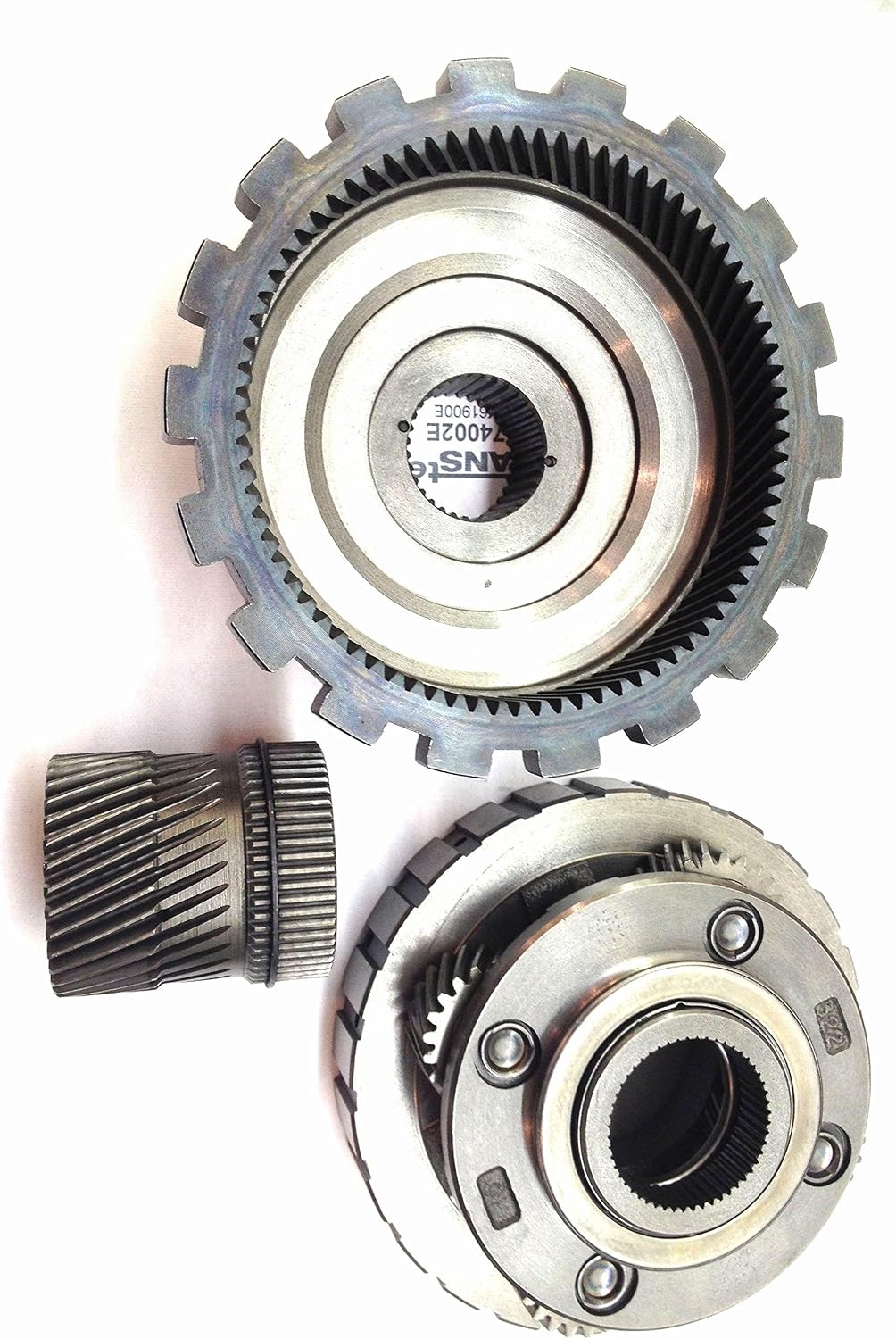
With the unit apart, the front and reaction carriers are the first honest evidence. Four-pinion and five-pinion carriers both exist inside this family, and Sonnax is blunt about what happens if you mix them: the carrier, the reaction shaft and the bearing between them are a matched set, and combining designs gives you incorrect endplay and an output shaft snap ring that will not seat. If the snap ring is fighting you, stop and check the stack-up rather than forcing it.
Numbers to work to while you are in there:
- Installed input shaft endplay: 0.005 in. to 0.035 in.
- Bench stack check before the case goes on: roughly 0.020 in. to 0.030 in. Put the components on the output shaft with a snap ring retaining them and read it with a dial indicator or feeler gauge.
- March 2007 running change: GM thickened the reaction carrier bearing and modified the reaction carrier and reaction shaft together. The front planet to reaction shaft thrust bearing for '07-later units is Sonnax 74238-01. Mixing a pre-'07 carrier with a post-'07 bearing is one of the classic ways to end up chasing endplay that will not come in.
A five-pinion front carrier supports the 4L65E hypothesis. It does not prove the unit left the factory as one, because five-pinion planets are also the standard update kit when anybody builds a 4L60E properly.
Step Four: Count the 3-4 Frictions
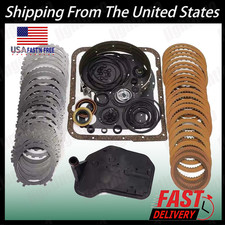
GM's seven-plate clutch reference is the 3-4 pack in the input housing. A garden-variety 4L60E runs five frictions in that space. Pull the input housing apart and count.
Same caveat, louder: the 3-4 pack is the single most replaced item in this transmission. It burns, it gets rebuilt, and the person who rebuilt it may have used whatever kit was on the shelf. A seven-plate pack in a unit with an M30 label tells you somebody upgraded it, not that GM did.
Step Five: Pin the Year Off the Valve Body
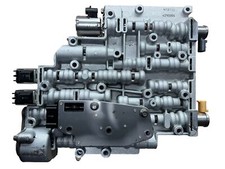
This is where identification gets genuinely reliable, because the valve body changed on a schedule and the changes are visible. Sonnax groups the 4L60E family valve bodies by year, and these are the markers that matter on a 4L65E-era unit:
- '96–'00 (GM048): five solenoids, early EPC, white plastic on/off 3-2 control solenoid at 20–31 ohms, gray plastic PWM TCC solenoid, vented manual valve, 3-2 port cast shut.
- '00–'02 annular lockup (GM049): same solenoid line-up, but with the TCC annular exhaust port at the top and bottom of the casting.
- '03–'08 (GM051): five solenoids, late EPC, white plastic on/off 3-2, gray plastic PWM TCC at 10–15 ohms, vented manual valve, annular TCC exhaust ports top and bottom.
- Colorado and Hummer H3 (GM052): same solenoid specs as GM051, identified by a distinctive angled casting by the EPC and accumulator valve.
The earlier bodies are a different world. The '93–'94 GM046 has four solenoids and no TCC solenoid at all, and the '95 GM047 uses a metal white PWM TCC solenoid at 10–15 ohms. If you are looking at a four-solenoid body, you are not holding a 4L65E-era unit.
An ohmmeter across the solenoids is the cheapest identification tool in the box. Twenty to thirty-one ohms on the 3-2 means a plastic on/off solenoid and a '96-or-later body. Ten to fifteen on the TCC means PWM.
Step Six: The 2003 EPC Solenoid Change
"Late EPC" in the Sonnax table has a concrete meaning, and ATRA documented it the year it happened. For 2003 model year units GM moved the pressure control solenoid to Borg Warner, in two versions: the first design has one flat on the aluminum solenoid body, part number 24219308, and the second design has two flats, part number 24224905. The first design went in at start of production for 2003; the second came in as a running change in December 2002. The internal harness was changed to 24222891 specifically to stop anyone plugging the Borg Warner solenoid into a previous Delphi setup.
That keying is a gift. If the harness will not mate, you have mixed eras, and you now know which side to change. Look at the flats on the solenoid body before you order anything.
Step Seven: Pump, Stator and Turbine Shaft — Is It Actually a 4L70E?
The most common misidentification in this family is not 4L60E versus 4L65E. It is a 4L70E core sitting on the bench wearing nobody's label. The tell is the input speed sensor and everything GM changed to feed it.
Sonnax breaks pump and shaft identification into three checks worth doing every time a pump comes apart:
- Identify the shaft. Note where the sealing rings sit, because there are several variations, and look for reluctor teeth. Later 4L60E, 4L65E and 4L70E units run the 300mm converter shaft; the older 298mm units are a different animal.
- Early or late pump. Lay a straightedge through the center of the pump bolt holes. On earlier pumps the converter feed hole sits just to the right of that line; on later ones it sits just to the left.
- Early or late stator. Look at the converter feed and lube holes. Early stators have them directly in line with each other. Later ones put the converter feed hole to the right of the lube hole.
Then the ISS question. Some pump covers have the sensor hole drilled and some only have the boss cast in, waiting for a hole that never got drilled. Sonnax flags a real-world anomaly: a cover with no ISS hole paired with a reluctor-style stator and no reluctor on the input shaft, which forces an ISS stator to make the assembly work. If your core has a drilled hole and a sensor in it, the vehicle's control module is expecting an input speed signal, and that is a 4L70E conversation, not a 4L65E one.
On the electronic side, '95-and-later units in this family run PWM/EC3 lockup control, with a further EC3 change from '98. If you are matching a valve body or a TCC component to a case, that split matters as much as the year group.
What Identification Cannot Tell You
After twenty years of cores moving around, the tag, the RPO and the contents disagree constantly. I have taken apart plenty of M30-labeled units with five-pinion planets and a seven-plate 3-4 pack, and plenty of M32 trucks running a replacement 4L60E somebody threw in cheap.
So order parts off what you counted, not off what the label says. The case, bellhousing and pan tell you the family. The pinion count, the friction count, the solenoid ohms, the flats on the EPC solenoid and the pump cover tell you the unit. When those two disagree, the parts you are holding win.
Five-pinion front planet, the part behind Step Three
If your teardown turned up a four-pinion front carrier and you want the 4L65E-spec gear train, this is the update kit GM used: five-pinion front planet, OEM 24243874, 1982-up. Remember the carrier, reaction shaft and bearing have to go in as a matched set.
See the 5-pinion front planet kit →FAQ
What RPO code is a 4L65E?
M32. GM's own 2007 OBD grouping document lists M30 against the 4L60E and shows M32 and M70 riding behind the 6.0L LQ4 and LQ9 truck engines, with M70 also under the LS2 TrailBlazer SS and SSR. The code lives on the service parts identification label, usually in the glovebox. Remember it tells you what left the plant, not what is bolted in the truck today.
How do I tell a 4L65E from a 4L60E without tearing it down?
You mostly cannot, and that is the honest answer. The case, bellhousing, pan, bolt pattern and gear ratios are shared. GM lists the 4L65E at 3.06, 1.62, 1.00 and 0.70, the same spread the 4L60E family runs. The differences GM names are internal: five-pinion gearsets, heat-treated stator shaft splines, an induction-hardened turbine shaft and a seven-plate clutch. Outside the unit, the RPO label and the donor vehicle are your only real clues.
How many clutches does a 4L65E 3-4 pack have?
GM describes the 4L65E as having a seven-plate clutch, against the five-plate pack in the ordinary 4L60E. Count the frictions in the input housing with the unit apart. Be careful drawing conclusions from a used core, because 3-4 packs get changed at every rebuild and plenty of 4L60E units have been stuffed with the taller pack.
Is the 4L65E valve body different from a 4L60E valve body?
The castings are shared across the family and Sonnax catalogs them by year group, not by 4L60E versus 4L65E. What changes is calibration and the solenoid line-up. The '03 through '08 group runs five solenoids with the late EPC, a white plastic on/off 3-2 solenoid measuring 20 to 31 ohms and a gray plastic PWM TCC solenoid measuring 10 to 15 ohms. Match the group, not the badge.
Could the unit on my bench actually be a 4L70E?
Check the pump cover for a drilled input speed sensor hole and check the turbine shaft for reluctor teeth. Sonnax warns that some covers have the sensor boss cast in but never drilled, and that you can run into a cover with no ISS hole paired with a reluctor-style stator, which forces you to use an ISS stator. If the sensor is there and wired, the vehicle controller is expecting an input speed signal.
Sources
- Chevrolet Performance (General Motors) — Performance Parts: Transmissions. Backs the gear ratios and torque ratings used in Step Two: the SuperMatic 4L65-E, 4L70-E, 4L75-E and 4L85-E are all listed with gear ratios of 3.06 (1st), 1.62 (2nd), 1.00 (3rd) and 0.70 (4th); and the published torque limits of 430 lb-ft for the SuperMatic 4L65-E, 495 lb-ft for the SuperMatic 4L70-E and 650 lb-ft for the SuperMatic 4L75-E. chevrolet.com
- Chevrolet Performance (General Motors) — SuperMatic 4L70-E transmission product page, part no. 19368612 (4WD) / 19368614 (2WD, LT1). Backs GM's own description of the unit as based on the 4L60-E/4L65-E with increased horsepower and torque capacity, and the feature list quoted in Step Two: five-pinion gearsets, heat-treated stator shaft splines, induction-hardened turbine shaft, seven-plate clutch and specific valve-body calibration. gmspecialtyvehicles.com (Chevrolet Performance)
- General Motors Service Information — 2007 OBD Grouping Summary / CARB-approved OBD groupings (V10, 29 Nov 2005). Backs the RPO mapping used in Step One: M30 listed explicitly as the 4L60E, and M32 and M70 appearing against the 6.0L LQ4 and LQ9 C/K pickup and crew cab applications, with M70 also under the 6.0L LS2 in the TrailBlazer SS and SSR. gsi.ext.gm.com
- Sonnax — GM 4L60-E Valve Body Identification Guide. Backs the year-group table: GM046 ('93–'94, four solenoids, no TCC solenoid), GM047 ('95, metal white PWM TCC at 10–15 ohms), GM048 ('96–'00, plastic white on/off 3-2 at 20–31 ohms, vented manual valve, 3-2 port cast shut), GM049 ('00–'02 annular lockup), GM051 ('03–'08, late EPC, annular TCC exhaust ports top and bottom) and GM052 (Colorado and Hummer H3, angled casting by the EPC and accumulator valve). sonnax.com
- Sonnax TASC Force — "4L60-E Series Input Shaft, Stator & Pump Cover Compatibility: Three Easy Checks," by Caleb Perham. Backs the three pump checks in Step Seven: shaft sealing-ring variation and reluctor identification, the converter feed hole sitting right or left of a line drawn through the pump bolt holes on early versus late pumps, the stator converter feed and lube hole alignment, and the documented anomaly of an undrilled ISS cover paired with a reluctor-style stator requiring an ISS stator. sonnax.com
- Sonnax — "Too Close For Comfort: Pinpointing 4L60-E Gear Train Assembly Problems." Backs the four- versus five-pinion carrier warning, the requirement that reaction carrier, reaction shaft and bearing be used as a matched set after the March 2007 change, the resulting endplay and output shaft snap ring symptoms, the 0.005 in. to 0.035 in. installed input shaft endplay spec, the 0.020 in. to 0.030 in. bench target, and thrust bearing 74238-01 for '07-later units. sonnax.com
- ATRA (Automatic Transmission Rebuilders Association) — 2003 General Motors seminar manual, "4L60E/4L65E Updated PCS," p. 52. Backs the 2003 pressure control solenoid change in Step Six: the move to Borg Warner, first design with one flat on the aluminum body (P/N 24219308) at start of production 2003, second design with two flats (P/N 24224905) introduced December 2002 as a running change, and updated harness P/N 24222891 keyed to prevent interchange with the previous Delphi solenoid. atracom.blob.core.windows.net