The 4L65E is the heavy-duty branch of the 4L60E family — RPO M32, five-pinion planets, a stronger input shaft, and a life spent behind 6.0L and 8.1L engines in 2500-series trucks, Escalades, H2s and the Trailblazer SS. It shares the 4L60E valve body and solenoid lineup, which means it shares P0748: Pressure Control Solenoid A Electrical.
What it does not share is the margin for error. Line pressure is the only thing clamping the 3-4 pack against the torque these trucks make. When the EPC circuit faults and the transmission drops to failsafe pressure, a 4L60E behind a 4.8L gets rude shifts; a 4L65E behind an 8.1L gets rude shifts and a heat problem. This is an electrical code, and it is worth proving electrically before anything comes apart.
The circuit is identical to its lighter sibling, so the companion piece on 4L60E P0748 covers the same code from the 4L60E side, including the commanded-amperage curve.
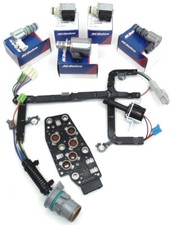
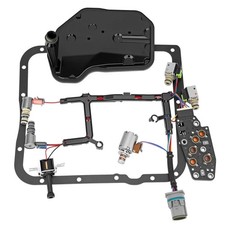
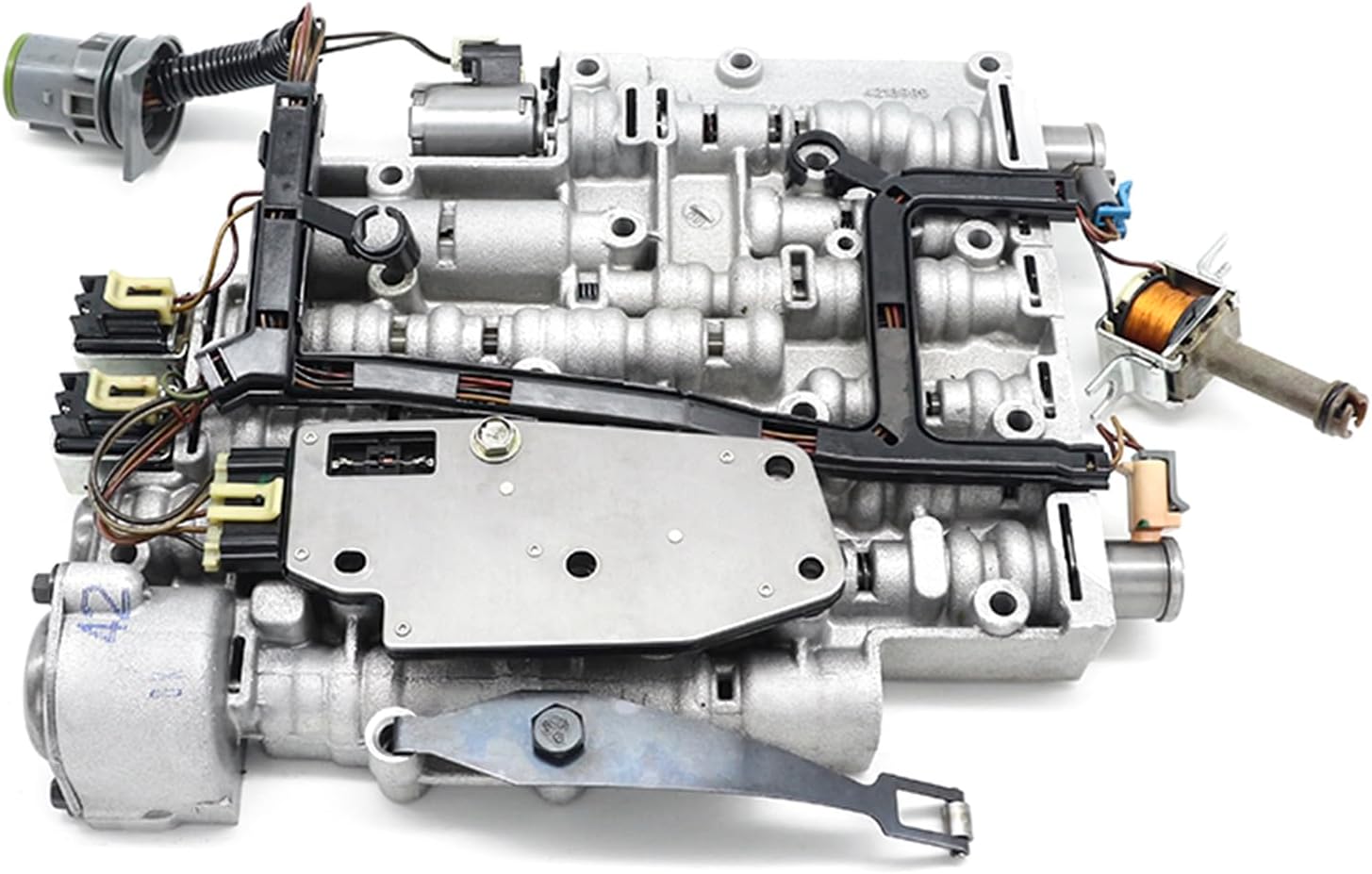
What the EPC Solenoid Actually Controls
The electronic pressure control solenoid — GM also calls it the pressure control solenoid or PCS — is a variable-force solenoid, not an on/off shift solenoid. The PCM feeds it a variable current, and that current sets how much oil the solenoid bleeds off the spring side of the pressure regulator valve. That, in turn, sets line pressure for the whole unit.
The relationship is inverse, and it catches people out. More commanded current means lower line pressure; less current means higher line pressure. At light throttle the PCM commands high current and holds pressure down for a soft, quiet drive. As engine load climbs, the PCM reduces current and line pressure rises to clamp the clutches against the load.
That inverse logic is exactly why P0748 produces a harsh transmission. When the circuit faults, the PCM cannot trust its own current feedback, so it stops commanding the solenoid. Zero current equals maximum pressure. The transmission is protecting itself from slipping clutches at the cost of shift quality and fluid temperature.
The Circuit Upstream of the Solenoid: Actuator Feed Limit
Here is the part that gets skipped, and it is the reason a lot of P0748 jobs come back. The EPC solenoid does not run on line pressure directly. It runs on a regulated feed supplied by the actuator feed limit (AFL) valve.
Per the Sonnax TASC Force hydraulics writeup published in Transmission Digest, in the GM 4L60-E and 4L80-E, line pressure is regulated to approximately 115 psi and fed to the shift solenoids, the pressure control solenoid, the TCC solenoid, the 3-2 control solenoid, and the 2-3 shift valve lineup. Every solenoid in the unit drinks from that one regulated circuit.
The AFL valve has a large reaction area on its spring end, which side-loads the valve and makes the bore especially prone to wear. Sonnax notes that in the 4L60E and 4L80E, worn AFL bores result in low actuator feed and line pressures, and that the leakage leaves the solenoids either flooded or starved — ultimately a loss of line pressure. Because of how the circuit is laid out, that same wear can throw TCC and P1870-family codes.
The practical takeaway: if you have a solenoid complaint on a high-mileage 4L65E, check what is feeding the solenoid before you condemn it. A starved EPC cannot regulate pressure no matter how good the coil measures.
Symptoms of P0748 on a 4L65E
- Harsh, slamming shifts. The signature complaint. Failsafe maximum pressure applies every clutch and band at full force.
- Firm or banging engagement into Drive and Reverse. Common enough that customers describe it as being rear-ended at the light.
- Higher fluid temperature. Maximum line pressure all the time makes the pump work harder and heats the fluid, which matters more on tow-rated 4L65E applications.
- Intermittent behavior. A chafed wire or a spread connector terminal gives normal shifts one minute and hard shifts the next, with the code setting and clearing as the connection makes and breaks.
- Check engine light. P0748 is emissions-monitored and will command the MIL on.
Diagnosis: Test at the Pins
P0748 is an electrical code, so start with a meter and the case connector. ATRA Technical Bulletin 269 publishes the GM 4L60-E family case connector map, and it is the fastest way to isolate this fault without pulling the pan first.
1. Ohm the circuit at the case connector
Per ATRA bulletin 269, the pressure control solenoid reads across pins C and D at 3.5 to 8.0 ohms. An open coil or broken wire reads OL; a shorted coil reads well under spec. While you are in there, the rest of the map is worth knowing, because a single damaged internal harness usually takes more than one circuit with it:
- Pressure control solenoid — pins C and D, 3.5 to 8.0 ohms
- 1-2 shift solenoid — pins E and A, 20 to 40 ohms
- 2-3 shift solenoid — pins E and B, 20 to 40 ohms
- TCC solenoid — pins E and T, 20 to 40 ohms
- 3-2 control solenoid — pins E and S, 9 to 14 ohms
- Transmission fluid temperature sensor — pins L and M, resistance falls with temperature (roughly 3,520 ohms at 68F down to 241 ohms at 194F)
Note that pin E is the shared feed for the shift, TCC and 3-2 solenoids. If every one of those circuits reads open but the EPC on C and D reads fine, chase pin E rather than five solenoids.
2. Split the circuit at the solenoid
If the case connector reading is out of spec, drop the pan and measure across the EPC solenoid terminals directly. In spec at the solenoid but out of spec at the connector means the internal wiring harness or the pass-through connector is your fault. That connector is a known trouble spot on this family — fluid intrusion, spread terminals and pushed-back pins produce a high-resistance joint that reads exactly like a dying solenoid from outside the case.
3. Handle the pass-through connector correctly
ATRA is specific about this, and it saves a callback. Squeeze the two tabs toward each other and pull the connector straight up. Do not pry it off with a screwdriver, and limit twisting or wiggling during removal, because that bends pins. To install, line up the arrows on each half and push straight down without angling the mating parts until it clicks. Also worth knowing: if the pass-through is disconnected while the engine is running, multiple DTCs will set, so clear codes after you reconnect.
4. Wiggle-test with the meter attached
With the pan down, inspect the internal harness for chafing against the pan rail and the valve body, and look for oil-soaked or discolored insulation. Then wiggle the connector with the DVOM connected. A reading that jumps as you move it is the smoking gun on an intermittent P0748.
Working a 4L65E this week?
EPC solenoids, internal wiring harnesses, case connectors, valve body components, filters and DEXRON VI — the parts to fix P0748 properly, shipped from the USA.
Shop 4L65E parts →The Trap: Maximum Pressure With No Transmission Code
This one is worth committing to memory, because it looks like a transmission fault and is not one. Transmission Digest documents a pattern on GM trucks where the complaint is harsh engagements and harsh shifts, scan data shows no amperage command to the EPC solenoid at all so line pressure sits at maximum, and there are no transmission codes stored. What is stored are lean codes in the ECM, and the ABS or vehicle stability control light may be on. The write-up notes it is prevalent on Chevrolet Silverados with the 5.3 non-flex-fuel engine.
The cause is the engine running lean, and one documented trigger is ethanol-blend fuel in a non-flex-fuel vehicle. The recommended check is to sample the fuel; if it is ethanol-based, drain the tank and refill with non-ethanol fuel. If the fuel is fine, diagnose and repair the lean condition properly. Either way, the transmission is innocent.
If you see maximum line pressure with no EPC command and no transmission codes, read the engine side before you sell a valve body.
When the Electrical Side Is Clean
If the wiring and the solenoid both check out and pressure is still wrong, the problem is hydraulic. The EPC solenoid duty-cycles constantly, and that motion wears the parts it works against.
Sonnax notes that pressure regulator valve bore wear is common in the 4L60/E family, and that the real danger is not just low pressure but unstable pressure — pressure pulsation from poor PR valve control is what kills pumps, and the tell is needle bounce on the gauge when you test line pressure. Their guidance is that stabilizing pressure starts with precise valve-to-bore clearance, a leak-free boost valve, and feeding the boost valve with a clean, properly working EPC solenoid and steady AFL pressure. Every one of those items is upstream of the shift quality complaint.
On the boost side, Sonnax documents that the EPC solenoid duty cycle wears the boost valve sleeve quickly, letting oil leak past the boost valve at the torque signal orifice and exhaust at the Reverse orifice, which reduces line rise. Their detection note for a worn OE pressure regulator valve is a dyno reading 50 to 100 psi below spec in Reverse during boost, with road symptoms of clutch slippage, reverse chatter and 3-4 clutch failure. On a 4L65E carrying real load, that combination burns the 3-4 pack fast.
4L65E Master EPC Pressure Control Solenoid Kit
The EPC solenoid and service parts for exactly this repair, matched to the 4L65E. Confirm your year and connector style before ordering — the solenoid changed across the production run.
View the 4L65E EPC solenoid kit →Need something else for the unit? Browse the full 4L65E parts collection.
The Fix
- Replace the EPC solenoid if the coil falls outside the 3.5 to 8.0 ohm window or fails a commanded-current test.
- Replace the internal wiring harness if terminals are damaged, insulation is chafed, or resistance differs between the solenoid and the case connector. Do not reuse a harness with pushed-back terminals; the code returns.
- Refresh the case connector if the pass-through shows fluid intrusion or spread terminals.
- Address the AFL valve bore if solenoid feed is suspect on a high-mileage unit. This is the step most often skipped on a repeat P0748.
- Address the PR and boost valve only if pressure testing showed low or unstable line rise.
With the pan already off, doing the EPC solenoid, the shift solenoids, the internal harness and the filter together is cheap insurance against a second teardown for the next solenoid in line.
Fluid, Capacity and Torque
Refill with DEXRON VI. GM moved this family to DEXRON VI and it is backward compatible with the older DEXRON III fill, so DEXRON VI is the correct choice for any 4L65E on the bench today. A pan drop and filter takes roughly 5 to 6 quarts; a full dry fill after a rebuild or converter swap runs about 11 to 12 quarts. Fill in stages and set the level hot, in gear, on level ground — verify against the service information for your specific year and application.
Torque valve body bolts to 89 to 106 in-lbs (about 8 to 9 ft-lbs). Overtightening distorts the separator plate and creates the exact cross-leaks you just repaired. Snug the pan bolts evenly in a crisscross pattern. After any pressure-related repair, clear codes and let the adaptive pressure logic relearn.
FAQ
What does P0748 mean on a 4L65E?
P0748 is Pressure Control Solenoid A Electrical. The PCM commands a specific current to the EPC solenoid and watches the actual current in that circuit. When the feedback does not match the command because of an open, a short, or resistance that has drifted out of range, it sets P0748 and defaults line pressure to maximum. It is an electrical fault, not a verdict on the clutches.
What is the resistance spec for the 4L65E pressure control solenoid?
ATRA Technical Bulletin 269 lists the GM 4L60-E family pressure control solenoid at 3.5 to 8.0 ohms, measured across case connector pins C and D. Measure it at the case connector first, then again at the solenoid itself with the pan down. If it is in spec at the solenoid but out of spec at the connector, the internal harness or the pass-through connector is the fault, not the solenoid.
Can I keep driving a 4L65E with P0748 set?
Only far enough to get it off the road. In failsafe the EPC defaults to maximum line pressure, so every shift lands hard and the fluid runs hotter than normal. The 4L65E sits behind high-torque engines where that heat and clamp load punish the frictions and the pump quickly. Diagnose it rather than driving on it.
Why do I have harsh shifts and no transmission code at all?
Transmission Digest documents a pattern on GM trucks where the scan tool shows no amperage command to the EPC solenoid, line pressure sits at maximum, no transmission codes are stored, and the ECM has lean codes. The cause is the engine running lean, including ethanol-blend fuel in a non-flex-fuel vehicle. Fix the fuel or the lean condition and the pressure command returns.
Does the 4L65E use the same EPC solenoid as the 4L60E?
Yes. The 4L65E is the heavy-duty version of the 4L60E and shares the valve body, solenoid lineup, and case connector pinout. The internals differ, with five-pinion planets and a stronger input shaft, but the EPC circuit and its diagnosis are the same. Confirm the year and RPO before ordering, because the solenoid connector style changed across the production run.
4L65E EPC solenoids, internal harnesses, case connectors, valve body components, filters and DEXRON VI — shipped fast from the USA.
Shop 4L65E parts →Sources
- ATRA — Technical Bulletin 269, "GM 4L60-E Solenoid/Switch Resistances." Backs the case connector pin map and every resistance figure quoted above: pressure control solenoid on pins C and D at 3.5-8.0 ohms, 1-2 shift solenoid on pins E and A and 2-3 on pins E and B at 20-40 ohms each, TCC solenoid on pins E and T at 20-40 ohms, 3-2 control solenoid on pins E and S at 9-14 ohms, and the transmission fluid temperature sensor resistance-versus-temperature table on pins L and M. Also backs the connector removal and installation procedure and the note that multiple DTCs set if the pass-through is disconnected with the engine running. atracom.blob.core.windows.net
- Sonnax TASC Force, via Transmission Digest — "Hydraulic Fundamentals: AFL/Solenoid Modulator Valves." Backs that GM 4L60-E and 4L80-E line pressure is regulated to approximately 115 psi and fed to the shift solenoids, pressure control solenoid, TCC solenoid, 3-2 control solenoid and 2-3 shift valve lineup; that the AFL valve's large spring-end reaction area side-loads the bore and makes it prone to wear; and that worn AFL bores produce low actuator feed and line pressure, flooded or starved solenoid feed, and TCC or 1870-family codes. transmissiondigest.com
- Transmission Digest — "Avoiding 4L60-E harsh shifts and engagements." Backs the no-code trap: harsh engagements and shifts with no amperage command to the EPC solenoid and line pressure at maximum, no transmission codes stored, lean codes in the ECM, possible ABS or VSC lights, prevalence on Chevrolet Silverados with the 5.3 non-flex-fuel engine, and the ethanol-fuel-in-a-non-flex-fuel-vehicle cause and fuel-drain remedy. transmissiondigest.com
- Sonnax — "Building the Killer 4L60E." Backs that pressure regulator valve bore wear is common in 4L60/E units, that pressure pulsation from poor PR valve control is the real pump killer with gauge needle-bounce as the tell, and that stabilizing pressure requires precise valve-to-bore clearance, a leak-free boost valve, and a clean EPC solenoid fed by steady AFL pressure. sonnax.com
- Sonnax — Oversized Pressure Regulator Valve 77917-06. Backs the detection method for a worn OE pressure regulator valve: low line pressure during boost, 50-100 psi less than specified in Reverse, with vehicle symptoms of clutch slippage, reverse chatter and 3-4 clutch failure. sonnax.com
- Sonnax — Boost Valve Kit 77898E-K. Backs that the EPC solenoid duty cycle wears the boost valve sleeve quickly, allowing oil to leak past the boost valve at the torque signal orifice and exhaust at the Reverse orifice, reducing line rise and contributing to 3-4 clutch and 2-4 band failure. sonnax.com