The 4L65E is the heavy-duty version of the 4L60-E, with a five-pinion planetary that spreads load more evenly across the sun and ring gears than the four-pinion setup. Sonnax notes the extra pinion reduces ring gear flex and stress at high torque, which is why the unit ended up behind the bigger engines.
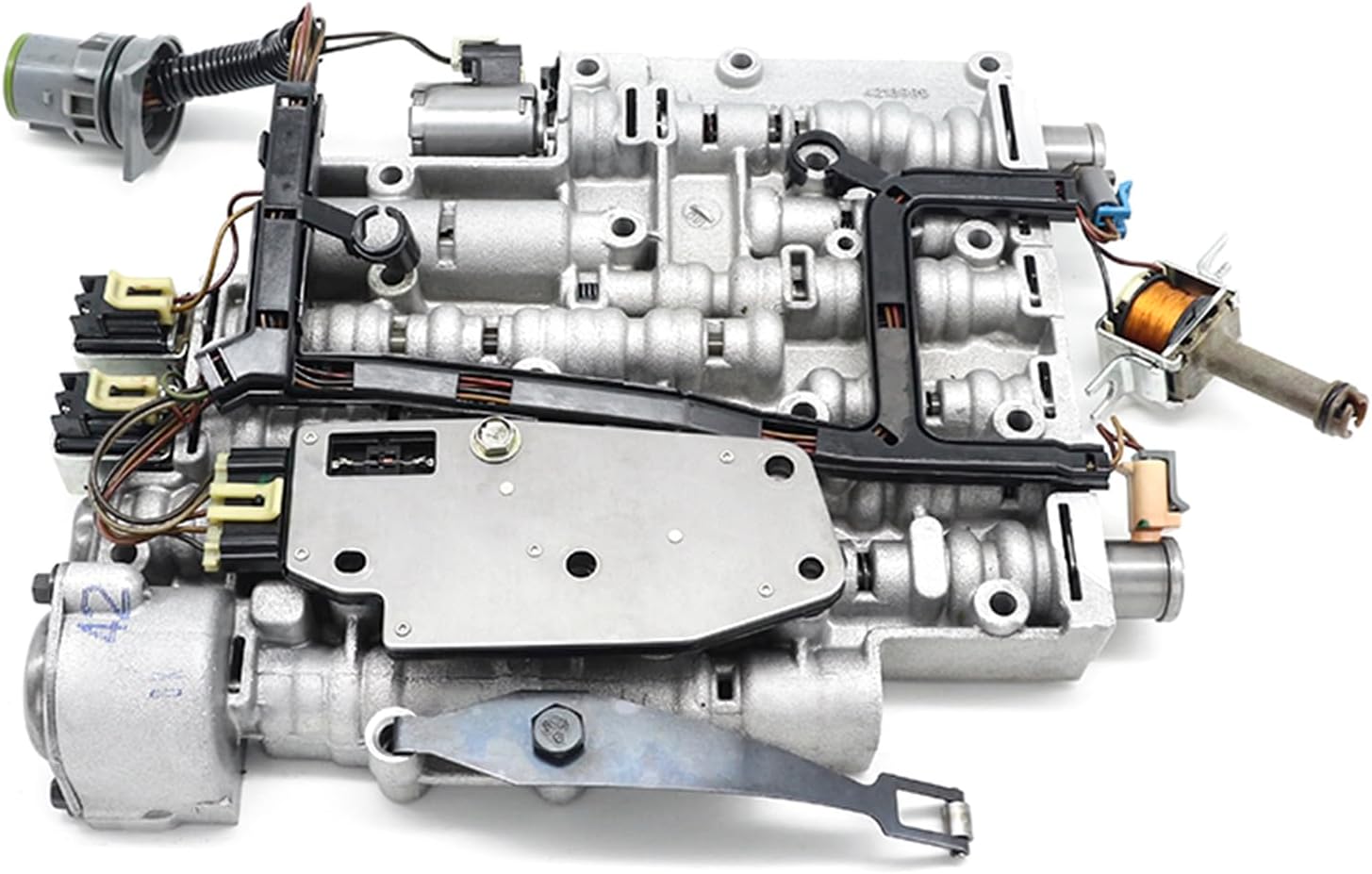
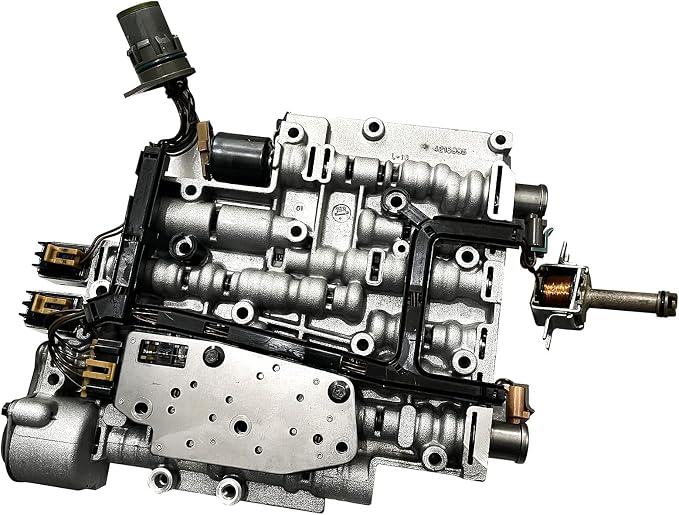
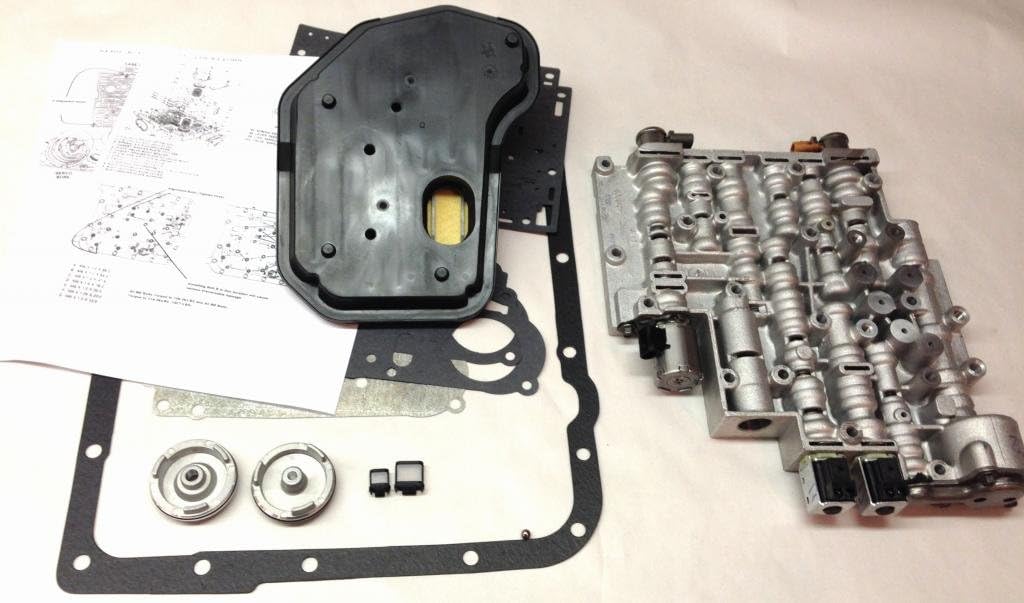
What it did not get was a different valve body. Sonnax publishes one vacuum test guide covering the 4L60-E, 4L65-E and 4L70-E together, because the valve train, pump cover and pressure control system are identical. Everything documented about 4L60-E shift quality applies directly here — including every bore wear problem the platform is known for. This is the order I work these in, with the numbers to expect at each step.
Before Anything Else: Is It Actually a Harsh Shift?
A genuine harsh shift and a slide bump feel similar from the driver's seat and have opposite fixes. Getting this wrong is what turns a two-hour diagnosis into a three-week comeback.
An accumulator goes through three phases. Pre-shift, servo pressure is zero against an opposing oil (accumulator pressure) that varies with load. During the shift, oil flows from the 1-2 shift valve to both servo and accumulator, and servo pressure climbs from roughly 25 psi as the accumulator strokes. When the accumulator bottoms out, shifting pressure spikes straight to line pressure. If the shift already finished, nobody notices. If it did not, you get a violent bump at the end — that is a slide bump, and ATRA's GEARS magazine is blunt that it gets misdiagnosed as a harsh shift constantly.
That matters because the standard fix for harshness — lowering pressure, softening the apply — makes a slide bump worse. The band was already applying too slowly to stop the drum; take pressure away and it slides longer before the spike hits.
How to tell them apart: a slide bump has a delay or flare first, then the bang. You feel the unit try to shift, fail, then get hit. A true harsh shift is immediate and firm with no slip in front of it. In the GEARS case on a 2007 Silverado 5.3L, the telltale was that "something" happened just before the bang and got worse with throttle. The cause was a broken 1-2 accumulator spring.
Road test it before you touch anything
Do not check fluid level or clear codes before the first drive — topping off a low unit or resetting adaptives can change the behavior enough that you never reproduce the complaint. Drive light throttle, then half, then heavy, noting which shift misbehaves and where. A shift that is fine at light throttle but bad at half already rules out a check ball worn through the separator plate, which would be harsh at every throttle position.
Step 1: Put a Gauge On It — and Know the Numbers
The 4L65E has a line pressure tap. Use it — route the hose so you can hold the gauge while driving, well away from the exhaust. Here is a reference set from a healthy 2007 Silverado 5.3L with this valve body family, published by GEARS:
| Condition | Expected line pressure |
|---|---|
| Idle, Park | ~55 psi |
| Idle, Reverse | ~80 psi |
| Stall test, Reverse | ~300 psi |
| Idle, Drive | ~55 psi |
| Stall test, Drive | ~165 psi |
| Medium-throttle takeoff | ~110 psi |
| Cruising ~25 mph | ~90 psi |
| Heavy-throttle takeoff | ~140 psi |
Two things matter beyond the raw values. First, look for a pressure spike during the problem shift. If pressure behaves normally through the 1-2 and you still get a bang, the pressure control system is not your problem — stop chasing solenoids. Second, watch the needle. Sonnax calls gauge needle-bounce the sure sign of unstable regulation, and unstable pressure is what kills pump vane rings. PR valve bore wear is common here, showing up as erratic line pressure, low line rise, excess pump noise and reverse chatter. GEARS documented a rebuild where every vacuum test passed except the PR valve at about 12 in-Hg; at full stall it maxed at 150 psi, dropped to 90, came back to 130, jumping randomly.
Step 2: Verify the EPC Command With an Amp Clamp, Not the Scan Tool
GM determines desired line pressure from engine data and raises or lowers it through the electronic pressure control (EPC) solenoid. The specs at the solenoid:
- At idle: around 10% engine load and 0.9 – 1.1 amps commanded to the pressure control solenoid.
- Wide open throttle, just before the 1-2: engine load climbs to 90 – 100% and solenoid command drops to 0.2 – 0 amps.
As load rises, solenoid amperage falls and line pressure rises. That inverse relationship is the whole system in one sentence.
Now the important part: do not trust the commanded amperage PID. Transmission Digest warns it will often display the correct amperage when it is in fact wrong, particularly where the ECM's EPC driver has failed — a known problem on 1993–1997 models. GEARS documented exactly that: scan tool amperage looked rock steady while an amp clamp on the EPC ground wire showed erratic current mirroring the gauge. Powers, grounds and every other system checked out; the computer was bad. Clamp the wire and watch actual current — two minutes, and the difference between replacing a $40 solenoid and finding a failed driver.
Step 3: Check for the Codes That Force Maximum Line Pressure
A large share of harsh 1-2 complaints on this platform are not shift-quality problems at all — they are torque converter clutch slip problems. When TCC slip sets P1870 or P0894, the controller puts the transmission into high line pressure mode. The harsh 1-2 is a symptom of the pressure raise, not of anything in the 1-2 circuit.
The root cause is usually bore wear at the TCC regulator and isolator valves. With PWM control from 1995 and EC3 from 1998-later, the converter rarely sees full lockup — 20 to 40 rpm of TCC slip is normal here. Constant oscillation of those valves against an aluminum valve body wears the casting and lets apply pressure exhaust. The repair is to ream the bore and install the Sonnax TCC regulator and isolator valve kit (77754-04K for EC3 '98-later units). Sonnax's Tory Royce flags a trap: builders assume that kit restores the whole bore, but on high-mileage units the isolator end is often worn too and needs its own oversize sleeve.
Fix the TCC problem first. Soften the 1-2 while the unit is still in high line pressure mode and you have made the shift worse for the day the code clears.
Step 4: Rule Out the Engine
This one catches people. If the scan tool shows no amperage command at all to the EPC solenoid, line pressure sits at maximum and every shift and engagement comes in hard. No transmission codes are stored — but there are lean codes in the ECM, and the ABS or vehicle stability control lights may be on.
Transmission Digest reports this is prevalent on Chevrolet Silverados with the 5.3L non-flex-fuel engine, a common cause being E85 in a vehicle not rated for it. The engine runs lean, the torque signal goes invalid, and the transmission defaults to full pressure. ATSG covers it under the "Invalid Engine Torque Signal" bulletin. Check the fuel: ethanol blend in a non-flex-fuel truck, drain and refill with straight gasoline. Otherwise the lean codes need engine-side diagnosis before you open the transmission.
Step 5: The Actuator Feed Limit Valve
If pressure is erratic and the engine side is clean, the AFL valve is next — the most common valve body wear item in this family.
The AFL valve is a solenoid feed regulator: it takes line pressure, regulates it down (roughly 115 psi in the 4L60-E and 4L80-E), and feeds the shift solenoids, pressure control solenoid, TCC solenoid, 3-2 control solenoid and 2-3 shift valve lineup. Every solenoid in the unit is downstream of this one valve.
The OE valve has a large reaction area on the spring end that side-loads it hard against the bore, and the EPC solenoid oscillating the torque signal and AFL oil increases that action further. As the aluminum bore wears, pressure to the shift solenoids drops — setting solenoid and ratio codes — and the same oil loss pulls line pressure down with it. Sonnax lists the worn-AFL symptoms as wrong gear starts, solenoid performance codes, erratic line pressure, no 4th, harsh shifts and 2nd gear starts. The repair is kit 77754-09K: a hardcoat anodized aluminum valve with annular grooves to resist side-loading, in a full contact sleeve giving 54% more support than OE.
Step 6: The Accumulator Valve and Sleeve
If the complaint is specifically a 1-2 bang at light throttle, look here. The accumulator valve regulates accumulator pressure — the opposing oil that cushions the 1-2 and 3-4 accumulator pistons and sets band apply rate. It varies with engine torque: heavier throttle, higher pressure and a quicker apply; light throttle, lower pressure and a slower one.
Wear at the sleeve lets throttle, line or accumulator pressure leak past the wear pockets, producing harsh, soft or bang shifts and shortened 2-4 band life. Sonnax addresses it with accumulator valve train kit 77754-10K, which fits the DX size with selective springs covering CX and YZ.
Reading the letter codes
The letters stamped on the sleeve tell you the spool sizing and spring, which sets firmness. On 700-R4 and very early 4L60-E units, codes K, N and A give lower accumulator pressure curves and a lighter apply; B, M and L sit higher and shift firmer. Later units use C (early) and YZ, CX and DX. Against the firmer 700-R4 codes, the later designs are roughly equal at light throttle but noticeably firmer under heavy throttle. A stronger-than-OE spring pushes the whole curve up — worth checking if someone before you already did it.
Step 7: The 4-3 Sequence Valve (The One People Miss)
The 4-3 sequence valve plays no role in regulating 1-2 shift feel, which is exactly why it gets skipped. Stuck inboard, it produces a nasty harsh 1-2 anyway.
It re-routes 2-4 band apply oil to the 4th gear servo apply piston, whose apply area is 6.108 — only marginally smaller than the Corvette piston's 6.356. You have effectively installed a Corvette servo without meaning to. Worse, because the band applies ahead of the metered flow through the.067 in. to.086 in. separator plate orifice, the servo cushion spring never does its job and the 1-2 accumulator piston acts too late to matter. Band apply with no accumulation and no metering delivers a genuinely violent shift, with 2-3 and 3-2 complaints alongside it. Sonnax lists 1-2 harsh, no 4th, 2-4 band burned and loss of 4th signal oil for this valve.
Step 8: Mechanical Checks Once the Pan Is Down
- #8 check ball. It passes band apply oil through the.067 in. to.086 in. separator plate orifice on the 1-2 upshift. Left out or misplaced, you get a harsh 1-2. Check that orifice for size too — techs enlarge these, which firms the shift permanently.
- Servo piston size. Four OE sizes. The 093 is primarily Corvette and high-performance Camaro; the 554 is four-cylinder and 2.8L V6 only; nearly everything else takes a 553 or 159. Wrong apply area gives a soft shift, a slide-bang or a harsh shift.
- 1-2 accumulator piston and spring. Look for a broken or cocked spring, worn piston pin bore, or pin-to-piston interference. Watch assembly order: early units put the piston in first with the spring on top, so heavier tension shifted firmer. Later inverted units put springs in first, where heavier tension gives a softer shift. Backwards, and you tune the wrong way.
- Servo cushion spring and band pin. The heavy spring between piston and retainer plate is critical to 1-2 accumulation and part of the 2-3 accumulator system. Pull the band pin and confirm it is not binding in the piston — a binding pin makes the cushion spring inoperative.
- Servo travel. Sonnax kits specify.075 in. to.125 in. with a dial indicator. Never shim a servo to correct travel; it drives the piston deeper into the bore where it can bottom out and take the band with it.
Step 9: Vacuum Test Before You Reassemble
Vacuum testing confirms bore condition instead of guessing at it. Sonnax publishes a free 4L60-E / 4L65-E / 4L70-E vacuum test guide with port locations for every valve in the body and pump cover, noting that OE valves should be tested in rest position unless instructions say otherwise. A low reading means wear. Use it as a symptom-to-valve map:
| Valve | Symptoms it causes |
|---|---|
| Actuator feed limit | Wrong gear starts, solenoid performance codes, erratic line pressure, harsh shifts, 2nd gear starts, no 4th |
| Accumulator valve & sleeve | 1-2 bang at light throttle, reduced 2-4 band life |
| 4-3 sequence | 1-2 harsh, 3-4 concerns, no 4th, 2-4 band burned |
| TCC regulator | Codes 894 and 1870, low line pressure, 2nd gear starts, 3rd clutch failure |
| Pressure regulator | Erratic line pressure, low line rise, 3-4 clutch failure, excess pump noise, reverse chatter |
| Boost valve assembly | Low line rise, poor shift quality, 3-4 clutch failure, 2-4 band failure |
| Forward abuse | Delayed forward engagement, forward clutch distress, band failure, damaged valve body casting |
| Reverse abuse | Delayed reverse, low/reverse clutch distress, damaged valve body casting |
Pass/fail in-Hg specs vary by valve — the guide points you to the individual Sonnax kit instructions for each.
Delayed Engagement Specifically
Delayed engagement is a different failure path than a harsh shift, and the table above is where to start. Delayed forward engagement points at the forward abuse valve; delayed reverse at the reverse abuse valve. Both share bore repair kits (77754-35K, or the oversized forward and reverse abuse valve kit 77754-58K).
Before condemning a valve, cover the basics: fluid level checked with the engine running in Park, fluid condition, and idle pressure in the affected range. Correct idle pressure points to a valve or circuit leak. Low idle pressure is a pump, filter or leak problem, and the valve body is the wrong place to look.
On fluid: this family runs a DEXRON-spec ATF, with DEXRON-VI as the current service fill. Fill, run, then set the level hot after a drive cycle rather than trusting a quart count — the converter and cooler lines make dry-fill numbers unreliable. Our transmission fluid spec chart lists specs by unit.
Rebuilding a 4L65E this week?
Valve body kits, separator plates, servos, accumulator components, solenoids, filters and the tools to set band travel properly — shipped fast from the USA.
Shop 4L65E parts →4L60E/4L65E Shift Kit & Valve Body Separator Plate Combo
Covers the circuits above — accumulator and AFL oiling, 1-2 orifice sizing, and the separator plate that governs it — in one kit sized for this valve body family.
View kit →Related: 4L60E valve body wear, 4L60E shift solenoid symptoms, and shift flare versus slip if you are still sorting out what you felt on the road test.
Sources
- Sonnax — "GM 4L60-E, 4L65-E, 4L70-E Vacuum Test Guide." Backs that the 4L60-E, 4L65-E and 4L70-E share one valve body and pump cover layout, the port-by-port vacuum test locations, the instruction to test OE valves in rest position, and the symptom lists tied to the actuator feed limit, accumulator, 4-3 sequence, TCC regulator, pressure regulator, boost, forward abuse and reverse abuse valves, along with the Sonnax repair part numbers for each. sonnax.com
- Sonnax — "Actuator Feed Limit Valve Kit 77754-09K." Backs that the AFL valve is the solenoid feed regulator for the EPC and shift solenoids in 4L60-E, 4L65-E and 4L70-E units, the large reaction area and side-loading that wears the bore, the EPC solenoid oscillation that increases valve action, the resulting solenoid and ratio codes plus lower line pressure, and the hardcoat anodized replacement valve with annular grooves and 54% more support in a full contact sleeve. sonnax.com
- Sonnax — "GM 4L60 (700-R4), 4L60-E Accumulator Valve Codes: Deciphering the Alphabet Soup of Shift Feel," Maura Stafford (Sonnax VP of transmission products, TASC Force). Backs the role of accumulator pressure in cushioning the 1-2 and 3-4 accumulator pistons and its variation with engine torque, the lighter K/N/A versus firmer B/M/L 700-R4 code curves, the early C and later YZ/CX/DX 4L60-E codes, the comparison of the two families at light versus heavy throttle, and the effect of a stronger-than-OE accumulator spring. sonnax.com
- Sonnax — "Understanding 4L60-E Series Isolator Bore Wear & How to Address It," Tory Royce (Sonnax technical support engineer, TASC Force). Backs PWM controls arriving in 1995 and EC3 in '98-later models, 20–40 rpm of TCC slip being normal operation, TCC regulator and isolator valve oscillation wearing the aluminum casting and exhausting apply pressure, kit 77754-04K as the standard repair, and the frequently missed casting wear at the isolator end of the bore. sonnax.com
- Sonnax — "Building the Killer 4L60E: Top Tips for Optimizing Your Transmission Upgrades." Backs gauge needle-bounce as the sign of unstable pressure regulation and the risk it poses to pump vane rings, pressure regulator valve bore wear being common in 4L60/E units, and the specification for setting servo travel between.075 in. and.125 in. with a dial indicator rather than shimming the servo. sonnax.com
- GEARS Magazine (ATRA) — "A Bump in the Road: Diagnosing a Harsh Shift Complaint." Backs the road-test-before-touching-anything procedure, the full line pressure reference set on a 2007 Silverado 5.3L (55 psi Park idle, 80 psi Reverse idle, 300 psi Reverse stall, 55 psi Drive idle, 165 psi Drive stall, 110 psi medium takeoff, 90 psi at 25 mph, 140 psi heavy takeoff), the reasoning that ruled out a check ball worn through the plate, and the broken 1-2 accumulator spring that caused the slide bump. gearsmagazine.com
- GEARS Magazine (ATRA) — "Controlling Pressure: General Motors." Backs the 10% engine load and 0.9–1.1 amp pressure control solenoid command at idle, the 90–100% load and 0.2–0 amp command just before the 1-2 at wide open throttle, the inverse relationship between solenoid amperage and line pressure, the AFL valve feeding the pressure control solenoid, and the case study where a 12 in-Hg pressure regulator valve and an amp clamp on the EPC ground wire exposed a failed computer that the scan tool showed as steady. gearsmagazine.com
- GEARS Magazine (ATRA) — "The 'Harsh' Realities: Understanding the Systems of Shift-Feel and Shift Quality." Backs the three accumulator phases on a 4L60E 1-2 shift, servo pressure rising from roughly 25 psi as the accumulator strokes, the pressure spike to line oil once the accumulator bottoms out, the definition of a slide bump and its frequent misdiagnosis as a harsh shift, and the reversed spring behavior between early and later 1-2 accumulator housing assembly orders. gearsmagazine.com
- Transmission Digest — "4L60E Harsh 1-2 Shift." Backs P1870 and P0894 TCC slip codes putting the unit into high line pressure mode, the unreliability of the EPC commanded amperage PID and the ECM EPC driver failures on 1993–1997 models, the four OE servo sizes (093 Corvette/HP Camaro, 554 for four-cylinder and 2.8L V6, 553 and 159 for everything else), the #8 check ball and.067–.086 in. separator plate orifice on the 1-2 upshift, the 1-2 accumulator piston and spring assembly orders, the servo cushion spring and band pin binding check, and the 4-3 sequence valve stuck inboard re-routing band apply oil to the 6.108 sq in. 4th gear servo piston versus the 6.356 Corvette piston. transmissiondigest.com
- Transmission Digest — "Hydraulic Fundamentals: AFL/Solenoid Modulator Valves," Neal Axelrod-Adams (Sonnax design engineer, TASC Force). Backs the AFL valve regulating line pressure to approximately 115 psi in GM 4L60-E and 4L80-E units and feeding the shift solenoids, pressure control solenoid, TCC solenoid, 3-2 control solenoid and 2-3 shift valve lineup, and worn AFL bores producing low actuator feed and line pressures, solenoid codes, wrong gear starts, clutch and band failure and harsh or soft shifts. transmissiondigest.com
- Transmission Digest — "Avoiding 4L60-E Harsh Shifts and Engagements." Backs the no-EPC-amperage-command condition that pins line pressure at maximum with lean codes stored in the ECM and no transmission codes, the illuminated ABS or vehicle stability control lights, the prevalence on Chevrolet Silverados with the 5.3L non-flex-fuel engine, E85 in a non-flex-fuel vehicle as a cause, and the ATSG "Invalid Engine Torque Signal" bulletin as the reference. transmissiondigest.com