A 4L60E valve body does not fail the way a clutch pack fails. Nothing breaks. The casting is aluminum, the valves are steel, and every time a valve strokes in its bore it takes a microscopic amount of aluminum with it. Do that a few hundred million times and the clearance between the spool and the bore opens up past the point where oil will stay on the correct side of the valve. The valve still moves. It still looks fine on the bench. It just cannot hold pressure anymore.
That is the whole problem, and it is why so many 4L60E units come back after a rebuild. The builder replaced every soft part in the box, cleaned the valve body in the parts washer, blew it off, bolted it back on, and handed the truck back with the same worn bores it came in with. The clutches are new. The leak is not. Here is how to find that wear, how to measure it instead of guessing at it, and what the actual repair looks like.
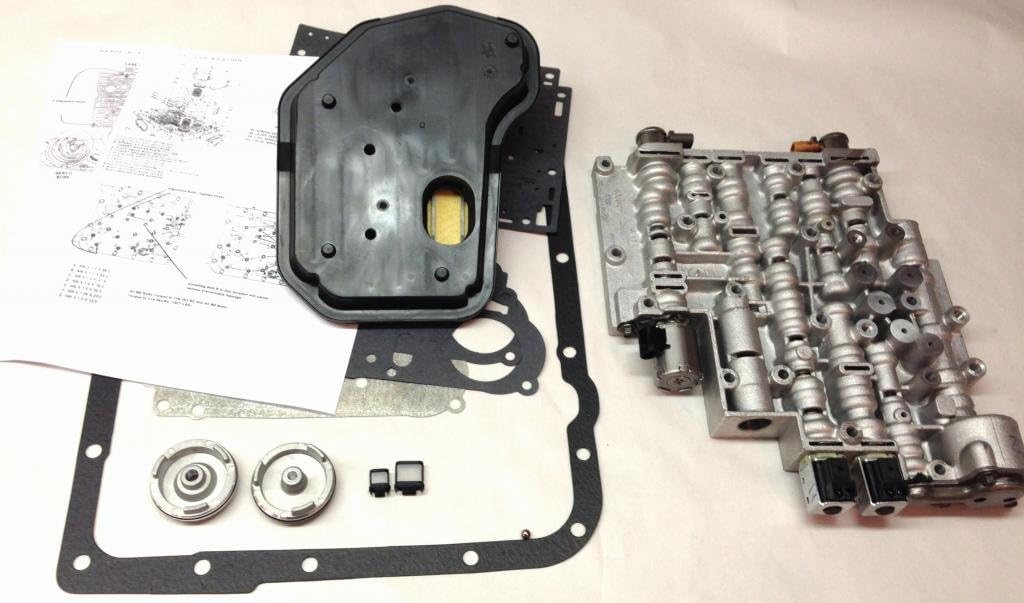
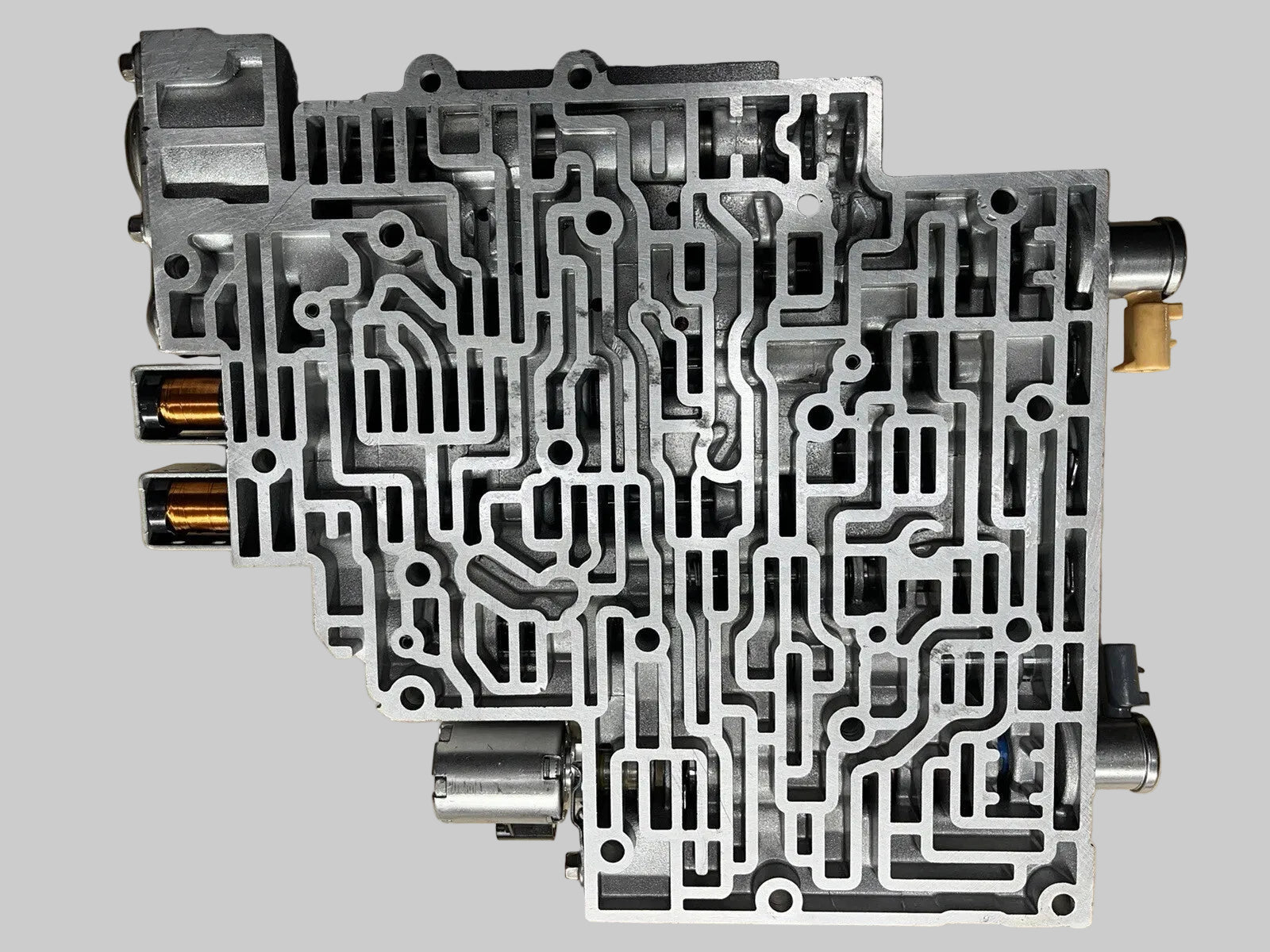
Why the 4L60E Casting Wears Where It Does
Not every valve wears at the same rate. Wear tracks activity, and it concentrates wherever a valve oscillates in a narrow, repeatable band of the bore. The Sonnax TASC Force sorts valves into four groups by how hard they work, and it is a useful way to think about where to look first:
- Active valves such as boost valves, which move constantly because EPC and throttle pressure are always changing.
- Modulated valves, driven by low-resistance solenoids. This is the important category on a 4L60E. The older 32-Hertz solenoids pulse fast enough to modulate a valve but slow enough that the valve actually strokes a real distance in the bore before reversing direction. The newer 300-Hertz solenoids pulse faster than the valve can travel, so they cause far less etching of the casting.
- Regulating valves such as the main pressure regulator and the solenoid feed regulator. These sit in a narrow section of bore holding a target pressure, which means they wear the casting at exactly the spot where the seal matters most.
- On/off valves such as shift valves and the manual valve, which move less often and over a wider span. These wear last.
That framework explains the 4L60E's two signature wear locations. Both are modulated or regulating valves living in a narrow band of soft aluminum.
The TCC Regulator and Isolator Bore
The 4L60-E went into production in 1993. PWM converter clutch control arrived in 1995, and the 1998-later units added EC3 controls, which is where this gets interesting. With EC3, the converter rarely sees full lockup by design. Under most conditions, 20 to 40 RPM of TCC slip is normal operation, not a fault. The side effect is that the TCC regulator and isolator valves are never allowed to sit still. That constant oscillation in an aluminum casting wears the bore until critical apply pressure exhausts past the valve instead of reaching the converter.
The Actuator Feed Limit Bore
The actuator feed limit valve, universally called the AFL, is the solenoid feed regulator. It supplies the EPC solenoid and the shift solenoids. The OE valve has a large reaction area and is badly affected by side-loading, which wears the bore out of round over time. As that bore opens up, feed pressure to the shift solenoids drops. Low feed pressure to a solenoid looks a lot like a bad solenoid on a scan tool, which is why AFL wear gets misdiagnosed and gets a new solenoid pack installed that fixes nothing for very long.
Symptoms, Sorted by What Actually Leaks
The complaint you get depends on which bore is worn and which control strategy the unit uses. This is worth memorizing because the year range narrows the diagnosis considerably.
| Unit / years | Bore wearing | What the leak does |
|---|---|---|
| 1991-94 | Isolator valve | Exhausts second-gear oil. The TCC solenoid in the pump never gets enough converter-clutch signal oil, producing a no-lockup condition. |
| 1993-97 PWM | Isolator valve | Exhausts AFL PWM boost pressure. Result is a slipping converter clutch and failure of the 3-4 clutch. |
| 1998-later EC3 | TCC regulator and isolator | Casting wear from constant valve oscillation bleeds off apply pressure. Codes 894 and 1870, TCC cycling, overheated converter. |
| All years | Actuator feed limit | Low feed pressure at the EPC and shift solenoids. Harsh or soft shifts, wrong-gear starts, solenoid and ratio codes, clutch and band failure. |
The one that sends most of these units to the shop is the harsh 1-2 upshift with P1870 set. GM documented this directly. Bulletin 01-07-30-023B, "Harsh 1-2 Upshift, SES, MIL, or CEL Illuminated, DTC P1870 Set (Replace Valve Body)," dated March 22, 2002, covers 1996-2000 GM vehicles with the 4L60-E and attributes the condition to wear in the bore that holds the TCC isolator and regulator valves, producing poor or no TCC apply. An earlier bulletin, 99-07-30-005 from March 18, 1999, covered the same complaint as "Component Slipping/DTC P1870 - Diagnosis" on 1996-1999 units.
Two details from that bulletin are worth writing on the toolbox lid. First, the condition typically shows up after roughly 32,000 km (20,000 miles), so this is not strictly a high-mileage failure. Second, and this is the one that burns people, the harsh 1-2 shift and the P1870 are hard to duplicate when transmission temperature is below 93°C (200°F). If you road test a complaint of harsh 1-2 shifting on a cold unit and cannot reproduce it, you have not ruled anything out. Get it hot and drive it again.
Measuring the Wear Instead of Guessing
Wiggle tests and eyeballing a spool tell you almost nothing. A bore can be worn well past its sealing limit and still feel tight by hand. You need a number, and there are two practical ways to get one at the bench.
Vacuum Testing
Vacuum testing seals a port on a circuit and tries to pull air past the valve spool. Because clearance is what allows the leak, the vacuum reading maps directly to how worn the bore is, and the vacuum loss is proportional to the amount of wear. Test on a clean, dry valve body, and calibrate before you start.
The reference numbers, per the Sonnax TASC Force write-up in Transmission Digest:
- 29.9 in-Hg is a perfect vacuum, which no real circuit will ever pull because design clearance always exists. This number moves with elevation, which is why you calibrate to your own shop.
- 22 to 23 in-Hg is an extremely good circuit reading.
- 8 in-Hg is a severely worn bore.
For targeted testing, the guidance is explicit: a 4L60-E with an 1870 code should have the TCC regulator valve bore vacuum checked for leakage. Start there, then work through the AFL and the boost valve. Balance ports make good test locations because the circuit is naturally captive and sealable.
Hydraulic Flow Testing
The other approach measures actual leakage flow rather than vacuum. Rick Hoffman documented a shop-built stand in Transmission Digest using a Sonnaflow sensor, which resolves oil flow down to 0.5 milliliter per minute, graphed on a scan tool in hertz. His pass/fail standard, calibrated to his own machine:
- 2.5 Hz free flow, meaning nothing is sealing at all.
- 0.4 Hz on a good tight circuit.
- More than 1.0 Hz means the circuit needs repair.
The 4L60-E TCC regulator bore he documented measured 1.85 Hz before repair, which is well into replace territory. After reaming the casting and installing the Sonnax TCC regulator valve kit, the circuit showed minimal leakage. The point of either method is the same: you get a before number and an after number, so you know the repair actually did something rather than hoping it did.
The Fix: Ream and Sleeve, Not Pin and Pray
Once a bore is worn, the casting is the problem, not the valve. You cannot fix an out-of-round bore by putting a new OE valve in it, and you cannot fix it with a shortcut. On the 4L60-E TCC regulator bore specifically, the documented finding is blunt: pinning the valve will not correct leakage. It changes how the valve behaves, but the oil still exhausts past the worn section.
The real repair is to machine the bore oversize and install a wear-resistant sleeve so the new valve runs in steel instead of aluminum.
TCC Regulator and Isolator Bore
The standard repair is to ream the bore and install Sonnax TCC regulator and isolator valve kit 77754-04K, which provides a sleeve and valve for the regulator portion of the bore. Per Sonnax, that kit addresses codes 894 and 1870, overheated converter, low TCC apply pressure, burned 3-4 clutch, harsh 1-2 shift, and low line pressure.
Here is the part a lot of builders miss. The 77754-04K includes a lengthened isolator valve specifically so it operates in an unworn portion of the bore. That works, but only if the isolator end of the casting is still good. On high-mileage units it often is not. Installing 77754-04K does not restore the integrity of the entire bore, and casting wear on the isolator end is a real source of comebacks.
When vacuum testing shows the isolator section is also worn, the fix is to oversize that section with reamer 77754-RM5 (or tool kit F-77754-TL4) and install isolator sleeve kit 77754-ISO. That puts the new isolator valve from the 04K into a wear-resistant sleeve as well, which eliminates leakage across the full bore. Sonnax lists that kit against codes 894 and 1870, TCC cycling, TCC slip, and 3-4 clutch failure.
Actuator Feed Limit Bore
The AFL gets the same treatment: ream and sleeve. The Sonnax AFL kit uses a redesigned valve that regulates pressure correctly along with a wear-resistant sleeve to re-establish pressure control. Fixing the AFL is often what makes a set of solenoid and ratio codes go away permanently after a new solenoid pack did not.
One practical note on ordering. GM revised the TCC regulator and isolator valves in all transmissions produced after January 15, 1999, and service parts through GMSPO carry the revised valves. That revision helps, but it does not repair a casting that is already worn. If your vacuum numbers are bad, you still need the sleeve.
Reassembly and Keeping It Fixed
A few things that keep this repair from turning into a comeback:
- Test before and after. Record the vacuum or flow number on every bore you touch. Without a before reading you have no way to prove the repair worked, and no way to defend the job if the truck comes back for something unrelated.
- Check the whole lineup, not just the bore that matches the code. Once you have the valve body clean and dry, walking the rest of the casting takes ten minutes. Boost valves in particular should always be checked because they never stop moving.
- Clean means clean and dry. Vacuum testing a valve body with fluid still in it gives you optimistic readings, because the oil film seals the very clearance you are trying to measure.
- Flush the cooler and lines. If a converter clutch has been slipping and overheating, the debris is in the cooler circuit. New valve body, old debris, same outcome.
- Deburr after reaming. Any aluminum chip left in the casting ends up in a bore or under a check ball.
None of this is exotic work. It is a reamer, a sleeve kit, and a way to measure what you did. The reason 4L60E valve body wear has the reputation it does is not that the fix is hard. It is that the failure is invisible unless you go looking for it with the right tool.
4L60E valve bodies, solenoid kits, shift kits, overhaul kits, and the bench tools to test and install them — shipped fast from the USA.
Shop 4L60E parts →4L60E / 4L65E Valve Body Assembly with Solenoids, GM 96-02
When the casting is too far gone to sleeve economically, a complete valve body assembly with solenoids is the faster path. Fits 1996-2002 applications.
View the valve body assembly →Sources
- Sonnax — "Understanding 4L60-E Series Isolator Bore Wear & How to Address It," Tory Royce, January 27, 2025. Backs the 1993 production start, the 1995 introduction of PWM and the 1998-later EC3 controls, the 20-40 RPM of normal TCC slip, casting wear from constant TCC regulator and isolator oscillation in the aluminum body, the 77754-04K kit and its lengthened isolator valve, the limitation that 04K alone does not restore the whole bore, and the 77754-RM5 reamer, F-77754-TL4 tool kit and 77754-ISO isolator sleeve repair. sonnax.com
- Transmission Digest — "Diagnosing Valve Bodies with Vacuum Testing," Maura Stafford, Sonnax TASC Force, June 1, 2013. Backs the vacuum test reference values (29.9 in-Hg perfect vacuum, 22-23 in-Hg for an extremely good circuit, 8 in-Hg for a severely worn bore), vacuum loss being proportional to wear, the clean-and-dry testing requirement, the direction to vacuum check the TCC regulator bore on a 4L60-E with an 1870 code, the 32-Hertz versus 300-Hertz solenoid etching difference, and the active, modulated, regulating and on/off valve wear categories. transmissiondigest.com
- Transmission Digest — "Checking Valve Bodies With a Homemade Hydraulic Test Stand," Rick Hoffman, January 1, 2004. Backs the flow-test pass/fail standard (2.5 Hz free flow, 0.4 Hz tight circuit, more than 1.0 Hz needing repair), the 1.85 Hz reading measured on a 4L60-E TCC regulator bore and its post-reaming result, the Sonnaflow 0.5 ml/min resolution, the 1991-94 isolator wear exhausting second-gear oil, the 1993-97 PWM isolator wear exhausting AFL boost pressure and failing the 3-4 clutch, and the finding that pinning the valve will not correct leakage. transmissiondigest.com
- Sonnax — Actuator Feed Limit Valve Kit 77754-09K product and application data. Backs the AFL valve's role as the solenoid feed regulator supplying the EPC and shift solenoids, the large reaction area and side-loading that wears the bore, the resulting drop in solenoid feed pressure causing solenoid and ratio codes, harsh or soft shifts and wrong-gear starts, and the redesigned valve plus wear-resistant sleeve repair. sonnax.com
- Sonnax — TCC Regulator & Isolator Valve Kit 77754-04K product and application data. Backs the specific conditions the kit addresses: codes 894 and 1870, overheated converter, low TCC apply pressure, burned 3-4 clutch, harsh 1-2 shift and low line pressure, across all years including 1998-later EC3 units. sonnax.com
- Sonnax — "GM 4L60-E, 4L65-E, 4L70-E Valve Body Layout." Reference for locating the actuator feed limit, TCC regulator and isolator valves in the casting and identifying the OE 1998-later PWM valve lineup before reaming. sonnax.com
GM service bulletins referenced inline: 01-07-30-023B, "Harsh 1-2 Upshift, SES, MIL, or CEL Illuminated, DTC P1870 Set (Replace Valve Body)," March 22, 2002, covering 1996-2000 4L60-E applications and superseding 01-07-30-023A; and 99-07-30-005, "Component Slipping/DTC P1870 - Diagnosis," March 18, 1999, covering 1996-1999 units. Both are available through GM service information and the NHTSA technical service bulletin database.