P0741 reads out as TCC System Stuck Off. It is easy to look at that description, order a torque converter, and be wrong. The code is not a measurement of the converter. It is a comparison: the module commanded the converter clutch on, then compared engine speed to input shaft speed, and the two numbers stayed further apart than the calibration allows.
That distinction is the whole job. Anything that lets the clutch slip while the computer thinks it is applied sets this code, and on a 4L80E most of those things are hydraulic, not electrical.
Related reading: 4L80E P1870 transmission component slipping, which is the same failure detected in a different gear, and our 4L80E TCC shudder diagnosis.
Exactly what has to be true for the code to set
GM publishes the diagnostic parameters for this unit, and the numbers are worth reading before you touch anything. From the 2005 4L80E transmission diagnostic parameters table, P0741 detects excessive converter slip when the TCC is commanded on in 2nd and/or 3rd gear only, and the fail threshold is:
- TCC slip greater than or equal to 125 RPM, for 3.0 seconds, on the 4th occurrence.
- Engine running above 400 RPM for more than 7 seconds, system voltage between 8 and 18 volts.
- Range indicating D4, D3 or D2, with the calculated ratio in 2nd or 3rd.
- Throttle position 10 percent or more and less than 100 percent.
- Transmission fluid temperature above 20 C and below 150 C.
- TCC capacity commanded at 60 percent or more, and TCC locked on for more than 0.1 second.
- No input speed, range switch, TPS, VSS, TCC stuck-on or TCC PWM electrical codes present.
Two of those lines do real diagnostic work. The 20 C lower temperature limit means the test does not even run until the fluid is warm, so a truck that only slips stone cold will not set this. And the 4th occurrence counter means a stored P0741 is not a one-off event - the module watched it happen four separate times before it lit the light.
Older calibrations used different numbers. Sonnax's TASC Force writeup on GM converter codes documents an earlier set of criteria: TCC duty cycle greater than 50 percent, slip greater than 180 RPM for 7 seconds. Same failure, looser window. If you are working on an early 90s unit, do not hold it to the 2005 table.
Why 2nd and 3rd gear, and not 4th
This trips people up constantly. On the 4L80E, high converter slip in 4th gear does not set P0741. It sets P1870 / P0894, Transmission Component Slipping, which fails on slip between 100 and 550 RPM with the TCC locked in 4th. Sonnax states it plainly: the 4L80-E uses P0741 for 3rd gear TCC slip and P1870 for 4th gear TCC slip.
The reason GM split them is that in 4th gear the overdrive clutch is also carrying load, so slip measured across the converter in 4th could be the converter clutch or the fourth clutch pack. In 2nd and 3rd the fourth clutch is not applied, so the slip has nowhere else to come from. P0741 is the cleaner of the two codes. If you have both, start here.
The mirror-image code is worth knowing too: P0742, TCC Stuck On, fails when slip sits between -15 and +15 RPM with the clutch commanded off. And P2761 is the purely electrical TCC PWM solenoid code - open, short to ground, or short to battery. P2761 and P0741 are different problems. If P2761 is set, fix that first, because its presence blocks the P0741 test from running at all.
How the circuit actually works
The 4L80E applies its converter clutch with a pulse-width-modulated solenoid, not a simple on-off valve. The module varies duty cycle to ramp the clutch on rather than slamming it. That PWM signal strokes a valve train - a TCC control (switch) valve, a TCC enable valve, and most importantly the TCC regulator valve, which is item 108 in Sonnax's 4L80-E valve body layout. The regulator valve is what actually meters line pressure into the converter clutch apply passage and sets clamping force.
Think of the converter as a one-way valve. In the released state, charge oil flows out through the turbine shaft, between the clutch piston and the cover, past the piston's outer diameter, out of the converter, through the cooler, and back in as lube. When the control valve strokes to apply, that flow reverses and the release side opens to exhaust. The piston is pushed against the cover by the converter's own internal pressure.
Two consequences follow. First, the clutch applies because release oil goes away, not only because apply oil arrives. Second, that exhaust passage runs through the turbine shaft, pump, case and valve body and can be up to 13 inches long - a lot of opportunities to be restricted or to leak. Sonnax's lockup troubleshooting guide makes both points, and both explain why a P0741 can exist with a good solenoid and a good converter.
Because the solenoid is pulse-width modulating, the regulator valve is oscillating continuously any time the clutch is being controlled. That constant motion is what eats the bore. It is the single most common hydraulic cause of this code on a high-mileage 4L80E.
Diagnosing it on the truck
1. Read the slip, do not guess at it
TCC slip is engine speed minus input shaft speed. Get both on the screen along with TCC duty cycle / TCC capacity and transmission fluid temperature, then drive it at light steady throttle in 3rd with the fluid warm. What you are looking for is the shape of the event: does slip stay pinned high the whole time the clutch is commanded, or does it apply and then walk away as the unit heats up?
- Never pulls down at all, with duty cycle commanded high - no apply oil is reaching the clutch. Hydraulic or electrical, keep going.
- Pulls partway down and hangs around 150 to 400 RPM - partial apply. Classic lost apply pressure, which points at the regulator valve bore or a leaking apply circuit.
- Applies fine cold, slips once hot - clearance opening up with temperature. Bore wear and pump-side leaks both behave this way.
- Slip never shows in the data you captured - remember the code only runs above 20 C fluid and above 10 percent throttle, so you have to drive it in the window GM tests in.
2. Rule out the cheap stuff before the pan comes down
Check for a calibration update. Sonnax lists computer reprogram as a known cause of P0741, and it is free to check with the VIN. Then check fluid level and condition properly, at temperature. Overfull fluid aerates, and aerated fluid will not hold a clutch. Fluid that smells burnt and has friction material suspended in it has already answered the question.
3. Check the solenoid side
P2761 covers hard electrical faults, but a solenoid can be within its resistance spec and still be hydraulically bad. Sonnax specifically lists defective TCC PWM or TCC apply solenoids among the known P0741 causes, along with a restricted separator plate solenoid feed orifice. A partially blocked feed orifice starves the solenoid without setting an electrical code, and the only way you find it is with the plate off and light behind it.
4. Isolate inside versus outside the converter
This is the test that saves you from replacing a good converter. Sonnax's method: loop the cooler lines to take the cooler and lines out of the circuit. If the condition changes, the restriction is downstream of the piston, in the cooler or lines. If nothing changes, it is upstream - inside the converter, or in the apply circuit feeding it. If you run a flow meter, note that when release oil flow drops below roughly 0.45 GPM the piston starts dragging on the cover, which is the same circuit going the other direction and a useful sanity check on the whole flow path.
5. Vacuum test the bore
With the valve body on the bench, vacuum test the TCC regulator valve bore at the location Sonnax marks in the 4L80-E vacuum test guide, and test the TCC valve and TCC enable valve signal circuit at their end plugs while you are there. Low vacuum means wear, full stop. Also test the pressure regulator valve in the pump - Sonnax lists low TCC release pressure and low cooler flow as its specific symptoms, and that is exactly the flow path you have been chasing.
The seven things that actually cause it
Sonnax publishes the known-cause list for P0741, and after enough of these you will find it is the whole universe of the problem:
- Worn TCC valve bores in the valve body. The big one. Constant PWM oscillation wears the regulator bore, apply pressure bleeds off, the clutch slips.
- Damaged or worn pump bearing seal. A cross leak here dumps apply oil straight back into the release circuit.
- Defective TCC PWM or TCC apply solenoid.
- Restricted separator plate solenoid feed orifice.
- Defective torque converter. Real, but far down the list.
- Computer reprogram needed.
- Channel plate sleeve and turbine shaft sealing ring damage. Worn rings on the turbine shaft leak the apply and release circuits into each other, and no valve body work will fix it.
The fix
If the vacuum test failed at the TCC regulator bore - and on a truck with 150,000-plus miles it usually does - the repair is a regulator valve kit, and there are two ways to do it. Sonnax's 34994-01K is the drop-in version: hardcoat anodized aluminum valve, lengthened critical spool, annular grooves to keep the valve centered and reduce future side-load wear, an added chamfer to improve apply feel and prevent shudder, and two selective springs so you can pick OE lockup feel or firmer than OE. No reaming.
If the bore is too far gone for a drop-in, 34994-18K is the oversized kit. Same idea, but the bore gets reconditioned and a sleeve goes in, which means you need the F-34994-TL18 reamer and a VB-FIX fixture. That is a real tooling commitment. If you do not have it, the drop-in kit or a remanufactured valve body is the better call than a bore you reamed freehand.
Whichever way you go, do the rest of the circuit at the same time, because you will not enjoy doing this job twice. Replace the turbine shaft sealing rings, check the pump bearing seal, verify the separator plate orifices are clear, and put a new filter and pan gasket in. Fill with DEXRON VI. The 4L80E was factory filled on DEXRON III, and GM's current transmission capacities and fluids chart carries an explicit Not DEXRON III note, so DEXRON VI is what goes back in - see our 4L80E fluid type and capacity guide for the numbers.
One warning aimed at the converter. If the clutch has slipped long enough to set this code four times over, look at the fluid before you reuse it. Burnt converter lining is a symptom Sonnax attributes directly to TCC regulator bore wear, and a converter that has been cooking its own clutch will contaminate a fresh valve body in short order.
Need the part for this one
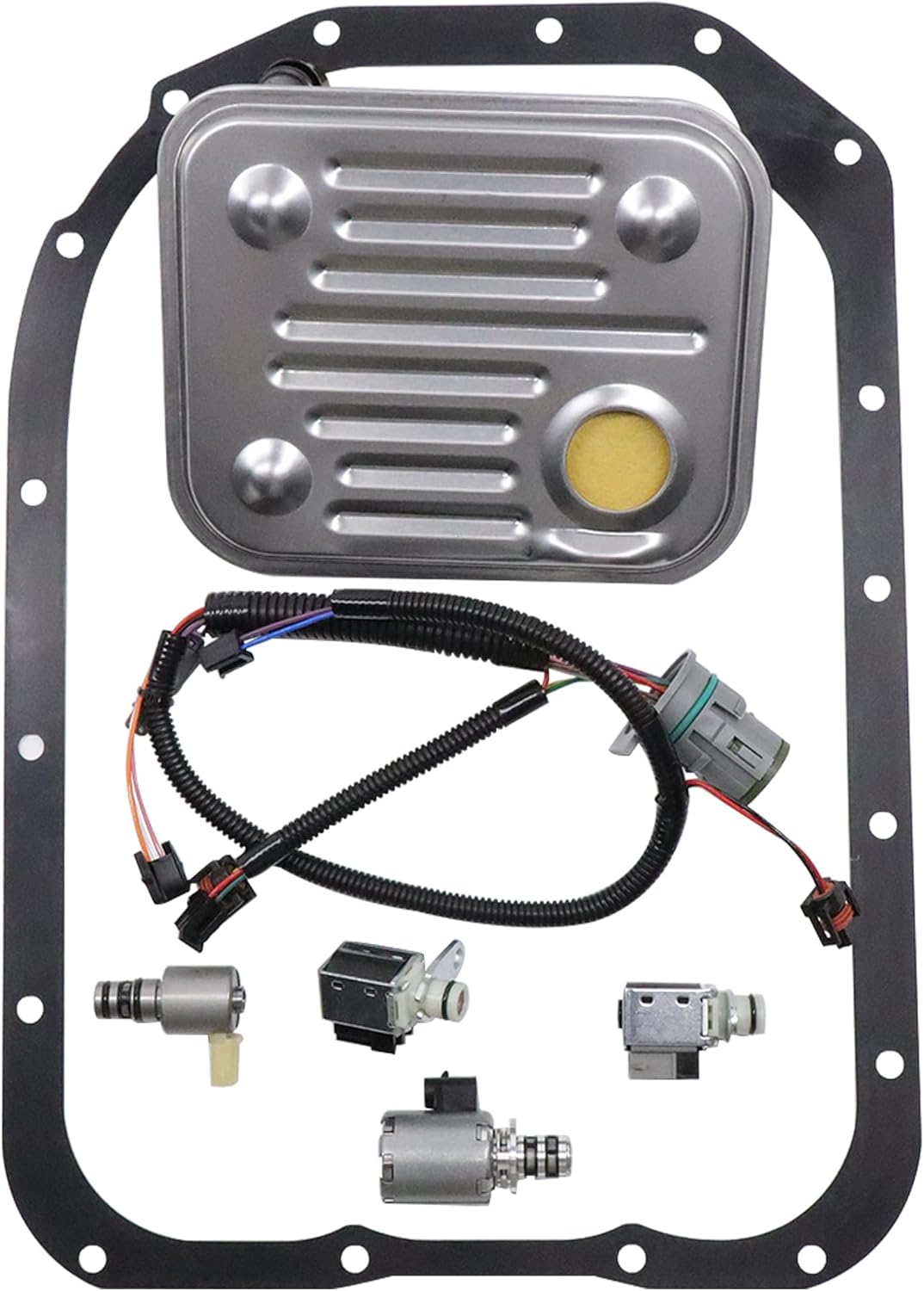
If the TCC regulator bore failed its vacuum test, the valve kit is the repair - and it fixes the cause rather than the symptom, which is why a converter alone so often does not stick. Also at CoreTransmissionParts: TCC PWM lock-up solenoids, valve body kits and the full 4L80E catalog.
4L80E Sonnax TCC Regulator Valve Kit →Keeping it fixed
Converter clutch heat is what wears these circuits out. Keep the fluid clean and at level on a real service interval rather than a lifetime fill, keep the cooler and lines unrestricted (they sit in the same flow path you just diagnosed), and do not ignore a light shudder for a year. A shudder is the regulator bore telling you it is leaking. Caught there it is a valve kit; ignored, it becomes a converter, a valve body and a set of clutches.
FAQ
Does P0741 on a 4L80E mean I need a new torque converter?
Usually not. P0741 is a slip measurement, not a converter test, and Sonnax lists a defective converter as only one of seven known causes. Worn TCC valve bores in the valve body, a damaged pump bearing seal, a restricted separator plate feed orifice and worn turbine shaft sealing rings all produce identical slip with a perfectly good converter. Vacuum test the TCC regulator bore and loop the cooler lines before you condemn the converter.
How much TCC slip is too much on a 4L80E?
GM's 2005 4L80E diagnostic parameters set the P0741 fail threshold at 125 RPM or more of TCC slip, held for 3.0 seconds, on the 4th occurrence, with the clutch commanded at 60 percent capacity or higher in 2nd or 3rd gear. Earlier calibrations documented by Sonnax used 180 RPM for 7 seconds with duty cycle above 50 percent. A locked converter clutch should be pulling slip down near zero, so anything sitting in the 150 to 400 RPM range while commanded on is a partial apply.
What is the difference between P0741 and P1870 on a 4L80E?
Which gear the slip was measured in. The 4L80E uses P0741 for converter clutch slip detected in 2nd and 3rd gear, and P1870 or P0894, Transmission Component Slipping, for slip detected in 4th gear with the clutch locked. GM split them because in 4th the overdrive clutch is also carrying load, so slip there could be the converter clutch or the fourth clutch pack. In 2nd and 3rd, it can only be the converter clutch.
Why does my 4L80E only set P0741 when it is warm?
Partly because the test will not run cold. GM's enable conditions require transmission fluid temperature above 20 C and below 150 C, so a cold truck never gets tested. The rest of it is real: clearances in a worn TCC regulator bore open up as the aluminum expands and the fluid thins, so apply pressure that was adequate at 30 C bleeds off at 90 C. Warm-only slip is a strong pointer toward bore wear rather than an electrical fault.
Can a bad TCC solenoid set P0741 instead of P2761?
Yes. P2761 only detects a continuous open, short to ground or short to battery in the TCC PWM circuit - a hard electrical fault. A solenoid that passes its resistance check but leaks internally, or one being starved by a restricted separator plate feed orifice, will not trip P2761 but will absolutely fail to apply the clutch and set P0741. Note also that if P2761 is set, the P0741 test is disabled entirely, so clear the electrical fault first.