A P0741 on a 4L60E pays well if you diagnose it and eats a whole week if you guess. The complaint reaching the counter is usually vague - it drones on the freeway, it feels like it is hunting, the mileage dropped, the temp gauge sits higher than it used to. Then the light comes on and you get a code telling you the torque converter clutch is not holding. It does not tell you why, and there are seven very different reasons why.
The good news is that GM published specific set criteria for this code, and a 4L60E gives up its answer to a scan tool faster than almost any other unit on the bench. You just have to know which number you are looking at.
Related reading: 4L60E TCC solenoid replacement cost and 4L60E valve body replacement cost.
What Actually Sets P0741
P0741 is Torque Converter Clutch Circuit Performance or Stuck Off. The PCM knows engine speed and it knows input shaft speed. Subtract one from the other and you have TCC slip. When the computer commands the clutch on and the slip does not come down, the code sets.
Sonnax's Gregg Nader publishes the exact thresholds, and they are worth memorizing because they tell you how to duplicate the fault:
- TCC duty cycle greater than 50%
- TCC slip speed greater than 180 rpm for 7 seconds
- Both conditions present two times during the same ignition cycle
That is the whole test. It also explains why the code is so often intermittent: a marginal circuit will sit at 150 rpm of slip all day and never set anything, then cross 180 for eight seconds on one hill with a trailer behind it and light the dash. If a customer says the light only comes on towing or on a long trip, believe them - that is the code doing exactly what it was written to do.
P0741 versus P1870
These two get used interchangeably in shop conversation and they should not be. P1870 is GM's manufacturer-specific code, described as transmission component slipping. P0741 is the generic OBD-II description, TCC stuck off. Per Nader, some late-model 4L60E units will set a P1870 or a P0741 depending purely on how the computer is programmed, and both codes set for the same reasons. On a 4L80E the split is by gear - P0741 covers third-gear TCC slip and P1870 covers fourth. Do not chase a different diagnostic tree because you got one number instead of the other; on a 4L60E they point at the same circuit.
Know What Normal Slip Looks Like Before You Condemn Anything
This is where good converters get replaced for nothing. A 4L60E is not one transmission for lockup purposes. PWM control arrived around 1995, and 1998-and-later units added EC3, electronically controlled capacity clutch. Sonnax technical support engineer Tory Royce puts the number plainly: on an EC3 unit, 20 to 40 rpm of TCC slip is normal operation under most conditions, and the converter will rarely see full lockup at all. So 30 rpm of slip at cruise on a 2002 Silverado is a healthy transmission. On a 1994 unit with on/off lockup, that same 30 rpm would be a real problem. Know which strategy you have before you interpret the number.
The duty-cycle tell
The single best free diagnostic on this platform comes out of the EC3 adaptive strategy, and Richard Middleton documented it with graphed scan data from a 1998 Camaro in Transmission Digest. The PCM does not simply command more pressure when it sees load. It deliberately ramps TCC duty cycle down until the clutch just begins to slip, then commands slightly above that minimum - hunting for the lowest pressure that will hold, to save fuel and reduce clutch wear.
That means duty cycle is a live readout of how much pressure the circuit needs to do its job. On his healthy baseline the computer held slip at 38 rpm easily. As the unit came up to temperature the circuit started leaking, slip surged, and the PCM answered with sharp jumps in duty cycle - from 40% to 75% in one step - with no change in throttle or speed. After that shop overbored the TCC regulator and actuator feed limit (AFL) valve bores and installed oversize valves, the same hot test drive held lockup at 25% duty cycle.
So log average TCC duty cycle on every GM that comes through the door. A low-mileage truck running high average duty is telling you the circuit is leaking long before it will set a code. And note that the fault showed up warm and disappeared cold. Hot fluid is thin fluid, and thin fluid walks past worn clearances that seal fine at 70 degrees. If you cannot duplicate a P0741 on a cold test drive, you have not ruled anything out - get it hot and get it loaded.
The Seven Real Causes
Nader's published cause list for P0741 is short, complete, and ordered about the way you will actually find them:
- Worn TCC valve bores in the valve body
- Damaged or worn pump bearing seal
- Defective TCC PWM or TCC apply solenoid
- Restricted separator plate solenoid feed orifice
- Defective converter
- Computer reprogram required
- Channel plate sleeve and turbine shaft sealing ring damage
Notice that only one of those seven is a solenoid, and only one is the converter. That ratio is why the parts-cannon approach fails on this code so often.
Cause one: the valve body bore, and why it wears
This is the one you will find most. The 4L60E valve body is aluminum. Under PWM and EC3 control the TCC regulator and isolator valves oscillate constantly - that is the control strategy working as designed - and Royce explains that this constant oscillation causes casting wear that allows critical apply pressure to exhaust. Pressure that should be squeezing the clutch against the cover goes to the sump instead. The PCM raises duty cycle to compensate, and it keeps compensating until it runs out of room. Then you get a code.
The standard repair is to ream the regulator bore and install Sonnax TCC regulator and isolator valve kit 77754-04K, which brings a wear-resistant sleeve, a hardcoat anodized regulator valve, and a lengthened isolator valve designed to run in unworn casting. Royce adds a caveat that catches a lot of builders: many assume 77754-04K restores the entire bore, but on a high-mileage unit the isolator section can be worn too. That end needs reamer 77754-RM5 (or tool kit F-77754-TL4) and isolator sleeve kit 77754-ISO to fully seal. Skip that step on a worn casting and you have bought yourself a comeback.
Do not eyeball the bore - casting wear that will absolutely cause a slip code is often invisible. Vacuum test or wet air test it. Rob Faucett's GEARS article gives you a benchmark: on the job he documented, a healthy valve body section held 20 in-Hg while the failed TCC control valve pulled only 13 in-Hg. That is the kind of gap you are looking for - not a subtle one.
4L60E TCC Regulator Valve & Isolator Sleeve Kit (Sonnax 77754-04K, 1993-2008)
This is the part that actually fixes the most common cause of P0741. If your vacuum or wet air test fails on the TCC regulator bore, ream it and sleeve it - a solenoid will not fix a leaking casting. Covers 1993-2008 4L60E, 4L65E and 4L70E.
View the 77754-04K kit →Need the solenoid or the reamer too? Browse the full 4L60E parts collection.
Causes two and seven: the leaks nobody checks
The pump bearing seal, the channel plate sleeve, and the turbine shaft sealing rings all sit in the apply and release oil path. Wear here bleeds apply pressure before it ever reaches the converter, and none of it shows on a scan tool as anything other than slip. These are the failures that survive a valve body repair and send the truck back, because the builder found bore wear, fixed it, and never looked at the shaft seals behind it. Inspect and replace these rings any time the unit is apart.
Cause four: the restricted separator plate orifice
A partially plugged solenoid feed orifice in the separator plate starves the circuit without failing any electrical test. It is a five-minute check with the plate on the bench and a good light. Do it every time the valve body is off.
Cause five: the converter that looks fine
Ed Lee's write-up of a persistent P0741 is required reading before you condemn or clear a converter. On that job the converter was cut apart, end play and clutch release clearances measured within specification, and the clutch showed no evidence of slipping. Nothing looked wrong. The problem was the clearance between the bushing in the TCC piston I.D. and the turbine hub, which acts as an orifice because there is no O-ring or lathe cut seal in that location. The numbers are worth writing on the wall:
- New OE clearance: roughly 0.0015 in. to 0.002 in.
- 0.002 in. feeler fits: bushing is good
- 0.003 in. feeler is a tight fit: marginal, will work
- 0.004 in. or larger fits: replace the bushing
On the problem converter a 0.007 in. feeler slid in - roughly five times the intended leak rate past that area. The symptom pattern is distinctive: lockup felt right for about 300 miles, then went soft, and the code only set on long trips, in hilly terrain, or with a trailer. If that is your customer's story and the valve body tests clean, this is where to look.
Cause six: it is the engine, not the transmission
Before you pull anything, read all the codes and take the engine-side ones seriously. Dan Tucker documented a 1998 Chevrolet pickup where a freshly overhauled 4L60E came out with no lockup at all and no stored transmission codes. The scan tool showed the control module commanding TCC enable: NO, and everything it needed - TPS, brake, speed, coolant temperature - looked correct. The answer was a P0300 random misfire from the original scan, which cancels TCC apply. A bidirectional command applied the clutch on demand, proving the hydraulics were fine while the module simply refused to ask for it on its own.
That bidirectional test is the fastest split in the whole diagnosis. Command lockup and watch: if it holds with slip near zero, the hydraulic side is healthy and your problem is an enable condition or an engine fault.
Working a 4L60E this week?
TCC and PWM solenoids, regulator and apply valve kits, internal harnesses, filters and DEXRON VI — the parts to fix P0741 right, shipped from the USA.
Shop 4L60E parts →A Diagnostic Order That Works
- Pull every code, not just transmission codes. A misfire, or any fault that inhibits TCC enable, produces the complaint with a healthy transmission underneath it.
- Check fluid level and condition. Aerated or low fluid will not hold a clutch. Burnt fluid with clutch material in it moves you straight to teardown.
- Graph TCC slip against TCC duty cycle, hot. Overlay them with vehicle speed and throttle. Cold data proves nothing. You are looking for the 180 rpm threshold, and for how much duty the PCM needs to keep slip in line.
- Interpret duty by strategy. An EC3 unit sitting at 25 to 50% with 20 to 40 rpm of slip is fine. That same unit needing 75 to 80% average to hold is leaking somewhere.
- Command TCC bidirectionally. Holds with slip near zero means the hydraulics work and the problem is enable logic or the engine side. Still slips means the circuit or the converter.
- Check line pressure command against actual. Low line pressure feeds low TCC apply pressure. Sanity-check the MAF while you are there: grams per second should roughly equal engine displacement in liters at idle (plus or minus 10%) and about twenty times displacement at 2500 rpm. A MAF reading wrong but still inside its own spec lowers line pressure command without setting a code.
- Pull the valve body and vacuum or wet air test the TCC regulator, isolator and AFL bores. Judge against 20 in-Hg. Inspect the separator plate feed orifices while it is apart.
- If the circuit tests clean, the converter is next - and measure that piston bushing to turbine hub clearance with a feeler gauge rather than trusting how the lining looks.
The Fix, and Doing It Once
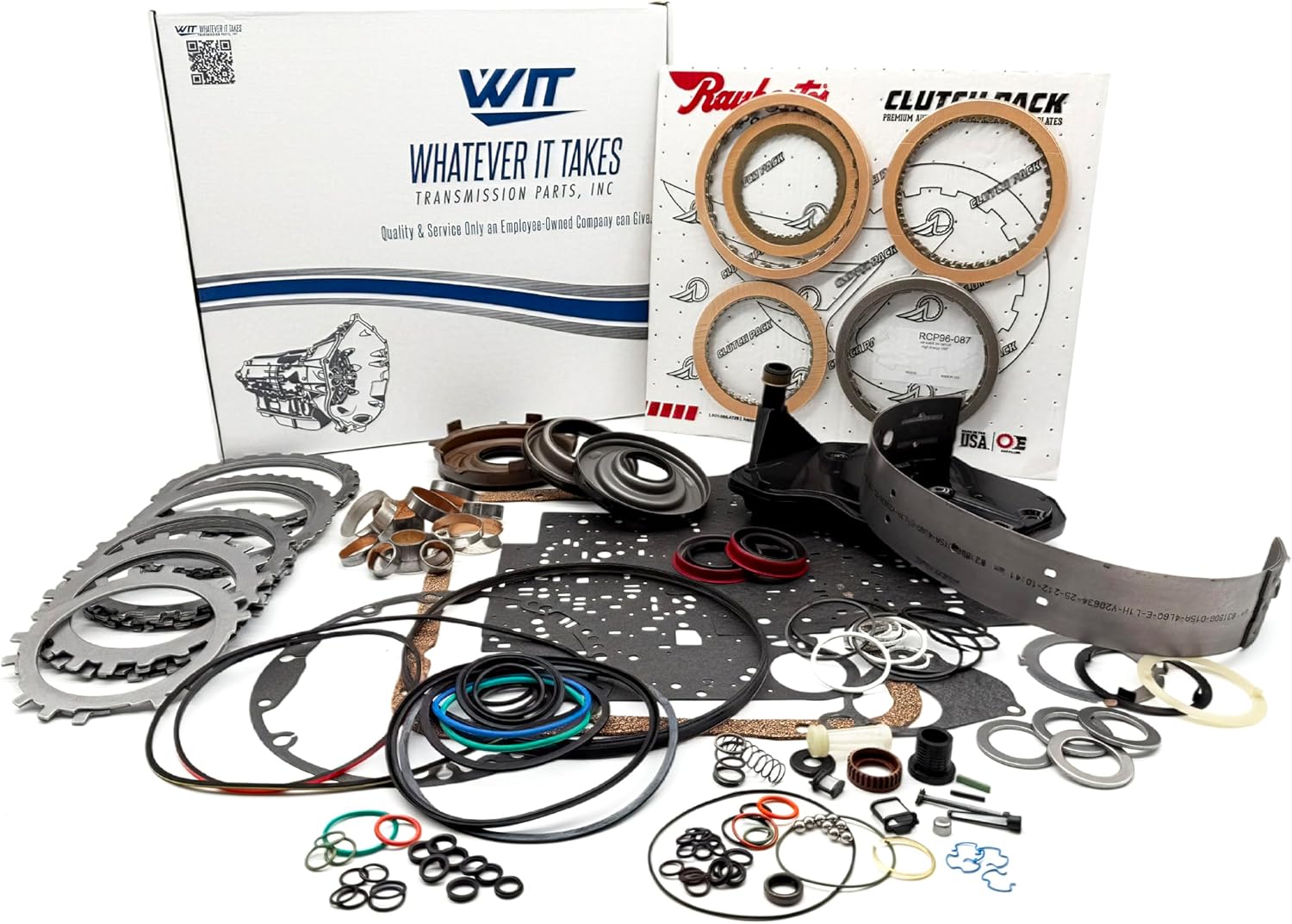
Match the repair to what testing proved. Bore wear gets reamed and sleeved with 77754-04K, plus 77754-RM5 and 77754-ISO if the isolator end is worn too. A failed solenoid or internal harness gets replaced as a set while the pan is down. A leaking shaft seal or channel plate sleeve gets addressed with the unit apart. A converter that fails the bushing clearance check gets replaced or properly rebuilt, not cleaned and reinstalled.
Two things are not optional on any P0741 job where the converter was slipping: replace or flush the cooler, and change the filter. A slipping converter clutch runs hot and sheds friction material, and that debris ends up in the cooler and then back in the valve body you just repaired. Refill with DEXRON VI, the correct fluid for the 4L60E family today and backward compatible with the older DEXRON III fill - roughly 5 to 6 quarts for a pan and filter service, about 11 to 12 quarts for a dry fill after a rebuild or converter swap. Fill in stages and set the level hot, in gear, on level ground.
Torque the valve body bolts to 89-106 in-lbs (roughly 8-9 ft-lbs). Overtightening warps the separator plate and creates cross-leaks that will hand you a fresh slip code on the test drive. Then take a hot, loaded test drive with the scan tool connected and confirm the duty cycle came down. That number is your proof the repair worked - not the absence of a light on the dash.
FAQ
What does P0741 mean on a 4L60E?
P0741 is Torque Converter Clutch Circuit Performance or Stuck Off. The PCM commands the converter clutch on, then subtracts input shaft speed from engine speed to measure TCC slip. Per Sonnax, the code sets when TCC duty cycle is greater than 50 percent and TCC slip speed stays above 180 rpm for 7 seconds, and those conditions have to occur twice in the same ignition cycle. It means the clutch is not holding, not that a specific part has failed.
Is P0741 the same as P1870 on a 4L60E?
They overlap. P1870 is GM's manufacturer-specific code for transmission component slipping, and P0741 is the generic OBD-II code for TCC stuck off. Sonnax notes that some late-model 4L60E units set a P1870 or a P0741 depending on how the computer is programmed, and both set for the same reasons. On a 4L80E the split is by gear: P0741 for third-gear TCC slip and P1870 for fourth.
How much TCC slip is normal on a 4L60E?
On a 1998-and-later EC3 unit, 20 to 40 rpm of slip is normal operation, not a fault. The PCM deliberately holds a small amount of slip to smooth out driveline pulses. On earlier PWM and on/off units, slip should fall to near zero once the clutch is fully applied. Judging an EC3 unit by on/off expectations is how good converters get replaced for nothing.
Can a bad torque converter set P0741 even if it looks fine when cut apart?
Yes. Sonnax documented a case where the TCC piston bushing and clutch lining both looked good, but a 0.007 inch feeler gauge fit between the piston bushing and the turbine hub. That gap acts as an orifice and bleeds apply oil. New clearance is roughly 0.0015 to 0.002 inch; a 0.002 gauge that fits means the bushing is good, 0.003 is marginal, and 0.004 or more means replace it.
Will a misfire code cause a P0741?
It can cause the no-lockup complaint that leads you there. Sonnax documents a 1998 Chevrolet 4L60E where the PCM refused to enable TCC with no transmission codes present, because a P0300 random misfire was inhibiting converter clutch apply. Fix the engine-side fault before you condemn anything in the transmission.
Shop 4L60E parts →
Sources
- Sonnax - "Beyond 1870: GM Converter Codes P0741, P0742 and 1887," Gregg Nader. Backs the exact P0741 set criteria (TCC duty cycle greater than 50 percent, TCC slip speed greater than 180 rpm for 7 seconds, conditions present twice in the same ignition cycle), the relationship between P0741 and GM-specific P1870, the 4L80E split of P0741 for third-gear slip and P1870 for fourth, and the full known-cause list: worn TCC valve bores, damaged or worn pump bearing seal, defective TCC PWM or apply solenoids, restricted separator plate solenoid feed orifice, defective converter, computer reprogram, and channel plate sleeve and turbine shaft sealing ring damage. sonnax.com
- Sonnax - "Understanding 4L60-E Series Isolator Bore Wear & How to Address It," Tory Royce (January 2025). Backs 20 to 40 rpm of TCC slip as normal EC3 operation, the mechanism by which constant oscillation of the TCC regulator and isolator valves wears the aluminum valve body casting and exhausts apply pressure, vacuum testing as the detection method, and the repair path of reaming the bore for kit 77754-04K plus reamer 77754-RM5 or tool kit F-77754-TL4 and isolator sleeve kit 77754-ISO when the isolator end of the bore is also worn. sonnax.com
- Transmission Digest - "4L60-E EC3 TCC Control and Adapt," Richard Middleton (January 2011). Backs the adaptive PCM strategy of ramping TCC duty cycle down until the clutch just begins to slip and then commanding slightly above that minimum, the observation that the fault appears as the unit warms up, the sharp duty-cycle spike the PCM commands in response to surging, and the post-repair result on a 1998 Camaro where duty cycle held at about 25 percent after the TCC regulator and AFL valve bores were overbored and fitted with oversize valves. Also backs wet air testing as the method that found the wear. transmissiondigest.com
- GEARS Magazine (ATRA) - "The Problem and the Cause," Rob Faucett (March 2017). Backs the vacuum-test benchmark used to condemn a bore (a healthy valve body section held 20 in-Hg while the failed TCC control valve pulled only 13 in-Hg), the requirement to address root cause rather than just the failed converter, the reminder to check line pressure command against actual line pressure, and the mass airflow sanity check of grams per second roughly equal to engine displacement in liters at idle and about twenty times displacement at 2500 rpm. gearsmagazine.com
- Sonnax - "Mystery P0741 Code," Ed Lee. Backs the torque converter TCC piston bushing to turbine hub clearance specification of roughly 0.0015 to 0.002 inch when new, the field inspection rule (0.002 feeler fits means good, 0.003 tight means marginal, 0.004 or larger means replace), the documented failure where a 0.007 inch gap leaked about five times the intended oil past that area, and the symptom pattern of lockup that goes soft after roughly 300 miles and sets the code only under load, on hills, or while towing. sonnax.com
- Sonnax - "No Lockup for No Reason?" Dan Tucker. Backs the real-world 1998 Chevrolet 4L60E case in which the control module commanded TCC enable NO with no transmission codes stored because a P0300 random misfire was canceling converter clutch apply, and backs the use of a wet air test on the valve body to find the worn TCC regulator bore during the overhaul. sonnax.com
Shop 4L60E TCC regulator and apply valve kits, TCC and PWM solenoids, internal harnesses, coolers, filters, and DEXRON VI — shipped fast from the USA.
Shop 4L60E parts →