The classic P0742 complaint walks in the door the same way every time: the truck runs fine at speed, then the customer pulls up to a stop sign and it stalls like they dumped the clutch on a manual. Or it does not quite stall - it shudders, drops a couple hundred rpm, and drones its way down to idle. Either way the converter clutch is applied when the computer never asked for it.
Here is the part most techs get wrong on the first attempt: P0742 is very often not a solenoid. Understanding why means understanding that a lockup converter is normally applied and has to be actively held off. Once that clicks, the diagnosis stops being a parts-swap lottery.
For more GM automatic coverage, see our Chevrolet transmission hub and GMC transmission hub.

What P0742 Actually Means
P0742 is Torque Converter Clutch Circuit Stuck On. The PCM commands the TCC off - at idle, at a stop, with the brake applied - and then checks whether the converter actually released. It knows the answer because it can subtract transmission input speed from engine speed. That difference is TCC slip. With the clutch released and the vehicle coasting to a stop, slip should climb into the hundreds of rpm as the fluid coupling does its job. If slip stays at or near zero rpm with the clutch commanded off, the converter is mechanically locked to the engine and P0742 sets.
That is also your best confirmation test, and it takes thirty seconds. Put a scan tool on TCC Slip Speed (or graph Engine RPM against Input/Turbine Speed) and coast to a stop in gear. Slip that flatlines near zero on the way down is proof, not a guess.
How the 4L60E converter clutch is supposed to work
This is the mechanism that makes the rest of the article make sense. As Sonnax technical specialist Randall Schroeder lays it out in Transmission Digest, the lockup disc is normally held off by release oil and converter charge, and lockup is achieved by controlling the exhaust - when you release the oil holding the clutch off, charge oil forces the disc against the cover.
In other words, converter charge pressure is always trying to push the TCC piston into the cover. The only thing stopping it is a steady flow of release oil out of the turbine shaft, between the piston and the cover, around the piston's outside diameter, and out of the converter to the cooler. Sonnax puts a hard number on it: when the flow of TCC release oil drops below 0.45 gallons per minute, the TCC piston starts to drag on the cover, and it gets worse as flow falls further.
So P0742 is not really "something turned the clutch on." It is "something stopped holding the clutch off." That reframing is what keeps you from replacing a perfectly good solenoid.
The Two Root Causes - And Only Two
Sonnax's Ed Lee narrows unintended lockup down to exactly two possibilities, and every real-world 4L60E P0742 falls under one of them:
- Not enough TCC release oil passing between the piston and the cover to keep the piston off.
- Oil in the TCC apply circuit at a time it should not be there.
Your job is to figure out which bucket you are in before you buy a part. A flow meter splits them fastest, but a pressure gauge and a cooler-line loop get you most of the way there.
Bucket 1: restricted release oil
Loop the cooler lines - run a hose from the outlet line straight back to the return line, bypassing the cooler and both lines - and retest. It splits the circuit in one move:
- Goes away with the lines looped: the restriction is downstream of the TCC piston - the cooler itself, the lines, or an auxiliary cooler. On a unit that ate a converter, a plugged cooler is the number one repeat offender, and exactly why flushing or replacing the cooler after a failure is not optional.
- Still there with the lines looped: the restriction is upstream of the piston. Suspect the converter itself, the turbine shaft seal, the turbine shaft sealing rings at the stator, or the stator support bushings.
If neither pans out, go back to the pump. Install a line pressure gauge and watch it alongside your flow reading. Lee's rule is clean: if line pressure is low when flow is low, you have pump or pump-circuit wear. If line pressure is high when flow is low, the pressure regulator valve is being stroked out of balance and is choking off charge and release oil on its way to making pressure.
That last case explains one of the most useful clues you will ever get on this code: a stall that only happens in Reverse. Line pressure is higher in Reverse, so the PR valve strokes further toward the high-pressure position, and in doing so it can limit charge and TCC release oil flow. Lee documents this exact behavior on the early Ford E4OD, which would stall the engine only in Reverse. On a 4L60E, a Reverse-only stall with a P0742 in memory points you at the pump and PR valve, not the solenoid.
Bucket 2: apply oil where it does not belong
If release flow measures fine and the clutch still applies, then apply oil is reaching the converter when it should not be. Per Lee, the most common cause is the TCC control valve stroking to the apply position when it should not, and that happens for two reasons: the TCC solenoid is stuck closed, or the pilot oil orifice is passing more oil than the solenoid is capable of exhausting.
That second one is the sneaky failure, and it is where a lot of comebacks live. The solenoid is not dead - it just cannot exhaust fast enough to keep up with what is being fed to it, usually because the valve bore it controls has worn and is leaking feed oil past the spool. Add that leakage to the orificed signal oil and the total exceeds what the solenoid can dump. The valve strokes, the clutch applies, and a brand new solenoid will not fix it.
There is a hardware failure worth knowing here too. Sonnax documents that the OE plastic TCC solenoid snout cracks where it contacts the plunger valve, causing oil leaks, and that on PWM units the plastic TCC signal drainback valve becomes loose or melts and blocks the converter apply valve. Symptoms are TCC apply concerns, an overheated converter, and loss of lube oil. A melted drainback valve fouling the apply valve is a mechanical stuck-on that no amount of electrical testing will find.
Working a 4L60E this week?
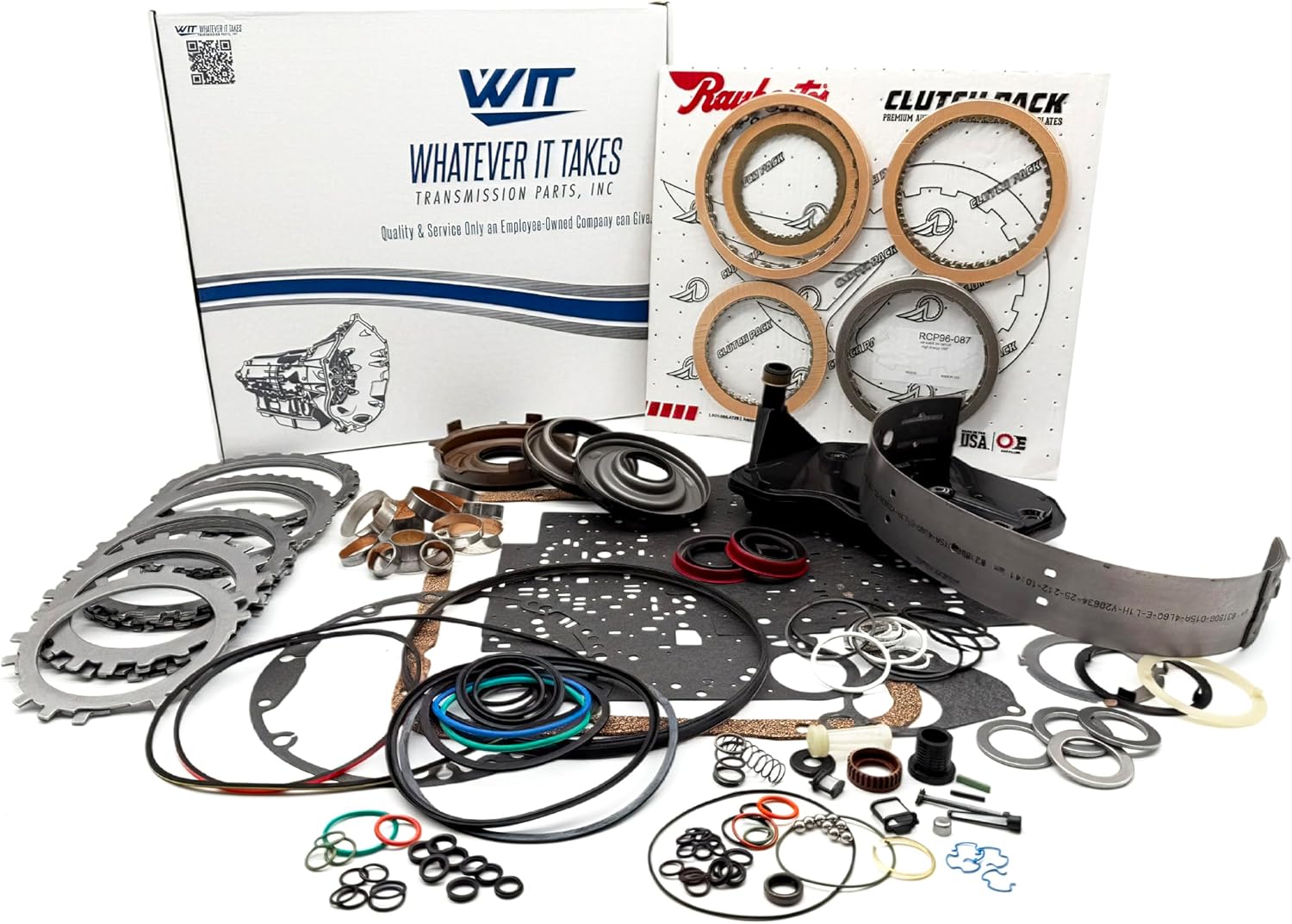
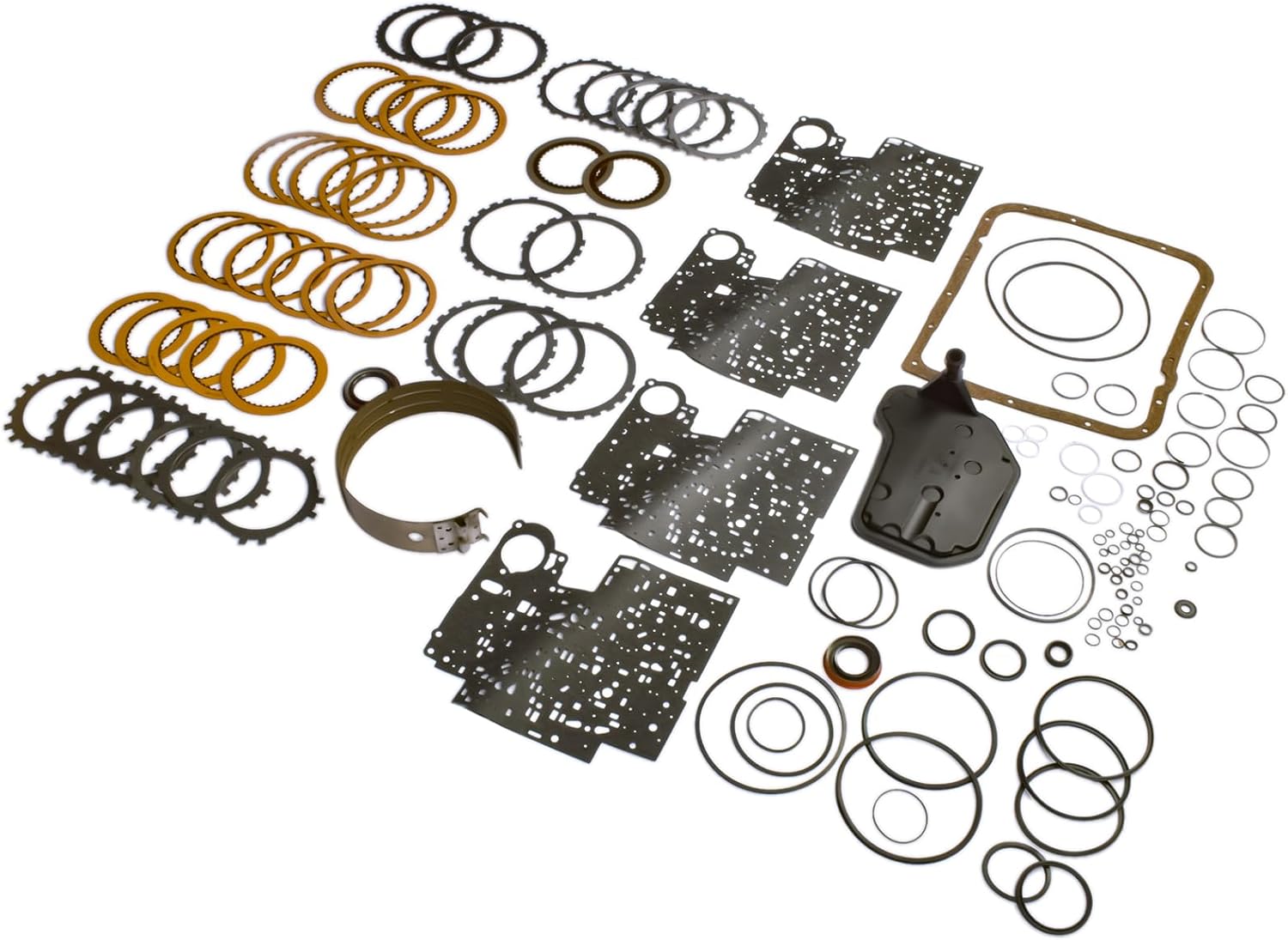
TCC PWM solenoids, lockup solenoids, internal harnesses, apply and regulator valve kits, filters and DEXRON VI — the parts to fix P0742 right, shipped from the USA.
Shop 4L60E parts →Know Which TCC System You Are Working On
A 4L60E is not one transmission for lockup purposes, and assuming the wrong strategy will cost you an afternoon. Per Sonnax, the 4L60-E ran from 1993 to 2014, PWM controls came in around 1995, and 1998-and-later units added EC3 (electronically controlled capacity clutch). Maura Stafford's breakdown of GM TCC circuits groups them by control method: a single on/off enable solenoid, an enable solenoid plus a PWM solenoid, or a single PWM solenoid controlling multiple valves.
The practical difference for P0742 is what "normal" looks like on your scan tool:
- Early on/off units: the clutch is either locked or unlocked. Slip near zero when commanded off is unambiguously wrong.
- PWM units: the PCM ramps duty cycle linearly from 0% unlocked to about 90% for full lockup. Duty cycle should be at or near zero at a stop.
- EC3 units (1998-later): the PCM raises duty in rapid steps to around 50% to begin apply, then holds a deliberate 20 to 40 rpm of slip under most conditions, and pushes to 98% to fully lock under high load or freeway speed. A small standing slip on an EC3 unit is normal operation, not a fault.
The duty-cycle tell that beats the code
This is the best free diagnostic on the platform and almost nobody uses it. Because EC3 is adaptive, the PCM raises duty cycle to compensate as the TCC regulator bore wears. Sonnax spells out the implication: if you see a vehicle with relatively low mileage running an average TCC duty cycle around 79%, the PCM is compensating for circuit wear, most likely in the regulator bore. You can spot the failure before it ever sets a code. Log average TCC duty on every GM that comes in for anything and you will catch these early.
Valve Body Bore Wear: The Real Killer
The 4L60E valve body is aluminum, and the TCC regulator and isolator valves oscillate constantly under PWM and EC3 control. Sonnax technical support engineer Tory Royce writes that this constant oscillation causes casting wear that allows critical apply pressure to exhaust. That bore wear shows up on the parts side as the cause behind codes 1870 and 0894, low TCC apply pressure, overheated converters, burned 3-4 clutches, harsh 1-2 shifts, and low line pressure.
Wear on this bore cuts both ways for a P0742 job. Leakage past a worn spool can be the extra oil volume that overwhelms the solenoid's ability to exhaust - Bucket 2. And because the worn bore is open to line pressure, it also bleeds line pressure to exhaust, dragging down the pump's ability to maintain converter charge and release oil - Bucket 1. One worn casting, both failure modes.
Check for it with a vacuum test rather than eyeballing the bore, because casting wear that will absolutely cause a comeback is often invisible to the naked eye. The standard repair is to ream the bore and install the Sonnax TCC regulator and isolator valve kit 77754-04K, which brings a wear-resistant sleeve, a hardcoat anodized regulator valve, and a lengthened isolator valve that reaches unworn casting. Royce's 2025 update adds an important caveat: many builders assume 77754-04K restores the whole bore, but on high-mileage units the isolator section can be worn too, and that end needs reamer 77754-RM5 (or tool kit F-77754-TL4) plus isolator sleeve kit 77754-ISO to fully seal.
4L60E TCC Lock-Up Solenoid, OEM 24227793 (1993-2008)
If your testing lands on a stuck-closed TCC solenoid - the clutch applies with the circuit commanded off and release flow measures normal - this is the part. OEM number, fits 1993-2008 4L60E. Change the filter and fluid while the pan is down.
View the TCC solenoid →Not sure which one your unit takes? Browse the full 4L60E parts collection.
A Diagnostic Order That Works
- Confirm the complaint with slip data. Coast to a stop watching TCC Slip Speed. Slip pinned near zero with the clutch commanded off confirms stuck-on. If slip behaves normally, you are chasing an intermittent or an engine-side stall.
- Qualify the symptom. Stalling, just pulling rpm down, or only overheating the converter? Every range, only Reverse, or only after a specific shift? Reverse-only says pump and PR valve. Lockup that arrives right after one shift and will not release until the downshift says the signal oil stroking the TCC control valve is coming from a clutch circuit - Lee documents that exact pattern on the 200-4R, where a defective solenoid let 2nd clutch oil stroke the control valve after the 1-2 shift.
- Check fluid level, condition, and cooler flow. Low fluid and a restricted cooler both starve release oil. If the converter has failed before, assume the cooler is contaminated until proven otherwise.
- Loop the cooler lines, then gauge line pressure against flow. The loop splits upstream from downstream. Low pressure with low flow equals pump wear; high pressure with low flow equals a PR valve out of balance.
- Test the solenoid circuit electrically. Ohm the TCC and PWM solenoids at the solenoid and again at the case connector to isolate a bad internal harness, and verify on a scope or graphing meter that the solenoid is actually being turned off at a stop. A wire chafed to a 12V source will hold it energized no matter what the PCM commands - check for voltage on the control wire with the connector unplugged.
- Pull the valve body and vacuum test the TCC regulator and isolator bores, and inspect the solenoid snout and drainback valve for the cracked-plastic and melted-drainback failures above. If duty cycle history was running high, expect to find bore wear.
The Fix, and the One Modification to Avoid
Match the repair to what the testing proved: cooler replacement and flush for a downstream restriction, a converter for an internal restriction, pump or PR valve work for a pressure imbalance, solenoid and harness for an electrical or stuck-closed fault, and a reamed bore with 77754-04K for casting wear.
What you should not do is the old shortcut. Builders have long blocked the TCC regulator valve with a 700-R4 inner pump slide spring to kill slip codes, effectively reverting the unit to on/off. Sonnax is direct about the consequences: it feeds full line pressure into the apply circuit, up to 140 psi under load, against an OE apply pressure range of roughly 60 to 80 psi. The results are cracked or deformed TCC pistons, broken damper rivets, torsional driveline disturbance, damaged crankshaft bearings, harsh apply, friction lining delaminating from the piston, and converter failure. It also leaves the worn bore open to line pressure, so you introduce a line pressure leak on top of everything else. If you want elevated apply pressure without that, Sonnax's TCC pressure limiter spring system caps it at 100 psi instead.
Fluid and reassembly notes
Refill with DEXRON VI. GM moved the 4L60E family to DEXRON VI and it is backward compatible with the older DEXRON III fill, so DEXRON VI is the correct choice for any 4L60E on the bench today - Shell's Pennzoil DEXRON-VI technical data sheet states the fluid meets GM specification GMN10060 and is fully back serviceable for DEXRON-III(H), III and IIE applications, and lists preventing clutch shudder in modulated torque converters among its design goals, which is exactly the job a 4L60E lockup clutch asks of it. Fluid choice matters more than usual on a lockup job: Schroeder notes that incorrect fluid causes low-speed chatter, because the clutch is being applied as early as second gear and will not grab without the right friction modifiers.
A pan drop and filter takes roughly 5 to 6 quarts; a dry fill after a rebuild or converter swap runs about 11 to 12 quarts. Fill in stages and check level hot, in gear, on level ground. Torque valve body bolts to 89-106 in-lbs (about 8-9 ft-lbs) - overtightening warps the separator plate and creates the exact cross-leaks you just spent the day chasing. If the converter overheated, replace it and flush or replace the cooler. Schroeder's warning that converter failures fill the transmission with metal debris that sticks control body valves and restricts solenoids is the reason a "clutch stuck on" job so often turns into a full teardown.
FAQ
What does P0742 mean on a 4L60E?
P0742 is Torque Converter Clutch Circuit Stuck On. The PCM commands the converter clutch off, then compares engine speed to input shaft speed to measure TCC slip. If slip stays at or near zero rpm while the clutch is commanded off, the converter is still locked to the engine and the code sets. The classic symptom is the engine stalling or lugging as the vehicle comes to a stop.
Why does my truck stall at stop signs with a P0742?
Because the converter clutch is mechanically locking the engine to the drivetrain, exactly like leaving a manual transmission in gear and never pushing the clutch pedal. A torque converter normally decouples the engine at low speed through fluid coupling. With the clutch stuck applied, that decoupling never happens, so the wheels stop and the engine stops with them.
Is P0742 always a bad TCC solenoid?
No, and that assumption causes most of the comebacks on this code. The converter clutch is held off by release oil flow, so anything that restricts that flow will apply the clutch with a perfectly good solenoid installed - a plugged cooler, a restricted converter, worn turbine shaft seals, or a pressure regulator valve stroked out of balance. Sonnax notes the clutch begins dragging on the cover once release flow falls below 0.45 GPM. Prove where the restriction is before ordering parts.
Can I drive a 4L60E with a P0742 code?
Not safely, and not for long. A vehicle that stalls at every stop is a real hazard in traffic, and if the cause is restricted flow, the converter is overheating the whole time you drive it. Overheated converters shed friction material and metal into the fluid, which contaminates the valve body and turns a solenoid or cooler repair into a rebuild.
How do I know if my 4L60E is PWM or EC3?
Roughly, 1993 to 1994 units used on/off lockup control, PWM came in around 1995, and 1998-and-later units added EC3. Confirm on the vehicle rather than by year alone by watching TCC duty cycle and slip on a scan tool at a steady cruise. An EC3 unit deliberately holds 20 to 40 rpm of slip at around 50% duty; a PWM unit ramps to about 90% for full lockup with slip near zero.
Shop 4L60E parts →
Sources
- Sonnax — "Troubleshooting Lockup Issues," Ed Lee. Backs the two root causes of unintended lockup (insufficient TCC release oil, or apply oil present at the wrong time), the 0.45 GPM release-flow threshold at which the TCC piston begins dragging on the cover, the cooler-line looping test to isolate restrictions upstream vs. downstream of the piston, the line-pressure-versus-flow rule for separating pump wear from a pressure regulator valve stroked out of balance, the Reverse-only stall mechanism on the early E4OD, and the 200-4R case where 2nd clutch signal oil stroked the TCC control valve after the 1-2 shift. sonnax.com
- Sonnax — "20 Years Later: What's New with 4L60-E PWM Modifications." Backs the PWM duty cycle range (0% unlocked to about 90% full lockup), the EC3 strategy of roughly 50% duty for 20-40 rpm of controlled slip and 98% for full lock under load, the diagnostic that a low-mileage vehicle averaging about 79% TCC duty indicates regulator bore wear, and the consequences of blocking the TCC regulator valve with a 700-R4 pump slide spring (up to 140 psi apply versus an OE 60-80 psi, cracked pistons, broken damper rivets, lining delamination, converter failure) plus the 100 psi Sonnax pressure limiter alternative. sonnax.com
- Sonnax — "Understanding 4L60-E Series Isolator Bore Wear & How to Address It," Tory Royce (January 2025). Backs the 1993-2014 production span, PWM from 1995 and EC3 from 1998, the constant oscillation of the TCC regulator and isolator valves causing aluminum casting wear that exhausts apply pressure, vacuum testing as the detection method, and the repair path of reaming the bore with kit 77754-04K plus reamer 77754-RM5 and isolator sleeve kit 77754-ISO for the isolator section. sonnax.com
- Sonnax — TCC Solenoid Snout Kit 77942-01K product page. Backs the OE plastic solenoid snout cracking where it contacts the plunger valve and leaking oil, the PWM TCC signal drainback valve becoming loose or melting and blocking the converter apply valve, and the resulting symptoms of TCC apply concerns, overheated converter, and loss of lube oil. sonnax.com
- Sonnax — TCC Regulator & Isolator Valve Kit 77754-04K product page. Backs the failure symptom list tied to TCC regulator/isolator bore wear (codes 894 and 1870, overheated converter, low TCC apply pressure, burned 3-4 clutch, harsh 1-2, low line pressure) and the stated cause that excess bore wear allows TCC apply pressure to exhaust. sonnax.com
- Transmission Digest — "The torque converter can of worms: Lockup and aftermarket programming," Randall Schroeder (May 2024). Backs the core mechanism that the lockup clutch is normally held off by release oil and converter charge and is applied by controlling the exhaust, that incorrect fluid causes low-speed chatter because the clutch is applied as early as second gear, and that converter failures fill the transmission with metal debris that sticks control body valves and restricts solenoids. transmissiondigest.com
- Sonnax — "GM TCC Circuits," Maura Stafford. Backs the classification of GM converter clutch circuits by control method (single on/off enable solenoid; enable plus PWM; single PWM solenoid controlling multiple valves) and the 700-R4/4L60 on-off to 4L60-E enable-plus-PWM transition. sonnax.com
- Shell / Pennzoil — ATF Dexron-VI Technical Data Sheet. Backs that a GM-approved DEXRON-VI fluid meets GM specification GMN10060, is fully back serviceable for DEXRON-III(H), III and IIE applications, and is formulated to help prevent clutch shudder in modulated torque converters, which is why DEXRON VI is the correct refill for a 4L60E today. shop.sclubricants.com (PDF)
Shop 4L60E TCC and PWM solenoids, internal harnesses, valve body components, coolers, filters, and DEXRON VI — shipped fast from the USA.
Shop 4L60E parts →