Torque converter clutch lockup on a 4R100 doesn't behave like it does on most other transmissions, and that catches a lot of techs off guard the first time they chase a shudder or a soft-apply complaint on one of these trucks. The 4R100 shares its case and much of its converter design with the E4OD it replaced, but Ford changed the TCC hydraulics enough that the two units fail differently. Treat a 4R100 TCC problem like an E4OD problem and you'll spend money on parts that don't fix it.
PWM vs. non-PWM: Know Which TCC Strategy You're Working On
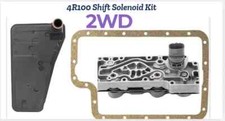
Before you diagnose anything, confirm which lockup strategy the truck actually has. Per Transmission Digest's March 2001 Tech/Talk bulletin, Ford offered the 4R100 with two different TCC application strategies starting at the beginning of 1998 production: a pulse-width-modulated (PWM) version that went into V-10 gasoline trucks and every diesel application, and a non-PWM, on/off version that went into all other gas engines that year. Starting with 1999 production, every 4R100 switched to the PWM strategy, so if you're working a 1999-or-later truck, it's PWM, full stop. On a 1998 model, check the engine and solenoid pack before assuming either way.
The two strategies aren't interchangeable, and the differences aren't cosmetic. The same bulletin documents the hardware changes Ford made to support PWM: the TCC valve bore in the pump cover was enlarged by about 0.070 in. for a larger valve land, a 0.036 in. orifice and air bleed were added to the TCC-solenoid signal passage, a bushing and valve were added to the TCC control valve's rear spool, and the converter-release orifice present in the non-PWM pump cover was removed entirely from the PWM cover. The solenoid packs are different parts too: Ford F81Z-7G391-AB for PWM, F81Z-7G391-BA for non-PWM, with separate pump assembly part numbers for each. None of it interchanges, so ordering a non-PWM solenoid pack for a PWM-equipped diesel will not fix anything and won't even bolt up correctly to the pump's hydraulic circuit.
What a Failing TCC Lockup Actually Feels Like
Transmission Digest's TASC Force write-up on repeated 4R100 converter failure lays out the classic progression on a real truck: a 2000 model-year 7.3L diesel came back from its final test drive with the TCC apply feeling noticeably longer and softer than it should, and the truck returned within the week showing overheated fluid and a stored code 1728 or 1744. The shop's first instinct, swap converters or coolers, burned through fresh fluid, a heavy-duty converter and labor without solving anything, because the actual cause wasn't the converter itself. It was insufficient pressure at the TCC piston to control slip as engine torque increased, and on the 4R100's modulated TCC circuit, any restriction in that flow path matters far more than it would on the E4OD's simpler on-off circuit.
Why the Modulated TCC Circuit Is So Easy to Get Wrong
The mechanism behind that sensitivity comes down to how the 4R100 handles converter-apply and release oil. On the modulated converter circuit, fluid from the TCC regulator valve flows unrestricted straight to the converter-apply piston. As the TCC solenoid modulates the control valve, the release oil between the piston and the converter cover exhausts with no orifice at all, so the apply side gets priority and the cooler circuit gets shortchanged in the process. Add an external pressure-bypass checkball, spring-loaded to open at roughly 60 psi of cooler head pressure to keep lube flow moving around a restricted cooler, and you have a circuit where a change in any one orifice size shifts pressure and flow somewhere else you weren't expecting. Make an orifice bigger and the TCC piston gets less clamping pressure; make it smaller and the cooler and lube circuit get starved. There isn't a "just open it up" fix here.
The Diagnostic That Actually Works: Cooler Flow and Head Pressure
Because the problem is almost always a flow restriction rather than an electrical fault, Transmission Digest's TASC write-up recommends testing cooler flow and head pressure together, not just pulling codes and swapping the solenoid pack. Checking head pressure alone, if you don't have a flow meter, is the minimum; checking both at once tells you whether the converter is actually being charged and released correctly during lockup. On a healthy 4R100, head pressure should rise to the documented normal spec during TCC apply. Units the publication tested with restricted converters showed minimal flow difference during lockup and head pressure that never climbed to normal, which is the signature of a flow problem rather than a solenoid that simply isn't firing. If your scan tool shows the TCC being commanded on but the truck won't confirm clean lockup, this is the test that tells you whether to look at the solenoid circuit or the hydraulic side of the converter and pump.
Converter Endplay: The Spec Most Shops Skip
A separate but related failure mode is TCC drag, where the clutch doesn't release cleanly and keeps dragging against the cover between lockup events. Transmission Digest's flow-issues article, written by Sonnax technical specialist Ed Lee, traces this directly to how the 4R100 differs from the E4OD internally. The E4OD has an unrestricted flow path between the clutch and the cover that keeps the clutch from dragging and still feeds the lube circuit. The 4R100's turbine hub, when fitted with a bearing, only allows converter-charge and clutch-release oil to pass through three narrow slots between the turbine shaft and the hub, with no lube passages bypassing the bearing. That makes converter endplay critical: Lee specifies a minimum of 0.035 in. to 0.040 in. of endplay to let enough release oil through to keep the clutch off the cover. Too little endplay and the clutch drags; too much and you risk an impact-related bearing failure instead. This is a measurement made during a converter rebuild, not something you can eyeball, and it's a common reason a "rebuilt" converter still produces a shudder or soft apply if the shop that built it didn't check this spec.
What the Codes Mean, per ATSG
Before you pull a pan, read the code for what it actually is. The ATSG 4R100 diagnostic code chart defines P0741 (and P0743) as the PCM picking up an excessive amount of TCC slippage during normal operation, with erratic or no converter clutch operation and a flashing TCIL (the O/D OFF lamp). P1744 is a different animal: ATSG lists it as a TCC solenoid mechanical failure detected, with a harsh shift and a possible flashing TCIL. So P0741 points at the converter clutch and its hydraulic supply, while P1744 points first at the solenoid and the valve it controls.
Check the solenoid electrically before you condemn anything hydraulic. ATSG's solenoid body test reads both TCC solenoids across connector pins 1 and 4: the TCC On/Off solenoid at 20-30 ohms on non-PWM units, and the TCC PWM solenoid at 10-20 ohms on PWM units. A reading in range doesn't clear the solenoid of a sticking valve, but a reading out of range ends the hydraulic chase right there.
The PWM Plunger Valve: A Specific, Fixable Wear Point
On PWM-equipped trucks specifically, Sonnax's own product documentation for its 4R100 TCC control plunger valve kit identifies another wear pattern worth checking before you condemn a converter. PWM units use a plunger valve assembly and coil spring to cushion the TCC control valve, using regulated converter pressure as a variable hydraulic spring that controls how quickly the TCC applies. Continuous oscillation of that plunger valve wears the sleeve's inside diameter over time, which lets regulated converter pressure leak past it. The result is premature or bumpy TCC apply, shudder, or both, on a truck where the converter and pump might otherwise be fine. Sonnax's fix is a drop-in valve kit (Sonnax 36424-08K, PWM units only) with a wear-resistant aluminum alloy sleeve and a hardcoat-anodized valve, intended to restore the original hydraulic control without replacing the whole pump. If you're chasing a shudder on a 1998-or-later PWM truck and the cooler-flow test above comes back reasonably normal, this plunger valve bore is the next thing to inspect.
Where Fluid Condition Fits In
Fluid matters here, but it's not the first thing to chase. Degraded or contaminated ATF reduces the friction coefficient of the TCC clutch itself and can mimic or worsen a shudder that's really coming from the mechanical issues above. Fresh fluid and filter are cheap insurance and worth doing before you tear into the valve body or pump, but don't expect a flush alone to fix a drag or shudder that's actually coming from converter endplay or a worn plunger valve bore. If a fluid service doesn't resolve the symptom within a short drive cycle, move on to the hydraulic circuit rather than running a second or third flush.
Need parts for this job? See our dedicated shudder diagnosis guide for a step-by-step bench approach, or check the valve body testing guide if the control valve itself is the suspect.
FAQ
What does code 1728 or 1744 mean on a 4R100?
Transmission Digest's TASC Force write-up on repeated 4R100 converter failure describes a 2000 model-year 7.3L diesel that returned from a test drive with the TCC apply feeling longer and softer than normal, followed by overheated fluid and code 1728 or 1744 on the next trip. Both point to the control module seeing a torque converter clutch that isn't locking up cleanly, which on this transmission usually traces back to a flow restriction in the modulated TCC circuit rather than a bad solenoid.
Why does a 4R100 TCC shudder feel different from an E4OD shudder?
The two share a case and a converter design, but not the same TCC hydraulics. Transmission Digest's flow-issues write-up explains that the E4OD has an unrestricted path for release oil between the clutch and the cover, so it rarely drags. The 4R100 added a turbine hub bearing with only three narrow oil slots on the ID, and converter endplay below spec starves that release flow, letting the clutch drag on the cover instead of releasing cleanly. That's a mechanical flow problem, not just a solenoid or fluid issue.
How do I know if my 4R100 has the PWM or non-PWM TCC solenoid pack?
Per Transmission Digest's March 2001 Tech/Talk bulletin, every 1999-and-later 4R100 uses the PWM (pulse-width-modulated) lockup strategy. For the 1998 model year only, the PWM version went into V-10 gasoline trucks and all diesel applications, while other 1998 gas engines got a non-PWM, on/off solenoid pack. The two use different solenoid packs (Ford F81Z-7G391-AB for PWM, F81Z-7G391-BA for non-PWM) and different pump castings, and the parts are not interchangeable between the two strategies.
What converter endplay does a 4R100 need to avoid TCC drag?
Transmission Digest's Sonnax-authored flow-issues article gives a minimum of 0.035 in. to 0.040 in. of converter endplay to let enough clutch-release oil pass through the turbine hub bearing and keep the clutch from dragging on the cover. Too little endplay restricts that oil and causes drag; too much endplay shortens bearing life. Both ends of that range matter, which is why endplay gets measured and set during a converter rebuild rather than assumed.
Can a full fluid flush fix 4R100 TCC shudder?
Sometimes, if the shudder is coming from degraded friction material in the fluid, but not if the cause is mechanical. Several of the root causes covered here, like a worn TCC control plunger valve bore or insufficient converter endplay, are flow and clearance problems inside the pump and converter that a flush does not touch. If a fluid and filter service with the correct ATF doesn't resolve a shudder within a short drive cycle, stop chasing fluid and start checking the hydraulic circuit.
Diagnosing a 4R100 TCC complaint this week?
PWM and non-PWM solenoid packs, valve bodies, pumps, converters, and master rebuild kits — all in one place, shipped from the USA.
Shop 4R100 parts →Sources
- Transmission Digest — "4R100: Repeated Converter Failure," TASC Force Tips, June 2006. Backs the 2000 model-year 7.3L case history, the TCC apply feeling longer and softer before overheated fluid and codes 1728/1744 appear, the lack of sufficient pressure at the TCC piston as the root mechanism, the unrestricted apply-oil/unorificed release-oil circuit on the modulated converter, the external pressure-bypass checkball opening around 60 psi of cooler head pressure, and the cooler-flow-plus-head-pressure diagnostic method. transmissiondigest.com
- Transmission Digest — "4R100 Flow Issues," Ed Lee (Sonnax technical specialist), June 2006. Backs the E4OD-vs-4R100 turbine hub bearing comparison, the three narrow oil slots that meter clutch-release oil on the 4R100, the 0.035 in. to 0.040 in. minimum converter endplay specification, and the tradeoff between clutch drag (too little endplay) and bearing wear (too much endplay). transmissiondigest.com
- Transmission Digest — "Ford 4R100: PWM and Non-PWM Pump Differences," Tech/Talk, March 2001. Backs the 1998 split between PWM (V-10 gas and all diesel) and non-PWM (other gas) strategies, the switch to all-PWM at the start of 1999 production, the 0.070 in. valve-bore enlargement, the 0.036 in. TCC-solenoid signal orifice, the removed converter-release orifice on PWM pump covers, and the Ford part numbers for each pump and solenoid-pack variant. transmissiondigest.com
- Sonnax — 4R100 TCC Control Plunger Valve Kit 36424-08K (PWM units only), product documentation. Backs the PWM plunger valve and coil spring mechanism that cushions TCC apply, the wear pattern in the sleeve ID from continuous plunger valve oscillation, the resulting converter pressure leakage, and premature or bumpy TCC apply/shudder as the symptom. sonnax.com
- ATSG (Automatic Transmission Service Group) — Ford 4R100 technical service manual (2003), Diagnostic Trouble Code Chart and solenoid body testing. Backs the P0741/P0743 TCC slippage and P1744 TCC solenoid mechanical failure definitions and symptoms, and the TCC On/Off (20-30 ohms) and TCC PWM (10-20 ohms) solenoid resistance specs across pins 1 and 4. ATSG 4R100 manual (PDF)
- Sonnax — "4R100 Repeated Converter Failure," tech resource mirror. Confirms the converter-failure case history and modulated-TCC mechanism above as Sonnax's own published technical material. sonnax.com