A fresh red spot under the truck doesn't tell you much by itself. The 4R100, and the E4OD it was built from, have a handful of spots that account for most of the leaks shops actually see, and they're not evenly likely. Chasing the wrong one first means pulling a transmission for a seal that was never the problem, or re-torquing a pan for the third time while the real leak is at the top of the case the whole time. This guide works both units since they share the same case, pump family, and tailshaft design through most of their production run.
Before anything else, confirm it's actually transmission fluid. On these trucks it runs red when fresh and darkens with age, same base color as power steering fluid, so a drip near the firewall or the front of the engine can send you looking in the wrong spot. Transmission fluid shows up at the pan, the front of the case near the bellhousing, the dipstick/fill tube, the cooler line fittings, or the tailshaft where the driveshaft connects. Anything further forward or up high is more likely power steering or coolant.

Step 1: Check the dipstick/fill tube before you touch the pan
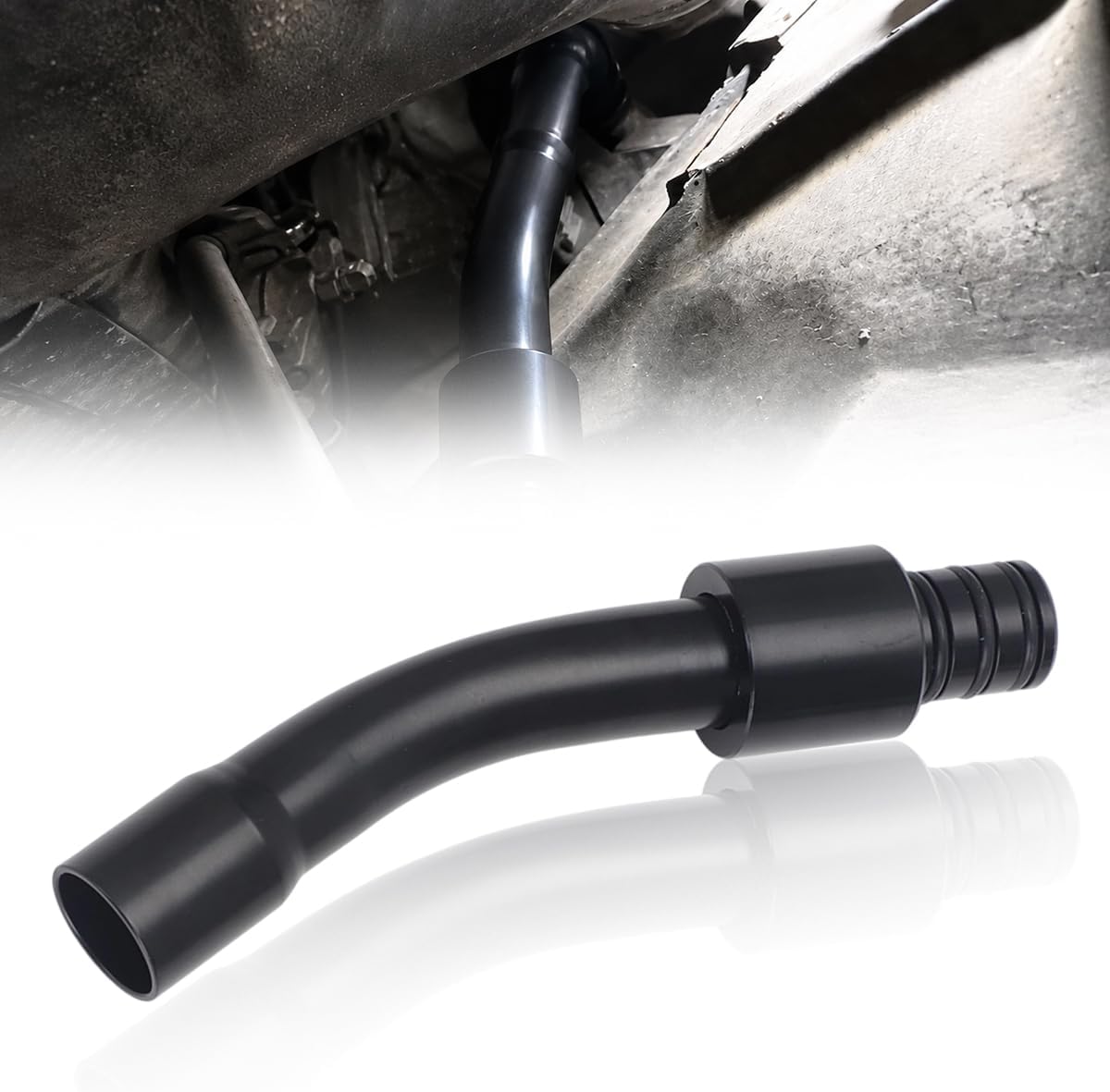
This is the spot most people skip, because it's up high and easy to write off as "just a little grime." The factory fill tube on these trucks, Ford part XC3Z-7A160-AA, is a press-in design that depends on a Teflon coating around its base to hold the seal against the case. ATS Diesel's repair-tube listing for the 1989-2010 E4OD, 4R100 and 5R110 family describes exactly this failure mode: the coating is prone to losing its seal over time, which lets fluid weep out at the top of the case rather than drip from underneath. Because the stock tube is pressed in, a full factory-style repair has traditionally meant pulling the transmission, which is a lot of labor for what's really a $20 part.
Wipe the tube and its base at the case completely dry, then check it again after a drive. If fluid shows up there first, before anything shows at the pan or the front of the case, you've found it, and a direct-fit replacement tube fixes it without a transmission removal.
Step 2: Pan gasket and pan rail
This is the leak reported most often by owners and shops working on these trucks, and it's also the one most likely to get chased wrong. A warped pan rail from over-torquing a previous gasket, a hardened cork gasket that's cracked, or bolts that backed off from heat cycling will all show fluid weeping along the bottom edge of the pan. Clean the pan and the case mating surface completely, install a new gasket (a reusable rubber-style gasket holds up better than a one-time cork gasket on a truck that gets driven hard or towed), and torque the bolts evenly in a criss-cross pattern rather than working around the pan in a circle.
Torque specs reported across shops and service threads for this pan commonly land in the 9 to 11 ft-lb range (roughly 110 to 130 in-lbs), but that figure varies by pan and bolt size and isn't something to take from a forum post with a pan half off. Confirm the number in your factory service manual or with a parts-counter lookup for your exact pan before you start, and don't chase a persistent leak with more torque; an over-tightened bolt through a thin pan flange is how you crack the casting or strip the hole, which turns a gasket job into a pan replacement.
Step 3: Front of the case, and the leak that isn't a drip at all
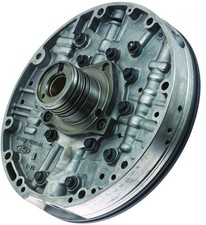
The front pump seal, behind the dust cover near the bellhousing, is the other leak point shops report most on these units, and it's the one that requires pulling the transmission to fix. If fluid shows up at the front of the case with the truck running and in gear, and the pan and dipstick tube are clean and dry, the front seal is the next suspect.
Look at the pump bushing before you drive a new seal in. A worn bushing lets the converter hub move around and pushes more converter oil toward the seal than the drainback hole can handle, and a new seal riding on a sloppy hub leaks again. Sonnax lists "leaking front seal" and "excess converter hub-to-bushing clearance" among the conditions its finish-in-place pump bushing 36002-01 is meant to cure on the E4OD and 4R100. Their note on that part is the useful one for a rebuilder: thin aftermarket drop-in bushings can leave too much clearance, and the finish-in-place design allows 0.008 to 0.010 inch of material removal to set the bushing-to-hub clearance correctly. If the hub has any visible wear or the old bushing shows scoring, plan on the bushing as well as the seal.
But not every disappearing quart shows up as a puddle. Sonnax's technical documentation on the 4R100/E4OD pump identifies a wear pattern in the line-to-lube pressure regulator valve, inside the pump itself, that lets the OE valve restrict converter charge and cooler flow as it wears. The resulting symptoms are codes 62, 628 and 1744, high line pressure, an overheating converter, and stall or stumble on engagement in Reverse, with low cooler flow, not a visible external leak. Sonnax's own kit (36424-04K / 36424-16K, fitting E4OD and 4R100 pumps with F1, F5, F8 and E9 castings) corrects it by adding an internal check valve and a revised orifice. The same documentation flags a shortcut some shops use, drilling the pump casing for full-time cooler flow, as imprecise and prone to causing converter drainback and delayed-engagement complaints, so it's not a substitute for the correct valve. If your fluid level keeps dropping and you can't find a drip anywhere, this internal wear is worth ruling out before you assume you just haven't found the external leak yet.
Step 4: Tailshaft seal, and the bushing that keeps eating it
Fluid flung from where the driveshaft meets the back of the transmission points to the tailshaft (output shaft) seal. A new seal is cheap and usually fixes it, but on units that keep re-leaking after a fresh seal, the rear case bushing is the thing to check before you blame the seal again. Sonnax documents that the OE rear case bushing on E4OD and 4R100 units spins out from lack of lubrication, excessive journal clearance, or too much load for the bearing area, and that once it spins, it damages the case bore it sits in. A standard bushing won't seat correctly in a damaged bore, which is why Sonnax sells an oversized bushing (36008C, with installer tool T36008A) for late-style, 1995-and-newer three-groove cases. If the output shaft isn't running true because the bushing and bore around it are worn, a brand-new seal has nothing round left to seal against, and you'll be back here again in a few thousand miles.
Step 5: Cooler lines and fittings
Don't skip the cooler lines just because they're easy to see. On trucks that have spent years on salted roads, the steel sections between the transmission and the radiator or auxiliary cooler corrode from the outside, and the failure usually shows up as a pinhole or a split at a bend, not at the fitting itself. Follow the full run of both lines by hand, checking for rust scale, chafing against the frame or crossmember, and a fitting that's simply backed off. A line that's leaking under load but fine at idle is often chafing against something and only opening up under vibration.
On 1997-and-later units, also check the cooler bypass valve assembly where the lines leave the case. It is sealed with O-rings, and Sonnax's 36605-02K cooler bypass valve kit for the E4OD and 4R100 includes seven new O-rings for that circuit. The same Sonnax listing documents a second problem at that valve: a bypass that leaks or opens below its 70-75 psi cracking pressure cuts cooler flow and shows up as TCC slip, overheating and codes 1741, 1744 and 1783. Fluid at the case fittings plus a converter that runs hot points here before the radiator cooler.
Diagnostic order, start to finish
| Where you found fluid | Most likely cause |
|---|---|
| Weeping at the top of the case, near the dipstick tube | Dipstick/fill tube seal (XC3Z-7A160-AA design) |
| Along the bottom edge of the pan | Pan gasket, warped rail, or under/over-torqued bolts |
| Front of the case near the bellhousing | Front pump seal; requires pulling the transmission |
| Level keeps dropping, no drip found anywhere | Pump line-to-lube valve wear, converter overheat, codes 62/628/1744 |
| At the driveshaft/yoke, rear of the transmission | Tailshaft seal; check the rear case bushing if it re-leaks |
| Along the line run between the trans and the cooler | Corroded steel line or a chafed/loose fitting |
Shop the part for this fix: 4R100 front pump reseal kit
If the front of the case is the confirmed source, this is the direct-fit reseal kit that covers the front pump seal job properly rather than a bare seal alone. For the dipstick tube, the pan kit, and everything else covered above, browse the full 4R100 range at CoreTransmissionParts.
See the 4R100 front pump reseal kit at CoreTransmissionPartsNeed parts for this job?
Our 4R100 parts page has the dipstick tube, pan and filter kits, pumps, and tailshaft hardware, so once you've traced the leak you can order the exact part and check out on site.
FAQ
What's the most common place a 4R100 leaks transmission fluid?
Shops report the front pump seal at the dust cover and the pan gasket as the two most frequent external leak points, but check the dipstick/fill tube first. It's a known weak spot on this family because the factory tube is a press-in design that relies on a Teflon coating to seal, and that coating is documented to fail over time, letting fluid weep out at the top of the case where it's easy to miss.
Can a 4R100 lose fluid without an actual puddle under the truck?
Yes. Sonnax's technical documentation on the pump's line-to-lube pressure regulator valve shows that wear in that circuit can send converter and cooler oil down the wrong path internally, which shows up as converter overheat, codes 62, 628 or 1744, and a fluid level that drops with no visible drip anywhere. That's a different animal from a gasket or seal leak and it won't respond to re-torquing the pan.
What transmission fluid does a 4R100 use, and does it matter for a leak repair?
The 4R100 calls for MERCON V, per Ford's Motorcraft fluid spec sheet. It matters for a leak repair because topping off with the wrong fluid, or mixing it with whatever was already in there, can soften or swell seals that were otherwise fine, turning a slow weep into a real leak. Confirm the dipstick spec before refilling after any seal or gasket job.
Does a worn rear case bushing cause a 4R100 to leak at the tailshaft?
It can contribute to one. Sonnax documents that the OE rear case bushing on these units spins out from lack of lubrication, excessive journal clearance, or too much load for the bearing area, which damages the case bore it sits in. Once that bore is worn, the output shaft doesn't run true against the tailshaft seal anymore, so a new seal alone won't stop a leak that keeps coming back. Sonnax sells an oversized bushing for late-style, '95-and-newer three-groove cases to restore the correct fit before the seal goes back in.
Is the 4R100 dipstick fill tube a known leak point, or is that just one truck's problem?
It's a documented pattern across the family, not a one-off. ATS Diesel's repair tube listing for the 1989-2010 E4OD, 4R100 and 5R110 names the factory part (XC3Z-7A160-AA) and describes the stock tube's press-in, Teflon-coated design as prone to losing its seal over time. Because the factory tube is pressed into the case, a full repair traditionally meant pulling the transmission; a direct-fit replacement tube avoids that.
Related guides
- 4R100 No Movement in Any Gear: Diagnosis
- 4R100 Fluid Change Cost
- 4R100 Delayed Engagement Fix
- 4R100 Harsh Shift Causes
- 4R100 Valve Body Problems: Testing
Sources
- Sonnax, "2062, Oversized Line-to-Lube Pressure Regulator Valve Kit." Backs the pump wear mechanism (OE valve restricting converter charge/cooler flow), the resulting codes 62/628/1744, converter overheat, and the note that drilling the pump casing is imprecise and allows converter drainback. sonnax.com
- Sonnax, "2051, Oversized Rear Case Bushing." Backs the OE rear case bushing spin-out failure in E4OD/4R100 cases from lack of lubrication, excessive journal clearance or bearing overload, the resulting case bore damage, and the 36008C/T36008A fix for '95-and-later three-groove cases. sonnax.com
- Sonnax, "Pump Bushing 36002-01." Backs the leaking front seal and excess converter hub-to-bushing clearance conditions on E4OD/4R100 pumps, the finish-in-place design and the 0.008-0.010 in. material removal to set hub clearance. sonnax.com
- Sonnax, "Cooler Bypass Valve Kit 36605-02K." Backs the 1997-and-later E4OD/4R100 cooler bypass valve, its seven O-rings, the 70-75 psi cracking pressure, and the leaking-bypass symptoms (TCC slip, overheating, codes 1741, 1744, 1783). sonnax.com
- Ford Customer Service Division, Motorcraft MERCON V Automatic Transmission and Power Steering Fluid product page. Backs the MERCON V fluid specification for this transmission family. fcsdchemicalsandlubricants.com