You pull the lever into Drive, the engine idles, and nothing happens for a second or two. Then the truck takes up, sometimes with a thump. Or it happens in Reverse while you are backing a trailer and the truck rolls forward before it catches. That is delayed engagement, and on a 4R100 it is one of the most common complaints on Super Duty trucks, vans and Excursions with the 5.4L, 6.8L and 7.3L.
Which range is late, and when, points straight at the circuit. This guide covers that logic, the line pressure numbers to test against, and the parts that fix it. The specs come from the ATSG 4R100 manual, Sonnax's E4OD/4R100 tech pages and Transmission Digest (full list under Sources).

What has to apply in Drive and in Reverse
Per the ATSG component application chart, in Park and Neutral no clutches are applied. When you select a range, these have to fill and apply:
| Range | Clutches applied | One-way clutches holding |
|---|---|---|
| OD / Drive, 1st | Forward clutch | Overdrive roller clutch, low roller clutch |
| Reverse | Direct clutch, coast clutch, low/reverse clutch | Overdrive roller clutch |
| Manual 1st | Forward clutch, coast clutch, low/reverse clutch | Overdrive roller clutch, low roller clutch |
That chart is the whole diagnosis in one table. Drive 1st uses exactly one clutch: the forward clutch. Reverse uses three others and not the forward clutch at all. So:
- Late in Drive, Reverse is fine: the problem is in the forward clutch or its feed circuit.
- Late in Reverse, Drive is fine: the problem is in the direct, coast or low/reverse clutch circuit, or the manual valve and low/reverse modulator that feed them.
- Late in both: look at what both ranges share. Fluid level, the filter and its seal, the pump, main line pressure and EPC, and converter drainback.
- Late only on the first shift after the truck has sat, fine after that: fluid is draining out of the converter overnight. More on that below.
Time it. Put the truck at operating temperature, hold the brake, and count from the moment the lever hits the detent until you feel the drivetrain load up. A healthy unit takes up in well under a second. When it runs past about a second and a half, most builders call it a delay worth chasing. Do it cold and hot, in D, R and manual 1, and write it down.
Step 1: Check the fluid the way Ford wants it checked
Low fluid is the first thing to rule out, and the 4R100 is easy to read wrong. ATSG's fluid requirements page says to use Motorcraft MERCON multi-purpose ATF (XT-2-QDX) or an equivalent MERCON fluid, and to set the level on the dipstick at normal operating temperature, 150 to 170 F, engine idling in Park. Checked cold, a correctly filled unit reads low and people overfill it.
If the level is low, the pump pulls air along with fluid every time the clutches fill. Aerated fluid compresses, the apply takes longer, and you get the delay. Find the leak before you top off, and look at the fluid. Burnt fluid with friction material in it means a clutch has already been slipping, and adding fluid will not bring it back.
Step 2: Pull the pan and look at the filter
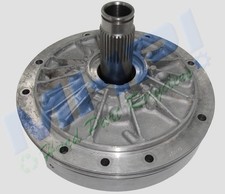
On the 4R100 the bottom pan filter is not bolted down. It pushes into a bore in the oil pump on a seal, and ATSG has you pry it out with a screwdriver during teardown. If the seal was left in the pump bore and doubled up, torn on install, or the filter was never pushed fully home, the pump sucks air at the pickup. ATSG's install step is to lube the new filter seal with a little assembly gel and push it into the pump bore.
While the pan is off:
- Look at the debris. Fine gray paste is normal wear. Brass flakes point at bushings or thrust washers. Chunks of friction material point at a burnt clutch pack, and a delay caused by a clutch that is already burnt is a rebuild, not a service.
- Reinstall the pan with a new gasket. ATSG's spec is the 20 pan bolts at 14-16 N-m (10-12 ft-lb).
Step 3: Scan it before you gauge it
The 4R100 uses an electronic pressure control (EPC) solenoid to set line pressure, and a PCM that sees the range selector through the digital transmission range (DTR) sensor. Both can cause engagement complaints. Pull codes and watch the transmission range and TFT (fluid temperature) PIDs.
- EPC. ATSG's code chart lists P1746 (EPC driver failure in the PCM), where an open circuit gives maximum EPC pressure and harsh engagements, and P1747 (EPC shorted circuit), where a short gives minimum EPC pressure and the PCM limits engine torque. Minimum EPC means low line pressure, and low line pressure means slow, soft applies. It measures the EPC solenoid across pins 11 and 12 of the solenoid pack connector at 3.0-5.0 ohms.
- DTR sensor. ATSG lists P1702 for an intermittent DTR signal (erratic, harsh engagements) and P1704 for a misaligned or failed DTR sensor (raised EPC pressure). If the PCM does not see the range change when you move the lever, it does not raise EPC for the engagement. Watch the range PID as you move through P, R, N, D, 2, 1. It should step cleanly with no in-between readings.
Transmission Digest's list of E4OD delayed engagement causes includes a bad manual-lever-position sensor, so clear the electrical side first.
Step 4: Line pressure test
Put a 300 psi gauge on the line pressure tap on the side of the case. On PTO trucks, ATSG notes you may have to remove the PTO unit and install the PTO cover and gasket to get to the port, and turn the PTO off for the test. Here are the ATSG specs:
| Range | Idle | Stall |
|---|---|---|
| P, N | 50-65 psi | — |
| R | 70-100 psi | 220-240 psi |
| OD, M2 | 50-65 psi | 136-156 psi |
| M1 | 70-115 psi | 175-210 psi |
ATSG rules: if idle pressure is low, do not stall test, and never hold wide open throttle over 5 seconds. Reading the numbers:
- Low in every range: the problem is upstream of the manual valve. Filter or seal, low fluid, a worn pump, the main pressure regulator, or EPC. Sonnax lists low base line pressure among the symptoms its elevated-pressure main regulator spring (36424-10) addresses, and it calls out severe boost sleeve wear on these units as a cause of EPC and reverse boost oil leaking off.
- Low in Reverse only: the leak is in the reverse circuit. Keep reading, Step 6 covers it.
- Pressure in spec but Drive is still late: the pressure is getting to the valve body and then leaking between there and the forward clutch piston. Step 7.
Step 5: The first-shift-of-the-morning delay
If the truck is slow into gear only after it has sat for a few hours, and every engagement after that is normal, the converter is draining back into the pan. When the truck starts, the pump has to refill the converter before there is enough fluid to apply a clutch quickly.
On the 4R100 there is a specific way shops create this problem. Sonnax explains that drilling the pump casting to get full-time cooler flow is not precise and allows converter drainback, which causes delayed engagement complaints. If you are working on a unit that has been apart before, look at the pump for an extra drilled hole. The proper fix is Sonnax's line-to-lube pressure regulator valve, 36424-04K. It is a drop-in valve with an internal line-to-lube passage and a check valve that allows full-time flow to the converter and cooler but blocks drainback. Sonnax lists it for 4R100 and E4OD with F1, F5, F8 and E9 pump castings.
Step 6: Delayed Reverse
Reverse needs three clutches applied in the right order, which is why Reverse is where most 4R100 engagement complaints show up. Transmission Digest describes the classic E4OD version: a delayed "bang" into Reverse caused by a timing problem where the direct clutch applies before the low/reverse clutch. The geartrain starts to spin on the direct clutch, then the low/reverse clutch comes on late and stops it hard. One cause it names is a weak spring on the low/reverse modulator valve, the valve right next to the manual valve, and its fix was to double the spring tension.
The same Transmission Digest list of delayed engagement causes covers the rest of the reverse circuit: a loose tension plate on the spacer plate, leaks in the low/reverse, direct or coast clutch circuits, excessive clutch pack clearance, low line pressure and low fluid.
For the valve body, two Sonnax parts target this exactly:
- Oversized manual valve kit, 36947-13K. Sonnax lists delayed Reverse, Reverse slip, low/reverse clutch failure and low line pressure in Reverse and manual low as the symptoms it helps cure.
- Heavy-duty low/reverse modulator sleeve kit, 36947-09K (1996 and later units). It uses two plunger valves. Sonnax says the smaller inboard valve works mainly as the engagement control for the low/reverse clutch, and the larger outer valve gives almost double the OE holding capacity. It is aimed at burnt low/reverse clutches and low pressure.
One more check from ATSG before the valve body goes back in: put the manual lever in Reverse and measure how far the manual valve sticks out past the rear of the valve body casting. It should be about .050 inch. If it is not, ATSG says to replace the detent spring and roller assembly. A manual valve that is not centered in its range half-opens the circuit and gives you a slow, soft apply. Torque the valve body bolts to 9-11 N-m (80-100 in-lb).
Step 7: Delayed Drive, Reverse fine
Because Drive 1st uses only the forward clutch, a Drive-only delay with good line pressure lands on the forward clutch and its feed. From the ATSG forward clutch rebuild section, here is what to check when it is on the bench:
- The air bleed ball in the forward clutch piston. ATSG says to make sure it is free and seals. If it sticks open, apply oil bleeds off through it and the piston fills slowly.
- Piston seals. The inner O-ring seal goes in the drum and the outer lip seal goes on the piston with the lip facing the apply side. A rolled or cut lip seal leaks on every apply.
- The two forward clutch sealing rings. These seal the feed oil into the drum. Worn rings or a grooved sealing surface leak apply pressure before it reaches the piston.
- Clearance. ATSG's forward clutch clearance is 0.76-1.40 mm (.030-.055 inch). Too much clearance means the piston travels farther before the pack clamps, and on engagement that shows up as time. Friction wear opens this up on high-mile units.
- The center support-to-hub joint. Forward clutch oil passes through the center support, and Sonnax traced forward clutch failures and poor lube flow on the 4R100 and E4OD to leakage between the center support and its hub, caused by too few, unevenly spaced mounting screws and surface finish and flatness defects. Their center support gasket (36743G) uses a printed silicone bead to fill those gaps. If the rings, seals and clearance all check good and Drive is still late, this joint is the next suspect. The same leak shows up on the E4OD, covered in our E4OD delayed engagement guide.
The forward clutch is applied in 1st, 2nd and 3rd, so if it is burnt you will also feel slipping under load, and it is a rebuild. The 4R100 slipping guide covers the rest of that job.
Preventing it from coming back
- Check fluid only at 150-170 F, idling in Park, and use MERCON. Most "it was fine until the service" delays are a level or filter-seal mistake.
- When you change the filter, make sure the old seal came out of the pump bore and the new filter is fully seated.
- Do not drill the pump for cooler flow. Use a valve built for it so the converter does not drain back.
- On a rebuild, set forward, direct and coast clutch clearances to spec and fix the manual valve and low/reverse modulator bores while the valve body is apart.
Shop the part for this fix: 4R100 transmission filter
A direct-fit 4R100 filter for 1994-2003 units. Most delayed engagement jobs start at the pan, so replace the filter and its pump bore seal while you are in there.
See the 4R100 transmission filter at CoreTransmissionPartsNeed parts for this job?
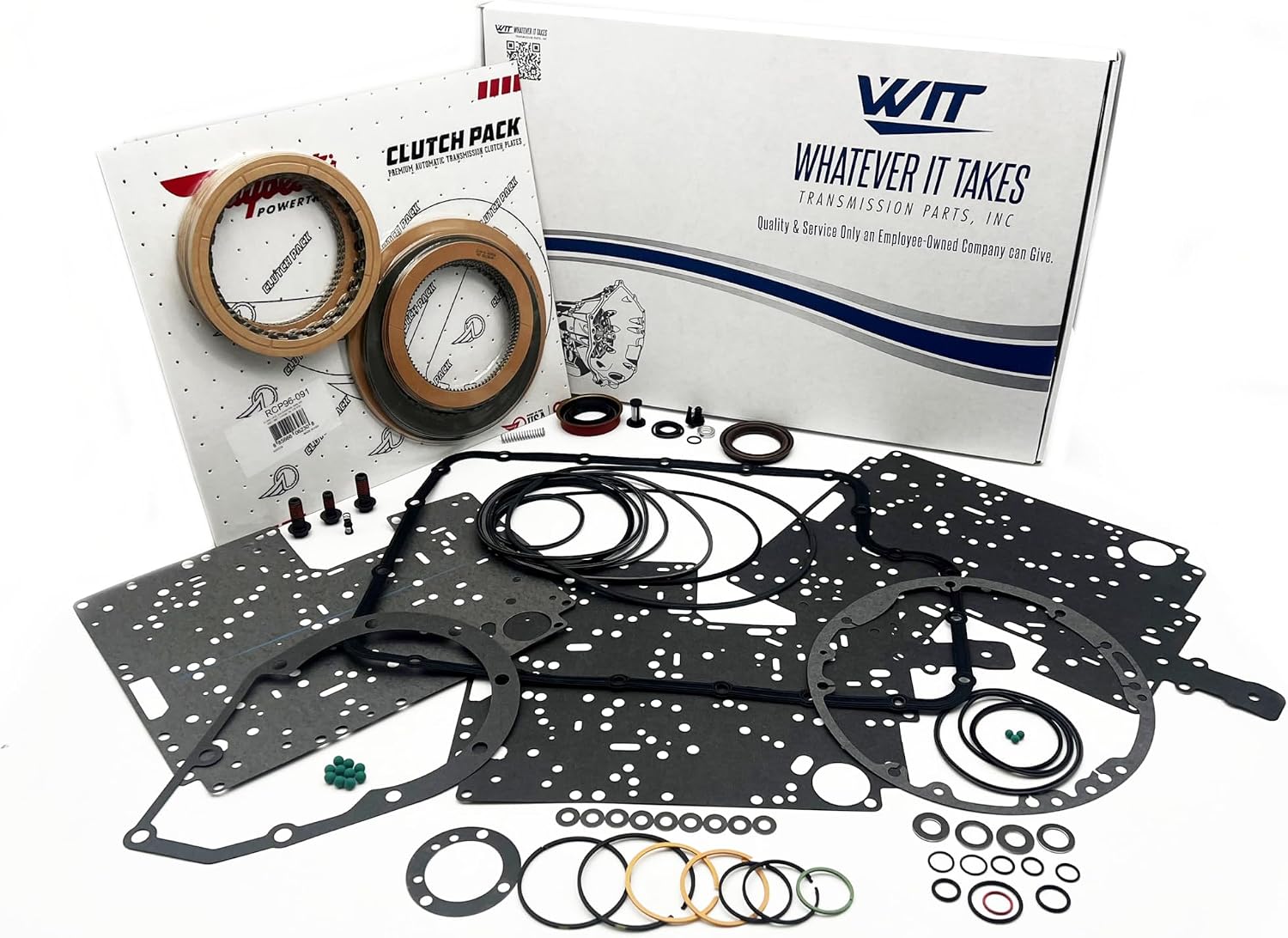
Our 4R100 parts page has filter and gasket kits, pumps, valve bodies, solenoid packs and master rebuild kits, with checkout on site. Confirm the model year, engine, PTO or non-PTO, and pan depth before you order.
FAQ
Why is my 4R100 slow to engage Drive?
Drive 1st on a 4R100 applies only the forward clutch, so a Drive-only delay with Reverse normal points at the forward clutch circuit: a leaking piston lip seal, worn forward clutch sealing rings, an air bleed ball stuck open, or too much clutch clearance. If Reverse is late too, check fluid level, the filter seal and line pressure first, since those feed both ranges.
Why is my 4R100 slow to go into Reverse?
Reverse needs the direct, coast and low/reverse clutches. Common causes are a worn manual valve bore, a weak low/reverse modulator valve spring that lets the direct clutch apply before the low/reverse clutch, circuit leaks, and low line pressure. Line pressure in Reverse should be 70-100 psi at idle per ATSG.
Why does my 4R100 only engage slowly first thing in the morning?
That is usually converter drainback. Fluid drains out of the converter while the truck sits, and the pump has to refill it before a clutch can apply. Sonnax notes that drilling the pump casting for full-time cooler flow causes exactly this, and sells an anti-drainback line-to-lube regulator valve (36424-04K) to fix it.
How do you check 4R100 fluid level correctly?
Use MERCON fluid and check it on the dipstick at normal operating temperature, 150 to 170 F, with the engine idling in Park, per the ATSG manual. A cold check reads low and leads to overfilling, and a low level lets the pump draw air, which slows every engagement.
Related guides
- 4R100 Slipping: Causes and Fix
- 4R100 No Reverse Fix
- 4R100 Harsh Shift Causes
- 4R100 Valve Body Problems and Testing
- 4R100 Fluid Change Cost
- E4OD Delayed Engagement: Causes and Fix
Sources
- ATSG (Automatic Transmission Service Group), Ford 4R100 technical service manual (2003). Backs the component application chart, the fluid type and 150-170 F check procedure, the filter-into-pump-bore design, the pan bolt and valve body bolt torques, the EPC code behavior and solenoid resistances, the DTR codes, the line pressure chart and test rules, the .050 inch manual valve check, and the forward clutch air bleed ball, seals and 0.76-1.40 mm clearance. ATSG manual (PDF)
- Sonnax, Line-To-Lube Pressure Regulator Valve 36424-04K. Backs drilled pump castings causing converter drainback and delayed engagement, and the anti-drainback check valve design and pump casting fitment. sonnax.com
- Sonnax, Ford E4OD, 4R100 Valve Body Layout. Backs the oversized manual valve kit 36947-13K symptoms (delayed Reverse, Reverse slip, low line pressure in Reverse and manual low) and the main pressure regulator spring 36424-10 for low base line pressure. sonnax.com
- Sonnax, Heavy Duty Low/Reverse Modulator Sleeve Kit 36947-09K. Backs the inboard valve working as low/reverse clutch engagement control, the near-double holding capacity, and the 1996-later fitment. sonnax.com
- Transmission Digest, January 2002 issue, E4OD delayed Reverse. Backs the direct-before-low/reverse timing problem, the weak low/reverse modulator valve spring and its fix, and the list of delayed engagement causes (spacer plate tension plate, circuit leaks, clutch clearance, manual lever position sensor, low line pressure, low fluid). transmissiondigest.com
- Sonnax, Center Support Gasket 36743G. Backs the leakage between the center support and hub causing forward clutch failure and poor lube flow on the 4R100 and E4OD, the mounting screw spacing and flatness causes, and the printed silicone bead fix. https://www.sonnax.com/parts/2081-center-support-gasket