A 4R100 that won't move in any gear is one of the scariest calls a shop gets, because the list of suspects runs from a five-minute linkage check to a full tear-down. The truck starts, idles fine, the shifter clicks through PRNDL, and nothing happens at the wheels in Drive or Reverse. Before you pull the pan, you need to know which half of the transmission you're dealing with: the half before the clutches (converter, pump, input shaft) or the half after (clutch packs, manual valve, valve body). One test splits that for free.
This guide works the 4R100 and its direct predecessor, the E4OD, since they share the same case, pump, input shaft family, valve body layout and low/reverse clutch hardware through most of their production. The hydraulic and mechanical failure points come from Sonnax and Transmission Digest, and the fluid spec comes straight from Ford's Motorcraft data. Everything is listed under Sources at the bottom.
Step 1: Fluid level and the free-rev test
Check the fluid hot, with the engine running and the shifter in Park, against the dipstick markings. The ATSG 4R100 manual sets the level at normal operating temperature, 150 to 170 F, engine idling in Park, and calls for MERCON multi-purpose fluid. Low fluid is the single most common cause of a no-movement complaint, because the pump can't maintain pressure if it's drawing air. Use MERCON V (Motorcraft part numbers XT-5-QMC by the quart, XT-5-5Q3M in a 5-quart jug, XT-5-DMC by the drum) unless the dipstick or the build tag on the unit specifies something else. Motorcraft's own product listing is explicit that MERCON V is not the fluid for anything calling for MERCON SP, MERCON LV, MERCON ULV, CVT fluid, or Type F, so don't assume and don't top it off with whatever is on the shelf.
With the level confirmed, do the free-rev test before you touch anything else. Put the truck in Drive, hold the brake, and listen and feel for whether the engine revs freely with no resistance, or whether it loads up like it's trying to pull the truck. Do the same in Reverse. This single test sorts the whole diagnosis into two directions:
- Engine free-revs, no load, in both Drive and Reverse: power isn't reaching the gearset at all. Suspect the converter-to-pump connection, a broken input shaft, or a stripped converter hub. Nothing downstream of that point even gets tested.
- Engine loads and bogs like it wants to move the truck: the converter is doing its job and transmitting torque. The fault is downstream, in the clutches, the manual valve, or the valve body's ability to route pressure to the right circuit.
Step 2: If it's fresh off a rebuild or reinstall, check the converter first
This is the fastest kill on a truck that just came back from a transmission swap, a converter replacement, or a shop rebuild. Before the transmission goes up to the engine, the converter has to be rotated and pushed onto the pump's input splines until it's fully seated, not just resting against the bellhousing bolt pattern. If it isn't, the pump drive tangs never engage the converter hub, the pump never turns, and the truck can crank, idle, and shift the shifter with absolutely nothing happening at the wheels. It's also possible to damage the front pump itself if the engine and transmission get bolted together with the converter only partially seated, which turns a five-minute reseat into a pump replacement.
Before condemning anything else on a fresh install: pull the transmission back from the engine, confirm the converter spins freely on the pump by hand, and check that it sits the correct distance back from the bellhousing face rather than standing proud. If the converter was ever bolted to the flexplate while still hanging forward off the pump, that's your answer.
Step 3: Pump pressure and the valve body circuits that starve it
If fluid is good, the converter is seated, and the engine still free-revs with no load, or if it loads but nothing holds in any gear, check line pressure at idle and in gear against spec. ATSG's procedure is a 300 psi gauge on the line pressure tap, idle readings in every range first, and no stall test at all if idle pressure is low, because that does more damage. Never hold wide open throttle for more than 5 seconds, and on PTO trucks turn the PTO off (or remove it and fit the cover if it blocks the port) before you test. A pump that's worn, cavitating, or starved by a leaking circuit upstream of the clutches can't apply anything consistently.
Sonnax's Zip Kit for this family (part E4OD-4R100-ZIP, fits both E4OD and 4R100) exists specifically because of how many different complaints trace back to the same root cause on these units: loss of oil pressure from worn components in critical oil circuits and lube-related failure. The symptom list Sonnax ties to that one root cause includes burnt low/reverse clutch, delayed engagement, loss of gear, OD planetary failure, premature clutch failure, and codes 62, 628 and 1744. The kit reseals the main line, accumulator control, line pressure modulator and lockup control circuits with new valves rather than one at a time, which is usually faster than chasing a single worn bore when pressure is low across the board.
| Zip Kit component | What it reseals |
|---|---|
| Boost valve kit | Line pressure boost circuit (also sold separately for low-line-rise complaints) |
| Line pressure modulator plunger valve kit | Modulated line pressure bore |
| Front lube/drainback valve kit + case bushing (one-piece) | Lube flow to the front of the unit |
| Intermediate & direct clutch feed seal kit | Case-to-clutch-support feed passages |
| Low/reverse modulator plunger kit ('96 and later) | Low/reverse apply modulation |
Source: Sonnax, E4OD-4R100-ZIP kit documentation.
If the pump itself is worn past the point a reseal fixes, that shows up as line pressure that won't come up to spec no matter what you do to the valve body. That's a pump replacement, not a kit.
Step 4: Manual valve and the range sensor, not just the shifter
A shifter that moves freely and a dash indicator that reads correctly only prove the cable or shift lever is adjusted right. They don't prove the manual valve inside the valve body is actually moving to the commanded position, and they don't prove the transmission range sensor agrees with where the valve really is. Confirm the range sensor's voltage or resistance matches the chart for each position, check the connector and harness for corrosion, and then physically verify the manual valve linkage at the valve body end, not just at the shifter. A worn manual valve bore or a linkage that disconnects partway can leave the valve between positions, which can look exactly like "no movement" even though every clutch in the unit is healthy. Sonnax's E4OD/4R100 vacuum test guide lists a worn manual valve bore for delayed reverse, reverse slip, low/reverse clutch failure and low line pressure in Reverse and manual Low, and the engagement control valve for delayed Forward and Reverse engagement with burnt forward or direct clutches. Vacuum test both bores while the valve body is on the bench.
Step 5: The low roller clutch, if it moves in manual Low but nowhere else
This is a specific, documented pattern worth knowing by name. Transmission Digest's Tech Talk for this family covers a Ford E4OD complaint of no forward movement until the manual shift lever is placed in the manual Low position. The cause was a newer plastic-caged low roller clutch (Ford part F3TZ-7A089-A) installed incorrectly during a rebuild. The correct procedure: install the roller clutch through the rear side of the reverse-clutch hub with the tabs on the rear edge, seat it into the hub, then rotate it clockwise to seat the rollers and lock the tabs in place. Get that orientation wrong and the unit won't deliver power in Drive, only in manual Low, because Low routes around the one-way clutch differently than the automatic ranges do.
If your no-movement complaint showed up right after a rebuild and manual Low is the one position that works, this is the first thing to pull back out and recheck, before you suspect the valve body or the pump at all.
Step 6: Broken input shaft or forward clutch hardware
If the free-rev test in Step 1 showed the engine spinning with zero load in every gear, and the converter is confirmed seated, the input shaft is a real suspect, especially on a modified diesel truck. Sonnax sells a heavy-duty input shaft (36670-HD, replacing OE part F81Z-7017-EA) for the 4R100, 5R110W and E4OD specifically because, as Sonnax puts it, input shaft failure becomes common as power levels are increased. The input shaft carries turbine torque from the converter to the clutch packs; if it twists or snaps, the converter spins freely with the engine and nothing reaches the gearset no matter what the valve body does.
On a less dramatic failure, a cracked or spun forward clutch drum can produce the same "spins but doesn't pull" feel in Drive specifically, while Reverse may still work if it uses a different clutch path. Pull the pan and check for metal or friction material before you commit to a shaft diagnosis blind.
What you'll find at teardown
If it gets to this point, two more Sonnax-documented wear items are worth checking while the case is open, even if they weren't your primary suspect:
- Rear case bushing spin-out. Sonnax notes the OE rear case bushings in the E4OD and 4R100 tend to spin out from lack of lubrication, excessive journal clearance, or too much load for the bearing area, which damages the case bore itself. A standard replacement bushing won't seat in a damaged bore; Sonnax's oversized bushing (36008C) with its installer tool (T36008A) is the fix for '95-and-later three-groove cases.
- Clutch feed leakage at the case. Leakage between the case and the intermediate/direct clutch feed passages causes low clutch apply pressure and burned clutches over time, which is why that seal kit is built into the Zip Kit rather than sold as an afterthought.
Diagnostic order, start to finish
| What you found | Likely cause |
|---|---|
| Fluid was low or aerated | Fill to spec with MERCON V, recheck hot |
| Fresh rebuild/reinstall, engine free-revs with no load | Converter not seated on pump; reseat before anything else |
| Engine free-revs, converter confirmed seated | Broken input shaft or converter hub; check for metal at teardown |
| Engine loads but nothing holds, line pressure low or erratic | Valve body pressure circuits (Zip Kit) or worn pump |
| Range sensor/manual valve don't agree with shifter | Manual valve linkage or range sensor, not the clutches |
| Moves in manual Low only, not Drive or Reverse | Low roller clutch installed incorrectly (rebuild error) |
| Metal in the pan, case bore damage, burnt clutches | Rear case bushing spin-out or clutch feed leakage; full rebuild |
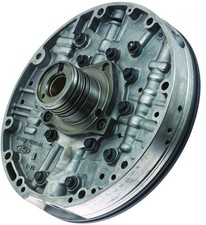
Shop the part for this fix: 4R100 remanufactured pump assembly
If the free-rev test and line pressure point to the pump, this is a direct-fit remanufactured unit for 1999-up 4R100s with the F8 casting. For converters, forward clutch drums and the rest of the no-movement suspects, browse the full 4R100 range at CoreTransmissionParts.
See the 4R100 pump assembly at CoreTransmissionPartsNeed parts for this job?
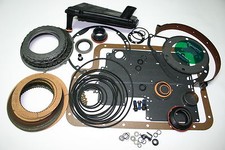
Our 4R100 parts page has pumps, clutch modules, valve bodies and full master rebuild kits, so you can order the exact part the diagnosis pointed to and check out on site.
FAQ
What's the first thing to check when a 4R100 won't move in any gear?
Fluid level and condition, checked hot with the engine running in Park, per the dipstick. Then do a free-rev test: put it in Drive and Reverse and see whether the engine revs freely or loads against the converter. That one test splits the diagnosis into two completely different directions before you pull a single bolt.
Does the engine free-rev or load tell you anything on a 4R100 with no movement?
Yes. If the engine free-revs with no load in gear, the converter isn't transmitting power to anything downstream, which points at a broken input shaft, a stripped converter hub, or a converter that never fully seated on the pump. If the engine loads and bogs like it's trying to move the truck, the converter is doing its job and the fault is downstream in the clutches, bands, or output path.
Why would a 4R100 move in manual Low but not Drive or Reverse?
Transmission Digest's Tech Talk for this family documents exactly this pattern on a fresh rebuild: no forward movement until the shift lever is placed in manual Low. The cause was a plastic-caged low roller clutch installed incorrectly during the rebuild. Pull the valve body and recheck that the roller clutch is seated into the reverse-clutch hub with the tabs locked, per the correct orientation, not just dropped in.
Can a bad torque converter installation cause no movement after a 4R100 rebuild?
Yes, and it's one of the most common post-rebuild comebacks. If the converter isn't rotated and pushed fully onto the pump's input splines before the transmission goes up to the engine, the pump drive never engages. The truck can crank, idle, and shift the dash indicator with nothing happening at the wheels. Pull it back off, confirm the converter spins freely and sits the correct distance off the bellhousing face, and reseat it before blaming the valve body.
Related guides
- 4R100 No Reverse: Fix
- 4R100 Limp Mode Causes
- 4R100 Valve Body Problems: Testing
- 4R100 Slipping: Causes and Fix
- 4R100 Torque Converter Shudder
Sources
- Sonnax, "E4OD-4R100-ZIP, Zip Kit." Backs the kit's fitment on E4OD and 4R100, the root cause of "loss of oil pressure due to worn components in critical oil circuits and/or lube related failure," and the full symptom list including burnt low/reverse clutch, delayed engagement, loss of gear and codes 62/628/1744. sonnax.com
- Sonnax, "4653, Heavy Duty Input Shaft." Backs the 36670-HD input shaft (replacing OE F81Z-7017-EA) for 4R100, 5R110W and E4OD, and that input shaft failure becomes common as power levels increase. sonnax.com
- Sonnax, "2051, Oversized Rear Case Bushing." Backs the OE rear case bushing spin-out failure in E4OD/4R100 cases from lack of lubrication, excessive journal clearance or bearing overload, and the 36008C/T36008A fix for '95-and-later three-groove cases. sonnax.com
- Transmission Digest, Tech Talk, November 2000 issue. Backs the documented Ford E4OD complaint of no forward movement except in manual Low, traced to an incorrectly installed plastic-caged low roller clutch (part F3TZ-7A089-A), and the correct installation and orientation procedure. transmissiondigest.com
- Ford Customer Service Division, Motorcraft MERCON V Automatic Transmission and Power Steering Fluid product page. Backs the MERCON V part numbers (XT-5-QMC, XT-5-5Q3M, XT-5-DMC) and that it is not for applications calling for MERCON SP, MERCON LV, MERCON ULV, CVT fluid or Type F. fcsdchemicalsandlubricants.com
- ATSG (Automatic Transmission Service Group), Ford 4R100 technical service manual (2003). Backs the 150-170 F fluid level check with MERCON fluid and the line pressure test procedure: 300 psi gauge, idle readings before any stall test, 5 second WOT limit and PTO precautions. ATSG 4R100 manual (PDF)
- Sonnax, E4OD/4R100 Critical Wear Areas and Vacuum Test Locations. Backs the manual valve bore symptoms (delayed reverse, reverse slip, low/reverse clutch failure, low line pressure in Reverse and manual Low) and the engagement control valve symptoms (delayed Forward and Reverse engagement, burnt forward and direct clutches). Sonnax vacuum test guide (PDF)