Ask for a "3-4 clutch" at a 4T65E parts counter and you will get a funny look, because GM never named one. The clutch that comes on during the 3-4 upshift is the 4th clutch, and on this transaxle it works alongside the 2nd clutch, which stays applied through second, third and fourth. When people say their 4T65E has a bad 3-4 clutch, what they usually have is one of four things: a burned 4th clutch pack, a stripped 4th clutch hub and shaft, a leaking 3-4 accumulator circuit, or a valve body that is not getting enough feed oil to command the shift. This is how to tell them apart before the unit comes out of the car.

What the 3-4 Shift Actually Asks For
On the 3-4 upshift the PCM switches shift solenoid A, the 1-2/3-4 solenoid, after third gear is established. That moves the shift valve, sends apply oil to the 4th clutch, and the 4th clutch acts on the input sun gear through the 4th clutch hub and shaft. The ATSG write-up republished in Transmission Digest (May 2005) describes that connection specifically: the base of the 4th clutch hub and shaft is splined to the input sun gear.
The 3-4 accumulator sits in the 4th clutch apply circuit and cushions the apply. Sonnax's product notes for its billet 3-4 accumulator piston are blunt about why it matters: poor 3-4 shifts, no 4th and a burned 4th clutch are common on GM 4T65-E units, and the root can be wear at the accumulator piston pin bore that lets 4th clutch oil exhaust. Sonnax adds that the same pin bore wear reduces 3rd clutch pressure during the 3-4 shift, which is why a leaking accumulator can make a unit feel loose on the shift even before the 4th clutch is burned.
Symptoms and What Each One Points To
| Complaint | Most likely area | Why |
|---|---|---|
| No 4th at all, engine revs high at highway speed, solenoid A commanded on | Stripped 4th clutch hub and shaft spline | The clutch can apply and still hold nothing if the spline to the input sun gear is gone. ATSG notes this often happens with no codes stored. |
| Long, soft or flared 3-4, worse when hot or under load | 3-4 accumulator pin bore or accumulator valve bore wear | 4th clutch oil exhausts past the worn bore, so the clutch fills slowly and slips while it fills. |
| Very harsh 3-4 bang | Seized 3-4 accumulator piston | Sonnax notes a seized 4th accumulator piston makes the 4th shift very hard. No cushion, full apply. |
| Falls out of 4th, 2nd gear starts, P1811 | Worn actuator feed limit (AFL) valve bore in the channel plate | Solenoid A and the EPC solenoid run on AFL oil. Low AFL volume means the solenoid cannot hold the shift valve. |
| Slips in 4th after it shifts, burnt fluid, P0730 | Burned 4th clutch, often from one of the above | A clutch that filled slowly for thousands of shifts eventually glazes and cannot hold steady-state torque. |
How the PCM Grades a Bad 3-4 Shift
The 4T65E has a turbine speed sensor, so unlike the older 4T60-E it can compare input speed against vehicle speed and catch slip. Wayne Colonna laid out the strategy in Transmission Digest (August 2003). The PCM uses an adaptive modifier on every shift. If a shift takes longer than 0.65 second and the adapt cannot shorten it by raising line pressure, a counter increments, and two of those in one drive cycle sets P1811 (maximum adapt and long shift). If the shift completes in time, the PCM then watches gear ratio, and slip in any gear lasting more than six seconds sets P0730 (incorrect gear ratio). Because the PCM tries more line pressure first, a marginal 4th clutch can go months without a code.
That same strategy gives you your best diagnostic data. Colonna lists the PIDs to pull on a GM scan tool:
- 3-4 shift error. The difference between desired and actual shift time, in seconds. A negative number means the shift ran long.
- 3-4 shift time. The duration of the last 3-4 shift in seconds. Compare it against the 0.65 second P1811 threshold.
- 3-4 TAP cell. Transmission adaptive pressure the PCM added to get the 3-4 done on time. A large number means it has been fighting a long shift.
- Steady-state TAP (kPa). Pressure the PCM had to add to keep the unit in gear. A high fourth-gear value with a normal third-gear value points at the 4th clutch circuit, not general line pressure.
Colonna's observation about which gears show the slip is the most useful piece of logic in the whole job. Because the 2nd clutch stays applied in second, third and fourth, a loose or burned 2nd clutch shows up as slip across all three gears. Third-clutch slip shows only in third. So if second and third are clean and only the 3-4 shift error, 3-4 TAP and fourth-gear steady-state numbers are high, you have narrowed it to the 4th clutch, its hub and shaft, or its apply circuit.
Separating the Causes Before Teardown
Command present, no shift: suspect the hub and shaft
The ATSG case in Transmission Digest is the classic one: a 4T65E with no 3-4 shift at any time, live data showing the PCM commanding the 3-4, and solenoid A switching on after third with the electrical signal verified at the case connector. The PCM may store P0751, but ATSG subscribers reported that most of the time the unit sets no code at all, not even P0730. The cause was a stripped spline at the base of the 4th clutch hub and shaft. The repair is the hub-and-shaft assembly. No solenoid, valve body or shift kit will bring 4th back if that spline is round.
TransGo's SK-4T65E instructions say the same: worn-looking splines will strip. If one is showing a step or polished edge on teardown, replace it.
Shift happens, but long or flared: suspect the accumulator
If 4th engages but the 3-4 shift time is long and the TAP cell is climbing, the accumulator circuit moves to the top of the list. There are two wear points. The first is the 3-4 accumulator piston pin bore, covered above. The second is the 3-4 accumulator valve and its bore in the valve body. Sonnax's oversized 3-4 accumulator valve kit (84754-55K) lists the symptoms as 3-4 concerns, soft shifts and poor line rise, caused by wear at the valve or bore that bleeds off torque signal, 3-4 accumulator pressure and line pressure. The fix is reaming the bore for the oversized valve, or a valve body.
Drops out of 4th, odd shift order: suspect AFL feed
Sonnax's 4T65-E channel plate guide explains that the AFL valve regulates line pressure to a maximum of 115 psi and feeds that oil to the EPC solenoid and the 1-2/3-4 shift solenoid. When the AFL bore wears, regulated oil leaks to exhaust and both solenoids lose pressure and volume. The documented results include low line rise with P1811, TCC slip with P0741, second-gear starts and falling out of 4th gear. ATSG adds that a damaged or out-of-position upper channel plate gasket causes the same AFL starvation, and that it is commonly overlooked.
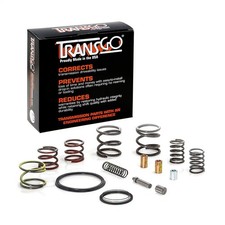
4T65E Shift Kit, 1997-2008
Good clutches but a worn 3-4 accumulator circuit? A shift kit addresses the apply side while the valve body is off. Confirm your year.
View the 4T65E shift kit →Fixing a Burned 4th Clutch the Right Way
A burned 4th clutch is usually a result, not a root cause. Fix what starved it or the next set burns too. On teardown:
- Inspect the 4th clutch hub and shaft spline where it meets the input sun gear. Any rounding means replacement.
- Check the 3-4 accumulator piston for pin bore wear and the piston for sticking. Sonnax makes a billet aluminum 3-4 accumulator piston (84880M-01) that accepts OE or standard D-rings and is meant to restore accumulator pressure and stop the cross leak.
- Check the 3-4 accumulator valve bore in the valve body for wear, and vacuum test it if you have the equipment.
- Pull and inspect the AFL valve in the channel plate. ATSG's procedure: remove the retainer, spring and valve, clean the channel plate, and inspect the valve and bore for scoring. Confirm the balance-orifice cup plug is present and not plugged. A scored bore means a channel plate or an oversized valve repair.
- Replace the input drum's solid Teflon sealing rings. TransGo notes the three rings shrink and should always be replaced, and that a correctly assembled drum still shows clearance on one clutch while you air check the other.
- Set clutch clearance with a feeler gauge, not by faith. More on this below.
Clearance: The Part GM Does Not Publish
Both Transmission Digest articles make the same point: GM does not publish clutch clearances for the 4T65E and does not offer selective plates, on the theory that the correct overhaul kit lands you in tolerance. In practice the packs are often loose. The working rule both articles cite is 0.008 to 0.012 inch of clearance per friction surface. Excess clearance takes more oil to fill before the clutch holds, stretching shift time, and can let the molded piston cock in its bore.
The articles give numbers for the 2nd and 3rd clutches, which share the shift-time problem with the 4th side and are worth checking on any 3-4 complaint:
| Pack | Plates | Target clearance | Notes from the source |
|---|---|---|---|
| 2nd clutch | 6 frictions, 5 steels | 0.048-0.072 in | OE steels are 0.068 in. Clearance can exceed 0.130 in on some units. Thicker aftermarket steels (Colonna cites Alto 062733-228 at 0.090 in) tighten the pack. |
| 3rd clutch | 5 drive, 5 driven, single-sided | 0.040-0.060 in | OE driving plate 0.076 in total (0.048 steel), driven plate 0.082 in total (0.050 steel). At 0.088 in or more, add a stripped external-tooth plate on top of the wave plate. |
Never remove the wave plate to tighten a pack. If it is broken, warped or flat, replace it. The articles also describe opening the 2nd or 3rd clutch feed orifice in the spacer plate by 0.010 inch from its original 0.070 inch, but ATSG is clear that this is a last resort after every other cause is eliminated, and the total should never exceed 0.082 inch.
Solenoid A and Its Feed Holes
Because solenoid A controls both the 1-2 and the 3-4, a weak one can look like a 4th clutch problem. ATSG's guidance for out-of-sequence shifts is to clean the whole valve body, confirm every valve moves freely, and replace both shift solenoids; at the time, the updated OE number for solenoids A and B was 24219819. ATSG also suggests opening spacer plate orifices 1 and 30 to 0.035-0.040 inch, and no further, or the solenoids can flood when they open to exhaust.
Fluid, Level and the Relearn
Check fluid before anything else and after everything else. GM's owner manual for 4T65E-equipped cars such as the 2008 Impala calls for DEXRON-VI and lists the transaxle at 7.4 quarts (7.0 L), noting more may be needed if the converter is drained or replaced. Check it at normal operating temperature, which GM gives as 180-200°F.
After the repair, clear the adapts. TransGo points out that when the splines were stripped or the EPC was sticking, the PCM may have adapted to a high-pressure strategy trying to finish the shift, and that memory needs to be cleared. Their road-test advice: if light-throttle shifts, especially into 4th, are too firm, disconnect the battery for an hour to reset shift adapts, then drive 50 to 100 shifts in normal traffic to let it relearn.
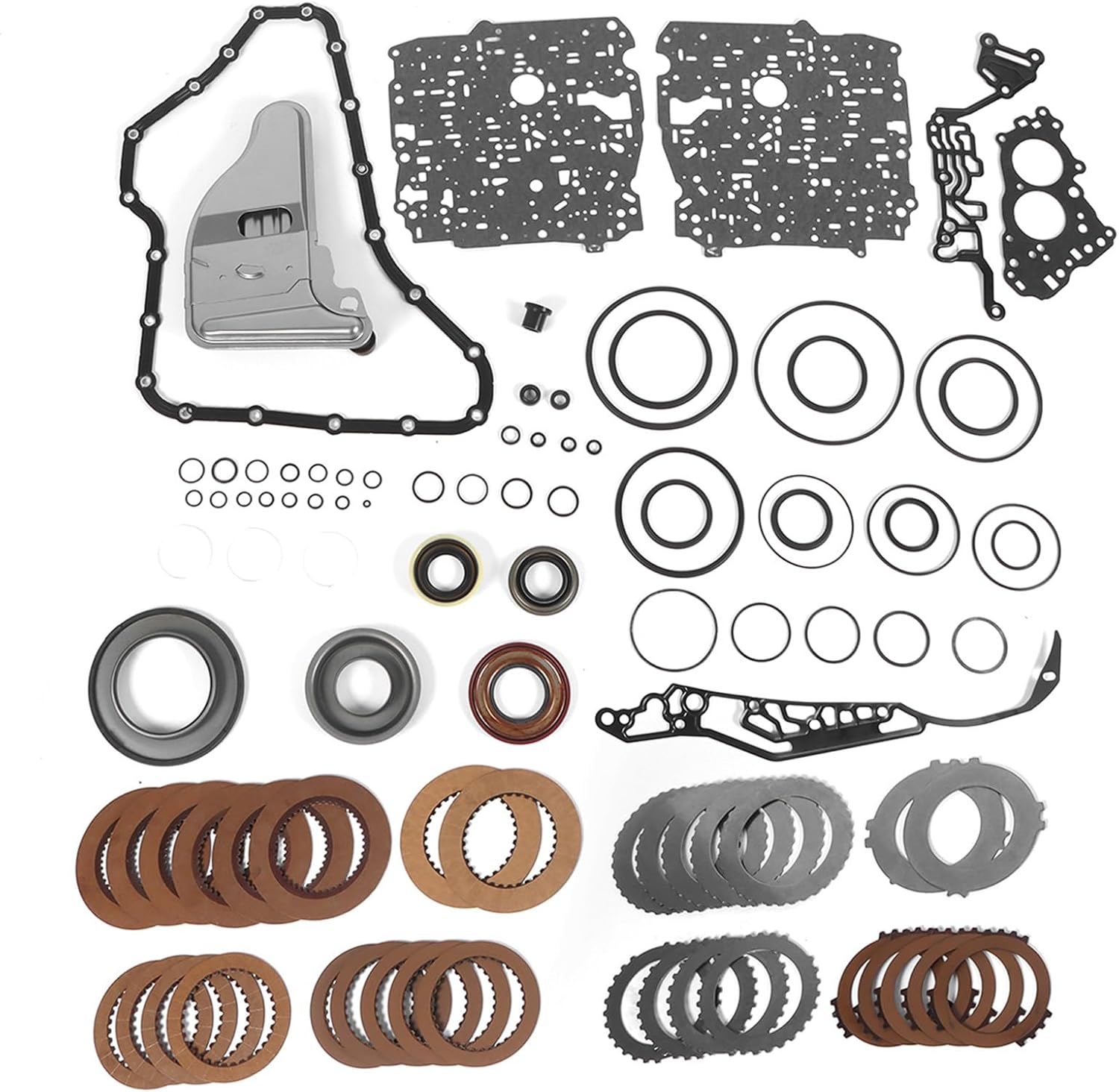
Shop 4T65E master rebuild kits, shift kits, valve bodies and solenoids — shipped fast from the USA.
Shop 4T65E parts →FAQ
What is the 3-4 clutch on a 4T65E?
GM does not use that name. The clutch that applies on the 3-4 upshift is the 4th clutch, and it works with the 2nd clutch, which stays applied in second, third and fourth. The 4th clutch acts through the 4th clutch hub and shaft, which is splined to the input sun gear.
What causes no 4th gear on a 4T65E?
The most common hard-parts cause is a stripped spline at the base of the 4th clutch hub and shaft, where it meets the input sun gear. ATSG notes the PCM commands the shift and solenoid A switches on, but nothing holds. Other causes are a worn AFL valve bore starving solenoid A, a leaking 3-4 accumulator, or a burned 4th clutch pack.
Can a 4T65E 3-4 shift problem set no codes?
Yes. ATSG subscribers reported that a stripped 4th clutch hub usually sets no P0751 or P0730 at all. The PCM also raises line pressure before it sets P1811 or P0730, so a marginal clutch can go months without a code. Graph the 3-4 shift time and TAP cells instead of waiting for a code.
Will a fluid change fix a slipping 4T65E 3-4 shift?
Not if the cause is mechanical. A worn accumulator pin bore, a worn AFL bore or a stripped spline stay worn after a drain and fill. Correct DEXRON-VI at the right hot level rules out the cheap cause, and that is all it does.
Shop the 4T65E master rebuild kit at CoreTransmissionParts → or browse all rebuild kits
Related 4T65E guides
Sources
- Wayne Colonna, Transmission Digest — "The 4T65-E: 'Slip-Sliding Away,'" August 1, 2003. Backs the turbine speed sensor slip monitoring, P1811 (shift over 0.65 second, twice per drive cycle) and P0730 (slip over six seconds) set logic, the 3-4 shift error, shift time, TAP cell and steady-state TAP PIDs, 2nd-clutch slip showing in 2nd through 4th versus 3rd-clutch slip only in 3rd, the 0.008-0.012 in per friction rule and the Alto 062733-228 steel. transmissiondigest.com
- Transmission Digest (ATSG bulletins), May 2005 issue. Backs the no 3-4 shift case with solenoid A commanded, the stripped 4th clutch hub and shaft spline at the input sun gear (often with no codes), 2nd and 3rd clutch plate counts, thicknesses and target clearances, the 0.070 in spacer plate orifice limit of 0.082 in, AFL valve and channel plate gasket causes, orifices 1 and 30 at 0.035-0.040 in, and shift solenoid part number 24219819. transmissiondigest.com
- Sonnax — "GM 4T65-E Channel Plate Common Problems & Solutions." Backs the AFL valve regulating to a maximum of 115 psi to feed the EPC and 1-2/3-4 solenoids, and AFL bore wear causing P1811, P0741, second-gear starts and falling out of 4th. sonnax.com
- Sonnax — Oversized 3-4 Accumulator Valve Kit 84754-55K. Backs 3-4 concerns, soft shifts and poor line rise from 3-4 accumulator valve or bore wear bleeding off torque signal, accumulator and line pressure. sonnax.com
- Sonnax 3-4 accumulator piston description, via Transend (Sonnax distributor) listing. Backs pin bore wear exhausting 4th clutch oil and causing harsh 4th, no 4th or a burned 4th clutch, reduced 3rd clutch pressure on the 3-4 shift, a seized piston causing a very hard 4th, and Sonnax piston 84880M-01. transend.us
- TransGo — SK-4T65E Shift Kit Instructions, April 2012. Backs stripped splines causing no 4th, adapts needing to be cleared after stripped splines or a sticking EPC, the one-hour battery disconnect and 50-100 shift relearn, and replacing the three solid Teflon input drum rings. transgo (PDF)
- General Motors — 2008 Chevrolet Impala Owner Manual. Backs DEXRON-VI, the 7.4 qt (7.0 L) capacity, and the 180-200°F operating temperature for the fluid check. assets.gm.com (PDF)