A 4T65E that will not leave 3rd gear almost always sorts into one of two completely different problems, and you need a scan tool to tell them apart before you touch a wrench. Either the TCM is commanding 4th gear and the transaxle physically cannot build it, which is a hydraulic leak inside the 3-4 accumulator circuit, or the TCM has decided on its own not to command 4th at all, which is a fail-safe response to a sensor or solenoid fault it does not trust. Both look the same from the driver's seat — the car just runs out of gears at 55 mph and drones — but one is a valve body repair and the other is a connector or sensor fix that takes twenty minutes.
This unit covers a huge range of GM front-wheel-drive cars and minivans built from 1997 through 2011 — Grand Prix, Impala, Lumina, Regal, Century, LaCrosse, Venture, Uplander and more — and the 3-4 accumulator circuit wear point is consistent across nearly all of them because the casting carried forward with minimal change. Here is how to separate a commanded no-4th from a mechanical no-4th, and what actually fixes each.
Rule Out Fluid Before You Chase Anything Electronic
A low fluid level starves the pump of the volume it needs to fully stroke the 4th clutch, and it is free to check. GM's fluid specification for 4T65E-equipped vehicles calls for DEXRON-VI, with the 2008 Chevrolet Impala owner's manual listing an automatic transmission fluid capacity of 7.4 qt (7.0 L) and a note that additional fluid may be needed when the torque converter is drained or replaced. Check it hot, in Park, per the dipstick procedure. If the level is correct but the fluid is dark or smells burnt, you are not looking at a level problem — you are looking at friction material that has already cooked, which shifts the likely cause toward a burned 4th clutch rather than a sensor or solenoid fault.
If fluid checks out clean, the next step is a scan tool, not a pan drop. You need to know whether the TCM is commanding 4th at all before you decide where to start.
Scan Tool First: Is 4th Being Commanded?
Road test with a scan tool logging commanded gear, actual gear ratio (from input and output speed), TCC slip RPM, and transmission fluid temperature. The split you are looking for is simple: if commanded gear shows 4th and actual gear ratio never gets there, the TCM wants 4th and the hydraulic circuit is failing to deliver it — that is a mechanical problem inside the case. If commanded gear never leaves 3rd no matter how long you hold a steady highway speed, the TCM itself has decided not to ask for 4th, which means something upstream of the valve body is telling it not to.
This distinction matters because it sends you to two completely different repairs, and neither one is diagnosed correctly by just swapping a part and hoping.
Read the adapt data while you are in there. The 4T65-E has a turbine speed sensor, so the computer compares actual gear ratio against vehicle speed and tries to cover a slip by raising line pressure before it sets a code. Transmission Digest's Wayne Colonna lays out the thresholds: if a shift takes longer than 0.65 second and the adaptive modifier cannot shorten it, a counter increments, and two of those in one drive cycle sets P1811 (maximum adapt and long shift). Slip in any gear lasting more than six seconds sets P0730. Before either code appears, the 3-4 shift error, 3-4 shift time and 3-4 TAP cell PIDs tell the story. A large 3-4 TAP number means the computer has been adding pressure to finish a long 3-4, which points straight at the 4th clutch apply circuit described below.
Commanded 4th, No Actual 4th: Worn 3-4 Accumulator Piston Bore
This is the single most common mechanical cause of a 4T65E that the TCM wants in 4th but that never gets there, or that gets there harshly and then burns the clutch. Sonnax documents the failure directly: the 3-4 accumulator piston pin bore wears from ordinary cycling over the unit's service life, and that wear lets 4th clutch apply oil exhaust past the piston instead of building toward full clamping pressure. The documented symptom set is poor 3-4 shifts, no 4th gear, or a burned 4th clutch — which is exactly the progression a lot of these units follow: a flare or soft 3-4 for months that nobody addresses, followed by the clutch letting go entirely and the car getting stuck below overdrive for good.
The fix is Sonnax part 84880M-01, a replacement piston machined from high-grade billet aluminum with tighter tolerances than the OE piece, sized to restore the original pin-to-bore clearance and stop the cross-leak. It accepts the OE or a standard replacement D-ring and is a drop-in service at the valve body, not a case-apart rebuild.
If the piston itself checks out but the 3-4 shift is still soft rather than fully absent, the companion wear point is the 3-4 accumulator valve and its bore in the same casting. Sonnax's documentation for that circuit describes wear at the valve and/or bore allowing torque signal, 3-4 accumulator, or line pressure to be lost, with a symptom set of general 3-4 concerns and soft shifts with poor line rise. The repair there is an oversized valve kit, Sonnax 84754-55K, which restores the hydraulic clearance the same way the piston kit does on the bore it shares the circuit with. On a high-mileage valve body it is common for both wear points to be present together, and addressing only one often leaves a partial complaint behind.
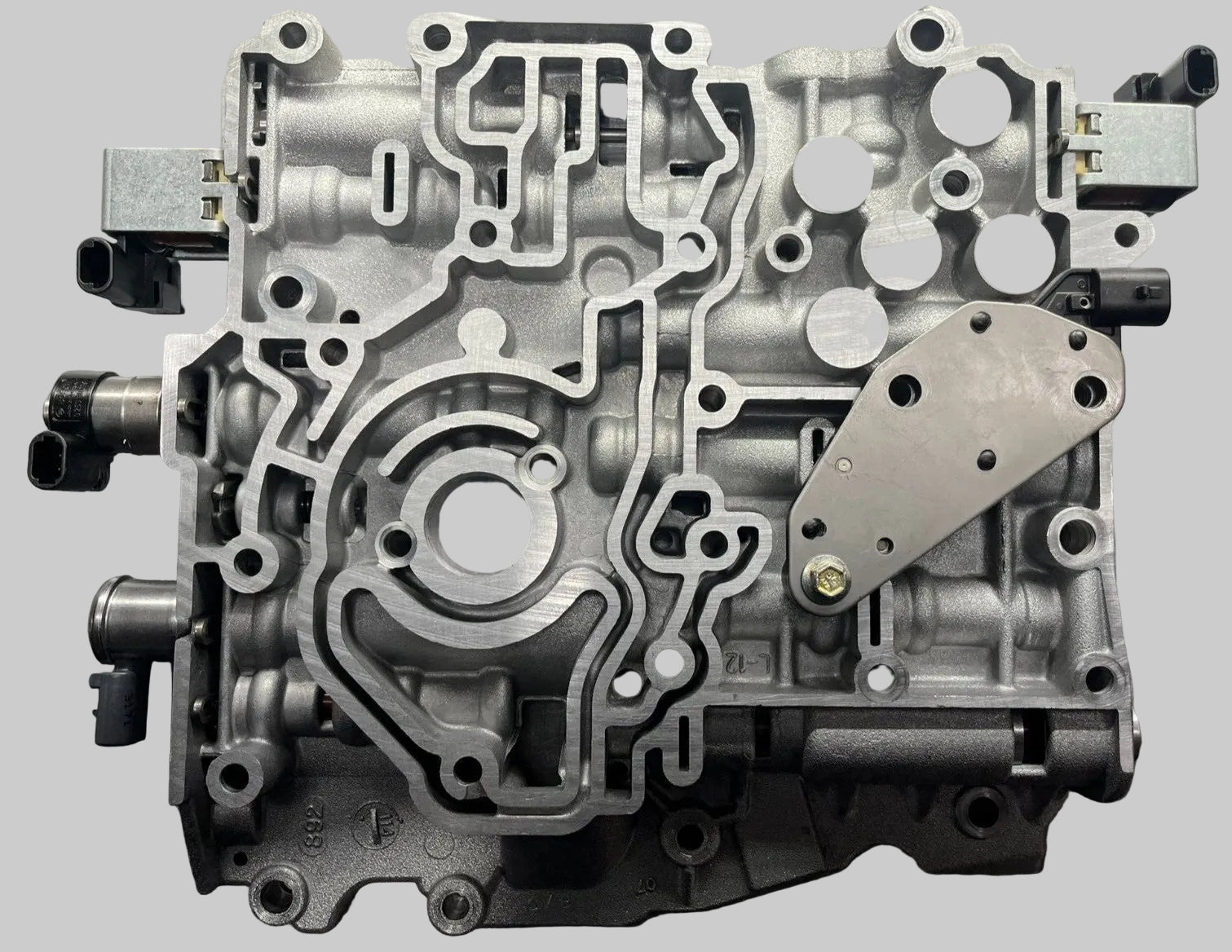
4T65E Valve Body 2003-Up - Remanufactured
If the 3-4 accumulator bore wear has progressed far enough that a piston and valve kit alone will not bring the circuit back to spec, or the casting shows other wear from age, a remanufactured valve body replaces the whole assembly with one already built to original clearances.
View the remanufactured valve body →No 4th Ever Commanded: Pressure Control Solenoid or Sensor Fail-Safe
If the scan tool shows the TCM holding at commanded 3rd and simply never asking for 4th, the transaxle itself may be mechanically fine. The 4T65E is an electronically controlled unit — the third evolution of GM's front-wheel-drive four-speed automatic family, per SAE's own technical paper on the transaxle — which means every shift, including the move into overdrive, is a command the TCM issues based on sensor inputs rather than a purely hydraulic decision tree. When the TCM cannot trust one of those inputs, it falls back to a conservative shift pattern that withholds 4th and torque converter clutch apply rather than risk commanding a shift it cannot verify landed correctly.
Two circuits account for most of these cases. The pressure control solenoid (also called EPC) is monitored for basic electrical faults — voltage or resistance out of range on its circuit — and when that monitor trips, the TCM defaults to maximum line pressure and a fail-safe shift strategy that, depending on calibration, holds the transaxle below overdrive. The other common trigger is the output speed sensor or vehicle speed signal: if that input drops out or reads implausibly, the TCM cannot confirm the gear ratio it would get from a 4th-gear command, so it declines to make one. A corroded connector at the transmission harness, a chafed wire, or an intermittent sensor can all produce this pattern without a single worn part inside the case.
This is why pulling codes and watching live data before dropping the pan matters so much on a no-overdrive complaint. Colonna notes that on a P1811, replacing the pressure control solenoid and turning its adjusting screw about 1/8 turn clockwise cures it in most cases. A solenoid or sensor fault repairs in minutes at the connector or with a bolt-in part; opening the transaxle to chase a problem that was never inside it wastes a day and the customer's money.
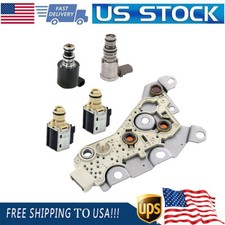
4T65E Pressure Control Solenoid
An out-of-range pressure control solenoid circuit is one of the most common electrical triggers for a 4T65E that defaults to a conservative shift pattern and will not move into overdrive. Confirm with a resistance check at the connector before replacing.
View the pressure control solenoid →If the 4th Clutch Has Already Burned
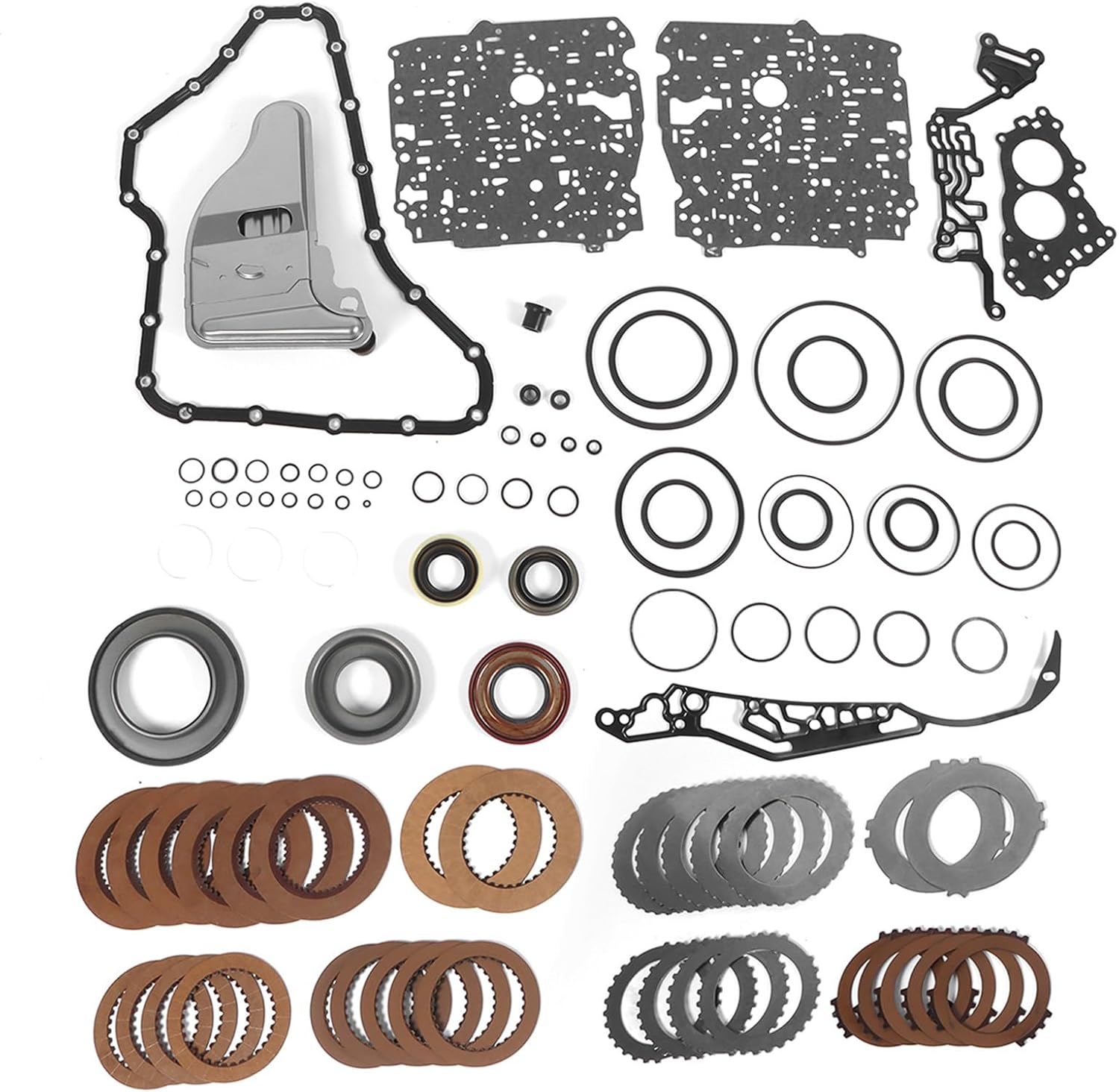
A 3-4 accumulator piston bore that wears slowly and goes unaddressed eventually lets enough oil escape that the 4th clutch runs partially applied under load long enough to cook the friction material. At that point replacing the piston and valve restores correct hydraulics to a clutch pack that is already damaged, and the no-4th complaint returns within a few thousand miles even though the leak itself is fixed. If the fluid was already dark and burnt when you checked it, or if a borescope or teardown shows glazed or flaking friction material on the 4th clutch pack, plan for a master rebuild kit rather than a piston-only repair.
Do not split the difference by replacing only the piston on a unit with confirmed burnt 4th clutch material and hoping it holds — the restored pressure will apply a clutch that no longer has full friction surface area, and it will slip again, usually sooner than the first time.
Diagnosis points at a valve body or solenoid repair, not a full rebuild?
3-4 accumulator pistons, valve bodies, pressure control and TCC solenoids, and full master rebuild kits for the 4T65E are in stock and ship fast.
Shop 4T65E parts →FAQ
What does it mean if a 4T65E stays in 3rd gear and never shifts into overdrive?
It means either the TCM has stopped commanding 4th on purpose, or 4th clutch oil is leaking out before it can hold. Pull up the scan tool's commanded-gear PID while road testing: if the TCM is commanding 4th and the transaxle still will not move into it, the problem is hydraulic or mechanical, most often a worn 3-4 accumulator piston pin bore letting 4th clutch apply oil exhaust. If the TCM is never commanding 4th at all, it is running a fail-safe shift pattern because it does not trust an input, usually the output speed sensor or transmission fluid temperature sensor.
Can a bad speed sensor cause a 4T65E to lose overdrive?
Yes, indirectly. The 4T65E is an electronically controlled transaxle, part of GM's third-generation front-wheel-drive four-speed family, with the TCM commanding every shift and the torque converter clutch off sensor inputs rather than hydraulic logic alone. When the TCM cannot get a trustworthy signal from the output speed sensor, it cannot verify that a 4th gear command would produce the correct shaft speed, so it defaults to a conservative pattern that holds the unit below overdrive rather than risk a bad shift. Fixing the sensor circuit restores normal shift commands without touching the valve body.
Is a worn 3-4 accumulator piston a common cause of no 4th gear on a 4T65E?
Yes. Sonnax documents this as a well-known wear point on GM 4T65-E units: the 3-4 accumulator piston pin bore wears from normal cycling, which lets 4th clutch apply oil exhaust past the piston instead of building the pressure needed to hold the clutch. The documented symptom set is poor 3-4 shifts, no 4th gear, or a burned 4th clutch, and the fix is a replacement billet piston sized to restore the original pin-to-bore clearance.
Will a pressure control solenoid fault cause a 4T65E to lose overdrive?
It can. The pressure control solenoid is a generic OBD-II monitored circuit, and when the TCM detects an electrical fault on it, out-of-range voltage or resistance rather than a hydraulic problem, it commands maximum line pressure and a fail-safe shift pattern as a protective default. Depending on the calibration that pattern can hold the unit out of 4th and lock out torque converter clutch apply, which looks identical to a mechanical no-overdrive complaint until you pull the code.
Can low or dirty transmission fluid cause a 4T65E to not shift into overdrive?
Yes, and it is the first thing to rule out because it costs nothing to check. A low level starves the pump of the volume needed to fully apply the 4th clutch, and GM's fluid specification for 4T65E-equipped vehicles calls for DEXRON-VI with a stated capacity of 7.4 quarts (7.0 L) on the 2008 Impala, plus a note that more fluid may be needed when the converter is drained. Dark or burnt-smelling fluid at that point means friction material has already been cooking, which points toward the clutch itself rather than just the level.
Sources
- Sonnax — 3-4 Accumulator Piston (84880M-01) technical page. Backs the 3-4 accumulator piston pin bore wear mechanism on GM 4T65-E units and the resulting poor 3-4 shift, no 4th gear, or burned 4th clutch symptom set. sonnax.com
- Sonnax — Oversized 3-4 Accumulator Valve Kit (84754-55K) technical page. Backs the companion 3-4 accumulator valve and bore wear mechanism, and the resulting 3-4 concerns and soft-shift-with-poor-line-rise symptoms on the same hydraulic circuit. sonnax.com
- SAE International — "General Motors 4T65-E Electronic Four-Speed Automatic Transaxle," SAE Technical Paper 980821. Backs the 4T65-E being the third evolution of GM's electronically controlled front-wheel-drive four-speed automatic family, with the TCM commanding shifts and torque converter clutch apply from sensor inputs. saemobilus.sae.org
- General Motors — 2008 Chevrolet Impala Owner Manual. Backs DEXRON-VI as the specified automatic transmission fluid, the 7.4 qt (7.0 L) fluid capacity figure, and the note that additional fluid may be needed when draining or replacing the torque converter. assets.gm.com
- Transmission Digest — The 4T65-E: 'Slip-Sliding Away' (Wayne Colonna, August 2003). Backs the turbine speed sensor ratio monitoring, line pressure compensation before a code sets, the 0.65-second long-shift and two-per-drive-cycle P1811 logic, the six-second P0730 slip threshold, the shift error, shift time and TAP cell PIDs, and the pressure control solenoid 1/8-turn fix for P1811. transmissiondigest.com: the 4T65-E slip-sliding away