Three different codes get blamed on "the shift solenoid" on a 4T65E, and they are not the same failure. P0753 and P0758 are hard electrical faults on the 1-2 and 2-3 shift solenoids. P0742, P2761, and P2764 live on the torque converter clutch (TCC) solenoid circuit, which is wired and diagnosed differently. And P1811, the code most often handed to a shift solenoid as the culprit, is frequently not an electrical failure at all — it is the PCM reporting that a shift took too long even after it tried to force the issue with more line pressure. Treat all three as "the solenoid" and there is a real chance of buying the wrong part twice before fixing anything.
What P0753 and P0758 Actually Report
The 4T65E's PCM controls shifts by energizing and de-energizing two solenoids, Shift Solenoid A (SSA) and Shift Solenoid B (SSB), in the combinations that select each gear. The transaxle was introduced for the 1997 model year as GM's evolution of the front-wheel-drive 4T60-E platform, carrying a PCM-controlled shift solenoid and pressure-control solenoid architecture over from that earlier design with a revised pump and torque converter, per SAE International's own engineering paper on the unit. P0753 (Shift Solenoid A Electrical) and P0758 (Shift Solenoid B Electrical) fire when the PCM commands a solenoid state and cannot verify it electrically — a continuous open circuit, a short to ground, or a solenoid that has failed internally. These are hard electrical faults, not performance complaints. If the transaxle shifts late or soft but P0753/P0758 never sets, the shift solenoids themselves are very likely not the problem.
SSA is tied to the 1-2 shift, SSB to the 2-3 shift, and both default to a known hydraulic state when de-energized. Techs who work this transaxle regularly report that with both shift solenoids electrically dead, the unit defaults toward 3rd gear and stays there rather than cycling through the gear set — a fail-safe behavior built into the valve body, not random misbehavior. A vehicle that starts off in an unusually high gear and will not downshift, paired with P0753 or P0758 actually stored, points at the shift solenoid circuit itself: the connector, the internal wiring, or the solenoid coil.
TCC Solenoid Codes Are a Different Circuit Entirely
P0742 (TCC Stuck On), P2761 (TCC Pressure Control Solenoid Circuit Open), and P2764 (TCC Pressure Control Solenoid Circuit Low) are not shift solenoid codes, even though they get lumped in with "solenoid problems" constantly. Transmission Digest's August 2017 Tech/Talk column documented a specific, repeatable cause on 2006-07 GM vehicles equipped with the 4T65E: the transmission's internal wire harness was routed so that the Tan TCC solenoid wire sat inside the harness's own metal retaining clip. Over time that clip either chafed through the wire's insulation, grounding the circuit, or severed the wire completely, opening it. Both failure modes land on the TCC solenoid circuit, not the shift solenoids, and both can trigger any combination of P0742, P2761, or P2764 depending on exactly where the wire failed. The documented fix is physical, not electronic: reposition the TCC solenoid and install a new internal wire harness (GM part number 24229643) routed clear of the retaining clip.
The practical lesson carries past that one model-year range. A chafed or pinched internal harness wire produces an intermittent code that can look like a flaky solenoid on a scan tool and test perfectly fine on the bench five minutes later. Before condemning a TCC solenoid, wiggle-test the internal harness with the pan down and watch for the code to flicker rather than assuming the solenoid itself failed.
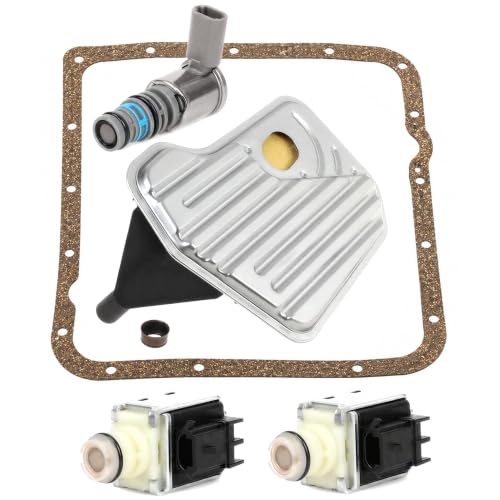
4T65E Transmission Shift Solenoid and Filter Kit 24230298
Covers the 1-2 and 2-3 shift solenoids plus the filter in one order, so a confirmed SSA/SSB electrical fault gets fixed in a single trip into the pan instead of two.
View the shift solenoid and filter kit →P1811: The Code Most Often Blamed on a Solenoid That Might Be Fine
P1811, "Maximum Adapt and Long Shift," works differently from a shift solenoid electrical fault, and Transmission Digest's technical editor laid out the logic behind it plainly: the PCM runs an adaptive modifier that tries to keep every shift under a fixed time, and if a shift runs long, the computer's first move is to raise line pressure and try again, not set a code. A counter inside the PCM increments only when a shift exceeds roughly 0.65 second and the adaptive modifier cannot pull it back under that threshold even with more pressure. Two of those events in a single drive cycle sets P1811. That strategy is also why the code is so inconsistent to chase: a light-footed drive cycle may never trigger it, while the same vehicle driven harder sets it reliably, which can make a fresh repair look like it worked for days before the code reappears.
The pressure control (EPC) solenoid is the most common root cause, and replacing it along with a slight clockwise adjustment to its regulating screw resolves a large share of P1811 complaints. But the same article documents 4T65E and 4T60-E units coming back with P1811 weeks or months after that exact repair, traced back to excessive clearance in the 2nd and 3rd clutch packs left over from an earlier rebuild. GM does not publish clutch-pack clearance specs for this transaxle, reasoning that correctly sized OE parts will land in tolerance automatically — but a clutch pack built with reused frictions, or simply built loose, can still clear that bar on paper and slip under hard acceleration anyway, producing the same long-shift symptom a tired EPC solenoid produces. If a brand-new pressure control solenoid does not permanently clear P1811, the next place to look is clutch clearance from the last rebuild, not a second solenoid.
There is also a valve-body-side contributor that has nothing to do with the solenoid at all. TransGo's shift kit for the 4T65E, which the company markets specifically against P1811 and P0741, replaces the factory pressure regulator spring and the accumulator springs rather than touching the solenoid, on the logic that those springs lose tension with age and let shift time drift past the PCM's 0.65-second threshold on their own. That is a second, independent mechanical path to the exact same code the pressure control solenoid gets blamed for.
A third path runs upstream of every solenoid in the unit. Per Sonnax's write-up on common 4T65-E channel plate problems, the actuator feed limit (AFL) valve regulates the supply to the EPC solenoid and the 1-2 and 3-4 shift solenoids to a maximum of 115 psi. When the AFL bore wears, that regulated oil leaks to exhaust, and the solenoids are left short of pressure and volume. Sonnax lists the results as low line rise with P1811 and shift adapts at maximum, TCC slip setting P0741, second-gear starts, and the unit falling out of fourth. All of those look like a solenoid problem, but new solenoids fed by a worn AFL bore will behave the same way. The repair is reaming the bore and fitting an oversize AFL valve and springs.
Confirm the Failure Before Buying a Solenoid
Before replacing anything, separate the three failure types by what actually set:
- P0753 or P0758 stored: this is the shift solenoid circuit. Check the connector and internal harness for corrosion or chafing before condemning the solenoid coil itself.
- P0742, P2761, or P2764 stored: this is the TCC solenoid circuit. Pull the pan and inspect the internal harness routing near the retaining clip before assuming the solenoid failed.
- P1811 stored, no shift solenoid or TCC code present: this is a shift-timing problem. Scan-tool data showing commanded versus actual shift time, plus the vehicle's rebuild history, matters more here than a parts cannon. A unit with a recent rebuild and no obvious EPC solenoid symptoms warrants a clutch-clearance conversation before a third solenoid goes in.
A scan tool that can run an active solenoid test, or a simple continuity and short-to-ground check at the connector with the harness unplugged, will confirm a P0753/P0758 electrical fault in minutes. There is no substitute for that five-minute check before ordering a part off a code alone.
What the Replacement Job Involves
The shift solenoids and the EPC/pressure control solenoid are mounted on the valve body, which comes out with the pan dropped — a straightforward in-and-out on a lift, no transmission removal required. The TCC solenoid and the internal wire harness connector block live further inside the case, and reaching them for anything beyond the pan-accessible work typically means lowering the transaxle enough to access the side cover. That is the dividing line worth knowing before committing to a quote: a confirmed SSA/SSB or EPC solenoid job is a pan-drop-level repair, while a TCC solenoid or internal harness repair is a bigger job that should be priced and scheduled differently from the start.
Whichever solenoid you replace, the refill matters. GM's owner manual for 4T65E cars such as the 2008 Impala specifies DEXRON-VI and says to check the level with the engine running and the fluid at its normal 180-200°F operating temperature, after moving the lever through each range. A unit run low after a pan-drop job will throw shift complaints of its own that look like a bad solenoid.
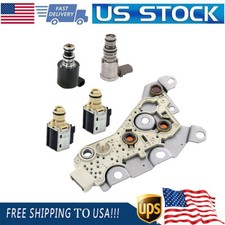
Shop 4T65E shift solenoids, pressure control solenoids, TCC solenoids, and full solenoid kits — shipped fast from the USA.
Shop 4T65E parts →FAQ
What does code P0753 mean on a 4T65E?
P0753 is Shift Solenoid A Electrical, a continuous open or short-to-ground fault in the 1-2 shift solenoid circuit or the solenoid itself. The PCM sets it when the commanded electrical state of the solenoid cannot be verified for an extended period, not when a shift simply feels wrong. P0758, Shift Solenoid B Electrical, is the same fault on the 2-3 shift solenoid.
What is the difference between P0753/P0758 and P1811?
P0753 and P0758 are hard electrical faults, an open or shorted circuit the PCM can detect directly. P1811 (Maximum Adapt and Long Shift) is a performance code: the PCM's adaptive modifier tried to shorten a slow shift by raising line pressure and still could not get it under its time threshold, twice in one drive cycle. A shift solenoid can be electrically perfect and a 4T65E can still set P1811.
Will a 4T65E really get stuck in one gear if a shift solenoid fails?
The 4T65E's hydraulic default is built around both shift solenoids being de-energized, and techs working on this transaxle commonly report the unit defaulting toward 3rd gear and staying there when SSA and SSB both go electrically dead. That default-gear behavior is the transmission's fail-safe strategy, not a random malfunction, and it is a strong clue pointing at the shift solenoid circuit specifically rather than the TCC or EPC solenoid.
What causes 4T65E TCC solenoid codes P0742, P2761, and P2764?
On 2006-07 GM vehicles with the 4T65E, Transmission Digest documented a specific internal wire harness routing defect: the Tan TCC solenoid wire was positioned inside the harness's own metal retaining clip, which could chafe through the insulation and short the circuit to ground, or sever the wire outright. The fix is repositioning the TCC solenoid and the new internal harness away from that clip, using internal wire harness part number 24229643.
Does replacing the pressure control solenoid always fix a P1811 code?
Not reliably on its own, and not permanently if the real cause is mechanical. Transmission Digest's technical editor documented 4T65E units that came back with P1811 weeks or months after a fresh pressure control solenoid, traced to excessive 2nd and 3rd clutch pack clearance left over from a prior rebuild, since GM does not publish clutch clearance specs. TransGo's shift kit for this transaxle targets P1811 and P0741 from the valve body side, replacing the pressure regulator spring and accumulator springs that lose tension and let shift time drift past the PCM's threshold in the first place.
Shop the 4T65E TCC solenoid at CoreTransmissionParts →
Related 4T65E guides
Sources
- Transmission Digest — "GM 4T65E: TCC solenoid circuit codes stored," Tech/Talk, August 2017. Backs the P0742/P2761/P2764 TCC solenoid circuit codes on 2006-07 GM 4T65E vehicles, the internal wire harness retaining-clip chafe defect, and internal wire harness part number 24229643. transmissiondigest.com
- Transmission Digest — "The 4T65-E: 'Slip-Sliding Away'," by Wayne Colonna, Technical Editor, August 2003. Backs the P1811 adaptive-modifier logic (the 0.65-second shift-time threshold and two-strikes-per-drive-cycle counter), the pressure control solenoid as the common fix, and excessive 2nd/3rd clutch pack clearance from a prior rebuild as a recurring root cause. transmissiondigest.com
- TransGo — SK 4T65E Shift Kit product page. Backs the shift kit's targeting of DTCs P1811, P0741, and P0894 via a new pressure regulator spring and accumulator springs rather than the solenoid itself. transgo.com
- SAE International — "General Motors 4T65-E Electronic Four-Speed Automatic Transaxle," Paper 980821. Backs the 4T65E's 1997 introduction as GM's evolution of the 4T60-E platform and its PCM-controlled shift solenoid and pressure-control solenoid architecture. saemobilus.sae.org
- Sonnax — "GM 4T65-E Channel Plate Common Problems & Solutions." Backs the AFL valve's 115 psi maximum feed to the EPC and 1-2/3-4 shift solenoids, worn-bore symptoms (P1811 with adapts at maximum, P0741 TCC slip, second-gear starts, falling out of fourth), and the ream-and-oversize-valve repair. sonnax.com
- General Motors — 2008 Chevrolet Impala Owner Manual (Automatic Transmission Fluid). Backs DEXRON-VI as the specified fluid and the hot-check procedure at 180-200°F with the engine running. assets.gm.com (PDF)