Delayed engagement on a 4T65E shows up the same way every time: you drop the shifter into Drive or Reverse, wait a beat too long, and then the vehicle takes up with a clunk instead of moving right away. A delay under half a second is normal on this transmission. A delay of one to three-plus seconds, especially one that gets worse when the fluid is hot or the vehicle has been sitting overnight, is a real symptom with a short list of actual causes. This guide walks through those causes in the order a shop should actually check them, from the five-minute fluid check to the hydraulic bores and clutch seals that cause the expensive version of this complaint.
What "delayed engagement" actually means hydraulically
Every forward and reverse range on the 4T65E is built by filling a clutch piston apply chamber with pressurized fluid until the piston clamps its clutch pack. Nothing moves until that piston has enough volume and pressure behind it to overcome the return spring and clamp the plates. Delayed engagement means something between the pump and that piston is either too slow to deliver volume, leaking pressure before it gets there, or letting the piston itself leak once it arrives. That is the whole diagnostic tree: supply, delivery, and containment. Everything below fits into one of those three buckets.
Cause #1: Low or worn fluid, and a clogged filter
This is the cheapest check and the one worth ruling out before anything else. Low fluid means the pump pickup can draw air instead of fluid on startup, which shows up as exactly this complaint: a pause before engagement that is worse on the first shift of the day. A collapsed or heavily loaded filter restricts the volume the pump can pull, producing the same delay even with the fluid level correct on the stick. Pull the pan, inspect the filter for debris, and check fluid condition and level before chasing anything downstream. A high mileage unit that has never had a fluid and filter service is the single most common reason this symptom shows up gradually rather than all at once.
Cause #2: A worn pump bushing or converter hub
If fluid and filter are good, the pump itself is next. The pump's front bushing rides directly on the torque converter hub, and as that bushing or the hub surface it rides on wears, clearance increases and pump output volume drops. A pump that is down on volume takes measurably longer to fill any clutch piston from a cold, empty state, which is exactly the condition present every time the vehicle has been parked for a while. This same low-volume pattern is also a well-documented contributor to torque converter clutch shudder on this transmission, so a 4T65E with both a cold-start engagement delay and a TCC shudder complaint on the same vehicle points hard at the pump.
Cause #3: A worn AFL valve bore or boost valve/sleeve in the channel plate
The 4T65E regulates its own line pressure upstream of the clutch pistons using two valves housed in the channel plate: the AFL (actuator feed limit) valve and the boost valve. Per Sonnax's technical writeup on the 4T65E channel plate, the AFL valve "regulates line pressure to a maximum of 115 psi" before sending controlled oil on to the EPC solenoid and the shift solenoids. As the AFL bore wears, "regulated pressure leaks to exhaust, which lowers the pressure and volume of oil to the solenoids," a low-line-rise condition that slows down every clutch apply fed by that circuit, including initial engagement.
The boost valve circuit wears in a related but distinct way. The OE boost sleeve assembly uses two steel valves and a steel plug riding inside a softer aluminum sleeve, and the steel wears the aluminum bore over time, letting boost pressure leak off. Sonnax's own listing for its drop-in boost valve kit (part 84754-30K) states plainly that 4T65E units with this wear pattern show "soft upshifts (especially 1-2), delayed Reverse and low line rise," and that the kit corrects "erratic line pressure... low line rise in Forward and Reverse... delayed Reverse engagement" by replacing the worn OE valves with hardcoat-anodized aluminum valves and a wear-resistant sleeve with oil channels built in to reduce side-load. In practice, a 4T65E that delays specifically going into Reverse, with soft 1-2 upshifts in Drive, is a strong match for this exact failure rather than a bad solenoid.
Cause #4: Forward clutch piston seal and clutch pack clearance wear
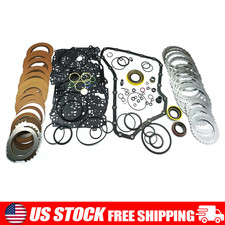
If the delay is specific to Drive and gets worse once the transmission is fully warmed up, suspect the forward clutch piston itself rather than the upstream hydraulic circuit. The forward clutch applies only in 1st gear and releases once the transmission shifts to 2nd, so its inner piston seal and the piston bore it rides in see a lot of apply cycles over the life of the unit. As that seal or the bore surface wears, line pressure can no longer fully pressurize the piston at idle, which produces a hesitation or a delayed bump into 1st on takeoff that is often worse hot than cold, the opposite pattern from a low-fluid or weak-pump complaint. This wear pattern does not respond to a solenoid or valve body swap; it requires pulling the unit to inspect and replace the worn clutch piston components, which is why a full master rebuild kit is the correct fix once this is confirmed rather than a parts-swapping guess.
Cause #4b: Input shaft housing sealing rings and the driven sprocket support
If the delay is worse hot and comes with a flared 2-3 shift, look at the input shaft housing. Per an ATSG case study written by Wayne Colonna, the input shaft and housing assembly holds the Input Clutch and 3rd Clutch, and its sealing rings seal against the inside of the driven sprocket support. When those rings cannot seal there, the result is "delayed engagements and a flare 2-3 shift," especially when hot. The fleet shop in that case saw it on Chevrolet Uplanders with as little as 20,000 miles. The parts looked fine, and by the time the unit was on the bench it had cooled enough that air checks passed.
The fix was the sprocket support itself. The bushing in the problem support sat higher than the sealing ring area on one side and nearly flush on the other. Supports with part number 24219592 embossed on them showed the problem, and swapping in a support stamped 24203724 cured it. The shop later saw the same failure on a 2007 Monte Carlo at 80,000 miles. If a hot-delay complaint survives a rebuild with new rings and good air checks, check the casting number on the driven sprocket support before tearing it down again.
Cause #5: A sticking EPC/pressure control solenoid
The EPC (Electronic Pressure Control) solenoid, also called the pressure control solenoid or PCS, can bind internally from sediment or varnish in old fluid without throwing an electrical code, since the PCM only flags a true open or short circuit. A solenoid stuck in the wrong position can starve the exact same hydraulic circuit the AFL and boost valves regulate, producing a delay that looks identical to the channel-plate wear described above. Because the solenoid is far cheaper and faster to replace than a valve body, it is a reasonable first part to swap once fluid, filter, and pump are confirmed good, but confirm it actually fixes the complaint on a road test before calling the job done, since a worn channel-plate bore can produce the same symptom and will not be solved by a new solenoid alone.
Why a GM P1811 code often rides along with this complaint
P1811, maximum adapt and long shift, is not an electrical fault. Per Transmission Digest's technical writeup on the 4T65E, the code sets when a shift takes too long and the PCM's adaptive pressure strategy has already increased commanded line pressure as far as it is allowed to go without shortening that shift time. The same article notes that replacing the pressure-control solenoid along with a slight clockwise, one-eighth-turn adjustment to its adjusting screw resolves a large share of these complaints, but it also flags a second possibility worth checking on any 4T65E that was rebuilt in the last several months: excessive clearance in the 2nd and 3rd clutch packs, which the PCM can mask for a while by increasing adaptive pressure before the code or the engagement delay returns. A 4T65E has a turbine-speed sensor the PCM uses to monitor actual gear ratio directly, which is why this unit catches clutch-pack slippage with a code where an older 4T60E without that sensor would not.
How to diagnose it, in order
- Check fluid level and condition, then pull the filter. Rule out the cheapest cause first, especially if the vehicle has never had a fluid service.
- Note which range is delayed and when. Delay in both Drive and Reverse, worse cold, points upstream at the pump or fluid supply. Delay in Reverse only, paired with soft 1-2 upshifts, points at the boost valve. Delay in Drive only, worse hot, points at the forward clutch piston seal; a hot delay paired with a flared 2-3 shift points at the input shaft housing rings and driven sprocket support.
- Pull codes. P1811 with no electrical codes means check the pressure-control solenoid and its adjusting screw first, then the clutch pack clearances if the code returns after a solenoid swap.
- Compare commanded line pressure to actual line pressure on a scan tool if the tool supports it. A growing gap between commanded and actual pressure points at a worn AFL or boost valve bore rather than the solenoid.
- Pull the pan and valve body once the cheap checks are exhausted. Inspect the AFL and boost valve bores for scoring, and check pump bushing clearance against the converter hub while it is apart.
Need parts for this job?
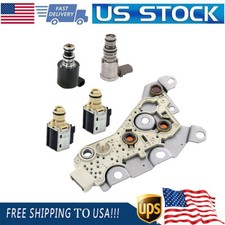
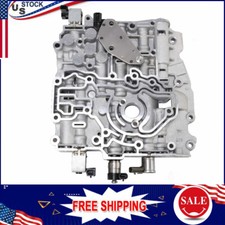
Pressure control solenoids, complete valve bodies, and master rebuild kits with the forward clutch piston components, all in stock for the 4T65E.
Shop 4T65E parts →Fluid and quick specs
A weak fluid supply makes every cause above worse, so confirm the basics before diagnosing further. The 4T65E was originally filled with Dexron-III-era fluid; Dexron-VI is the correct modern service fill. Per SAE International's published GM Dexron-VI global service-fill specification (GMW16444), Dexron-VI is a lighter-viscosity fluid, capped at 6.4 cSt at 100°C, engineered to be back-serviceable into older Dexron-III(H), III, and IIE applications, which is why it is the correct fluid to top off or refill with on this transmission regardless of original build date. Confirm final level at the dipstick with the engine running and the transmission at operating temperature rather than by quart count alone.
| Item | Spec |
|---|---|
| Fluid type | Dexron-VI (GMW16444), back-serviceable into Dexron-III/IIE |
| AFL valve max regulated pressure | 115 psi (per Sonnax) |
| Common related codes | P1811 (max adapt/long shift), P0741 (TCC slip), P0730 (ratio error) |
| Boost valve kit part number | Sonnax 84754-30K |
Shop the part for this fix
If the symptom pattern points at a worn AFL valve bore, CoreTransmissionParts carries the direct-fit correction kit rather than requiring a full valve body swap.
4T65E Transmission AFL Valve and Sleeve Kit (OEM 84596-02K)
Matches the AFL valve wear covered above, built to OEM spec for a direct-fit repair rather than a full valve body replacement. Sold by CoreTransmissionParts.
View the AFL valve kit on CoreTransmissionParts →FAQ
What does delayed engagement mean on a 4T65E?
It means there is a noticeable pause, usually one to several seconds, between moving the shifter into Drive or Reverse and the transmission actually taking up and moving the vehicle. It is caused by something slowing down how fast the clutch piston in question fills with pressurized fluid, whether that is a weak fluid supply, a worn hydraulic bore leaking pressure, or a worn clutch piston seal that will not hold pressure once it finally does fill.
Why does my 4T65E delay going into Drive but Reverse is fine, or the other way around?
The forward clutch and the reverse circuit are two separate hydraulic paths with their own piston, seals, and in the case of Reverse, its own apply servo and boost valve circuit. A delay on only one side points at a seal or bore specific to that circuit; a delay on both sides at the same time points at a shared upstream problem such as low fluid, a worn pump, or a worn AFL valve bore in the channel plate that regulates line pressure to both circuits.
Can a worn pump cause delayed engagement on a 4T65E?
Yes. The pump is what builds the initial volume of fluid that fills the clutch piston apply chambers the instant you select a gear. As the pump's bushing or the converter hub it rides on wears, clearance increases and pump output volume drops, which means it takes measurably longer to fill a clutch piston on cold start or at idle. A worn pump is also a common contributor to torque converter clutch shudder on this transmission, since the same low-volume problem affects the TCC apply circuit.
Does a 4T65E delayed reverse engagement always mean I need a valve body?
Not always, but it is one of the more common root causes. Per Sonnax's technical listing for the 4T65E boost valve kit, GM 4T65-E units with a worn OE boost sleeve assembly often exhibit soft upshifts, especially 1-2, along with delayed Reverse and low line rise in both Forward and Reverse, because the steel boost valves wear the softer aluminum sleeve and let boost pressure leak off. On a vehicle with that exact combination of symptoms, the channel plate's boost valve bore is the first place to look before condemning the solenoid or the reverse apply servo.
What is GM code P1811 and is it related to delayed engagement?
P1811 is maximum adapt and long shift. It sets when a shift takes longer than the PCM's calibrated limit and its adaptive pressure strategy has already increased commanded line pressure as far as it is allowed to go without shortening the shift time. It is closely related to delayed engagement because both conditions trace back to the transmission not building or holding pressure fast enough, and per Transmission Digest, replacing the pressure control solenoid along with a slight clockwise adjustment to its adjusting screw resolves a large share of P1811 complaints, though a transmission that already had loose 2nd and 3rd clutch clearance from a prior rebuild can also set it.
Related guides
- 4T65E no reverse: fix
- 4T65E pressure control (EPC) solenoid symptoms
- 4T65E harsh shift causes
- 4T65E slipping: causes and fix
- 4T65E TCC shudder diagnosis
Sources
- Sonnax, "GM 4T65-E Channel Plate: Common Problems & Solutions," Tech Resource 283 — backs the AFL valve's 115 psi maximum line pressure spec and the effect of AFL bore wear on oil pressure and volume delivered to the solenoids. sonnax.com/tech_resources/283
- Sonnax, Boost Valve Kit 84754-30K, product and technical listing — backs the boost sleeve wear mechanism and its soft-upshift, delayed-Reverse, low-line-rise symptom pattern, and the kit's hardcoat-anodized valve and wear-resistant sleeve design. sonnax.com/parts/2560-boost-valve-kit
- Transmission Digest / Wayne Colonna, "The 4T65-E: 'Slip-Sliding Away'" — backs the P1811 code definition, the pressure-control-solenoid-and-adjusting-screw fix, the turbine-speed-sensor-based ratio monitoring unique to this unit, and the 2nd/3rd clutch clearance root cause. transmissiondigest.com/the-4t65-e-slip-sliding-away
- SAE International, "General Motors DEXRON-VI Global Service-Fill Specification," Technical Paper 2006-01-3242 — backs the Dexron-VI viscosity spec (GMW16444, max 6.4 cSt at 100°C) and its back-serviceability into Dexron-III(H), III, and IIE applications. saemobilus.sae.org/papers/2006-01-3242
- ATSG / Wayne Colonna, "One part, two problems," Vehicle Service Pros (August 2014) — backs the 4T65-E input shaft housing sealing rings sealing inside the driven sprocket support, the hot delayed-engagement and flared 2-3 symptom, the 20K-mile Uplander fleet cases, and the 24219592 versus 24203724 sprocket support part numbers. vehicleservicepros.com: One part, two problems